Loading...
Ati George Sokomanu vs Julius Caesar
Julius Caesar leads by 46.9 pts · 2 figures compared
…
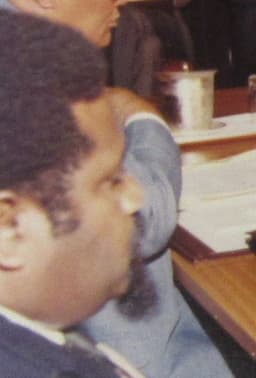
Ati George Sokomanu
Politician · Modern
35.9Total

Julius Caesar
General · Ancient
82.8Total
Basic Information
Born
1937
-100
Died
—
-44
Era
Modern
Ancient
Nationality
Vanuatu
Roman Republic
Occupation
Politician
General
Civilization
Other
Western
Score Comparison
Military (10%)
34.1
88.0
Political (20%)
25.0
78.0
Influence (20%)
45.5
85.0
Legacy (20%)
34.2
82.0
Leadership (15%)
31.2
80.0
Strategy (15%)
41.5
85.0
TOTAL
35.9
82.8
Ati George Sokomanu — Complete Timeline
1980 AD
Election as First President of VanuatuPolitical Action
Ati George Sokomanu was elected as the first President of Vanuatu following the country's independence from joint French-British colonial rule in 1980. He served from 1980 to 1984, symbolizing the new nation's sovereignty.
IndependencePresidencyVanuatu
Impact: nationalconstructive
1984 AD
Deposition from PresidencyPolitical Action◆ Major
Sokomanu was deposed from the presidency in 1984 after a political crisis. He was removed by the electoral college amid tensions between the government and opposition. He was later reinstated briefly but eventually left office.
DepositionPolitical CrisisVanuatu
Impact: nationaldestructive
Re-election as PresidentPolitical Action◆ Major
Following his deposition, Sokomanu was re-elected as president later in 1984, serving until 1989. His second term aimed to restore stability after the political turmoil.
PresidencyRe-electionVanuatu
Impact: national
1989 AD
End of Second PresidencyPolitical Action
Sokomanu's second term ended in 1989. He was succeeded by Fred Timakata. His legacy as the first president was marked by both the founding of the republic and political instability.
PresidencyTransitionVanuatu
Impact: national
Julius Caesar — Complete Timeline
58 BC
Gallic WarsWar◆ Major
Caesar, as proconsul of Gaul, launched a series of campaigns that conquered all of Gaul (modern France, Belgium, and parts of Switzerland). He fought numerous battles, including against the Helvetii, the Belgae, and the Gallic chieftain Vercingetorix. The wars brought immense wealth and a loyal army to Caesar.
Gallic WarsConquestRoman Expansion
Impact: regional
49 BC
Crossing the RubiconPolitical Action◆ Major
Caesar led Legio XIII across the Rubicon River into Italy, defying the Roman Senate's order to disband his army. This act triggered a civil war against Pompey and the Optimates, ultimately leading to Caesar's dictatorship and the end of the Roman Republic.
Roman Civil WarEnd of RepublicPower Struggle
Impact: global
48 BC
Battle of PharsalusWar◆ Major
Caesar's outnumbered army defeated the larger forces of Pompey the Great at Pharsalus in Greece. Caesar's tactical use of a reserve line to counter Pompey's cavalry charge proved decisive. Pompey fled to Egypt, where he was assassinated, leaving Caesar as the undisputed master of the Roman world.
Roman Civil WarBattleDecisive Victory
Impact: regional
44 BC
Appointment as Dictator for LifePolitical Action◆ Major
The Roman Senate appointed Caesar dictator perpetuo (dictator for life), granting him unprecedented personal power. This move concentrated military, legislative, and judicial authority in one person, effectively ending the Roman Republic's traditional system of checks and balances and alarming many senators.
DictatorshipEnd of RepublicPower Consolidation
Impact: regionaldestructive
Assassination on the Ides of MarchPolitical Action◆ Major
A group of Roman senators, led by Marcus Junius Brutus and Gaius Cassius Longinus, stabbed Caesar to death at a meeting of the Senate in the Theatre of Pompey. The assassination was intended to restore the Republic, but instead triggered another civil war that led to the rise of the Roman Empire.
AssassinationRoman PoliticsEnd of Republic
Impact: globaldestructive
Expert Analysis
ati-george-sokomanu-vs-julius-caesar
# The Rubicon and the Reef: Two Paths to Power
On a January morning in 49 BCE, a Roman general paused at a small river in northern Italy. Across the Rubicon lay not just the province of Gaul, but the fate of the Republic itself. Julius Caesar knew that crossing meant civil war. Two thousand years later, on a July day in 1980, a former colonial administrator stood on a Pacific island as a new flag rose over the capital of Port Vila. Ati George Sokomanu had just become the first President of Vanuatu, a nation born from the ashes of Anglo-French condominium rule. One man crossed a river to destroy a republic; the other accepted a presidency to build a nation. Their stories, separated by two millennia and half a world, reveal how power shapes men—and how men shape history.
Origins
Caesar was born into the chaos of the late Roman Republic, a world of senatorial intrigue, slave revolts, and civil wars. His family, the Julii, claimed descent from the goddess Venus, but their political influence had waned. Young Caesar learned early that in Rome, survival meant alliances. He married into power, borrowed heavily to fund his campaigns, and watched his uncle Marius and rival Sulla tear the state apart. His education was a brutal apprenticeship in ambition.
Sokomanu came of age on the island of Efate, in the New Hebrides, a colonial backwater where British and French officials bickered over administration while Melanesian villagers maintained their ancient customs. Born in 1937, he was educated in mission schools and later trained as a teacher and colonial administrator. His world was one of small offices, bureaucratic forms, and the slow, patient work of building institutions. Where Caesar learned to command legions, Sokomanu learned to manage committees.
Rise to Power
Caesar’s ascent was a masterclass in calculated risk. He secured the governorship of Gaul at age 40, then spent eight years conquering a territory that stretched from the Rhine to the Atlantic. His Commentaries transformed military reports into political propaganda, making him a hero to Rome’s common citizens. When the Senate ordered him to disband his army and return as a private citizen—vulnerable to prosecution—he chose war. The Rubicon crossing was not a moment of madness but a cold calculation: he would rather rule than be destroyed.
Sokomanu’s rise was quieter. As the New Hebrides moved toward independence in the 1970s, he emerged as a compromise candidate—acceptable to both the English-speaking and French-speaking factions that threatened to tear the young nation apart. In 1980, when Vanuatu finally gained independence, the electoral college chose him as president. He was not a conqueror but a consensus-builder, a man whose power came from being everyone’s second choice.
Leadership & Governance
Caesar governed as he conquered: with speed, terror, and generosity. As dictator, he reformed the calendar, granted citizenship to Gauls, launched public works, and packed the Senate with his supporters. His military genius was undeniable—at Alesia, he besieged 80,000 Gauls while fending off a relief army of 250,000—but his political wisdom was more fragile. He pardoned his enemies, but they never forgave him. He centralized power, but the Republic’s institutions were too broken to be fixed.
Sokomanu’s presidency was a study in constitutional restraint. Vanuatu’s president was largely ceremonial, a figurehead for a parliamentary system. His greatest challenge came in 1984, when a political crisis led to his deposition by the electoral college. Remarkably, he was re-elected later that same year—a testament to his ability to navigate factional politics without an army or a treasury. Where Caesar rewrote laws, Sokomanu followed them.
Triumph & Tragedy
Caesar’s triumph was absolute: he defeated his rivals, celebrated four triumphs in Rome, and was declared dictator for life. His tragedy came on the Ides of March, 44 BCE, when sixty senators stabbed him to death in the Pompeian Theatre. His last words, according to tradition, were “Et tu, Brute?”—a recognition that the Republic he had destroyed could not be rebuilt.
Sokomanu’s triumphs were quieter: he presided over the peaceful transition to independence and helped stabilize a fragile democracy. His tragedy was the 1984 deposition itself—a reminder that even the most careful politician can be undone by the forces he tries to balance. He served out his second term until 1989, then faded into the background of Vanuatu’s history.
Character & Destiny
Caesar was driven by an insatiable need for glory. He once said, “I would rather be first in a little Iberian village than second in Rome.” His personality—arrogant, generous, ruthless—shaped every decision. He could pardon a rival and then have him killed. He could write brilliant prose and then burn the Library of Alexandria. His destiny was to destroy the Republic he loved, because he could not imagine a world where he was not first.
Sokomanu was driven by duty. He did not seek the presidency; it was thrust upon him. His personality—patient, diplomatic, unassuming—made him a perfect figurehead but a poor revolutionary. His destiny was to be the first president of a nation that would soon forget him. He was not Caesar; he was the man who held the door open while others walked through.
Legacy
Caesar’s legacy is the Roman Empire itself. His name became a title—Caesar, Kaiser, Tsar—and his reforms shaped Western law, government, and language for two thousand years. He is remembered as a genius and a tyrant, a man who saw the future and forced it to happen.
Sokomanu’s legacy is Vanuatu—a small Pacific nation that has survived coups, cyclones, and economic hardship. He is remembered, if at all, as the man who was there at the beginning. His scores—a modest 47.4 overall—reflect a life of service rather than conquest. But in a world that celebrates Caesars, perhaps there is something to be said for the Sokomanus.
Conclusion
Standing at the Rubicon, Caesar saw a river that would make him immortal. Standing at the independence ceremony, Sokomanu saw a flag that would make his nation real. One man changed the world through war; the other through patience. Both faced the same question: what would you sacrifice for power? Caesar sacrificed the Republic. Sokomanu sacrificed his ambition. History remembers the man who crossed the river, but it is the man who stayed on the shore who built the house.
Rankings
🥇
Julius CaesarLeader
Mil: 88.0Pol: 78.0Inf: 85.0
82.8
🥈
Ati George Sokomanu
Mil: 34.1Pol: 25.0Inf: 45.5
35.9
+46.9 behind
How This Comparison Works
Algorithm
Each figure is scored on 6 dimensions (0—100 scale) based on structured historical data: Military (10%), Political (20%), Influence (20%), Legacy (20%), Leadership (15%), Strategy (15%). The weighted total produces the final ranking.
Data Sources
Scores are computed from structured sub-indicators in the database. Scale factors adjust for era (Ancient ×0.85, Modern ×1.0) and civilization size (Eastern ×1.05, Other ×0.80) to account for differences in population and military scale.
Maximum 3 Figures
Comparisons are limited to 2—3 figures to ensure readability and statistical meaningfulness.
Error Margins
±5 points per dimension — Sub-scores are derived from historical records with inherent uncertainty. Two figures within 5 points on a dimension should be considered roughly equivalent in that area.
Total Score Accuracy
±3 points overall — The weighted combination of 6 dimensions produces a total score with approximately ±3 points of uncertainty. Differences of less than 3 points are not statistically significant— the figures are effectively tied.
Known Limitations
- Historical records are incomplete and uneven across civilizations
- Figures from oral-tradition societies may be underrepresented
- Occupation labels can misclassify multi-role figures
- Scores measure capability and impact, not moral character
- Quantitative scoring is a comparison tool, not absolute truth
Capability Radar
Military (10%) — Battles & Warfare
Battles
20
95
Win Rate
27
92
Expansion
25
97
Political (20%) — Governance & Reform
Reform
10
90
Diplomacy
20
85
Economy
10
82
Influence (20%) — Cultural & Global Reach
Cultural
5
88
Global
5
94
Legacy (20%) — Historical Impact
Historical
10
95
Longevity
5
96
Leadership (15%) — Power & Stability
Tenure
10
75
Stability
5
60
Strategy (15%) — Tactics & Innovation
Strategy
33
94
Tactics
36
96
Reform
34
88
Similar Comparisons
Comments & Discussion
RUBICON\_SPARTACUS6/17/2026
Caesar didn't "destroy a republic"—he killed a rotting oligarchy that had already murdered the Gracchi and proscribed its own citizens. The Rubicon crossing is romanticized by armchair classicists who miss that Caesar's real revolution was bringing provincials like himself into power. Compare that to Sokomanu inheriting a ready-made presidency from departing colonial masters. One man earned his throne through blood and talent; the other was handed a flagpole.
珊瑚礁上的凯撒6/17/2026
说老实话,索科马努算哪根葱?瓦努阿图总共才30万人,而凯撒一个人就指挥过10个军团横扫高卢。我承认岛国独立很感人,但把一位连基本历史教科书都没几页的总统跟罗马史上最杰出的军事家比?这不叫比较,这叫对历史的侮辱。凯撒改变的是整个西方文明的走向,索科马努只是在自己小岛上挂了面国旗而已。
THE\_TWELFTH\_LEGION6/17/2026
Here's the actual military comparison: Caesar conquered Gaul with an army of 50,000 legionaries, defeated 300,000 Helvetii, and built a bridge across the Rhine in ten days. Sokomanu's career highlight was being a colonial education officer. The analysis bends over backward to find parallels, but the power gap is obscene. Caesar created power from nothing; Sokomanu presided over a pre-existing bureaucracy. Let's stop pretending these are equivalent historical actors.
历史数据的谎言6/17/2026
这份分析最大的问题就是使用"权力"这个模糊概念来抹平两个时代的鸿沟。罗马共和国的权力是私人军队、元老院阴谋、暗杀和直接暴力;瓦努阿图的权力是联合国席位、宪法程序和外交承认。你把公元前50年带剑的将军跟1980年穿西装的总统比较,就像把角斗士和裁判划等号——表面上都在竞技场,实际天差地别。这种比较本身就是对历史的简化暴力。
ATLANTIS\_MELANESIA6/17/2026
What this comparison misses is the revolutionary nature of decolonization itself. Caesar was playing an old game—Roman power politics. Sokomanu was part of creating an entirely new sovereign nation from a bizarre Anglo-French colonial experiment. That's not "lesser" history; it's a fundamentally different type of historical achievement. Founding a state where none existed is arguably harder than overthrowing one that already had dysfunctional institutions.