Loading...
Aslan Maskhadov vs Paul Martin
Paul Martin leads by 3.8 pts · 2 figures compared
…

Aslan Maskhadov
Politician · Modern
47.3Total
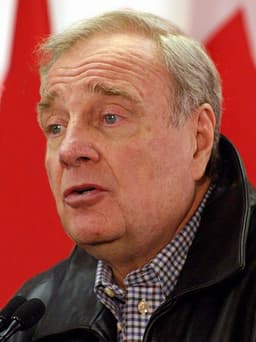
Paul Martin
Politician · Modern
51.1Total
Basic Information
Born
1951
1938
Died
—
—
Era
Modern
Modern
Nationality
Chechnya
Canada
Occupation
Politician
Politician
Civilization
Western
Western
Score Comparison
Military (10%)
50.0
50.0
Political (20%)
36.5
45.0
Influence (20%)
54.1
54.9
Legacy (20%)
44.2
45.8
Leadership (15%)
51.9
66.0
Strategy (15%)
45.0
42.8
TOTAL
47.3
51.1
Aslan Maskhadov — Complete Timeline
1997 AD
Elected President of IchkeriaPolitical Action◆ Major
Aslan Maskhadov was elected as the second president of the Chechen Republic of Ichkeria after Dudayev's death. He won a democratic election but faced challenges from radical factions within Chechnya.
ChechnyaElectionIchkeria
Impact: regionalconstructive
1999 AD
Second Chechen War BeginsWar
Russian forces launched a second invasion of Chechnya after the apartment bombings in Russia. Maskhadov led the Chechen resistance but was unable to prevent Russian forces from capturing Grozny and establishing control.
Chechen WarRussiaInvasion
Impact: regionaltragic
2005 AD
Killed by Russian ForcesWar◆ Major
Maskhadov was killed by Russian special forces during a raid in the village of Tolstoy-Yurt. His death was a major victory for Russia in the Second Chechen War. He was succeeded by radical leaders.
AssassinationChechnyaRussia
Impact: regionaltragic
Paul Martin — Complete Timeline
1998 AD
Eliminated Federal Budget DeficitReform◆ Major
As Minister of Finance, Martin presented a federal budget in 1998 that eliminated Canada's budget deficit, which had been a persistent problem since the 1970s. This was achieved through spending cuts and tax increases, leading to a period of sustained surpluses.
Budget DeficitFiscal PolicyEconomic Reform
Impact: nationalconstructive
2000 AD
Introduced the Clarity ActPolitical Action◆ Major
As Minister of Finance, Martin played a key role in the introduction of the Clarity Act, which set out the conditions under which the federal government would negotiate secession of a province. The act was a response to the 1995 Quebec referendum.
Clarity ActQuebec SovereigntyFederalism
Impact: nationalconstructive
2003 AD
Became Prime Minister of CanadaPolitical Action◆ Major
Paul Martin succeeded Jean Chr
Prime MinisterLiberal PartySuccession
Impact: national
2004 AD
Sponsorship Scandal and Minority GovernmentPolitical Action◆ Major
The sponsorship scandal, involving misuse of public funds in Quebec, damaged Martin's government. In the 2004 federal election, his Liberal Party was reduced to a minority government, and the scandal continued to erode public trust.
Sponsorship ScandalMinority GovernmentPolitical Damage
Impact: nationaldestructive
Expert Analysis
Origins
Aslan Maskhadov was born in 1951 in the Kazakh SSR, deported with his family during Stalin's forced relocation of Chechens. He grew up in exile, returning to Chechnya in the 1960s. Maskhadov pursued a military career, graduating from the Tbilisi Higher Artillery Command School and later serving in the Soviet Army, rising to the rank of colonel. His early life was marked by displacement and a strong sense of Chechen identity, which shaped his later nationalism.
Paul Martin was born in 1938 in Windsor, Ontario, Canada, into a political family. His father, Paul Martin Sr., was a prominent Liberal politician and diplomat. Martin studied philosophy and history at the University of Toronto, then law at the University of Toronto Law School. He practiced law and entered business, eventually building a successful shipping company, Canada Steamship Lines, which made him wealthy before entering politics. His background was one of privilege and establishment connections.
Rise to Power
Maskhadov rose to prominence during the First Chechen War (1994-1996), where he served as Chief of Staff of the Chechen forces. He played a key role in the Battle of Grozny and negotiations that led to the Khasav-Yurt Accord in 1996, ending the war. After the death of President Dzhokhar Dudayev in 1996, Maskhadov was elected President of the Chechen Republic of Ichkeria in January 1997, winning 59% of the vote. His rise was based on his military credibility and moderate stance.
Martin rose through the Liberal Party, serving as Minister of Finance from 1993 to 2002 under Prime Minister Jean Chrétien. He eliminated Canada's federal budget deficit by 1998, balancing the budget after years of deficits, which earned him wide acclaim. He also played a key role in introducing the Clarity Act (2000), clarifying terms for Quebec separation. After a long rivalry with Chrétien, Martin won the Liberal leadership in 2003 and became Prime Minister on December 12, 2003.
Leadership & Governance
Maskhadov's leadership was defined by war. As president of Ichkeria, he governed a devastated region, struggling to impose order amid warlords and Islamic radicals. He attempted to introduce sharia law to appease Islamists but also sought peace with Russia. His governance scored 51.9 in leadership and 36.5 in political scores, reflecting limited state capacity. During the Second Chechen War (1999-2009), he led the resistance but was unable to unite factions or prevent Russian advances.
Martin's governance as Prime Minister (2003-2006) focused on domestic policy, including increased healthcare spending and education. He faced the sponsorship scandal, which damaged his government's credibility. His Liberal Party lost its majority in the 2004 election, forcing a minority government. He scored 66.0 in leadership and 45.0 in political, showing stronger institutional governance than Maskhadov. However, his tenure was short and marred by scandal.
Triumph & Tragedy
Maskhadov's greatest triumph was securing Chechnya's de facto independence after the First Chechen War and being democratically elected president. His greatest tragedy was his death on March 8, 2005, when Russian special forces killed him in a raid. He failed to prevent the rise of extremism or win international recognition for Ichkeria. His legacy is mixed: a moderate leader who could not control radical elements.
Martin's greatest triumph was eliminating Canada's federal budget deficit, a major fiscal achievement that strengthened the economy. His greatest tragedy was the sponsorship scandal, which tarnished his government and led to his defeat in the 2006 election after only two years. He also failed to secure a majority government. His legacy includes the Clarity Act and deficit elimination, but his prime ministership is often seen as underwhelming.
Character & Destiny
Maskhadov was pragmatic and moderate, seeking a negotiated settlement with Russia, but his character was shaped by war and nationalist fervor. He was a military leader thrust into politics, often indecisive. His destiny was sealed by Russian determination to crush Chechen independence. He scored 45.0 in strategy, reflecting his inability to adapt to the asymmetric conflict.
Martin was a competent technocrat, known for his business acumen and fiscal responsibility. However, he struggled with political maneuvering and was overshadowed by his rivalry with Chrétien. His destiny was to be a one-term PM, remembered more as a finance minister than a leader. He scored 42.8 in strategy, similar to Maskhadov, but in a different context.
Legacy
Maskhadov is remembered as the last president of independent Ichkeria, a symbol of Chechen resistance. His death was a turning point, leading to the rise of more radical leaders like Shamil Basayev. His legacy score is 44.2, limited by the failure of his state.
Martin's legacy is stronger in Canadian history: the Clarity Act and deficit elimination are enduring policies. He is seen as a sound financier but a weak PM. His legacy score is 45.8, slightly higher than Maskhadov's.
Conclusion
Paul Martin has a higher total score (51.1 vs 47.3) and greater tangible impact on his nation's governance. While Maskhadov fought for survival, Martin's fiscal reforms shaped Canada for decades. Martin's leadership score (66.0) dwarfs Maskhadov's (51.9). Despite Martin's short tenure, his policy achievements outweigh Maskhadov's failed state-building. Thus, Paul Martin had greater overall impact.
Rankings
🥇
Paul MartinLeader
Mil: 50.0Pol: 45.0Inf: 54.9
51.1
🥈
Aslan Maskhadov
Mil: 50.0Pol: 36.5Inf: 54.1
47.3
+3.8 behind
How This Comparison Works
Algorithm
Each figure is scored on 6 dimensions (0—100 scale) based on structured historical data: Military (10%), Political (20%), Influence (20%), Legacy (20%), Leadership (15%), Strategy (15%). The weighted total produces the final ranking.
Data Sources
Scores are computed from structured sub-indicators in the database. Scale factors adjust for era (Ancient ×0.85, Modern ×1.0) and civilization size (Eastern ×1.05, Other ×0.80) to account for differences in population and military scale.
Maximum 3 Figures
Comparisons are limited to 2—3 figures to ensure readability and statistical meaningfulness.
Error Margins
±5 points per dimension — Sub-scores are derived from historical records with inherent uncertainty. Two figures within 5 points on a dimension should be considered roughly equivalent in that area.
Total Score Accuracy
±3 points overall — The weighted combination of 6 dimensions produces a total score with approximately ±3 points of uncertainty. Differences of less than 3 points are not statistically significant— the figures are effectively tied.
Known Limitations
- Historical records are incomplete and uneven across civilizations
- Figures from oral-tradition societies may be underrepresented
- Occupation labels can misclassify multi-role figures
- Scores measure capability and impact, not moral character
- Quantitative scoring is a comparison tool, not absolute truth
Capability Radar
Military (10%) — Battles & Warfare
Battles
45
32
Win Rate
40
30
Expansion
10
33
Political (20%) — Governance & Reform
Reform
25
55
Diplomacy
40
60
Economy
15
65
Influence (20%) — Cultural & Global Reach
Cultural
30
30
Global
25
40
Legacy (20%) — Historical Impact
Historical
35
40
Longevity
20
35
Leadership (15%) — Power & Stability
Tenure
35
60
Stability
10
55
Strategy (15%) — Tactics & Innovation
Strategy
50
36
Tactics
55
41
Reform
30
47
Similar Comparisons
Comments & Discussion
No comments yet. Be the first to share your thoughts!