Loading...
Lal Krishna Advani vs Paul Martin
Lal Krishna Advani leads by 7.3 pts · 2 figures compared
…

Lal Krishna Advani
Politician · Modern
58.4Total
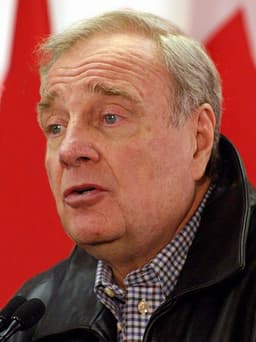
Paul Martin
Politician · Modern
51.1Total
Basic Information
Born
1927
1938
Died
—
—
Era
Modern
Modern
Nationality
India
Canada
Occupation
Politician
Politician
Civilization
Indian
Western
Score Comparison
Military (10%)
38.8
50.0
Political (20%)
65.0
45.0
Influence (20%)
56.7
54.9
Legacy (20%)
55.0
45.8
Leadership (15%)
72.0
66.0
Strategy (15%)
60.0
42.8
TOTAL
58.4
51.1
Lal Krishna Advani — Complete Timeline
1990 AD
Leadership of the Ram Rath YatraPolitical Action
Lal Krishna Advani led the Ram Rath Yatra, a political-religious procession from Somnath to Ayodhya, to mobilize support for building a Ram temple at the disputed Babri Masjid site. The yatra sparked communal tensions and was stopped by the Bihar government.
AyodhyaRam TempleCommunal Politics
Impact: nationaldestructive
1998 AD
Appointment as Minister of Home AffairsPolitical Action◆ Major
Lal Krishna Advani was appointed Union Minister of Home Affairs in the Vajpayee government, serving until 2004. He oversaw internal security, including the Kargil War (1999) and the 2001 Indian Parliament attack.
Home MinisterInternal SecurityKargil
Impact: national
2002 AD
Appointment as Deputy Prime Minister of IndiaPolitical Action◆ Major
Lal Krishna Advani was appointed Deputy Prime Minister of India in the Vajpayee government, serving until 2004. He also held the Home Ministry portfolio, overseeing internal security during a period of communal violence.
Deputy Prime MinisterHome MinisterSecurity
Impact: national
2004 AD
Appointment as Leader of the Opposition in Lok SabhaPolitical Action◆ Major
Lal Krishna Advani was appointed Leader of the Opposition in the Lok Sabha after the BJP's defeat in the 2004 general election. He served in this role until 2009, leading the opposition against the UPA government.
Leader of OppositionLok SabhaBJP
Impact: national
2009 AD
Resignation as BJP President After 2009 Election DefeatPolitical Action
Lal Krishna Advani resigned as President of the Bharatiya Janata Party after the party's defeat in the 2009 general election. He took responsibility for the electoral loss, though he remained a senior leader.
ResignationBJPElection Defeat
Impact: national
Paul Martin — Complete Timeline
1998 AD
Eliminated Federal Budget DeficitReform◆ Major
As Minister of Finance, Martin presented a federal budget in 1998 that eliminated Canada's budget deficit, which had been a persistent problem since the 1970s. This was achieved through spending cuts and tax increases, leading to a period of sustained surpluses.
Budget DeficitFiscal PolicyEconomic Reform
Impact: nationalconstructive
2000 AD
Introduced the Clarity ActPolitical Action◆ Major
As Minister of Finance, Martin played a key role in the introduction of the Clarity Act, which set out the conditions under which the federal government would negotiate secession of a province. The act was a response to the 1995 Quebec referendum.
Clarity ActQuebec SovereigntyFederalism
Impact: nationalconstructive
2003 AD
Became Prime Minister of CanadaPolitical Action◆ Major
Paul Martin succeeded Jean Chr
Prime MinisterLiberal PartySuccession
Impact: national
2004 AD
Sponsorship Scandal and Minority GovernmentPolitical Action◆ Major
The sponsorship scandal, involving misuse of public funds in Quebec, damaged Martin's government. In the 2004 federal election, his Liberal Party was reduced to a minority government, and the scandal continued to erode public trust.
Sponsorship ScandalMinority GovernmentPolitical Damage
Impact: nationaldestructive
Expert Analysis
Origins
Lal Krishna Advani was born on November 8, 1927, in Karachi, British India (now Pakistan), into a Sindhi Hindu family. His early life was shaped by the partition of India in 1947, which forced his family to migrate to India. He was influenced by the Hindu nationalist ideology of the Rashtriya Swayamsevak Sangh (RSS), joining the organization in his youth. Advani studied law at the Government Law College, Bombay, but his political career began with the Bharatiya Jana Sangh, a precursor to the Bharatiya Janata Party (BJP).
Paul Martin was born on August 28, 1938, in Windsor, Ontario, Canada, into a political family; his father, Paul Martin Sr., was a long-serving Liberal cabinet minister. He studied philosophy, history, and law at the University of Toronto and later earned a degree in business administration from Harvard Business School. Martin initially pursued a business career, working for Power Corporation of Canada, before entering politics in 1988, winning a seat in the House of Commons.
Rise to Power
Advani rose through the ranks of the Jana Sangh and later the BJP. His major turning point was leading the Ram Rath Yatra in 1990, a procession from Somnath to Ayodhya to mobilize support for building a Ram temple at the disputed site. This event galvanized Hindu nationalist sentiment and propelled the BJP from a marginal party to a major political force. Advani was arrested during the yatra, which increased his visibility. By 1998, he became Home Minister and later Deputy Prime Minister in the Vajpayee government.
Paul Martin's rise was defined by his tenure as Minister of Finance from 1993 to 2002 under Prime Minister Jean Chrétien. He successfully eliminated Canada's federal budget deficit by 1998, introducing austerity measures and the Clarity Act (2000), which clarified the terms of Quebec secession. This fiscal success earned him the nickname "Minister of Everything" and made him a leading candidate to succeed Chrétien. After a prolonged leadership feud, Martin became Liberal Party leader and Prime Minister on December 12, 2003.
Leadership & Governance
Advani's leadership was characterized by ideological rigidity and organizational acumen. As Home Minister, he oversaw internal security during a period of rising terrorism and communal violence. He advocated for a uniform civil code and the abrogation of Article 370 in Jammu and Kashmir. His governance style was hierarchical and centered on party discipline. He scored 72.0 in leadership, reflecting his ability to build the BJP's organizational structure.
Martin's leadership was more technocratic and consensus-oriented. As Prime Minister, he faced a minority government after the 2004 election, limiting his ability to pass legislation. He focused on fiscal responsibility, social programs, and healthcare. However, the sponsorship scandal, involving misuse of funds in Quebec, undermined his government's credibility. Martin's political score of 45.0 reflects the challenges he faced in maintaining party unity and public trust.
Triumph & Tragedy
Advani's greatest triumph was the Ram Rath Yatra, which transformed the BJP from a minor party to a dominant force in Indian politics, leading to its first national government in 1998. He also played a key role in the rise of Hindu nationalism. However, his greatest failure was the 2009 election defeat, after which he resigned as BJP president. The demolition of the Babri Masjid in 1992, which occurred after his yatra, remains a controversial legacy, with allegations that his rhetoric fueled communal violence.
Martin's triumph was eliminating Canada's budget deficit and implementing the Clarity Act, which strengthened national unity. He scored 66.0 in leadership for his economic management. His tragedy was the sponsorship scandal, which tainted his government and led to the Liberal Party's decline. In the 2006 election, his government fell to the Conservatives, and he resigned as party leader.
Character & Destiny
Advani was known for his discipline, loyalty to the RSS, and strategic thinking. His character was shaped by the partition experience, which fostered a strong Hindu nationalist identity. He was a master of political mobilization but often criticized for polarizing rhetoric. His destiny was to be a kingmaker rather than a prime minister, as he never held the top post.
Martin was cerebral and pragmatic, with a focus on policy details. His character was marked by a rivalry with Chrétien, which led to internal party strife. His destiny was to be a successful finance minister but a less effective prime minister, as the sponsorship scandal and minority government limited his achievements.
Legacy
Advani's legacy is the transformation of Indian politics through Hindu nationalism. The BJP's rise to power and subsequent dominance can be traced to his efforts. He scored 55.0 in legacy, reflecting the enduring impact of his ideological crusade. However, his legacy is contested due to the communal violence associated with his movement.
Martin's legacy is fiscal prudence and the Clarity Act. He left Canada with a strong economy and a clearer framework for national unity. His legacy score of 45.8 is lower, partly because his prime ministerial tenure was brief and marred by scandal. Nonetheless, his fiscal reforms had lasting benefits.
Conclusion
Lal Krishna Advani had a greater impact on his country's political landscape than Paul Martin. Advani's total score of 58.4 exceeds Martin's 51.1, a gap of 7.3 points. Advani fundamentally reshaped Indian politics by bringing Hindu nationalism to the mainstream, a shift that continues to influence elections and governance. Martin's achievements, while significant in economic management, were more incremental and less transformative. Advani's Ram Rath Yatra altered the trajectory of a nation of over a billion people, whereas Martin's deficit elimination, though important, was a correction within an existing system. Thus, Advani's influence on political discourse and party system is more enduring and profound.
Rankings
🥇
Lal Krishna AdvaniLeader
Mil: 38.8Pol: 65.0Inf: 56.7
58.4
🥈
Paul Martin
Mil: 50.0Pol: 45.0Inf: 54.9
51.1
+7.3 behind
How This Comparison Works
Algorithm
Each figure is scored on 6 dimensions (0—100 scale) based on structured historical data: Military (10%), Political (20%), Influence (20%), Legacy (20%), Leadership (15%), Strategy (15%). The weighted total produces the final ranking.
Data Sources
Scores are computed from structured sub-indicators in the database. Scale factors adjust for era (Ancient ×0.85, Modern ×1.0) and civilization size (Eastern ×1.05, Other ×0.80) to account for differences in population and military scale.
Maximum 3 Figures
Comparisons are limited to 2—3 figures to ensure readability and statistical meaningfulness.
Error Margins
±5 points per dimension — Sub-scores are derived from historical records with inherent uncertainty. Two figures within 5 points on a dimension should be considered roughly equivalent in that area.
Total Score Accuracy
±3 points overall — The weighted combination of 6 dimensions produces a total score with approximately ±3 points of uncertainty. Differences of less than 3 points are not statistically significant— the figures are effectively tied.
Known Limitations
- Historical records are incomplete and uneven across civilizations
- Figures from oral-tradition societies may be underrepresented
- Occupation labels can misclassify multi-role figures
- Scores measure capability and impact, not moral character
- Quantitative scoring is a comparison tool, not absolute truth
Capability Radar
Military (10%) — Battles & Warfare
Battles
41
32
Win Rate
49
30
Expansion
51
33
Political (20%) — Governance & Reform
Reform
75
55
Diplomacy
70
60
Economy
60
65
Influence (20%) — Cultural & Global Reach
Cultural
70
30
Global
55
40
Legacy (20%) — Historical Impact
Historical
75
40
Longevity
65
35
Leadership (15%) — Power & Stability
Tenure
85
60
Stability
65
55
Strategy (15%) — Tactics & Innovation
Strategy
50
36
Tactics
58
41
Reform
59
47
Similar Comparisons
Comments & Discussion
No comments yet. Be the first to share your thoughts!