Loading...
Lee Huan vs Paul Martin
Paul Martin leads by 7.1 pts · 2 figures compared
…

Lee Huan
Politician · Modern
44.0Total
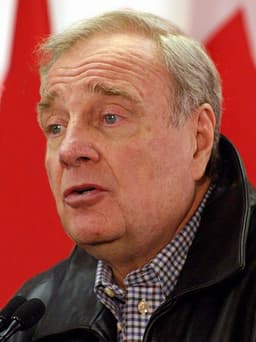
Paul Martin
Politician · Modern
51.1Total
Basic Information
Born
1917
1938
Died
2010
—
Era
Modern
Modern
Nationality
China
Canada
Occupation
Politician
Politician
Civilization
Eastern
Western
Score Comparison
Military (10%)
23.2
50.0
Political (20%)
39.4
45.0
Influence (20%)
47.1
54.9
Legacy (20%)
37.5
45.8
Leadership (15%)
58.8
66.0
Strategy (15%)
57.8
42.8
TOTAL
44.0
51.1
Lee Huan — Complete Timeline
1989 AD
Premiership of the Republic of ChinaPolitical Action◆ Major
Lee Huan served as Premier of the Republic of China from 1989 to 1990 under President Lee Teng-hui. He oversaw the continuation of economic reforms and the early stages of democratization.
PremierROCLee Teng-hui
Impact: national
1990 AD
Resignation after Political CrisisPolitical Action
Lee Huan resigned as Premier following the 1990 Wild Lily student protests and internal KMT power struggles. His resignation paved the way for a more reformist cabinet under Hau Pei-tsun.
ResignationPolitical CrisisDemocratization
Impact: national
1993 AD
Role in KMT ReformPolitical Action
Lee Huan served as a senior advisor to the Kuomintang, advocating for internal party reform and democratization. He supported Lee Teng-hui's efforts to transform the KMT from a Leninist party to a democratic one.
KMTParty ReformDemocratization
Impact: nationalconstructive
Paul Martin — Complete Timeline
1998 AD
Eliminated Federal Budget DeficitReform◆ Major
As Minister of Finance, Martin presented a federal budget in 1998 that eliminated Canada's budget deficit, which had been a persistent problem since the 1970s. This was achieved through spending cuts and tax increases, leading to a period of sustained surpluses.
Budget DeficitFiscal PolicyEconomic Reform
Impact: nationalconstructive
2000 AD
Introduced the Clarity ActPolitical Action◆ Major
As Minister of Finance, Martin played a key role in the introduction of the Clarity Act, which set out the conditions under which the federal government would negotiate secession of a province. The act was a response to the 1995 Quebec referendum.
Clarity ActQuebec SovereigntyFederalism
Impact: nationalconstructive
2003 AD
Became Prime Minister of CanadaPolitical Action◆ Major
Paul Martin succeeded Jean Chr
Prime MinisterLiberal PartySuccession
Impact: national
2004 AD
Sponsorship Scandal and Minority GovernmentPolitical Action◆ Major
The sponsorship scandal, involving misuse of public funds in Quebec, damaged Martin's government. In the 2004 federal election, his Liberal Party was reduced to a minority government, and the scandal continued to erode public trust.
Sponsorship ScandalMinority GovernmentPolitical Damage
Impact: nationaldestructive
Expert Analysis
Origins
Lee Huan was born on September 20, 1916, in Hubei, China, into a scholarly family. He studied at the Central University of China and later joined the Kuomintang, fleeing to Taiwan after the Chinese Civil War. His early career focused on youth and cultural affairs within the party.
Paul Martin was born on August 28, 1938, in Windsor, Ontario, Canada, into a political family; his father was a senator and cabinet minister. He studied law at the University of Toronto and was called to the bar in 1966. Before entering politics, he was a successful businessman and executive at Canada Steamship Lines.
Rise to Power
Lee Huan rose through the KMT ranks, serving as director of the Government Information Office (1972-1975) and later as secretary-general of the party (1987-1989). His ascent culminated in his appointment as Premier of the Republic of China on June 1, 1989, under President Lee Teng-hui, during a period of political liberalization.
Paul Martin entered federal politics in 1988 as a Liberal MP for LaSalle—Émard. He quickly rose to prominence as Minister of Finance (1993-2002) under Prime Minister Jean Chrétien, where he became known for his fiscal management. After a long leadership rivalry, he succeeded Chrétien as Prime Minister on December 12, 2003.
Leadership & Governance
Lee Huan's leadership was defined by his role in Taiwan's democratization. As premier, he oversaw economic reforms and supported Lee Teng-hui's democratic reforms, including the lifting of martial law and constitutional amendments. However, his tenure was marked by internal KMT factionalism and the Wild Lily student protests in 1990, which demanded further political reform. Lee Huan's score for leadership is 58.8, reflecting his cautious but reformist approach.
Paul Martin, as finance minister, eliminated Canada's federal budget deficit in 1998, a feat that required deep spending cuts and restructuring. His fiscal policies led to a decade of surpluses. As prime minister, he introduced the Clarity Act (2000), which set rules for Quebec secession. His leadership score is 66.0, higher than Lee Huan's, due to his decisive economic management. However, his political score is 45.0, reflecting the damage from the sponsorship scandal, which led to a minority government in 2004.
Triumph & Tragedy
Lee Huan's greatest success was his role in guiding Taiwan through a peaceful political transition, stepping down after the Wild Lily protests to allow for a more progressive cabinet. His failure was the inability to fully control the KMT's conservative wing, leading to his resignation after only one year as premier. His legacy score is 37.5, reflecting his limited long-term impact.
Paul Martin's greatest triumph was eliminating the deficit and creating the Clarity Act. His tragedy was the sponsorship scandal, which eroded public trust and forced his Liberals into a minority government. He lost the 2006 election to Stephen Harper. His influence score is 54.9, higher than Lee Huan's 47.1.
Character & Destiny
Lee Huan was a loyal party man, known for his integrity and commitment to reform within the system. His cautious nature prevented him from taking bold steps, which limited his effectiveness. He scored 57.8 in strategy, reflecting his careful maneuvering.
Paul Martin was a pragmatic and determined leader, but his rivalry with Chrétien and the sponsorship scandal tarnished his reputation. His strategy score is 42.8, lower than Lee Huan's, indicating less strategic success in navigating political challenges.
Legacy
Lee Huan is remembered as a transitional figure in Taiwan's democratization, but his impact is overshadowed by Lee Teng-hui. His legacy score of 37.5 reflects his modest enduring influence.
Paul Martin's legacy is more substantial: the Clarity Act and deficit elimination have had lasting effects on Canadian federalism and fiscal policy. His legacy score is 45.8, higher than Lee Huan's.
Conclusion
Paul Martin had a greater impact than Lee Huan. His total score of 51.1 versus 44.0 reflects his more significant achievements in fiscal management and constitutional clarity. While Lee Huan contributed to Taiwan's democratization, his tenure was brief and his influence limited. Martin's policies continue to shape Canada's political and economic landscape, giving him a stronger legacy.
Rankings
🥇
Paul MartinLeader
Mil: 50.0Pol: 45.0Inf: 54.9
51.1
🥈
Lee Huan
Mil: 23.2Pol: 39.4Inf: 47.1
44.0
+7.1 behind
How This Comparison Works
Algorithm
Each figure is scored on 6 dimensions (0—100 scale) based on structured historical data: Military (10%), Political (20%), Influence (20%), Legacy (20%), Leadership (15%), Strategy (15%). The weighted total produces the final ranking.
Data Sources
Scores are computed from structured sub-indicators in the database. Scale factors adjust for era (Ancient ×0.85, Modern ×1.0) and civilization size (Eastern ×1.05, Other ×0.80) to account for differences in population and military scale.
Maximum 3 Figures
Comparisons are limited to 2—3 figures to ensure readability and statistical meaningfulness.
Error Margins
±5 points per dimension — Sub-scores are derived from historical records with inherent uncertainty. Two figures within 5 points on a dimension should be considered roughly equivalent in that area.
Total Score Accuracy
±3 points overall — The weighted combination of 6 dimensions produces a total score with approximately ±3 points of uncertainty. Differences of less than 3 points are not statistically significant— the figures are effectively tied.
Known Limitations
- Historical records are incomplete and uneven across civilizations
- Figures from oral-tradition societies may be underrepresented
- Occupation labels can misclassify multi-role figures
- Scores measure capability and impact, not moral character
- Quantitative scoring is a comparison tool, not absolute truth
Capability Radar
Military (10%) — Battles & Warfare
Battles
53
32
Win Rate
54
30
Expansion
59
33
Political (20%) — Governance & Reform
Reform
25
55
Diplomacy
35
60
Economy
30
65
Influence (20%) — Cultural & Global Reach
Cultural
10
30
Global
10
40
Legacy (20%) — Historical Impact
Historical
15
40
Longevity
10
35
Leadership (15%) — Power & Stability
Tenure
30
60
Stability
25
55
Strategy (15%) — Tactics & Innovation
Strategy
60
36
Tactics
64
41
Reform
66
47
Similar Comparisons
Comments & Discussion
No comments yet. Be the first to share your thoughts!