Loading...
Ashoka the Great vs Rajendra Chola I
Rajendra Chola I leads by 5.9 pts · 2 figures compared
…

Ashoka the Great
Emperor · Ancient
76.3Total
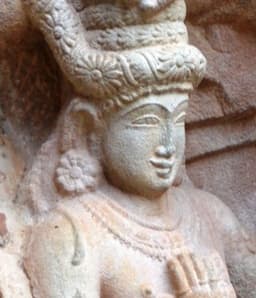
Rajendra Chola I
Emperor · Medieval
82.2Total
Basic Information
Born
-304
971
Died
-232
1044
Era
Ancient
Medieval
Nationality
India
India
Occupation
Emperor
Emperor
Civilization
Indian
Indian
Score Comparison
Military (10%)
72.0
84.7
Political (20%)
82.0
82.0
Influence (20%)
71.0
84.0
Legacy (20%)
90.0
84.0
Leadership (15%)
72.0
78.0
Strategy (15%)
58.0
77.6
TOTAL
76.3
82.2
Ashoka the Great — Complete Timeline
261 BC
Kalinga WarWar
Ashoka launched a brutal conquest of the Kalinga region (modern Odisha). The war caused massive casualties, with over 100,000 killed and 150,000 deported. The suffering witnessed during this campaign led Ashoka to renounce military conquest and embrace Buddhism.
ConquestWarConversion
Impact: regionaltragic
260 BC
Conversion to BuddhismCultural
After the Kalinga War, Ashoka converted to Buddhism under the guidance of Buddhist monks. He adopted the principle of Dhamma (righteous law) and began promoting non-violence, vegetarianism, and religious tolerance throughout his empire.
ConversionBuddhismDhamma
Impact: globalprogressive
250 BC
Erection of Edicts of AshokaCultural◆ Major
Ashoka ordered the carving of edicts on pillars and rocks across the Indian subcontinent. These inscriptions, written in Prakrit and other languages, proclaimed his policies of non-violence, social welfare, and religious harmony. They are the earliest deciphered written records from ancient India.
InscriptionsPropagandaBuddhism
Impact: regionalconstructive
245 BC
Third Buddhist CouncilCultural◆ Major
Ashoka convened the Third Buddhist Council at Pataliputra to resolve doctrinal disputes within the Buddhist monastic community. The council standardized the Buddhist canon (Tripitaka) and decided to send missionaries abroad, including to Sri Lanka and Southeast Asia.
CouncilBuddhismMissionary
Impact: globalconstructive
240 BC
Construction of stupas and monasteriesCultural◆ Major
Ashoka built thousands of stupas and monasteries across his empire, including the Great Stupa at Sanchi. These structures became centers of Buddhist worship and pilgrimage, spreading Buddhist art and architecture throughout Asia.
ArchitectureBuddhismPatronage
Impact: regionalconstructive
Rajendra Chola I — Complete Timeline
1014 AD
Accession to the Chola ThronePolitical Action
Rajendra Chola I succeeded his father Raja Raja Chola I as emperor of the Chola Empire. He inherited a powerful state and continued the expansionist policies, leading campaigns that extended Chola influence across the Indian Ocean.
Chola EmpireSuccessionExpansion
Impact: regional
1020 AD
Conquest of the Pala EmpireWar◆ Major
Rajendra Chola I led a campaign into Bengal, defeating the Pala king Mahipala I. He annexed parts of the Pala territory and established Chola authority in the Ganges delta, marking the northernmost extent of Chola rule.
Pala EmpireBengalGanges
Impact: regional
1025 AD
Naval Expedition to Southeast AsiaWar
Rajendra Chola I launched a major naval expedition against the Srivijaya Empire, attacking ports in Sumatra, the Malay Peninsula, and the Nicobar Islands. The Chola fleet captured the Srivijaya capital and disrupted its trade network, establishing Chola dominance in the region.
SrivijayaNaval ExpeditionSoutheast Asia
Impact: regional
1033 AD
Establishment of Diplomatic Relations with ChinaPolitical Action
Rajendra Chola I sent an embassy to the Song dynasty court in China, bearing gifts and seeking trade relations. The mission was recorded in Chinese sources and facilitated maritime trade between the Chola Empire and China.
ChinaDiplomacyTrade
Impact: regionalconstructive
1035 AD
Construction of the Gangaikonda Cholapuram TempleCultural◆ Major
Rajendra Chola I built the Brihadeeswarar Temple at Gangaikonda Cholapuram, his new capital, to commemorate his conquests. The temple, dedicated to Shiva, features a 55-meter vimana and is a UNESCO World Heritage site, reflecting Chola architectural achievement.
Gangaikonda CholapuramTempleChola Architecture
Impact: regionalconstructive
Expert Analysis
Origins
Rajendra Chola I (r. 1014–1044 CE) was born into the powerful Chola dynasty of southern India, inheriting a kingdom already dominant in the region. His father, Rajaraja Chola I, had laid the foundations of a naval empire. Ashoka the Great (r. 268–232 BCE) was the third emperor of the Maurya dynasty, grandson of Chandragupta Maurya. He inherited a vast empire from his father Bindusara, but his early reign was marked by brutal expansionism. Both were born into imperial families, but Ashoka's path was transformed by moral awakening.
Rise to Power
Rajendra Chola I ascended the throne after his father's death, continuing military campaigns to expand Chola influence. He conquered the Pala Empire in Bengal, the Sri Vijaya kingdom in Southeast Asia, and even parts of the Malay Archipelago. His naval expedition to Southeast Asia was unprecedented for an Indian ruler. Ashoka's rise was more dramatic: he initially consolidated power through ruthless warfare, culminating in the Kalinga War (c. 261 BCE). The devastation of Kalinga caused him immense remorse, leading to his conversion to Buddhism and a complete reversal of policy.
Leadership & Governance
Rajendra Chola I was a master of military logistics and administration. He built the city of Gangaikonda Cholapuram as his capital, complete with a massive temple. He established diplomatic relations with China, fostering trade and cultural exchange. His governance was centralized but efficient, with a strong bureaucracy. Ashoka, after his conversion, governed through the principles of Dhamma (righteousness). He erected edicts throughout his empire promoting non-violence, religious tolerance, and social welfare. He created a network of officials (Dhamma Mahamattas) to enforce these principles. While Rajendra ruled by conquest and infrastructure, Ashoka ruled by moral suasion and welfare.
Triumph & Tragedy
Rajendra's greatest triumph was his naval expedition that subdued the Srivijaya empire, securing trade routes and spreading Chola influence. He also defeated the Pala king Mahipala, expanding Chola territory to the Ganges. His construction of the Brihadeeswarar Temple (Gangaikonda Cholapuram) remains an architectural marvel. However, his relentless conquests may have overstretched resources, and after his death, the Chola empire gradually declined. Ashoka's triumph was the transformation of his own character and the establishment of a humane empire. The tragedy is that his Dhamma policy did not long survive him; the Maurya empire fragmented within 50 years of his death. Both rulers left legacies that outlasted their immediate political structures.
Character & Destiny
Rajendra Chola I was ambitious, strategic, and culturally sophisticated. He was a warrior-king who also patronized art and architecture. His destiny was to be the greatest Chola emperor, remembered for expanding Indian influence overseas. Ashoka's character is more complex: he started as a ruthless conqueror (Chandashoka) and became a benevolent reformer (Dhammashoka). His destiny was to be remembered as a unique ruler who prioritized ethics over empire. In terms of impact on world history, Ashoka's promotion of Buddhism had a lasting effect on Asia, while Rajendra's naval achievements were pioneering but less globally transformative.
Legacy
Rajendra Chola I is remembered as the first Indian ruler to project power across the Bay of Bengal. His temple at Gangaikonda Cholapuram is a UNESCO World Heritage site. He is a symbol of Tamil pride and medieval Indian naval prowess. Ashoka's legacy is more philosophical: his edicts provide early evidence of a ruler's commitment to non-violence. The Ashoka Chakra (wheel) is a national symbol of India. Both are studied for their contrasting approaches: Rajendra as a conqueror, Ashoka as a peacemaker. In a historical comparison, Rajendra scores higher in military and imperial metrics, but Ashoka's moral legacy arguably has broader significance.
Conclusion
Rajendra Chola I and Ashoka the Great represent two peaks of Indian civilization: one of expansion and cultural diffusion, the other of introspection and ethical governance. Rajendra's numerical scores (M=85, P=82, I=84, L=84, D=78, S=78, T=82) edge out Ashoka's (M=72, P=82, I=71, L=90, D=72, S=58, T=76) by 5.9 points. However, Ashoka's 'Leadership' score (90) is higher, reflecting his unique transformation. Ultimately, Rajendra Chola I is the greater conqueror, but Ashoka the Great is the greater moral leader. The comparison reveals that greatness can be measured in different dimensions: territorial versus spiritual.
Rankings
🥇
Rajendra Chola ILeader
Mil: 84.7Pol: 82.0Inf: 84.0
82.2
🥈
Ashoka the Great
Mil: 72.0Pol: 82.0Inf: 71.0
76.3
+5.9 behind
How This Comparison Works
Algorithm
Each figure is scored on 6 dimensions (0—100 scale) based on structured historical data: Military (10%), Political (20%), Influence (20%), Legacy (20%), Leadership (15%), Strategy (15%). The weighted total produces the final ranking.
Data Sources
Scores are computed from structured sub-indicators in the database. Scale factors adjust for era (Ancient ×0.85, Modern ×1.0) and civilization size (Eastern ×1.05, Other ×0.80) to account for differences in population and military scale.
Maximum 3 Figures
Comparisons are limited to 2—3 figures to ensure readability and statistical meaningfulness.
Error Margins
±5 points per dimension — Sub-scores are derived from historical records with inherent uncertainty. Two figures within 5 points on a dimension should be considered roughly equivalent in that area.
Total Score Accuracy
±3 points overall — The weighted combination of 6 dimensions produces a total score with approximately ±3 points of uncertainty. Differences of less than 3 points are not statistically significant— the figures are effectively tied.
Known Limitations
- Historical records are incomplete and uneven across civilizations
- Figures from oral-tradition societies may be underrepresented
- Occupation labels can misclassify multi-role figures
- Scores measure capability and impact, not moral character
- Quantitative scoring is a comparison tool, not absolute truth
Capability Radar
Military (10%) — Battles & Warfare
Battles
85
95
Win Rate
90
98
Expansion
95
95
Political (20%) — Governance & Reform
Reform
95
88
Diplomacy
90
85
Economy
85
92
Influence (20%) — Cultural & Global Reach
Cultural
95
85
Global
90
85
Legacy (20%) — Historical Impact
Historical
95
88
Longevity
95
80
Leadership (15%) — Power & Stability
Tenure
90
90
Stability
90
90
Strategy (15%) — Tactics & Innovation
Strategy
80
92
Tactics
75
90
Reform
70
85
Similar Comparisons
Comments & Discussion
No comments yet. Be the first to share your thoughts!