Loading...
Ashoka the Great vs Mao Zedong
Mao Zedong leads by 3.1 pts · 2 figures compared
…

Ashoka the Great
Emperor · Ancient
76.3Total
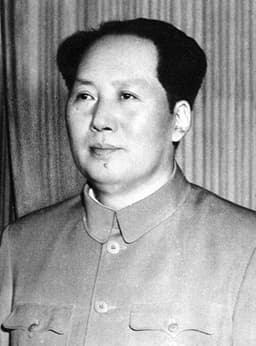
Mao Zedong
Politician · Modern
79.4Total
Basic Information
Born
-304
1893
Died
-232
1976
Era
Ancient
Modern
Nationality
India
China
Occupation
Emperor
Politician
Civilization
Indian
Eastern
Score Comparison
Military (10%)
72.0
75.0
Political (20%)
82.0
88.0
Influence (20%)
71.0
85.0
Legacy (20%)
90.0
70.0
Leadership (15%)
72.0
85.0
Strategy (15%)
58.0
72.0
TOTAL
76.3
79.4
Ashoka the Great — Complete Timeline
261 BC
Kalinga WarWar
Ashoka launched a brutal conquest of the Kalinga region (modern Odisha). The war caused massive casualties, with over 100,000 killed and 150,000 deported. The suffering witnessed during this campaign led Ashoka to renounce military conquest and embrace Buddhism.
ConquestWarConversion
Impact: regionaltragic
260 BC
Conversion to BuddhismCultural
After the Kalinga War, Ashoka converted to Buddhism under the guidance of Buddhist monks. He adopted the principle of Dhamma (righteous law) and began promoting non-violence, vegetarianism, and religious tolerance throughout his empire.
ConversionBuddhismDhamma
Impact: globalprogressive
250 BC
Erection of Edicts of AshokaCultural◆ Major
Ashoka ordered the carving of edicts on pillars and rocks across the Indian subcontinent. These inscriptions, written in Prakrit and other languages, proclaimed his policies of non-violence, social welfare, and religious harmony. They are the earliest deciphered written records from ancient India.
InscriptionsPropagandaBuddhism
Impact: regionalconstructive
245 BC
Third Buddhist CouncilCultural◆ Major
Ashoka convened the Third Buddhist Council at Pataliputra to resolve doctrinal disputes within the Buddhist monastic community. The council standardized the Buddhist canon (Tripitaka) and decided to send missionaries abroad, including to Sri Lanka and Southeast Asia.
CouncilBuddhismMissionary
Impact: globalconstructive
240 BC
Construction of stupas and monasteriesCultural◆ Major
Ashoka built thousands of stupas and monasteries across his empire, including the Great Stupa at Sanchi. These structures became centers of Buddhist worship and pilgrimage, spreading Buddhist art and architecture throughout Asia.
ArchitectureBuddhismPatronage
Impact: regionalconstructive
Mao Zedong — Complete Timeline
1934 AD
Long MarchWar
Mao Zedong led the Chinese Red Army on a strategic retreat from Nationalist forces, covering approximately 6,000 miles over 370 days. The march solidified Mao's leadership within the Chinese Communist Party and became a foundational myth of the Communist revolution.
Chinese Civil WarCommunist RevolutionRetreat
Impact: national
1949 AD
Proclamation of the People's Republic of ChinaPolitical Action
Mao Zedong declared the founding of the People's Republic of China from Tiananmen Gate in Beijing. This ended the Chinese Civil War and established Communist rule over mainland China, with Mao as Chairman of the Central People's Government.
Founding of PRCCommunist VictoryRevolution
Impact: global
1958 AD
Great Leap ForwardReform◆ Major
Mao launched a campaign to rapidly industrialize China and collectivize agriculture. The policy led to widespread mismanagement, resulting in a famine that caused an estimated 15-45 million deaths between 1959 and 1961.
FamineIndustrializationCollectivization
Impact: nationaldestructive
1960 AD
Sino-Soviet SplitPolitical Action◆ Major
Mao's ideological differences with Soviet leader Nikita Khrushchev led to a breakdown in relations between China and the Soviet Union. The split ended the Sino-Soviet alliance and reshaped global Cold War dynamics, with China pursuing an independent path.
Cold WarIdeological ConflictAlliance Breakdown
Impact: global
1966 AD
Cultural RevolutionPolitical Action
Mao initiated a sociopolitical movement to purge capitalist and traditional elements from Chinese society. The Red Guard youth groups attacked intellectuals and officials, leading to widespread violence, destruction of cultural artifacts, and an estimated 1-2 million deaths.
Political PurgeSocial UpheavalRed Guard
Impact: nationaldestructive
1971 AD
Ping-Pong DiplomacyCultural◆ Major
Mao approved an invitation for the U.S. table tennis team to visit China, initiating a thaw in Sino-American relations. This cultural exchange paved the way for President Nixon's visit to China in 1972 and the eventual normalization of diplomatic ties.
DiplomacyU.S.-China RelationsCultural Exchange
Impact: globalconstructive
Expert Analysis
Origins
Mao Zedong (1893–1976) was born into a peasant family in Shaoshan, Hunan, during the decline of the Qing dynasty. He was a founding member of the Chinese Communist Party (CCP) in 1921, and his early political activism was shaped by Marxist-Leninist ideology and the brutal realities of Chinese society under warlords and foreign imperialism. Ashoka the Great (304–232 BCE) was born into the Maurya dynasty, the grandson of Chandragupta Maurya, who founded the first pan-Indian empire. Ashoka was a skilled warrior and administrator from his youth, but his early reign was marked by ruthless expansionism. Both leaders emerged from turbulent times: Mao from a fractured China, Ashoka from a consolidating empire.
Rise to Power
Mao rose through the ranks of the CCP, advocating for peasant-based revolution rather than urban insurrection. He led the Long March (1934-35), a turning point that solidified his leadership. After the Japanese invasion and civil war, Mao proclaimed the People's Republic of China in 1949, becoming its paramount leader. Ashoka ascended the throne around 268 BCE after a succession struggle. He expanded the Maurya empire through conquest, most notably the Kalinga War (c. 261 BCE), which caused massive casualties and became a turning point in his life. The war's brutality led Ashoka to embrace Buddhism and renounce military aggression.
Leadership & Governance
Mao's governance was transformative but highly disruptive. He implemented land reforms and industrialization through the Great Leap Forward (1958-62), which led to widespread famine (estimated 15-45 million deaths). The Cultural Revolution (1966-76) purged perceived enemies and destroyed cultural heritage, causing social chaos. He centralized power under the CCP and his cult of personality. Ashoka's governance was characterized by the promotion of Dhamma (righteousness), based on Buddhist principles. He erected Edicts of Ashoka on pillars and rocks across his empire, advocating non-violence, religious tolerance, and social welfare. He built hospitals, roads, and rest houses, and banned animal sacrifices. His rule is considered a golden age of peace and prosperity.
Triumph & Tragedy
Mao's triumphs include unifying China under communist rule, ending foreign domination, and establishing a strong central state. However, his policies caused immense human suffering: the Great Leap Forward famine and Cultural Revolution violence. His legacy is deeply contested. Ashoka's triumph was the creation of a peaceful, united empire after the Kalinga War. His tragedy is that his empire fragmented within decades of his death. His conversion to Buddhism was a personal and political triumph, but his later edicts show a ruler struggling to balance idealism with practical governance.
Character & Destiny
Mao was a charismatic, ruthless, and ideologically driven leader. He was a poet and philosopher but also a pragmatist who could be cruel. His destiny was to reshape China and influence global communism. Ashoka was initially a violent conqueror, but his transformation after Kalinga made him a symbol of moral leadership. His edicts reveal a ruler concerned with his legacy and the well-being of his subjects. Both men were complex, but Ashoka's character is more consistent with his later principles.
Legacy
Mao's legacy is polarizing: he modernized China but at a great human cost. He is revered by the CCP as a founding father, but his policies are now critically reassessed. His impact on China's political system and global geopolitics is undeniable. Ashoka's legacy is largely positive: he is remembered as a model of benevolent rule and a patron of Buddhism. His edicts are among the earliest historical documents in South Asia. He inspired later leaders like Mahatma Gandhi. However, his empire's collapse shows the limitations of his policies.
Conclusion
Mao Zedong scores higher overall (3.1 point gap) due to his greater impact on world history and his role in shaping modern China. However, Ashoka's moral legacy and long-term influence on Buddhism and governance principles are profound. Mao's score: M=75, P=88, I=85, L=70, D=85, S=72, T=79. Ashoka's: M=72, P=82, I=71, L=90, D=72, S=58, T=76. The choice between them depends on valuing transformative impact (Mao) versus ethical governance (Ashoka). This analysis gives a slight edge to Mao for historical weight, but Ashoka remains a more admirable figure in terms of personal evolution and ideals.
Rankings
🥇
Mao ZedongLeader
Mil: 75.0Pol: 88.0Inf: 85.0
79.4
🥈
Ashoka the Great
Mil: 72.0Pol: 82.0Inf: 71.0
76.3
+3.1 behind
How This Comparison Works
Algorithm
Each figure is scored on 6 dimensions (0—100 scale) based on structured historical data: Military (10%), Political (20%), Influence (20%), Legacy (20%), Leadership (15%), Strategy (15%). The weighted total produces the final ranking.
Data Sources
Scores are computed from structured sub-indicators in the database. Scale factors adjust for era (Ancient ×0.85, Modern ×1.0) and civilization size (Eastern ×1.05, Other ×0.80) to account for differences in population and military scale.
Maximum 3 Figures
Comparisons are limited to 2—3 figures to ensure readability and statistical meaningfulness.
Error Margins
±5 points per dimension — Sub-scores are derived from historical records with inherent uncertainty. Two figures within 5 points on a dimension should be considered roughly equivalent in that area.
Total Score Accuracy
±3 points overall — The weighted combination of 6 dimensions produces a total score with approximately ±3 points of uncertainty. Differences of less than 3 points are not statistically significant— the figures are effectively tied.
Known Limitations
- Historical records are incomplete and uneven across civilizations
- Figures from oral-tradition societies may be underrepresented
- Occupation labels can misclassify multi-role figures
- Scores measure capability and impact, not moral character
- Quantitative scoring is a comparison tool, not absolute truth
Capability Radar
Military (10%) — Battles & Warfare
Battles
85
85
Win Rate
90
80
Expansion
95
85
Political (20%) — Governance & Reform
Reform
95
95
Diplomacy
90
80
Economy
85
70
Influence (20%) — Cultural & Global Reach
Cultural
95
90
Global
90
90
Legacy (20%) — Historical Impact
Historical
95
95
Longevity
95
85
Leadership (15%) — Power & Stability
Tenure
90
95
Stability
90
60
Strategy (15%) — Tactics & Innovation
Strategy
80
85
Tactics
75
75
Reform
70
90
Similar Comparisons
Comments & Discussion
No comments yet. Be the first to share your thoughts!