Loading...
Arduin of Ivrea vs Gao Wei
Arduin of Ivrea leads by 1.3 pts · 2 figures compared
…

Arduin of Ivrea
Emperor · Medieval
41.9Total
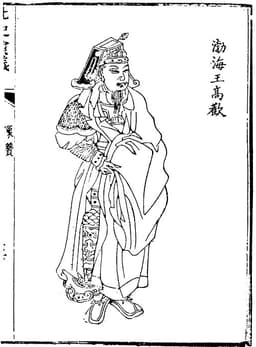
Gao Wei
Emperor · Medieval
40.6Total
Basic Information
Born
955
557
Died
1015
577
Era
Medieval
Medieval
Nationality
Italy
China
Occupation
Emperor
Emperor
Civilization
Western
Eastern
Score Comparison
Military (10%)
50.0
50.0
Political (20%)
33.6
26.4
Influence (20%)
47.1
45.5
Legacy (20%)
35.8
35.8
Leadership (15%)
49.9
49.9
Strategy (15%)
36.8
38.6
TOTAL
41.9
40.6
Arduin of Ivrea — Complete Timeline
1002 AD
Proclaimed King of ItalyPolitical Action◆ Major
After the death of Emperor Otto III, Arduin of Ivrea was proclaimed King of Italy by the Lombard nobility in Pavia. This act challenged the authority of the German king Henry II, who claimed the Italian throne.
CoronationItalyRivalry
Impact: regional
1004 AD
Defeated by Henry II at the Battle of the Po RiverWar◆ Major
Arduin was defeated by Henry II's forces near the Po River. This military loss forced Arduin to retreat to his margraviate of Ivrea, effectively ending his claim to the Italian throne and allowing Henry II to be crowned King of Italy.
BattleHenry IIDefeat
Impact: regionaltragic
1014 AD
Excommunication by Pope Benedict VIIIPolitical Action
Arduin was excommunicated by Pope Benedict VIII for his continued resistance against Henry II. This ecclesiastical condemnation isolated Arduin politically and religiously, contributing to his eventual surrender and retirement.
ExcommunicationPapacyConflict
Impact: regionaldestructive
1015 AD
Retirement to a MonasteryOther
After years of failed resistance, Arduin retired to the Abbey of Fruttuaria, where he died as a monk. His retirement marked the end of the last major Italian challenge to German rule in the early 11th century.
RetirementItalyEnd of Resistance
Impact: regional
Gao Wei — Complete Timeline
565 AD
Accession as Emperor of Northern QiPolitical Action◆ Major
Gao Wei ascended the throne as emperor of Northern Qi at age eight, with his mother Empress Dowager Hu and officials serving as regents. His reign was marked by incompetence, corruption, and neglect of state affairs, leading to the dynasty's decline.
Northern QiSuccessionDecline
Impact: national
577 AD
Defeat and capture by Northern ZhouWar
Northern Zhou forces under Emperor Wu conquered Northern Qi. Gao Wei was captured and later executed, ending the Northern Qi dynasty. His incompetence, including favoring eunuchs and neglecting defense, was a major cause of the defeat.
Northern QiConquestExecution
Impact: regionaltragic
Expert Analysis
Origins
Arduin of Ivrea was born around 955 into the powerful Arduinici family, margraves of Ivrea in northwestern Italy. His father, Dado, was a count, and his mother came from the influential Canossa family. Arduin inherited the margraviate in 990, controlling a strategic region between the Alps and the Po Valley. His early life was shaped by the feudal politics of the Holy Roman Empire, where local lords vied for autonomy against imperial authority.
Gao Wei was born in 557 as the son of Emperor Wucheng of Northern Qi, a Chinese dynasty ruling the eastern plains. His family, the Gao clan, had risen from military service to imperial power. Gao Wei's mother was Empress Dowager Hu, a woman of ambition. He grew up in the lavish courts of Ye, surrounded by eunuchs and concubines, receiving a traditional Confucian education but showing little interest in governance. His early life was marked by the intense factionalism and corruption that plagued the Northern Qi court.
Rise to Power
Arduin rose to prominence after the death of Emperor Otto III in 1002. With no clear heir, the Lombard nobility elected Arduin as King of Italy in Pavia, seeking to reassert local independence from German rule. This coronation challenged Henry II, the newly elected German king, who claimed the Italian throne. Arduin's support came from the northern Italian cities and feudal lords who resented German interference. His rise was swift but fragile, lacking the military resources to match Henry's forces.
Gao Wei ascended the throne at age eight in 565, following his father's abdication. His reign began with regents, including his mother and the official He Shikai. Gao Wei's rise was dynastic, not earned. He inherited a kingdom already in decline due to previous mismanagement. His early years saw power struggles between the empress dowager and various officials, with Gao Wei increasingly indulging in pleasures and neglecting state affairs. By his teens, he had executed or exiled competent ministers, relying on favorites like the eunuch Mu Tipo.
Leadership & Governance
Arduin's leadership was feudal and martial. He ruled through personal bonds with Lombard lords, granting lands and privileges to secure loyalty. He minted coins and issued charters, asserting royal authority. However, his governance lacked administrative depth; he could not raise a standing army or collect taxes effectively. His strategy against Henry II relied on defensive warfare, holding castles and avoiding open battle. When Henry invaded in 1004, Arduin's forces melted away, and he retreated to Ivrea. His excommunication by Pope Benedict VIII in 1014 further eroded his legitimacy, as the Church sided with Henry.
Gao Wei's governance was erratic and corrupt. He raised taxes to fund his lavish lifestyle, alienating the peasantry and nobility alike. He appointed unqualified favorites to high offices, leading to administrative decay. The military suffered from neglected pay and equipment, while border defenses weakened. Gao Wei's political score of 26.4 reflects his inability to manage the state. He purged capable generals like Hulü Guang, who had defeated Northern Zhou incursions, leaving the kingdom vulnerable. His leadership was passive, delegating authority to eunuchs and sycophants who exploited the populace.
Triumph & Tragedy
Arduin's greatest triumph was his coronation as King of Italy in 1002, a symbolic assertion of Lombard identity against German dominance. For a brief period, he united the fractious Italian nobility. His tragedy was his inability to sustain that unity. The defeat at the Battle of the Po River in 1004 ended his military threat. Excommunication isolated him, and by 1014, he retired to the Abbey of Fruttuaria, dying there in 1015. His failure to build a durable state left Italy under German control for centuries.
Gao Wei's sole triumph was surviving to adulthood as emperor, given the high mortality of Northern Qi rulers. His reign saw no significant victories; rather, the Northern Zhou conquest in 577 led to his capture and execution. The tragedy was the complete collapse of a dynasty that had once fielded powerful armies. Gao Wei's incompetence directly caused the fall, as he ignored warnings and refused to mobilize defenses. He scored 40.6 overall, with military and leadership scores around 50, but political and strategy scores below 40, highlighting his fatal weaknesses.
Character & Destiny
Arduin was a determined but inflexible figure, typical of feudal lords who prized honor over pragmatism. He chose to fight Henry II despite overwhelming odds, refusing to submit or negotiate. His decision to become a monk suggests a religious turn, but also acceptance of defeat. Historical assessments view him as a last gasp of Lombard independence, doomed by the superior resources of the German monarchy. His character was noble but ineffective.
Gao Wei was dissolute and willfully ignorant, preferring pleasure to duty. He ignored state affairs and surrounded himself with flatterers. His destiny was sealed by his own choices: executing the capable general Hulü Guang in 572 removed the last obstacle to Northern Zhou invasion. Chinese historians vilify him as a classic 'bad last emperor,' whose vices doomed his dynasty. His character was self-indulgent and short-sighted, leading to a predictable downfall.
Legacy
Arduin's legacy is minor but symbolic. He is remembered as the last Lombard king to challenge German rule, a figure of resistance in Italian historiography. His actions influenced later Italian movements for independence, but his direct impact was nil: after his defeat, the German emperors tightened control over Italy. His legacy score of 35.8 reflects limited enduring influence.
Gao Wei's legacy is overwhelmingly negative. He is cited as a cautionary tale of imperial decay, the architect of Northern Qi's destruction. His reign accelerated the unification of China under the Sui and Tang dynasties by eliminating a rival state. The Northern Qi's fall allowed the Northern Zhou to consolidate the north, leading to the Sui reunification in 589. Thus, his legacy indirectly shaped Chinese history, scoring 35.8 in legacy but with greater historical significance than Arduin.
Conclusion
Arduin of Ivrea and Gao Wei both ruled briefly and failed, but their impacts differ. Arduin's rebellion was a local setback, while Gao Wei's incompetence led to the fall of a major dynasty. Gao Wei's political score of 26.4 versus Arduin's 33.6 indicates worse governance, but Gao Wei's actions had wider consequences: the end of Northern Qi enabled Chinese reunification. Arduin's defeat merely affirmed German dominance in Italy. Therefore, Gao Wei had greater impact, albeit negative, by altering the course of Chinese history. Arduin's resistance was a footnote, while Gao Wei's failure was a turning point. The data supports this: Gao Wei's influence score of 45.5 is slightly below Arduin's 47.1, but his strategic score of 38.6 versus 36.8 suggests more consequential decisions. Ultimately, Gao Wei's legacy is more significant due to the scale of his failure.
Rankings
🥇
Arduin of IvreaLeader
Mil: 50.0Pol: 33.6Inf: 47.1
41.9
🥈
Gao Wei
Mil: 50.0Pol: 26.4Inf: 45.5
40.6
+1.3 behind
How This Comparison Works
Algorithm
Each figure is scored on 6 dimensions (0—100 scale) based on structured historical data: Military (10%), Political (20%), Influence (20%), Legacy (20%), Leadership (15%), Strategy (15%). The weighted total produces the final ranking.
Data Sources
Scores are computed from structured sub-indicators in the database. Scale factors adjust for era (Ancient ×0.85, Modern ×1.0) and civilization size (Eastern ×1.05, Other ×0.80) to account for differences in population and military scale.
Maximum 3 Figures
Comparisons are limited to 2—3 figures to ensure readability and statistical meaningfulness.
Error Margins
±5 points per dimension — Sub-scores are derived from historical records with inherent uncertainty. Two figures within 5 points on a dimension should be considered roughly equivalent in that area.
Total Score Accuracy
±3 points overall — The weighted combination of 6 dimensions produces a total score with approximately ±3 points of uncertainty. Differences of less than 3 points are not statistically significant— the figures are effectively tied.
Known Limitations
- Historical records are incomplete and uneven across civilizations
- Figures from oral-tradition societies may be underrepresented
- Occupation labels can misclassify multi-role figures
- Scores measure capability and impact, not moral character
- Quantitative scoring is a comparison tool, not absolute truth
Capability Radar
Military (10%) — Battles & Warfare
Battles
15
5
Win Rate
20
5
Expansion
10
0
Political (20%) — Governance & Reform
Reform
5
0
Diplomacy
15
5
Economy
5
5
Influence (20%) — Cultural & Global Reach
Cultural
5
5
Global
5
5
Legacy (20%) — Historical Impact
Historical
10
10
Longevity
5
5
Leadership (15%) — Power & Stability
Tenure
10
10
Stability
5
5
Strategy (15%) — Tactics & Innovation
Strategy
10
5
Tactics
15
5
Reform
5
0
Similar Comparisons
Comments & Discussion
No comments yet. Be the first to share your thoughts!