Loading...
This comparison has not been analyzed yet.
One-time AI generation (~1 minute). Scores and timeline are already available below.
Apolinario Mabini vs Yi Wan-yong
Apolinario Mabini leads by 12.3 pts · 2 figures compared
…
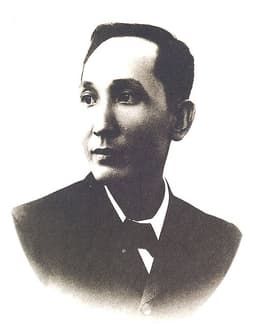
Apolinario Mabini
Politician · Modern
53.6Total
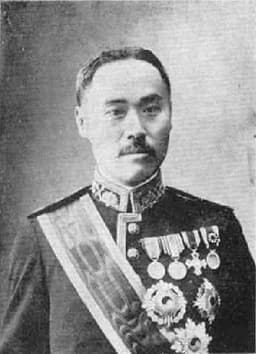
Yi Wan-yong
Politician · Modern
41.3Total
Basic Information
Born
1864
1858
Died
1903
1926
Era
Modern
Modern
Nationality
Philippines
Korea
Occupation
Politician
Politician
Civilization
Eastern
Eastern
Score Comparison
Military (10%)
18.4
15.7
Political (20%)
68.0
32.1
Influence (20%)
58.3
47.1
Legacy (20%)
58.0
37.5
Leadership (15%)
62.2
67.0
Strategy (15%)
31.3
37.3
TOTAL
53.6
41.3
Apolinario Mabini — Complete Timeline
1898 AD
Authored the Constitutional Program of the Philippine RepublicPolitical Action◆ Major
Mabini wrote the 'Constitutional Program of the Philippine Republic' in 1898, outlining the principles of the revolutionary government. His writings influenced the Malolos Constitution and the establishment of the First Philippine Republic.
Philippine HistoryConstitutionRevolution
Impact: nationalconstructive
1899 AD
Appointed as Prime Minister of the First Philippine RepublicPolitical Action◆ Major
Apolinario Mabini was appointed as the first Prime Minister of the First Philippine Republic on January 2, 1899, by President Emilio Aguinaldo. He served as the de facto head of government during the Philippine-American War.
Philippine HistoryFirst RepublicGovernment
Impact: nationalconstructive
1901 AD
Captured by American Forces and ExiledPolitical Action◆ Major
Mabini was captured by American forces on December 10, 1901, and exiled to Guam. He refused to swear allegiance to the United States, remaining a symbol of resistance. He was allowed to return to the Philippines in 1903.
Philippine HistoryExileResistance
Impact: nationaltragic
1903 AD
Died of Cholera Shortly After ReturnOther◆ Major
Apolinario Mabini died of cholera on May 13, 1903, shortly after returning from exile in Guam. His death at age 38 cut short his political career, but he is remembered as the 'Sublime Paralytic' and a key intellectual of the Philippine Revolution.
Philippine HistoryDeathRevolutionary
Impact: nationaltragic
Yi Wan-yong — Complete Timeline
1905 AD
Signing of the Japan-Korea Protectorate TreatyPolitical Action◆ Major
Yi Wan-yong, as Minister of Education, was one of five Korean ministers who signed the Eulsa Treaty, which made Korea a protectorate of Japan. This treaty stripped Korea of its diplomatic sovereignty and was widely opposed by the Korean public and many officials.
ProtectorateJapanese ImperialismCollaboration
Impact: nationaldestructive
1907 AD
Yi Wan-yong's role in the dissolution of the Korean armyPolitical Action◆ Major
As Prime Minister, Yi Wan-yong supported the Japanese demand to disband the Korean Imperial Army. This action left Korea defenseless against Japanese control and sparked the Righteous Army uprising, a guerrilla resistance movement.
Military DisbandmentResistanceJapanese Control
Impact: nationaldestructive
1910 AD
Signing of the Japan-Korea Annexation TreatyPolitical Action
Yi Wan-yong, as Prime Minister of Korea, signed the treaty that formally annexed Korea into the Japanese Empire. The treaty was signed under duress and without the consent of King Gojong, leading to Yi's condemnation as a traitor by many Koreans.
AnnexationJapanese Colonial RuleCollaboration
Impact: nationaldestructive
This comparison has not been analyzed yet.
One-time AI generation (~1 minute). Scores and timeline are already available below.
Rankings
🥇
Apolinario MabiniLeader
Mil: 18.4Pol: 68.0Inf: 58.3
53.6
🥈
Yi Wan-yong
Mil: 15.7Pol: 32.1Inf: 47.1
41.3
+12.3 behind
How This Comparison Works
Algorithm
Each figure is scored on 6 dimensions (0—100 scale) based on structured historical data: Military (10%), Political (20%), Influence (20%), Legacy (20%), Leadership (15%), Strategy (15%). The weighted total produces the final ranking.
Data Sources
Scores are computed from structured sub-indicators in the database. Scale factors adjust for era (Ancient ×0.85, Modern ×1.0) and civilization size (Eastern ×1.05, Other ×0.80) to account for differences in population and military scale.
Maximum 3 Figures
Comparisons are limited to 2—3 figures to ensure readability and statistical meaningfulness.
Error Margins
±5 points per dimension — Sub-scores are derived from historical records with inherent uncertainty. Two figures within 5 points on a dimension should be considered roughly equivalent in that area.
Total Score Accuracy
±3 points overall — The weighted combination of 6 dimensions produces a total score with approximately ±3 points of uncertainty. Differences of less than 3 points are not statistically significant— the figures are effectively tied.
Known Limitations
- Historical records are incomplete and uneven across civilizations
- Figures from oral-tradition societies may be underrepresented
- Occupation labels can misclassify multi-role figures
- Scores measure capability and impact, not moral character
- Quantitative scoring is a comparison tool, not absolute truth
Capability Radar
Military (10%) — Battles & Warfare
Battles
12
16
Win Rate
16
19
Expansion
19
22
Political (20%) — Governance & Reform
Reform
60
5
Diplomacy
55
5
Economy
30
5
Influence (20%) — Cultural & Global Reach
Cultural
65
5
Global
45
5
Legacy (20%) — Historical Impact
Historical
70
10
Longevity
55
5
Leadership (15%) — Power & Stability
Tenure
40
20
Stability
20
0
Strategy (15%) — Tactics & Innovation
Strategy
22
20
Tactics
27
26
Reform
30
28
Similar Comparisons
Comments & Discussion
No comments yet. Be the first to share your thoughts!