Loading...
Anxi Khan vs Mansa Wali Keita
Mansa Wali Keita leads by 11.4 pts · 2 figures compared
…
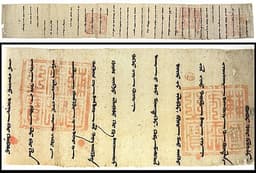
Anxi Khan
Emperor · Medieval
40.0Total

Mansa Wali Keita
Emperor · Medieval
51.4Total
Basic Information
Born
832
1240
Died
847
1270
Era
Medieval
Medieval
Nationality
Uyghur Khaganate
Mali Empire
Occupation
Emperor
Emperor
Civilization
Eastern
Other
Score Comparison
Military (10%)
50.0
25.0
Political (20%)
29.3
68.0
Influence (20%)
47.1
53.3
Legacy (20%)
37.5
45.0
Leadership (15%)
39.0
65.0
Strategy (15%)
35.7
43.3
TOTAL
40.0
51.4
Anxi Khan — Complete Timeline
840 AD
Collapse of the Uyghur KhaganateWar◆ Major
Anxi Khan's reign saw the final collapse of the Uyghur Khaganate after a Kyrgyz invasion. The Kyrgyz sacked the capital Ordu-Baliq and destroyed Uyghur power, forcing the Uyghurs to flee south and west, ending their empire.
CollapseKyrgyz InvasionEnd of Empire
Impact: regionaltragic
843 AD
Flight to the Tarim BasinPolitical Action◆ Major
After the fall of the Khaganate, Anxi Khan led a remnant of Uyghurs to the Tarim Basin, where they established the Kingdom of Qocho. This migration preserved Uyghur culture and led to the formation of the Uyghur states in Xinjiang.
MigrationUyghur DiasporaQocho
Impact: regional
847 AD
Death in ExileOther
Anxi Khan died in exile in the Tarim Basin, likely killed by local rivals or in a skirmish. His death marked the end of the Uyghur imperial line, though Uyghur successor states continued to exist in the region.
DeathExileEnd of Dynasty
tragic
Mansa Wali Keita — Complete Timeline
1255 AD
Expanded Mali's territory and tradePolitical Action◆ Major
Mansa Wali expanded the Mali Empire's borders, securing control over key gold-producing regions and trade routes. His reign saw increased commerce with North Africa, bringing wealth and stability to the empire.
ExpansionTrade
Impact: regionalconstructive
Reign as Mansa of MaliPolitical Action◆ Major
Mansa Wali succeeded his father Sundiata Keita as mansa. His reign was relatively short but effective, maintaining the empire's unity and prosperity. He is remembered as a capable ruler who strengthened Mali's foundations.
SuccessionRule
Impact: regionalconstructive
1260 AD
Performed Hajj pilgrimage to MeccaCultural◆ Major
Mansa Wali Keita (also known as Uli) became the first Mali emperor to undertake the Hajj. His pilgrimage showcased Mali's wealth and Islamic devotion, establishing diplomatic relations with the Mamluk Sultanate and other Muslim states.
PilgrimageIslamDiplomacy
Impact: regionalconstructive
Expert Analysis
Origins
Anxi Khan, the last khagan of the Uyghur Khaganate, was born into the Yaglakar clan around the early 9th century. Little is known of his early life, but he inherited a crumbling empire plagued by internal strife and external threats. The Uyghur Khaganate had dominated the steppe for a century, but by his reign, it was weakened by civil wars and the rising power of the Yenisei Kyrgyz. Anxi Khan's upbringing likely involved traditional steppe military training and exposure to Manichaeism, the state religion. In contrast, Mansa Wali Keita (also known as Wali or Uli) was born into the Keita dynasty of the Mali Empire, likely in the early 13th century. He was the son of Sundiata Keita, the legendary founder of the Mali Empire. Growing up in the imperial court, Wali was educated in Islamic scholarship and statecraft, preparing him for leadership in a growing West African empire.
Rise to Power
Anxi Khan ascended to the throne of the Uyghur Khaganate around 840 CE, a time of severe crisis. The Kyrgyz had been pressing from the north, and the Uyghur capital, Ordu-Baliq, was vulnerable. Anxi Khan's rise was not marked by great military victories but rather by desperate attempts to hold the empire together. In 848 CE, the Kyrgyz sacked Ordu-Baliq, forcing Anxi Khan to flee with a remnant of his people. He led them to the Tarim Basin, where they established the Kingdom of Qocho, a Buddhist Uyghur state. This migration preserved Uyghur identity but marked the end of their imperial power. Mansa Wali Keita rose to power after the death of his father, Sundiata, around 1255 CE. Sundiata had founded the Mali Empire after the Battle of Kirina in 1235. Wali inherited a stable, wealthy empire. His rise was smooth, supported by the military and court officials. He quickly consolidated power and embarked on a pilgrimage to Mecca, becoming the first Mali emperor to perform the Hajj. This act boosted his religious prestige and opened diplomatic and trade ties with the Islamic world.
Leadership & Governance
Anxi Khan's leadership was reactive and focused on survival. As the Khaganate collapsed, he made the strategic decision to retreat to the Tarim Basin, where he established a Buddhist kingdom. His governance in Qocho was likely a mix of Uyghur traditions and local customs, but his authority was limited. He scored 39.0 in leadership and 35.7 in strategy, reflecting his inability to prevent the empire's fall. In contrast, Mansa Wali Keita scored 65.0 in leadership and 43.3 in strategy. He governed the Mali Empire with a focus on expansion and economic growth. He secured control over gold-producing regions like Bambuk and Bure, and expanded trade routes across the Sahara. His pilgrimage to Mecca from 1260 to 1277 showcased Mali's wealth and strengthened Islamic ties. Wali also maintained the administrative systems established by Sundiata, ensuring stability. While Anxi Khan's governance was about managing decline, Wali's was about building prosperity.
Triumph & Tragedy
Anxi Khan's greatest achievement was leading the Uyghur migration to the Tarim Basin, preserving Uyghur culture and founding the Kingdom of Qocho, which lasted for centuries. However, his tragedy was the collapse of the Uyghur Khaganate, a catastrophic failure. He scored 50.0 in military but could not defend his capital. His death in exile, likely killed by local rivals, underscores his inability to secure a new homeland. Mansa Wali Keita's triumph was the successful Hajj pilgrimage, which elevated Mali's status in the Islamic world. He also expanded the empire's territory and trade. His tragedy is less dramatic: his reign was short (about 15 years), and he left no major architectural or cultural monuments. He scored 25.0 in military, indicating limited martial achievements compared to his father. However, his political score of 68.0 highlights his diplomatic success.
Character & Destiny
Anxi Khan's character was defined by resilience and pragmatism. Facing certain defeat, he chose retreat over annihilation, a decision that preserved Uyghur identity. Yet his inability to forge alliances or inspire loyalty led to his downfall. Historians view him as a tragic figure, a ruler overwhelmed by forces beyond his control. Mansa Wali Keita, by contrast, was a statesman rather than a warrior. He leveraged his father's legacy and focused on religious and economic diplomacy. His character was devout and ambitious, as seen in his Hajj. His destiny was to consolidate and expand an already powerful empire. Wali's scores (TOTAL 51.4) reflect a balanced but not exceptional ruler, while Anxi Khan's scores (TOTAL 40.0) reflect a leader of a failing state.
Legacy
Anxi Khan's legacy is mixed. The Kingdom of Qocho he founded became a center of Uyghur Buddhism and culture, but his name is often forgotten outside scholarly circles. The Uyghur Khaganate's collapse ended a major steppe empire. He scored 37.5 in legacy. Mansa Wali Keita's legacy is more enduring. He set a precedent for Mali emperors performing the Hajj, including his famous successor Mansa Musa. His expansion of trade routes enriched Mali for generations. He scored 45.0 in legacy. While Anxi Khan's impact was regional and temporary, Wali's actions contributed to Mali's golden age.
Conclusion
Mansa Wali Keita had a greater impact than Anxi Khan. With a total score of 51.4 compared to Anxi's 40.0, Wali's reign strengthened the Mali Empire, expanded its influence, and integrated it into the Islamic world. Anxi Khan, despite his resilience, presided over the collapse of his empire and his achievements were primarily about survival. Wali's political and leadership scores (68.0 and 65.0) far exceed Anxi's (29.3 and 39.0). While Anxi's military score (50.0) is higher than Wali's (25.0), his failure to defend his state negates that advantage. Wali's legacy of trade and pilgrimage had lasting effects, while Anxi's legacy is largely confined to Uyghur history. Therefore, Mansa Wali Keita is the more significant historical figure.
Rankings
🥇
Mansa Wali KeitaLeader
Mil: 25.0Pol: 68.0Inf: 53.3
51.4
🥈
Anxi Khan
Mil: 50.0Pol: 29.3Inf: 47.1
40.0
+11.4 behind
How This Comparison Works
Algorithm
Each figure is scored on 6 dimensions (0—100 scale) based on structured historical data: Military (10%), Political (20%), Influence (20%), Legacy (20%), Leadership (15%), Strategy (15%). The weighted total produces the final ranking.
Data Sources
Scores are computed from structured sub-indicators in the database. Scale factors adjust for era (Ancient ×0.85, Modern ×1.0) and civilization size (Eastern ×1.05, Other ×0.80) to account for differences in population and military scale.
Maximum 3 Figures
Comparisons are limited to 2—3 figures to ensure readability and statistical meaningfulness.
Error Margins
±5 points per dimension — Sub-scores are derived from historical records with inherent uncertainty. Two figures within 5 points on a dimension should be considered roughly equivalent in that area.
Total Score Accuracy
±3 points overall — The weighted combination of 6 dimensions produces a total score with approximately ±3 points of uncertainty. Differences of less than 3 points are not statistically significant— the figures are effectively tied.
Known Limitations
- Historical records are incomplete and uneven across civilizations
- Figures from oral-tradition societies may be underrepresented
- Occupation labels can misclassify multi-role figures
- Scores measure capability and impact, not moral character
- Quantitative scoring is a comparison tool, not absolute truth
Capability Radar
Military (10%) — Battles & Warfare
Battles
20
30
Win Rate
15
40
Expansion
10
45
Political (20%) — Governance & Reform
Reform
10
45
Diplomacy
20
50
Economy
10
55
Influence (20%) — Cultural & Global Reach
Cultural
10
35
Global
10
25
Legacy (20%) — Historical Impact
Historical
15
40
Longevity
10
30
Leadership (15%) — Power & Stability
Tenure
15
50
Stability
10
50
Strategy (15%) — Tactics & Innovation
Strategy
15
40
Tactics
20
35
Reform
10
30
Similar Comparisons
Comments & Discussion
No comments yet. Be the first to share your thoughts!