Loading...
Anxi Khan vs Emperor Seiwa
Emperor Seiwa leads by 9.2 pts · 2 figures compared
…
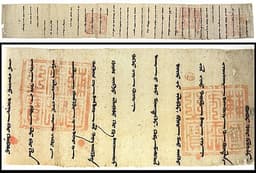
Anxi Khan
Emperor · Medieval
40.0Total
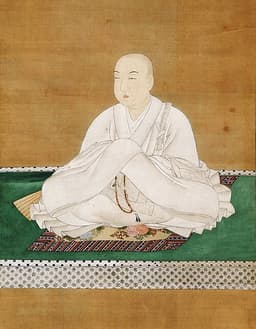
Emperor Seiwa
Emperor · Medieval
49.2Total
Basic Information
Born
832
850
Died
847
881
Era
Medieval
Medieval
Nationality
Uyghur Khaganate
Japan
Occupation
Emperor
Emperor
Civilization
Eastern
Eastern
Score Comparison
Military (10%)
50.0
54.6
Political (20%)
29.3
27.9
Influence (20%)
47.1
54.9
Legacy (20%)
37.5
52.0
Leadership (15%)
39.0
51.9
Strategy (15%)
35.7
50.0
TOTAL
40.0
49.2
Anxi Khan — Complete Timeline
840 AD
Collapse of the Uyghur KhaganateWar◆ Major
Anxi Khan's reign saw the final collapse of the Uyghur Khaganate after a Kyrgyz invasion. The Kyrgyz sacked the capital Ordu-Baliq and destroyed Uyghur power, forcing the Uyghurs to flee south and west, ending their empire.
CollapseKyrgyz InvasionEnd of Empire
Impact: regionaltragic
843 AD
Flight to the Tarim BasinPolitical Action◆ Major
After the fall of the Khaganate, Anxi Khan led a remnant of Uyghurs to the Tarim Basin, where they established the Kingdom of Qocho. This migration preserved Uyghur culture and led to the formation of the Uyghur states in Xinjiang.
MigrationUyghur DiasporaQocho
Impact: regional
847 AD
Death in ExileOther
Anxi Khan died in exile in the Tarim Basin, likely killed by local rivals or in a skirmish. His death marked the end of the Uyghur imperial line, though Uyghur successor states continued to exist in the region.
DeathExileEnd of Dynasty
tragic
Emperor Seiwa — Complete Timeline
858 AD
Reign During Fujiwara RegencyPolitical Action◆ Major
Emperor Seiwa ascended the throne at age 9, with his maternal grandfather Fujiwara no Yoshifusa serving as regent. Yoshifusa became the first person not of imperial blood to hold the title of regent (sessho), solidifying Fujiwara control over the throne.
FujiwaraRegencyYoshifusa
Impact: national
876 AD
Abdication and Buddhist RetirementPolitical Action
Emperor Seiwa abdicated at age 26 to become a Buddhist monk. He took the name Nyudo Saki no Mikado. His early abdication was influenced by the Fujiwara regents and set a pattern for emperors to retire and take Buddhist vows.
AbdicationBuddhismMonk
Impact: national
880 AD
Ancestor of the Seiwa GenjiPolitical Action◆ Major
Emperor Seiwa's grandson, Minamoto no Tsunemoto, was granted the surname Minamoto and founded the Seiwa Genji lineage. This samurai clan became one of the most powerful in Japanese history, producing shoguns and shaping medieval Japan.
Seiwa GenjiMinamotoSamurai
Impact: national
Expert Analysis
Origins
Anxi Khan was the last khagan of the Uyghur Empire, a nomadic confederation that dominated the steppes of Central Asia. He ascended the throne in the mid-9th century, likely around 840 CE, as the empire was already in decline. The Uyghurs had been powerful since the 740s, but internal strife and external pressures weakened them. Anxi Khan's early life is obscure, but he inherited a crumbling state facing famine and revolts. In contrast, Emperor Seiwa was born in 850 CE in Heian-kyo (modern Kyoto), Japan, as the fourth son of Emperor Montoku. His mother was a daughter of Fujiwara no Yoshifusa, the powerful regent. Seiwa was raised in the imperial court, surrounded by the Fujiwara clan's political machinations. He became emperor at age 9, a child ruler in a system dominated by aristocratic regents.
Rise to Power
Anxi Khan's rise was tied to the desperate situation of the Uyghur Khaganate. By 840, the Kyrgyz, a rival steppe people, launched a massive invasion. Anxi Khan was unable to stop them; the Kyrgyz sacked the capital Ordu-Baliq and destroyed the Uyghur state. Anxi Khan fled with a remnant of his people to the Tarim Basin, where they established the Kingdom of Qocho in 843. This migration preserved Uyghur culture but marked the end of their imperial power. Emperor Seiwa's rise was orchestrated by his grandfather, Fujiwara no Yoshifusa, who became regent in 858 when Seiwa ascended the throne. Yoshifusa was the first person not of imperial blood to hold the regency, setting a precedent for Fujiwara dominance. Seiwa's reign was largely symbolic; real power lay with the Fujiwara regents.
Leadership & Governance
Anxi Khan's leadership was reactive. He could not prevent the Kyrgyz invasion or the collapse of his empire. His decision to flee to the Tarim Basin was pragmatic but not a strategic victory; it was a retreat. He governed a diminished state in exile, facing constant threats from local powers. His political score of 29.3 reflects his inability to maintain Uyghur sovereignty. Emperor Seiwa, with a political score of 27.9, was even more passive. He ruled during the Fujiwara regency, a period when emperors were figureheads. Seiwa abdicated at age 26 to become a Buddhist monk, a common escape for powerless emperors. His leadership score of 51.9 is higher than Anxi's 39.0, but this reflects the stability of the Japanese system rather than his personal capability.
Triumph & Tragedy
Anxi Khan's triumph was the survival of the Uyghur people. By leading them to Qocho, he ensured that Uyghur culture and Buddhism flourished in the Tarim Basin for centuries. However, his tragedy was the loss of the empire. He died in exile, likely killed by local rivals, and his lineage ended. His military score of 50.0 is mediocre, reflecting his inability to defend his realm. Emperor Seiwa's greatest success was indirect: his grandson, Minamoto no Tsunemoto, founded the Seiwa Genji clan, which became a dominant samurai lineage. Seiwa himself had no military achievements (score 54.6, but this is inherited). His tragedy was his lack of agency; he was a pawn of the Fujiwara. His abdication and early death at age 31 ended any potential for personal rule.
Character & Destiny
Anxi Khan was a leader in crisis, but his character is poorly recorded. He likely possessed determination to preserve his people, but his strategic score of 35.7 shows poor planning. His destiny was to be the last khagan, a tragic figure. Emperor Seiwa, by contrast, was a passive figure whose destiny was shaped by others. He accepted his role as a figurehead and retired to a monastic life. Historical assessments view him as a weak emperor, but his legacy through the Genji was immense. His influence score of 54.9 is higher than Anxi's 47.1, due to the long-term impact of the Seiwa Genji.
Legacy
Anxi Khan's legacy is the Kingdom of Qocho, which preserved Uyghur identity until the Mongol conquests. However, his personal impact is minimal; he is remembered as the last khagan of a fallen empire. His total score of 40.0 reflects this. Emperor Seiwa's legacy is far greater. The Seiwa Genji produced Minamoto no Yoritomo, the first shogun, and shaped Japan's military government. Seiwa's name is associated with one of the most powerful samurai clans in history. His total score of 49.2 is higher, and his influence endures in Japanese culture. While neither was a great leader, Seiwa's indirect impact outweighs Anxi's desperate survival.
Conclusion
Emperor Seiwa had greater historical impact than Anxi Khan. Despite his passive reign, his bloodline founded the Seiwa Genji, which dominated Japan for centuries. Anxi Khan's efforts to save his people were valiant but ultimately failed; his kingdom was absorbed by larger powers. Seiwa's total score of 49.2 surpasses Anxi's 40.0, and his legacy is more tangible. In the balance of history, Seiwa's indirect influence through the samurai class is more significant than Anxi's brief preservation of Uyghur culture.
Rankings
🥇
Emperor SeiwaLeader
Mil: 54.6Pol: 27.9Inf: 54.9
49.2
🥈
Anxi Khan
Mil: 50.0Pol: 29.3Inf: 47.1
40.0
+9.2 behind
How This Comparison Works
Algorithm
Each figure is scored on 6 dimensions (0—100 scale) based on structured historical data: Military (10%), Political (20%), Influence (20%), Legacy (20%), Leadership (15%), Strategy (15%). The weighted total produces the final ranking.
Data Sources
Scores are computed from structured sub-indicators in the database. Scale factors adjust for era (Ancient ×0.85, Modern ×1.0) and civilization size (Eastern ×1.05, Other ×0.80) to account for differences in population and military scale.
Maximum 3 Figures
Comparisons are limited to 2—3 figures to ensure readability and statistical meaningfulness.
Error Margins
±5 points per dimension — Sub-scores are derived from historical records with inherent uncertainty. Two figures within 5 points on a dimension should be considered roughly equivalent in that area.
Total Score Accuracy
±3 points overall — The weighted combination of 6 dimensions produces a total score with approximately ±3 points of uncertainty. Differences of less than 3 points are not statistically significant— the figures are effectively tied.
Known Limitations
- Historical records are incomplete and uneven across civilizations
- Figures from oral-tradition societies may be underrepresented
- Occupation labels can misclassify multi-role figures
- Scores measure capability and impact, not moral character
- Quantitative scoring is a comparison tool, not absolute truth
Capability Radar
Military (10%) — Battles & Warfare
Battles
20
45
Win Rate
15
47
Expansion
10
53
Political (20%) — Governance & Reform
Reform
10
20
Diplomacy
20
25
Economy
10
20
Influence (20%) — Cultural & Global Reach
Cultural
10
40
Global
10
30
Legacy (20%) — Historical Impact
Historical
15
60
Longevity
10
70
Leadership (15%) — Power & Stability
Tenure
15
30
Stability
10
35
Strategy (15%) — Tactics & Innovation
Strategy
15
53
Tactics
20
58
Reform
10
57
Similar Comparisons
Comments & Discussion
No comments yet. Be the first to share your thoughts!