Loading...
Antonio Guzman Blanco vs Qin Shi Huang
Qin Shi Huang leads by 29.4 pts · 2 figures compared
…

Antonio Guzman Blanco
General · Modern
55.8Total
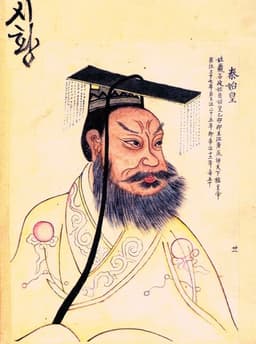
Qin Shi Huang
Emperor · Ancient
85.2Total
Basic Information
Born
1829
-259
Died
1899
-210
Era
Modern
Ancient
Nationality
Venezuela
China
Occupation
General
Emperor
Civilization
Western
Eastern
Score Comparison
Military (10%)
30.0
80.0
Political (20%)
72.0
90.0
Influence (20%)
56.7
85.0
Legacy (20%)
50.0
90.0
Leadership (15%)
62.0
78.0
Strategy (15%)
60.0
82.0
TOTAL
55.8
85.2
Antonio Guzman Blanco — Complete Timeline
1870 AD
Establishment of the Guzmán Blanco DictatorshipPolitical Action◆ Major
Guzmán Blanco seized power in Venezuela, beginning a period of authoritarian rule. He centralized the government, suppressed opposition, and initiated a program of modernization and infrastructure development.
DictatorshipModernizationVenezuela
Impact: national
1873 AD
Construction of the Caracas-Valencia RailwayReform◆ Major
Guzmán Blanco oversaw the construction of the Caracas-Valencia railway, a major infrastructure project. The railway improved transportation and trade between the capital and the interior, boosting economic development.
InfrastructureRailwayModernization
Impact: nationalconstructive
1874 AD
Abolition of Church PrivilegesReform◆ Major
Guzmán Blanco implemented anti-clerical reforms, including the abolition of church privileges and the seizure of church property. These measures reduced the power of the Catholic Church in Venezuela and promoted secularism.
Anti-ClericalismSecularismChurch-State Relations
Impact: nationalconstructive
1875 AD
Promotion of Education and CultureCultural◆ Major
Guzmán Blanco promoted education and culture, founding schools, libraries, and museums. He also supported the arts, commissioning public works and monuments that reflected his vision of a modern Venezuela.
EducationCulturePublic Works
Impact: nationalconstructive
1887 AD
Exile and Return to PowerPolitical Action◆ Major
After a period of exile in Europe, Guzm
ExileReturn to PowerAuthoritarianism
Impact: national
Qin Shi Huang — Complete Timeline
246 BC
Construction of the Mausoleum and Terracotta ArmyOther◆ Major
Qin Shi Huang commissioned a vast mausoleum complex near Xi'an, guarded by thousands of life-sized terracotta soldiers, horses, and chariots. The project employed hundreds of thousands of workers and reflected his obsession with immortality and imperial power.
Impact: global
230 BC
Conquest of the Six Warring StatesWar
From 230 to 221 BCE, Ying Zheng led the Qin state in a series of campaigns that conquered the Han, Zhao, Wei, Chu, Yan, and Qi states. This unified China under a single ruler for the first time, ending the Warring States period.
Impact: global
221 BC
Standardization of Writing, Currency, and MeasurementsReform◆ Major
Qin Shi Huang ordered the standardization of Chinese script, currency, and weights and measures across the unified empire. This facilitated administration, trade, and cultural integration, laying a foundation for future dynasties.
Impact: globalconstructive
Proclamation of the Qin DynastyPolitical Action
After conquering the last independent state, Ying Zheng declared himself Shi Huangdi (First Emperor), founding the Qin Dynasty. He adopted a new title to signify his supreme authority and initiated centralized imperial rule.
Impact: global
214 BC
Initiation of the Great Wall ConstructionOther◆ Major
Qin Shi Huang ordered the connection and extension of existing northern fortifications to create a unified defensive wall against nomadic Xiongnu raids. This project involved massive conscripted labor and became the precursor to the later Great Wall.
Impact: regional
213 BC
Burning of Books and Burying of ScholarsPolitical Action◆ Major
On the advice of Li Si, Qin Shi Huang ordered the burning of historical records and philosophical texts not aligned with Legalist doctrine. He also had 460 Confucian scholars buried alive to suppress dissent and consolidate ideological control.
Impact: nationaldestructive
Expert Analysis
antonio-guzman-blanco-vs-qin-shi-huang
### The First Emperor and the Modernizer: Two Paths to a Nation
In the winter of 221 BC, a king from the western frontier of China declared himself *Shi Huangdi*, the First Emperor, and set in motion a transformation so absolute that it would define a civilization for two millennia. Two thousand years later, in the spring of 1870, a young Venezuelan general marched into Caracas and announced a different kind of revolution—one of railways, secular schools, and French-style boulevards. Qin Shi Huang and Antonio Guzmán Blanco both sought to forge nations from chaos. One built an empire on blood and standardization; the other, a republic on borrowed European ideas. Their stories, separated by centuries and continents, reveal how the same ambition can produce utterly different outcomes.
### Origins
Ying Zheng was born in 259 BC into a world of relentless war. The Zhou dynasty had crumbled, leaving seven states locked in a struggle for supremacy. His father was a prince of Qin, a semi-barbarian kingdom in the west, known for its harsh legalist philosophy and ruthless cavalry. Qin’s culture valued discipline and efficiency over the refined rituals of its eastern rivals. Young Zheng grew up in a court rife with intrigue—his father died when he was thirteen, and his mother’s lover nearly seized power. From the start, he learned that trust was a weakness and absolute control the only security.
Antonio Guzmán Blanco, born in 1829, entered a Venezuela still shaking off Spanish rule. His father was a journalist and politician, a founding father of the republic. Young Antonio grew up in Caracas and Paris, absorbing the ideas of the Enlightenment and the pomp of Napoleon III’s France. While Qin Shi Huang learned war from generals, Guzmán Blanco learned politics from his father’s library and the salons of Europe. One was shaped by the sword, the other by the pen and the ballot—though both would come to wield power with an iron fist.
### Rise to Power
Qin Shi Huang’s ascent was a military masterpiece. In 230 BC, at age twenty-nine, he launched a campaign of annihilation. Over nine years, his armies crushed the six rival states one by one—Han, Zhao, Wei, Chu, Yan, and finally Qi in 221 BC. He did not negotiate; he conquered. Each victory was followed by the execution of the defeated royal family and the forced relocation of aristocrats to the Qin capital. By twenty-two, he had unified a land larger than the Roman Republic, but he had done so through terror.
Guzmán Blanco’s path was more circuitous. He fought in the Federal War (1859–1863), a brutal civil conflict that left Venezuela exhausted. He served as a diplomat in Europe, where he cultivated connections and a taste for opera. In 1870, sensing the moment, he led a revolt against the weak government in Caracas. Unlike Qin’s blitzkrieg, Guzmán’s seizure of power was almost bloodless—a coup, not a conquest. He called it the “Liberal Revolution,” though it was really a personal takeover. Where Qin destroyed to unify, Guzmán maneuvered to govern.
### Leadership & Governance
Here the two men diverged most sharply. Qin Shi Huang ruled through terror and standardization. In 221 BC, he ordered the unification of writing, currency, and measurements across the empire—a monumental reform that allowed a single bureaucracy to function from the Yellow River to the Yangtze. He built a network of roads and canals, and in 214 BC, he began linking existing walls into what would become the Great Wall. But his methods were brutal: in 213 BC, on the advice of his chancellor Li Si, he ordered the “Burning of Books and Burying of Scholars”—the destruction of all historical records and philosophical works that did not glorify his reign. Hundreds of Confucian scholars were executed. He believed that the past must be erased to control the future.
Guzmán Blanco also centralized power, but his methods were subtler. He abolished church privileges in 1874, seizing church lands and secularizing education. He built the Caracas-Valencia railway in 1873, linking the capital to the agricultural interior. He founded schools, libraries, and museums, and commissioned statues of himself in Parisian style. He was a dictator, but a modernizing one—he wanted Venezuela to look like Europe. Where Qin Shi Huang imposed unity through fear, Guzmán Blanco did so through infrastructure and culture. Both were autocrats, but one was a tyrant of the ancient world, the other a caudillo of the modern age.
### Triumph & Tragedy
Qin Shi Huang’s greatest triumph was the creation of a unified China—a concept that had never existed before. He built a mausoleum guarded by seven thousand life-sized terracotta warriors, a symbol of his absolute power. Yet his tragedy was equally immense. He became obsessed with immortality, sending expeditions for the elixir of life and consuming mercury pills that likely killed him in 210 BC at age forty-nine. Within three years of his death, the Qin dynasty collapsed in rebellion, his brutal laws and forced labor having sown the seeds of its own destruction.
Guzmán Blanco’s triumph was the transformation of Caracas from a dusty colonial town into a modern capital. He brought electricity, paved streets, and a national education system. But his tragedy was his vanity and corruption. He enriched himself and his family, and his rule became increasingly personal. When he left for Europe in 1887, his regime collapsed. He died in Paris in 1899, a wealthy exile, remembered as a builder and a despot.
### Character & Destiny
Qin Shi Huang was paranoid, brilliant, and utterly ruthless. He believed that history began with him—hence his title “First Emperor.” His personality drove him to erase the past and control the future, but his inability to trust anyone, including his own sons, doomed his dynasty. Guzmán Blanco was more pragmatic, a showman who loved the limelight. He wanted to be remembered as a civilizer, not a conqueror. Yet his vanity made him blind to the fragility of his achievements. One man’s destiny was to create a nation that would outlast him; the other’s was to build a legacy that crumbled with his departure.
### Legacy
Qin Shi Huang’s legacy is paradoxical. His dynasty lasted only fifteen years, but the institutions he created—a unified script, a centralized bureaucracy, a single legal code—survived for two thousand years. He is remembered as both a founding father and a tyrant, the man who made China possible. The terracotta warriors, discovered in 1974, have made him a global icon.
Guzmán Blanco’s legacy is smaller but no less complex. He modernized Venezuela, but his authoritarian style set a precedent for the caudillos who followed. Today, he is a footnote in Venezuelan history, remembered for his railways and his vanity. One man built an empire; the other built a façade. Both were men of their time, driven by the same ambition to forge order from chaos. The difference lay not in their goals, but in the scale of their vision and the depth of their ruthlessness.
Rankings
🥇
Qin Shi HuangLeader
Mil: 80.0Pol: 90.0Inf: 85.0
85.2
🥈
Antonio Guzman Blanco
Mil: 30.0Pol: 72.0Inf: 56.7
55.8
+29.4 behind
How This Comparison Works
Algorithm
Each figure is scored on 6 dimensions (0—100 scale) based on structured historical data: Military (10%), Political (20%), Influence (20%), Legacy (20%), Leadership (15%), Strategy (15%). The weighted total produces the final ranking.
Data Sources
Scores are computed from structured sub-indicators in the database. Scale factors adjust for era (Ancient ×0.85, Modern ×1.0) and civilization size (Eastern ×1.05, Other ×0.80) to account for differences in population and military scale.
Maximum 3 Figures
Comparisons are limited to 2—3 figures to ensure readability and statistical meaningfulness.
Error Margins
±5 points per dimension — Sub-scores are derived from historical records with inherent uncertainty. Two figures within 5 points on a dimension should be considered roughly equivalent in that area.
Total Score Accuracy
±3 points overall — The weighted combination of 6 dimensions produces a total score with approximately ±3 points of uncertainty. Differences of less than 3 points are not statistically significant— the figures are effectively tied.
Known Limitations
- Historical records are incomplete and uneven across civilizations
- Figures from oral-tradition societies may be underrepresented
- Occupation labels can misclassify multi-role figures
- Scores measure capability and impact, not moral character
- Quantitative scoring is a comparison tool, not absolute truth
Capability Radar
Military (10%) — Battles & Warfare
Battles
45
85
Win Rate
55
90
Expansion
20
90
Political (20%) — Governance & Reform
Reform
75
95
Diplomacy
65
75
Economy
70
90
Influence (20%) — Cultural & Global Reach
Cultural
50
95
Global
45
85
Legacy (20%) — Historical Impact
Historical
55
95
Longevity
40
95
Leadership (15%) — Power & Stability
Tenure
70
70
Stability
40
65
Strategy (15%) — Tactics & Innovation
Strategy
50
85
Tactics
40
80
Reform
30
95
Similar Comparisons
Comments & Discussion
历史数据控6/17/2026
吹啥标准化?秦始皇用活人殉葬记录被埋了,还吹系统工程?大数据告诉你:秦朝统一度量衡,但考古发现各地陶俑尺寸差了15%。Guzmán Blanco再差,他建了第一条横跨安第斯山脉的铁路,1865年通车,带动了科罗外贸。比那个焚书坑儒、饿死百姓搞长城的家伙,起码经济账算得清。
Classics Pedant6/17/2026
Please. Guzmán Blanco's "French-style boulevards" and positivist schools were wallpaper over a caudillo dictatorship. He was a modernist poseur who banned beards in the army while his ministers embezzled. Qin Shi Huang at least understood that building a state means breaking the old elites—disarmed the feudal lords, moved 120,000 families to his capital. Guzmán Blanco allied with the very oligarchs he claimed to modernize. One was a revolutionary; the other, a dandy with a constitution.
民科史学家6/17/2026
你们都被骗了!Guzmán Blanco到底是不是白人都不确定,他爹是西班牙裔但祖上有非洲血统,他本人却推行白人移民政策,整个一精神殖民者。反过来看秦始皇,修长城时用孟姜女传说黑他,实际上秦长城只是加固原有的,根本没传说的恐怖。他俩都是民族建构的骗子,但一个骗得彻底,一个骗得虚伪。
Skeptical Trooper6/17/2026
Let's talk actual governance: Qin abolished hereditary nobility and imposed a uniform legal code—even his own son was punished. That's institutional discipline. Guzmán Blanco's "July Revolution" was a farce; he alternated between president and ambassador to Europe, ruling remotely. In 1877, he had 70 political enemies executed, but his real legacy is the national debt he doubled. One man built a postal system that connected China; the other built a telegraph line from Caracas to his mistress's v
Chronicler13696/17/2026
Qin Shi Huang wasn't just a conqueror; he was a systems engineer. Standardizing script, axle widths, and even axle lengths for carts wasn't bureaucratic fussiness—it was brutal nation-building. That single-axle-width decree collapsed regional logistics barriers overnight. Guzmán Blanco built pretty boulevards; Qin built a civilization's skeleton. One created a template for a state that outlasted his dynasty; the other left boulevards that got swallowed by the jungle. Scale matters.