Loading...
Antiochus III the Great vs Shalmaneser I
Shalmaneser I leads by 1.1 pts · 2 figures compared
…
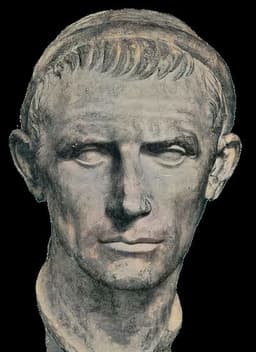
Antiochus III the Great
Emperor · Ancient
58.4Total

Shalmaneser I
Emperor · Ancient
59.5Total
Basic Information
Born
-241
-1273
Died
-187
-1244
Era
Ancient
Ancient
Nationality
Seleucid Empire
Assyria
Occupation
Emperor
Emperor
Civilization
Middle Eastern
Middle Eastern
Score Comparison
Military (10%)
78.5
74.0
Political (20%)
45.0
68.0
Influence (20%)
58.0
54.1
Legacy (20%)
50.0
45.8
Leadership (15%)
66.0
72.0
Strategy (15%)
69.1
61.2
TOTAL
58.4
59.5
Antiochus III the Great — Complete Timeline
217 BC
Battle of Raphia (217 BC)War
Antiochus III defeated Ptolemy IV's army at Raphia in the largest battle of the Syrian Wars. He used war elephants and a phalanx of native Egyptians to secure victory, recapturing Coele-Syria and Palestine from Ptolemaic control, restoring Seleucid power in the region.
Syrian WarBattleSeleucid Victory
Impact: regional
212 BC
Anabasis (Expedition to the East, 212-205 BC)War◆ Major
Antiochus III led a major military expedition to the eastern satrapies of the Seleucid Empire, including Parthia, Bactria, and India. He reasserted Seleucid authority, received tribute from local rulers, and secured the eastern borders, earning the title 'the Great'.
Military CampaignEastern EmpireSeleucid
Impact: regional
192 BC
Roman-Seleucid War (192-188 BC)War
Antiochus III invaded Greece, leading to war with the Roman Republic. He was decisively defeated at the Battle of Thermopylae (191 BC) and the Battle of Magnesia (190 BC) by Roman forces under Scipio Asiaticus, ending Seleucid ambitions in Europe and Asia Minor.
Roman-Seleucid WarDefeatRoman Expansion
Impact: globaldestructive
188 BC
Treaty of Apamea (188 BC)Political Action
Antiochus III signed the Treaty of Apamea with Rome, ending the war. He surrendered all territory in Asia Minor west of the Taurus Mountains, paid a massive indemnity of 15,000 talents, and agreed to limit his navy and war elephants, crippling Seleucid power.
TreatyRoman HegemonySeleucid Decline
Impact: globaltragic
187 BC
Death in Elymais (187 BC)Other◆ Major
Antiochus III was killed while attempting to plunder the temple of Bel in Elymais (southwestern Iran) to raise funds for the Roman indemnity. His death marked the end of Seleucid resurgence and the beginning of the empire's decline.
DeathTemple PlunderSeleucid
Impact: regionaltragic
Shalmaneser I — Complete Timeline
1270 BC
Campaign against UrartuWar◆ Major
Shalmaneser I led military campaigns against the kingdom of Urartu in the Armenian highlands. He defeated the Urartian forces and annexed territory, extending Assyrian control into the region.
Military CampaignUrartuExpansion
Impact: regional
1265 BC
Defeat of the MitanniWar◆ Major
Shalmaneser I defeated the remnants of the Mitanni kingdom, incorporating its lands into the Assyrian Empire. This victory eliminated a rival power and secured Assyrian dominance in northern Mesopotamia.
Military CampaignMitanniConquest
Impact: regional
1260 BC
Construction of KalhuCultural◆ Major
Shalmaneser I ordered the construction of a new capital city at Kalhu (Nimrud), relocating the administrative center from Ashur. The city became a major hub of Assyrian power and culture, featuring palaces, temples, and fortifications.
Urban PlanningCapital CityAssyrian Empire
Impact: regionalconstructive
Expert Analysis
Origins
Antiochus III was born around 242 BC, a son of Seleucus II Callinicus, king of the Seleucid Empire. He inherited a realm weakened by civil war and secessionist movements. His early years were marked by the decline of Seleucid power, with the loss of eastern satrapies and the rise of Ptolemaic Egypt. Shalmaneser I, by contrast, was born around 1270 BC, the son of Adad-nirari I, king of Assyria. He inherited a growing empire in northern Mesopotamia. His upbringing was steeped in the martial traditions of Assyria, with a focus on military campaigns and administrative consolidation.
Rise to Power
Antiochus III ascended the throne in 222 BC at age 20, after the death of his father. He faced immediate challenges: revolts in Media and Persia, and the defection of his cousin Achaeus in Asia Minor. His early reign was spent suppressing these rebellions. The turning point came with the Battle of Raphia in 217 BC, where he led a massive army against Ptolemy IV. Despite initial success, he failed to follow up his victory, settling for a truce. Shalmaneser I became king around 1265 BC upon his father's death. He continued Assyria's expansion, launching campaigns against the mountain tribes and the kingdom of Urartu. His major achievement was the defeat of the Mitanni kingdom around 1250 BC, eliminating a rival and securing Assyrian dominance in the region.
Leadership & Governance
Antiochus III was a charismatic leader who inspired loyalty among his troops. He scored 66.0 in leadership and 69.1 in strategy. He reorganized the empire's administration, appointing capable satraps and using marriage alliances to secure borders. However, his political score of 45.0 reflects his failure to manage the growing threat of Rome. He underestimated Roman power and overestimated his own, leading to disastrous decisions. Shalmaneser I scored 72.0 in leadership and 61.2 in strategy. He was a ruthless and effective administrator. He moved the capital from Ashur to Kalhu (Nimrud), building a new city with palaces and temples. This centralized power and projected Assyrian strength. He also implemented a policy of deporting conquered peoples to break resistance, a tactic later used by his successors.
Triumph & Tragedy
Antiochus III's greatest triumph was his Anabasis (212-205 BC), a campaign that reasserted Seleucid control over the eastern satrapies, including Parthia, Bactria, and India. He received tributes and restored the empire's prestige. His tragedy was the Roman-Seleucid War (192-188 BC). He invaded Greece but was defeated at Thermopylae (191 BC) and Magnesia (190 BC). The Treaty of Apamea (188 BC) stripped him of Asia Minor and imposed a heavy indemnity. He died in 187 BC while plundering a temple to raise funds, a humiliating end. Shalmaneser I's triumph was the defeat of Mitanni, which brought vast territories under Assyrian control. He also built Kalhu, which became a symbol of Assyrian power. His tragedy was the continuous struggle against Urartu, which remained a persistent threat. Though he won battles, he failed to fully subjugate the kingdom. His campaigns drained resources and led to periodic revolts.
Character & Destiny
Antiochus III was ambitious and energetic, but his overconfidence was his undoing. He believed he could match the Romans, but his military score of 78.5 did not translate into strategic foresight. He was a skilled tactician but a poor strategist in the long term. His death in a failed robbery attempt highlighted his desperation. Shalmaneser I was methodical and brutal, typical of Assyrian kings. He was a builder as well as a conqueror. His decision to move the capital showed a desire to leave a lasting mark. He was more cautious than Antiochus, consolidating gains rather than overreaching. His legacy was secure, but his empire faced challenges after his death.
Legacy
Antiochus III is remembered as a restorer who briefly revived the Seleucid Empire but ultimately failed against Rome. His military score of 78.5 and influence score of 58.0 show his impact. The Treaty of Apamea reshaped the Hellenistic world, weakening the Seleucids and paving the way for Roman dominance. Shalmaneser I's legacy is more architectural and administrative. His city of Kalhu became a major center, and his military campaigns set the pattern for later Assyrian expansion. His scores: military 74.0, political 68.0, legacy 45.8. He is less known than later Assyrian kings but was a crucial figure in establishing the empire's foundations.
Conclusion
Shalmaneser I had a greater impact on the trajectory of his civilization. His military campaigns destroyed rival kingdoms and expanded Assyrian territory, while his administrative reforms strengthened the state. Antiochus III, despite his high military score, ultimately weakened his empire through his conflict with Rome. Shalmaneser's total score of 59.5 edges out Antiochus's 58.4, reflecting his more sustainable achievements. While Antiochus's ambitions were grand, Shalmaneser's results were more enduring. Therefore, Shalmaneser I is the more significant figure in terms of lasting influence.
Rankings
🥇
Shalmaneser ILeader
Mil: 74.0Pol: 68.0Inf: 54.1
59.5
🥈
Antiochus III the Great
Mil: 78.5Pol: 45.0Inf: 58.0
58.4
+1.1 behind
How This Comparison Works
Algorithm
Each figure is scored on 6 dimensions (0—100 scale) based on structured historical data: Military (10%), Political (20%), Influence (20%), Legacy (20%), Leadership (15%), Strategy (15%). The weighted total produces the final ranking.
Data Sources
Scores are computed from structured sub-indicators in the database. Scale factors adjust for era (Ancient ×0.85, Modern ×1.0) and civilization size (Eastern ×1.05, Other ×0.80) to account for differences in population and military scale.
Maximum 3 Figures
Comparisons are limited to 2—3 figures to ensure readability and statistical meaningfulness.
Error Margins
±5 points per dimension — Sub-scores are derived from historical records with inherent uncertainty. Two figures within 5 points on a dimension should be considered roughly equivalent in that area.
Total Score Accuracy
±3 points overall — The weighted combination of 6 dimensions produces a total score with approximately ±3 points of uncertainty. Differences of less than 3 points are not statistically significant— the figures are effectively tied.
Known Limitations
- Historical records are incomplete and uneven across civilizations
- Figures from oral-tradition societies may be underrepresented
- Occupation labels can misclassify multi-role figures
- Scores measure capability and impact, not moral character
- Quantitative scoring is a comparison tool, not absolute truth
Capability Radar
Military (10%) — Battles & Warfare
Battles
85
75
Win Rate
80
80
Expansion
90
80
Political (20%) — Governance & Reform
Reform
65
65
Diplomacy
70
60
Economy
60
55
Influence (20%) — Cultural & Global Reach
Cultural
50
50
Global
60
35
Legacy (20%) — Historical Impact
Historical
65
55
Longevity
55
40
Leadership (15%) — Power & Stability
Tenure
80
70
Stability
55
60
Strategy (15%) — Tactics & Innovation
Strategy
85
75
Tactics
75
70
Reform
70
60
Similar Comparisons
Comments & Discussion
No comments yet. Be the first to share your thoughts!