Loading...
Antiochus III the Great vs Mithridates VI
Mithridates VI leads by 6.4 pts · 2 figures compared
…
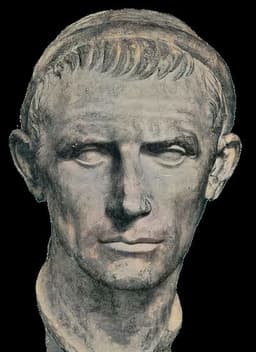
Antiochus III the Great
Emperor · Ancient
58.4Total

Mithridates VI
Emperor · Ancient
64.8Total
Basic Information
Born
-241
-135
Died
-187
-63
Era
Ancient
Ancient
Nationality
Seleucid Empire
Pontus
Occupation
Emperor
Emperor
Civilization
Middle Eastern
Middle Eastern
Score Comparison
Military (10%)
78.5
78.0
Political (20%)
45.0
70.0
Influence (20%)
58.0
61.0
Legacy (20%)
50.0
52.0
Leadership (15%)
66.0
72.0
Strategy (15%)
69.1
75.0
TOTAL
58.4
64.8
Antiochus III the Great — Complete Timeline
217 BC
Battle of Raphia (217 BC)War
Antiochus III defeated Ptolemy IV's army at Raphia in the largest battle of the Syrian Wars. He used war elephants and a phalanx of native Egyptians to secure victory, recapturing Coele-Syria and Palestine from Ptolemaic control, restoring Seleucid power in the region.
Syrian WarBattleSeleucid Victory
Impact: regional
212 BC
Anabasis (Expedition to the East, 212-205 BC)War◆ Major
Antiochus III led a major military expedition to the eastern satrapies of the Seleucid Empire, including Parthia, Bactria, and India. He reasserted Seleucid authority, received tribute from local rulers, and secured the eastern borders, earning the title 'the Great'.
Military CampaignEastern EmpireSeleucid
Impact: regional
192 BC
Roman-Seleucid War (192-188 BC)War
Antiochus III invaded Greece, leading to war with the Roman Republic. He was decisively defeated at the Battle of Thermopylae (191 BC) and the Battle of Magnesia (190 BC) by Roman forces under Scipio Asiaticus, ending Seleucid ambitions in Europe and Asia Minor.
Roman-Seleucid WarDefeatRoman Expansion
Impact: globaldestructive
188 BC
Treaty of Apamea (188 BC)Political Action
Antiochus III signed the Treaty of Apamea with Rome, ending the war. He surrendered all territory in Asia Minor west of the Taurus Mountains, paid a massive indemnity of 15,000 talents, and agreed to limit his navy and war elephants, crippling Seleucid power.
TreatyRoman HegemonySeleucid Decline
Impact: globaltragic
187 BC
Death in Elymais (187 BC)Other◆ Major
Antiochus III was killed while attempting to plunder the temple of Bel in Elymais (southwestern Iran) to raise funds for the Roman indemnity. His death marked the end of Seleucid resurgence and the beginning of the empire's decline.
DeathTemple PlunderSeleucid
Impact: regionaltragic
Mithridates VI — Complete Timeline
89 BC
First Mithridatic WarWar◆ Major
Mithridates VI invaded the Roman province of Asia, conquering much of Anatolia. He ordered the massacre of an estimated 80,000 Roman and Italian residents in the Asiatic Vespers, provoking a Roman response under Sulla. The war ended with the Treaty of Dardanos in 85 BC.
Mithridatic WarsRoman RepublicMassacre
Impact: regionaldestructive
83 BC
Second Mithridatic WarWar
Mithridates VI fought the Roman general Lucius Licinius Murena, who had invaded Pontus without authorization. Mithridates defeated Murena and forced a return to the status quo, but the war weakened his position and allowed Rome to regroup.
Mithridatic WarsRoman RepublicPontus
Impact: regional
73 BC
Third Mithridatic WarWar◆ Major
Mithridates VI launched a major war against Rome, initially achieving successes. However, the Roman general Lucullus defeated him at the Battle of Cabira in 72 BC, forcing Mithridates to flee to Armenia. The war continued under Pompey, who finally defeated Mithridates in 66 BC.
Mithridatic WarsRoman RepublicPontus
Impact: regional
72 BC
Battle of CabiraWar◆ Major
Mithridates VI was decisively defeated by the Roman general Lucullus at Cabira in Pontus. Mithridates fled to Armenia, losing his kingdom and much of his army. This battle marked the turning point of the Third Mithridatic War.
Mithridatic WarsBattlePontus
Impact: regionaltragic
63 BC
Death by suicidePolitical Action◆ Major
After being betrayed by his son Pharnaces II and besieged by Roman forces, Mithridates VI attempted suicide by poison. Having built immunity to poisons, he ordered a bodyguard to kill him with a sword. His death ended the Mithridatic Wars and the Kingdom of Pontus.
DeathPontusMithridatic Wars
Impact: regionaltragic
Expert Analysis
Origins
Antiochus III was born around 242 BC into the Seleucid dynasty, a Hellenistic kingdom founded by Seleucus I Nicator after Alexander the Great's empire fragmented. He was the son of Seleucus II Callinicus and Laodice II. His early years were marked by the decline of Seleucid power, as his father had lost significant territory to the Ptolemies and Parthians. Antiochus received a traditional Hellenistic education, emphasizing military training and Greek culture. He ascended the throne in 222 BC at age 20 after the death of his brother Seleucus III.
Mithridates VI was born in 134 BC in Sinope, Pontus, a Hellenistic kingdom on the Black Sea coast of Anatolia. He was the son of Mithridates V Euergetes, who was assassinated in 120 BC, possibly with the involvement of his wife. Mithridates VI's early life was precarious; he fled into hiding to avoid assassination by his mother and regents. He emerged in 113 BC to reclaim the throne, having developed a legendary immunity to poisons by taking sublethal doses. His education combined Greek culture with Persian and Anatolian traditions, shaping his later anti-Roman policies.
Rise to Power
Antiochus III's rise began with a series of campaigns to restore Seleucid authority. In 221 BC, he faced a revolt in Media and successfully suppressed it. His major turning point came at the Battle of Raphia in 217 BC, where he fought Ptolemy IV of Egypt. Despite having a larger army, including war elephants and a phalanx of native Egyptians, Antiochus was defeated. This setback taught him the need for military reform. He then focused on the east, launching the Anabasis from 212 to 205 BC, a massive expedition that reasserted Seleucid control over Parthia, Bactria, and reached India. This restored much of the empire's former territory, earning him the title 'Great'.
Mithridates VI's rise was marked by aggressive expansion. After securing his throne, he annexed Colchis and the Crimea, controlling the Black Sea trade. He built a powerful army and navy, incorporating Greek mercenaries and local levies. His first major conflict with Rome came in 89 BC when he invaded the Roman province of Asia. He quickly conquered most of Anatolia and ordered the massacre of 80,000 Roman and Italian residents in 88 BC, known as the Asiatic Vespers. This act galvanized Roman opposition but also united Greek cities against Rome.
Leadership & Governance
Antiochus III governed as a traditional Hellenistic monarch, centralizing power and relying on a network of satraps. He promoted Greek culture and founded cities, such as Antioch in Persis. His leadership style was charismatic but autocratic. He attempted to reform the army by incorporating native troops, but this was inconsistent. In contrast, Mithridates VI was a more pragmatic and ruthless ruler. He skillfully used anti-Roman propaganda, presenting himself as a liberator of Greeks. He reformed his army by adopting Roman tactics and equipment, and he built a formidable navy. Mithridates also minted coins to project power and fostered a cult of personality, claiming descent from Alexander the Great and Persian kings.
Triumph & Tragedy
Antiochus III's greatest triumph was the Anabasis, which restored Seleucid authority over vast eastern territories. He also temporarily regained Coele-Syria from the Ptolemies. However, his tragedy was the Roman-Seleucid War (192-188 BC). Invading Greece, he was defeated at Thermopylae in 191 BC by a Roman army under Manius Acilius Glabrio, then decisively at Magnesia in 190 BC by Scipio Asiaticus. The Treaty of Apamea in 188 BC forced him to cede all territory west of the Taurus Mountains, pay a huge indemnity, and surrender his war elephants. He died in 187 BC while plundering a temple in Elymais to raise funds, an ignominious end.
Mithridates VI's triumphs include his early victories against Rome: he defeated the Roman general Aquillius and conquered much of Asia Minor. He also successfully resisted Roman attempts to unseat him for decades. However, his tragedy was the eventual loss of his kingdom. The Third Mithridatic War saw his defeat by Lucullus at Cabira in 72 BC and later by Pompey the Great. Betrayed by his son Pharnaces II, he attempted suicide by poison but, due to his immunity, had to ask a bodyguard to stab him. His death in 63 BC ended the Pontic kingdom.
Character & Destiny
Antiochus III was ambitious and energetic, but his overconfidence led to his downfall. He underestimated Roman military power and diplomatic resolve. His character was that of a traditional conqueror, but he lacked the political acumen to navigate the rising Roman hegemony. Mithridates VI was cunning, resilient, and paranoid. He built a network of alliances and used terror (e.g., the Asiatic Vespers) to maintain control. His ability to recover from defeats was remarkable, but his inability to secure lasting alliances with Hellenistic kingdoms like Armenia (which betrayed him) limited his success. Both men's characters shaped their fates: Antiochus's hubris led to humiliation, while Mithridates's tenacity prolonged his struggle but ultimately ended in tragedy.
Legacy
Antiochus III's legacy is mixed. He revived the Seleucid Empire temporarily, but his defeat at Magnesia accelerated its decline. The Treaty of Apamea established Roman dominance in the eastern Mediterranean. His eastern campaigns influenced later Indo-Greek kingdoms. Mithridates VI left a stronger legacy as a symbol of resistance against Rome. His wars drained Roman resources and inspired later rebels. He is remembered in literature and art as the 'Poison King.' Historically, Mithridates's political and military reforms had a lasting impact on Pontus and the region. His scores reflect this: Mithridates VI scored 64.8 overall compared to Antiochus III's 58.4. In military, Antiochus edged out Mithridates 78.5 to 78.0, but Mithridates led in political (70.0 vs 45.0) and strategy (75.0 vs 69.1).
Conclusion
While Antiochus III temporarily restored Seleucid power, his failure against Rome and the collapse of his gains make his impact less enduring. Mithridates VI, despite losing, fought Rome for decades, forced major military commitments, and became a lasting icon of anti-imperial resistance. His higher total score of 64.8 versus Antiochus's 58.4, particularly in political and strategic categories, demonstrates a more effective and resilient leader. Therefore, Mithridates VI had a greater historical impact, as his wars shaped Rome's eastern policy and his legacy outlasted his kingdom.
Rankings
🥇
Mithridates VILeader
Mil: 78.0Pol: 70.0Inf: 61.0
64.8
🥈
Antiochus III the Great
Mil: 78.5Pol: 45.0Inf: 58.0
58.4
+6.4 behind
How This Comparison Works
Algorithm
Each figure is scored on 6 dimensions (0—100 scale) based on structured historical data: Military (10%), Political (20%), Influence (20%), Legacy (20%), Leadership (15%), Strategy (15%). The weighted total produces the final ranking.
Data Sources
Scores are computed from structured sub-indicators in the database. Scale factors adjust for era (Ancient ×0.85, Modern ×1.0) and civilization size (Eastern ×1.05, Other ×0.80) to account for differences in population and military scale.
Maximum 3 Figures
Comparisons are limited to 2—3 figures to ensure readability and statistical meaningfulness.
Error Margins
±5 points per dimension — Sub-scores are derived from historical records with inherent uncertainty. Two figures within 5 points on a dimension should be considered roughly equivalent in that area.
Total Score Accuracy
±3 points overall — The weighted combination of 6 dimensions produces a total score with approximately ±3 points of uncertainty. Differences of less than 3 points are not statistically significant— the figures are effectively tied.
Known Limitations
- Historical records are incomplete and uneven across civilizations
- Figures from oral-tradition societies may be underrepresented
- Occupation labels can misclassify multi-role figures
- Scores measure capability and impact, not moral character
- Quantitative scoring is a comparison tool, not absolute truth
Capability Radar
Military (10%) — Battles & Warfare
Battles
85
85
Win Rate
80
60
Expansion
90
80
Political (20%) — Governance & Reform
Reform
65
75
Diplomacy
70
85
Economy
60
70
Influence (20%) — Cultural & Global Reach
Cultural
50
65
Global
60
60
Legacy (20%) — Historical Impact
Historical
65
75
Longevity
55
70
Leadership (15%) — Power & Stability
Tenure
80
90
Stability
55
50
Strategy (15%) — Tactics & Innovation
Strategy
85
85
Tactics
75
90
Reform
70
70
Similar Comparisons
Comments & Discussion
No comments yet. Be the first to share your thoughts!