Loading...
Antiochus III the Great vs Kanishka
Kanishka leads by 2.4 pts · 2 figures compared
…
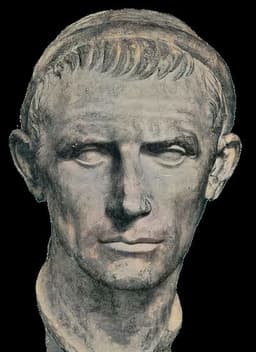
Antiochus III the Great
Emperor · Ancient
58.4Total

Kanishka
Emperor · Ancient
60.8Total
Basic Information
Born
-241
127
Died
-187
150
Era
Ancient
Ancient
Nationality
Seleucid Empire
Kushan Empire
Occupation
Emperor
Emperor
Civilization
Middle Eastern
Indian
Score Comparison
Military (10%)
78.5
78.0
Political (20%)
45.0
60.0
Influence (20%)
58.0
55.0
Legacy (20%)
50.0
58.0
Leadership (15%)
66.0
66.0
Strategy (15%)
69.1
58.0
TOTAL
58.4
60.8
Antiochus III the Great — Complete Timeline
217 BC
Battle of Raphia (217 BC)War
Antiochus III defeated Ptolemy IV's army at Raphia in the largest battle of the Syrian Wars. He used war elephants and a phalanx of native Egyptians to secure victory, recapturing Coele-Syria and Palestine from Ptolemaic control, restoring Seleucid power in the region.
Syrian WarBattleSeleucid Victory
Impact: regional
212 BC
Anabasis (Expedition to the East, 212-205 BC)War◆ Major
Antiochus III led a major military expedition to the eastern satrapies of the Seleucid Empire, including Parthia, Bactria, and India. He reasserted Seleucid authority, received tribute from local rulers, and secured the eastern borders, earning the title 'the Great'.
Military CampaignEastern EmpireSeleucid
Impact: regional
192 BC
Roman-Seleucid War (192-188 BC)War
Antiochus III invaded Greece, leading to war with the Roman Republic. He was decisively defeated at the Battle of Thermopylae (191 BC) and the Battle of Magnesia (190 BC) by Roman forces under Scipio Asiaticus, ending Seleucid ambitions in Europe and Asia Minor.
Roman-Seleucid WarDefeatRoman Expansion
Impact: globaldestructive
188 BC
Treaty of Apamea (188 BC)Political Action
Antiochus III signed the Treaty of Apamea with Rome, ending the war. He surrendered all territory in Asia Minor west of the Taurus Mountains, paid a massive indemnity of 15,000 talents, and agreed to limit his navy and war elephants, crippling Seleucid power.
TreatyRoman HegemonySeleucid Decline
Impact: globaltragic
187 BC
Death in Elymais (187 BC)Other◆ Major
Antiochus III was killed while attempting to plunder the temple of Bel in Elymais (southwestern Iran) to raise funds for the Roman indemnity. His death marked the end of Seleucid resurgence and the beginning of the empire's decline.
DeathTemple PlunderSeleucid
Impact: regionaltragic
Kanishka — Complete Timeline
127 AD
Founded the Kanishka EraCultural◆ Major
Kanishka introduced a new calendar era, known as the Kanishka Era (starting 127 CE), used in inscriptions and coins across the Kushan Empire. This era facilitated trade and administration and is still referenced in historical studies.
CalendarAdministration
Impact: regionalconstructive
130 AD
Convened the Fourth Buddhist CouncilCultural
Kanishka sponsored the Fourth Buddhist Council in Kashmir, which compiled the Sarvastivada canon and produced the Mahavibhasha commentary. This council standardized Buddhist doctrine and promoted the spread of Mahayana Buddhism across Central Asia and China.
BuddhismCouncilMahayana
Impact: globalconstructive
135 AD
Expanded the Kushan Empire into Central AsiaWar◆ Major
Kanishka led military campaigns into Central Asia, conquering territories in modern Uzbekistan, Tajikistan, and Afghanistan. He also extended Kushan control into the Tarim Basin (Xinjiang), controlling the Silk Road trade routes.
ConquestSilk Road
Impact: regional
140 AD
Patronized Buddhist Art and ArchitectureCultural◆ Major
Kanishka commissioned the construction of Buddhist stupas, monasteries, and the famous Kanishka Stupa at Peshawar. His patronage fostered the Gandhara school of art, blending Greek, Persian, and Indian styles, which influenced Buddhist iconography across Asia.
ArtArchitectureBuddhism
Impact: globalconstructive
Expert Analysis
Origins
Antiochus III was born in 241 BC to Seleucus II Callinicus, king of the Seleucid Empire. He ascended the throne at age 18 after his father's death, inheriting a fragmented realm weakened by civil war and secessionist movements. His early years were shaped by the decline of Seleucid power and the rise of Ptolemaic Egypt and the Roman Republic. Kanishka's origins are more obscure. He was likely born around 100 CE in the Kushan heartland of Bactria (modern Afghanistan). The Kushans were a nomadic Yuezhi tribe who had settled in Bactria and later expanded into India. Kanishka rose to power as the ruler of the Kushan Empire, possibly after usurping the throne. His reign is dated from 127 CE (the start of the Kanishka Era).
Rise to Power
Antiochus III came to power in 223 BC at age 18. He immediately faced rebellions: his cousin Achaeus established a breakaway kingdom in Asia Minor, and satraps in Media and Persis revolted. Antiochus spent his first decade suppressing these revolts and consolidating control. His first major campaign was against the Ptolemaic Empire in the Fourth Syrian War (219-217 BC), culminating in the Battle of Raphia in 217 BC. There, Antiochus commanded a massive army with war elephants and a phalanx of native Egyptians, but was defeated by Ptolemy IV. Despite the loss, he retained Coele-Syria. Kanishka's rise is less documented. He likely became king around 127 CE after the death of his predecessor Vima Kadphises. Inscriptions and coins suggest he expanded the empire aggressively. His early campaigns targeted the Parthian Empire and the remaining Greek kingdoms in Central Asia. He conquered territories in modern Uzbekistan, Tajikistan, and Afghanistan, and pushed into the Indian subcontinent, capturing the city of Pataliputra.
Leadership & Governance
Antiochus III was a military-focused ruler who prioritized restoring Seleucid territory. He led the Anabasis (212-205 BC), an expedition to the eastern satrapies, reasserting control over Parthia and Bactria. He also formed alliances through marriage, such as his daughter Cleopatra I marrying Ptolemy V. However, his governance was undermined by financial strain, especially after the Treaty of Apamea (188 BC) imposed a massive indemnity of 15,000 talents. Kanishka, by contrast, is remembered for his patronage of Buddhism and cultural synthesis. He convened the Fourth Buddhist Council in Kashmir, which compiled the Sarvastivada canon and produced the Mahavibhasha commentary. This council standardized Buddhist scriptures and promoted the spread of Mahayana Buddhism. Kanishka also introduced the Kanishka Era calendar, used in inscriptions and coins. His rule saw a flourishing of Gandhara art, blending Greek, Persian, and Indian styles.
Triumph & Tragedy
Antiochus III's greatest triumph was his Anabasis, which temporarily restored Seleucid authority over the eastern satrapies. He also defeated the Ptolemaic forces at the Battle of Panion (200 BC), securing Coele-Syria. However, his invasion of Greece in 192 BC triggered the Roman-Seleucid War, leading to decisive defeats at Thermopylae (191 BC) and Magnesia (190 BC). The Treaty of Apamea forced him to surrender Asia Minor west of the Taurus Mountains and pay a huge indemnity. His death in 187 BC while plundering a temple to raise funds symbolizes his tragic end. Kanishka's triumphs include the expansion of the Kushan Empire to its greatest extent, spanning from Central Asia to northern India. His patronage of Buddhism led to the construction of the Kanishka Stupa at Peshawar, a monumental structure that attracted pilgrims. However, his death (likely around 150 CE) left a power vacuum, and the empire declined under later rulers. Kanishka's military score is 78.0, slightly below Antiochus's 78.5, but his political score is 60.0 vs. Antiochus's 45.0.
Character & Destiny
Antiochus III was ambitious and energetic, but his overreach led to confrontation with Rome. He underestimated Roman military prowess and diplomatic networks. His character was that of a Hellenistic monarch seeking glory, but his failure to adapt to the rising power of Rome sealed his fate. Kanishka was a pragmatic ruler who combined military conquest with cultural patronage. He adopted Buddhism, possibly to unify his diverse empire. His character is reflected in his coins, which depict him as a warrior and a Buddhist. His destiny was to create a lasting cultural legacy through Buddhism and art, even if his empire fragmented.
Legacy
Antiochus III's legacy is mixed. He temporarily revived the Seleucid Empire but ultimately weakened it through war with Rome. The Treaty of Apamea ended Seleucid expansion in the west. His military score of 78.5 reflects his successes, but his political score of 45.0 shows his failure in long-term statecraft. Kanishka's legacy is more enduring. He is remembered as a great patron of Buddhism, and his era (Kanishka Era) was used for centuries. The Gandhara art style he sponsored influenced Buddhist art across Asia. His total score is 60.8, slightly higher than Antiochus's 58.4, reflecting his balanced impact.
Conclusion
While Antiochus III was a capable military commander who restored Seleucid power temporarily, his ultimate failure against Rome and his death in a plundering raid diminish his long-term impact. Kanishka, with a higher total score (60.8 vs. 58.4), had a more lasting influence through his promotion of Buddhism and cultural synthesis. Kanishka's legacy in religion and art outlasted Antiochus's territorial gains. Therefore, Kanishka had greater impact.
Rankings
🥇
KanishkaLeader
Mil: 78.0Pol: 60.0Inf: 55.0
60.8
🥈
Antiochus III the Great
Mil: 78.5Pol: 45.0Inf: 58.0
58.4
+2.4 behind
How This Comparison Works
Algorithm
Each figure is scored on 6 dimensions (0—100 scale) based on structured historical data: Military (10%), Political (20%), Influence (20%), Legacy (20%), Leadership (15%), Strategy (15%). The weighted total produces the final ranking.
Data Sources
Scores are computed from structured sub-indicators in the database. Scale factors adjust for era (Ancient ×0.85, Modern ×1.0) and civilization size (Eastern ×1.05, Other ×0.80) to account for differences in population and military scale.
Maximum 3 Figures
Comparisons are limited to 2—3 figures to ensure readability and statistical meaningfulness.
Error Margins
±5 points per dimension — Sub-scores are derived from historical records with inherent uncertainty. Two figures within 5 points on a dimension should be considered roughly equivalent in that area.
Total Score Accuracy
±3 points overall — The weighted combination of 6 dimensions produces a total score with approximately ±3 points of uncertainty. Differences of less than 3 points are not statistically significant— the figures are effectively tied.
Known Limitations
- Historical records are incomplete and uneven across civilizations
- Figures from oral-tradition societies may be underrepresented
- Occupation labels can misclassify multi-role figures
- Scores measure capability and impact, not moral character
- Quantitative scoring is a comparison tool, not absolute truth
Capability Radar
Military (10%) — Battles & Warfare
Battles
85
75
Win Rate
80
70
Expansion
90
80
Political (20%) — Governance & Reform
Reform
65
65
Diplomacy
70
75
Economy
60
70
Influence (20%) — Cultural & Global Reach
Cultural
50
80
Global
60
70
Legacy (20%) — Historical Impact
Historical
65
75
Longevity
55
70
Leadership (15%) — Power & Stability
Tenure
80
70
Stability
55
65
Strategy (15%) — Tactics & Innovation
Strategy
85
70
Tactics
75
65
Reform
70
60
Similar Comparisons
Comments & Discussion
No comments yet. Be the first to share your thoughts!