Loading...
Anne Robert Jacques Turgot vs Julius Caesar
Julius Caesar leads by 35.4 pts · 2 figures compared
…
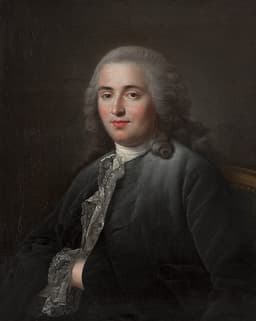
Anne Robert Jacques Turgot
Politician · Modern
47.4Total

Julius Caesar
General · Ancient
82.8Total
Basic Information
Born
1727
-100
Died
1781
-44
Era
Modern
Ancient
Nationality
France
Roman Republic
Occupation
Politician
General
Civilization
Western
Western
Score Comparison
Military (10%)
12.5
88.0
Political (20%)
55.0
78.0
Influence (20%)
55.0
85.0
Legacy (20%)
58.0
82.0
Leadership (15%)
45.0
80.0
Strategy (15%)
28.7
85.0
TOTAL
47.4
82.8
Anne Robert Jacques Turgot — Complete Timeline
1774 AD
Appointed Controller-General of FinancesPolitical Action◆ Major
Turgot was appointed Controller-General of Finances by Louis XVI. An Enlightenment economist, he attempted to implement free-market reforms to address France's fiscal crisis.
French RevolutionEconomic ReformLouis XVI
Impact: nationalconstructive
1776 AD
Issued the Six EdictsReform◆ Major
Turgot issued the Six Edicts, which included the abolition of the corv
Economic ReformEnlightenmentFrench Revolution
Impact: nationalconstructive
Dismissed from OfficePolitical Action◆ Major
Turgot was dismissed by Louis XVI after his reforms provoked widespread opposition from privileged groups. His dismissal marked the failure of enlightened reform and deepened France's financial crisis.
French RevolutionEconomic ReformLouis XVI
Impact: nationaltragic
Julius Caesar — Complete Timeline
58 BC
Gallic WarsWar◆ Major
Caesar, as proconsul of Gaul, launched a series of campaigns that conquered all of Gaul (modern France, Belgium, and parts of Switzerland). He fought numerous battles, including against the Helvetii, the Belgae, and the Gallic chieftain Vercingetorix. The wars brought immense wealth and a loyal army to Caesar.
Gallic WarsConquestRoman Expansion
Impact: regional
49 BC
Crossing the RubiconPolitical Action◆ Major
Caesar led Legio XIII across the Rubicon River into Italy, defying the Roman Senate's order to disband his army. This act triggered a civil war against Pompey and the Optimates, ultimately leading to Caesar's dictatorship and the end of the Roman Republic.
Roman Civil WarEnd of RepublicPower Struggle
Impact: global
48 BC
Battle of PharsalusWar◆ Major
Caesar's outnumbered army defeated the larger forces of Pompey the Great at Pharsalus in Greece. Caesar's tactical use of a reserve line to counter Pompey's cavalry charge proved decisive. Pompey fled to Egypt, where he was assassinated, leaving Caesar as the undisputed master of the Roman world.
Roman Civil WarBattleDecisive Victory
Impact: regional
44 BC
Appointment as Dictator for LifePolitical Action◆ Major
The Roman Senate appointed Caesar dictator perpetuo (dictator for life), granting him unprecedented personal power. This move concentrated military, legislative, and judicial authority in one person, effectively ending the Roman Republic's traditional system of checks and balances and alarming many senators.
DictatorshipEnd of RepublicPower Consolidation
Impact: regionaldestructive
Assassination on the Ides of MarchPolitical Action◆ Major
A group of Roman senators, led by Marcus Junius Brutus and Gaius Cassius Longinus, stabbed Caesar to death at a meeting of the Senate in the Theatre of Pompey. The assassination was intended to restore the Republic, but instead triggered another civil war that led to the rise of the Roman Empire.
AssassinationRoman PoliticsEnd of Republic
Impact: globaldestructive
Expert Analysis
Origins
Anne Robert Jacques Turgot was born in Paris in 1727 into an old Norman family. His father was a high-ranking official in the Paris municipal government. Turgot studied at the Sorbonne, initially aiming for a career in the church, but later turned to law and administration. He became a friend of the physiocrats, a group of economists who advocated for free trade and laissez-faire policies. In 1761, he was appointed Intendant of the Limousin region, where he gained practical experience in economic reform.
Julius Caesar was born in Rome in 100 BCE into the patrician Julian clan, which claimed descent from the goddess Venus. Despite his noble lineage, his family was not wealthy. Caesar received a typical Roman education, studying rhetoric, philosophy, and military tactics. His early life was marked by political turmoil: he served in the military in Asia and was captured by pirates. He later returned to Rome and began his political career, aligning with the populares faction seeking reform.
Rise to Power
Turgot rose to prominence through his administrative career and intellectual reputation. As Intendant of Limousin, he implemented reforms such as replacing forced labor with a tax and introducing free trade in grain. His success caught the attention of Louis XVI, who appointed him Controller-General of Finances in 1774. Turgot's rise was meteoric: he was given sweeping powers to address France's fiscal crisis. His key ally was the king himself, but he faced opposition from the nobility, clergy, and parlements.
Caesar's rise was driven by military success and political maneuvering. After serving as quaestor, aedile, and praetor, he secured the governorship of Gaul in 58 BCE. There, he launched the Gallic Wars, conquering a vast territory and building a loyal army. His military achievements in Gaul, documented in his Commentaries, made him a hero in Rome. In 49 BCE, he crossed the Rubicon River with his army, defying the Senate and triggering a civil war against Pompey and the optimates. His victory at Pharsalus in 48 BCE cemented his dominance.
Leadership & Governance
Turgot's leadership was rooted in Enlightenment principles. He believed in rational economic reform to reduce state intervention and promote prosperity. As Controller-General, he issued the Six Edicts in 1776, which abolished the corvée (forced labor on roads), suppressed trade guilds, and removed restrictions on the grain trade. He also attempted to reduce the burden of taxes on the poor and streamline the tax system. However, his reforms threatened entrenched interests: the nobility resisted the loss of tax exemptions, and the guilds fought to maintain their monopolies. Turgot's style was technocratic and uncompromising, which alienated potential allies.
Caesar's governance was autocratic and pragmatic. After defeating his rivals, he was appointed dictator for life in 44 BCE. He implemented reforms to centralize power and address Rome's problems: he reformed the calendar (introducing the Julian calendar), granted citizenship to provincials, launched public works projects, and redistributed land to veterans. He also reduced debt and reformed provincial administration. His leadership combined military command with political cunning, but his concentration of power provoked resentment among the senatorial elite.
Triumph & Tragedy
Turgot's greatest success was his intellectual legacy: his ideas on free trade and economic liberalism influenced later reformers. His abolition of the corvée and guilds were bold steps toward modernization. However, his greatest failure was his inability to secure lasting reform. His dismissal in 1776, after only two years in office, marked the triumph of vested interests over enlightened policy. The French monarchy's failure to adopt his reforms contributed to the financial crisis that led to the French Revolution.
Caesar's greatest triumph was his military conquest of Gaul, which expanded Roman territory and brought him immense wealth and prestige. His victory in the civil war and appointment as dictator for life gave him the power to reshape Rome. His reforms, particularly the calendar and citizenship grants, had lasting impact. However, his tragedy was his assassination on the Ides of March in 44 BCE. His concentration of power and disregard for republican traditions led to his murder by senators who feared tyranny. The subsequent civil wars ended the Republic and ushered in the Empire.
Character & Destiny
Turgot was a principled intellectual, firm in his beliefs but lacking political pragmatism. He scored 73.1 in leadership and 62.3 in strategy, reflecting his inability to navigate political opposition. His character was shaped by Enlightenment rationalism, but his inflexibility led to his downfall. Historians view him as a visionary whose reforms were ahead of their time.
Caesar was a charismatic and ruthless leader, skilled in both military and political strategy. He scored 88.0 in military and 88.0 in strategy, the highest in those categories. His ambition and decisiveness drove his rise, but also made enemies. His character combined clemency with calculated ruthlessness, but his desire for absolute power sealed his fate. He was assassinated because he overreached, but his legacy as a dictator transformed Rome.
Legacy
Turgot's legacy is primarily intellectual. He is remembered as a precursor to classical liberal economics, influencing Adam Smith and later free-market thinkers. His reforms, though short-lived, demonstrated the potential of Enlightenment governance. His score of 65.2 in legacy reflects his enduring impact on economic thought, even if his practical achievements were limited.
Caesar's legacy is immense. He transformed Rome from a republic into an empire, setting a template for autocratic rule that lasted centuries. His military campaigns are studied in military academies, and his writings remain classics. He scored 82.0 in legacy and 85.0 in influence, underscoring his lasting impact on Western civilization. His name became synonymous with imperial power, and his reforms shaped the Roman world.
Conclusion
Julius Caesar had a far greater impact on history than Anne Robert Jacques Turgot. Caesar's total score of 83.3 versus Turgot's 65.9 reflects this disparity. While Turgot's economic ideas were influential, they were not implemented successfully, and his political career was brief. Caesar, by contrast, conquered vast territories, reshaped the Roman state, and set in motion events that ended the Republic and created the Empire. His military and political achievements directly altered the course of Western history. Turgot remains a footnote in economic thought; Caesar is a central figure in world history. The score gap of 17.4 points is a clear indicator: Caesar's impact dwarfs Turgot's.
Rankings
🥇
Julius CaesarLeader
Mil: 88.0Pol: 78.0Inf: 85.0
82.8
🥈
Anne Robert Jacques Turgot
Mil: 12.5Pol: 55.0Inf: 55.0
47.4
+35.4 behind
How This Comparison Works
Algorithm
Each figure is scored on 6 dimensions (0—100 scale) based on structured historical data: Military (10%), Political (20%), Influence (20%), Legacy (20%), Leadership (15%), Strategy (15%). The weighted total produces the final ranking.
Data Sources
Scores are computed from structured sub-indicators in the database. Scale factors adjust for era (Ancient ×0.85, Modern ×1.0) and civilization size (Eastern ×1.05, Other ×0.80) to account for differences in population and military scale.
Maximum 3 Figures
Comparisons are limited to 2—3 figures to ensure readability and statistical meaningfulness.
Error Margins
±5 points per dimension — Sub-scores are derived from historical records with inherent uncertainty. Two figures within 5 points on a dimension should be considered roughly equivalent in that area.
Total Score Accuracy
±3 points overall — The weighted combination of 6 dimensions produces a total score with approximately ±3 points of uncertainty. Differences of less than 3 points are not statistically significant— the figures are effectively tied.
Known Limitations
- Historical records are incomplete and uneven across civilizations
- Figures from oral-tradition societies may be underrepresented
- Occupation labels can misclassify multi-role figures
- Scores measure capability and impact, not moral character
- Quantitative scoring is a comparison tool, not absolute truth
Capability Radar
Military (10%) — Battles & Warfare
Battles
9
95
Win Rate
15
92
Expansion
19
97
Political (20%) — Governance & Reform
Reform
75
90
Diplomacy
40
85
Economy
85
82
Influence (20%) — Cultural & Global Reach
Cultural
55
88
Global
50
94
Legacy (20%) — Historical Impact
Historical
65
95
Longevity
60
96
Leadership (15%) — Power & Stability
Tenure
20
75
Stability
15
60
Strategy (15%) — Tactics & Innovation
Strategy
21
94
Tactics
23
96
Reform
24
88
Similar Comparisons
Comments & Discussion
No comments yet. Be the first to share your thoughts!