Loading...
Anna Hazare vs Julius Caesar
Julius Caesar leads by 27.8 pts · 2 figures compared
…
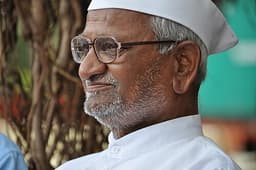
Anna Hazare
Politician · Modern
55.0Total

Julius Caesar
General · Ancient
82.8Total
Basic Information
Born
1937
-100
Died
—
-44
Era
Modern
Ancient
Nationality
India
Roman Republic
Occupation
Politician
General
Civilization
Indian
Western
Score Comparison
Military (10%)
40.0
88.0
Political (20%)
48.0
78.0
Influence (20%)
62.0
85.0
Legacy (20%)
50.0
82.0
Leadership (15%)
65.0
80.0
Strategy (15%)
60.0
85.0
TOTAL
55.0
82.8
Anna Hazare — Complete Timeline
1991 AD
Founded the Bhrashtachar Virodhi Janata AndolanPolitical Action
Hazare founded this organization to fight corruption in rural Maharashtra. He used Gandhian methods like hunger strikes and public protests to expose corrupt officials and politicians.
Anti-CorruptionActivismMaharashtra
Impact: regionalconstructive
1992 AD
Refused the Padma Bhushan awardPolitical Action
Hazare returned the Padma Bhushan award in protest against the government's failure to act on corruption. This gesture reinforced his image as a principled activist.
Award ReturnProtestCorruption
Impact: national
2011 AD
Led the India Against Corruption movementPolitical Action◆ Major
Anna Hazare went on a hunger strike at Jantar Mantar in Delhi, demanding the passage of the Jan Lokpal Bill to combat corruption. The movement gained massive public support and forced the government to form a joint drafting committee.
Anti-CorruptionHunger StrikeJan Lokpal
Impact: nationalconstructive
Julius Caesar — Complete Timeline
58 BC
Gallic WarsWar◆ Major
Caesar, as proconsul of Gaul, launched a series of campaigns that conquered all of Gaul (modern France, Belgium, and parts of Switzerland). He fought numerous battles, including against the Helvetii, the Belgae, and the Gallic chieftain Vercingetorix. The wars brought immense wealth and a loyal army to Caesar.
Gallic WarsConquestRoman Expansion
Impact: regional
49 BC
Crossing the RubiconPolitical Action◆ Major
Caesar led Legio XIII across the Rubicon River into Italy, defying the Roman Senate's order to disband his army. This act triggered a civil war against Pompey and the Optimates, ultimately leading to Caesar's dictatorship and the end of the Roman Republic.
Roman Civil WarEnd of RepublicPower Struggle
Impact: global
48 BC
Battle of PharsalusWar◆ Major
Caesar's outnumbered army defeated the larger forces of Pompey the Great at Pharsalus in Greece. Caesar's tactical use of a reserve line to counter Pompey's cavalry charge proved decisive. Pompey fled to Egypt, where he was assassinated, leaving Caesar as the undisputed master of the Roman world.
Roman Civil WarBattleDecisive Victory
Impact: regional
44 BC
Appointment as Dictator for LifePolitical Action◆ Major
The Roman Senate appointed Caesar dictator perpetuo (dictator for life), granting him unprecedented personal power. This move concentrated military, legislative, and judicial authority in one person, effectively ending the Roman Republic's traditional system of checks and balances and alarming many senators.
DictatorshipEnd of RepublicPower Consolidation
Impact: regionaldestructive
Assassination on the Ides of MarchPolitical Action◆ Major
A group of Roman senators, led by Marcus Junius Brutus and Gaius Cassius Longinus, stabbed Caesar to death at a meeting of the Senate in the Theatre of Pompey. The assassination was intended to restore the Republic, but instead triggered another civil war that led to the rise of the Roman Empire.
AssassinationRoman PoliticsEnd of Republic
Impact: globaldestructive
Expert Analysis
anna-hazare-vs-julius-caesar
# The General and the Gandhian
On a sweltering August morning in 2011, an elderly man in a white cap sat on a platform at Jantar Mantar in Delhi, refusing food and water. Thousands gathered, cameras rolled, and a nation held its breath. Two thousand years earlier, on the banks of the Rubicon River, another man made a decision that would shatter a republic and birth an empire. One crossed a river with legions; the other crossed a threshold of moral conviction with nothing but a fast. Julius Caesar and Anna Hazare, separated by millennia, continents, and the very meaning of power, both sought to reshape their worlds. But their tools, their triumphs, and their tragedies could not have been more different.
Origins
Caesar was born into the chaos of the late Roman Republic, a world of senatorial feuds, slave revolts, and crumbling traditions. His family, the Julii, claimed descent from the goddess Venus, but they were not among the wealthiest. From childhood, Caesar absorbed the brutal lessons of Roman politics: loyalty was fleeting, power was personal, and the only law that mattered was the one you enforced. He learned rhetoric in Greek schools, studied military tactics from earlier wars, and watched his uncle Marius purge enemies in the streets. The Republic was dying, and Caesar was being shaped to inherit its ruins.
Anna Hazare, by contrast, was born in 1937 in a small village in British India. His family was poor, and after his father’s death, young Anna was raised by his uncle in Mumbai. He never finished school. He drove trucks for the Indian Army, fought in the 1965 war against Pakistan, and was deeply influenced by the teachings of Mahatma Gandhi. Where Caesar learned that power came from the sword, Hazare learned that power came from suffering. Gandhi’s salt march and hunger strikes were his textbooks. The world of chariots and conquest was alien to him; his world was one of village councils, land rights, and the slow, grinding work of social change.
Rise to Power
Caesar’s rise was a masterclass in calculated ambition. He borrowed fortunes to fund lavish games, won the hearts of the Roman mob, and climbed the political ladder through alliances with the wealthy Crassus and the powerful Pompey. His governorship of Gaul gave him an army—and with it, the means to conquer a territory larger than Italy itself. When the Senate ordered him to disband his legions, he refused. Crossing the Rubicon in 49 BCE was not a decision of principle; it was a decision of survival. He knew that to step down was to face prosecution, exile, or death. So he marched on Rome, and the Republic fell.
Hazare’s rise was slower, quieter, and entirely different. In the 1990s, he founded the Bhrashtachar Virodhi Janata Andolan, a grassroots movement to fight corruption in rural Maharashtra. He used Gandhian methods: public fasts, marches, and appeals to conscience. In 1992, he refused the Padma Bhushan, one of India’s highest civilian awards, in protest against government inaction on corruption. The gesture was symbolic, but symbols matter. By 2011, when he launched the India Against Corruption movement, he had become a moral force. He did not command legions; he commanded attention. His hunger strike at Jantar Mantar drew millions onto the streets, not through fear, but through shame.
Leadership & Governance
Caesar governed as he conquered: decisively, ruthlessly, and with an eye on eternity. He reformed the calendar, granted citizenship to provincials, redistributed land to veterans, and centralized power in his own hands. His military genius was absolute—he won battles at Alesia, Pharsalus, and Alexandria through speed, discipline, and personal courage. But his political wisdom was flawed. He pardoned enemies who would later stab him, and he treated the Senate not as partners but as subjects. He believed that one man, himself, could fix Rome. In a way, he was right. But the Republic’s traditions were too strong, and his reforms came too fast.
Hazare never held office. He had no army, no treasury, no bureaucracy. His leadership was moral, not institutional. He demanded the passage of the Jan Lokpal Bill, an independent anti-corruption ombudsman. His strategy was simple: fast until the government listened. Critics called it blackmail; supporters called it courage. Unlike Caesar, Hazare did not seek to rule. He sought to compel others to rule justly. His governance was a mirror, not a sword. He reflected the corruption of the state back at itself, and the state was forced to blink.
Triumph & Tragedy
Caesar’s greatest triumph was Gaul. In eight years, he conquered hundreds of tribes, crossed the Rhine, and landed in Britain—feats that made him the most famous man in the Roman world. His greatest tragedy was the Ides of March. Surrounded by senators he had pardoned, he was stabbed twenty-three times. His last words, according to legend, were “Et tu, Brute?” The man who had conquered the world could not conquer the Senate’s resentment. His death plunged Rome into another civil war, and the Republic he had strangled was never revived.
Hazare’s greatest triumph was 2011. The India Against Corruption movement forced the government to draft a stronger Lokpal Bill, and it gave birth to a new political party, the Aam Aadmi Party. But the tragedy was in the aftermath. The bill was weakened, the movement fragmented, and Hazare himself faded from center stage. Unlike Caesar, he was not killed—he was ignored. His greatest failure was not a dagger but indifference. The system he fought absorbed his energy and moved on. Corruption did not end; it adapted.
Character & Destiny
Caesar was arrogant, brilliant, and impatient. He believed that history belonged to the bold, and he was right. But his character drove him to overreach. He could not imagine a world where he was not in control, and so he refused to share power. That refusal cost him his life. Hazare was stubborn, ascetic, and patient to a fault. He believed that truth and suffering would eventually prevail. But his character made him inflexible. He could not imagine a world where a hunger strike was not enough, and so he refused to compromise. That refusal cost him his movement.
Legacy
Caesar’s legacy is the Roman Empire. His name became a title—Kaiser, Tsar—and his reforms outlasted his assassins. He is remembered as a military genius, a political revolutionary, and a cautionary tale about ambition. His writings, especially the *Commentaries on the Gallic War*, are still read. He changed the course of Western civilization.
Hazare’s legacy is more fragile. He revived Gandhian activism in an age of cynicism. He showed that one man, without money or weapons, could shake a government. But his movement did not topple a system; it only dented it. He is remembered as a symbol, not a shaper. His name may not become a title, but it remains a question: Can moral force ever truly defeat institutional corruption?
Conclusion
Standing at Jantar Mantar, Anna Hazare did not look like a conqueror. He looked like a tired old man. Across the centuries, Julius Caesar did not look like a martyr. He looked like a king. One built an empire with blood; the other built a movement with hunger. One died at the hands of his friends; the other faded into the silence of a nation that had moved on. They are both remembered, but for different reasons. Caesar reminds us how easily power corrupts; Hazare reminds us how painfully virtue persists. In the end, the general and the Gandhian both believed they could change the world. One did—and the world has never stopped paying the price. The other tried—and the world is still waiting.
Rankings
🥇
Julius CaesarLeader
Mil: 88.0Pol: 78.0Inf: 85.0
82.8
🥈
Anna Hazare
Mil: 40.0Pol: 48.0Inf: 62.0
55.0
+27.8 behind
How This Comparison Works
Algorithm
Each figure is scored on 6 dimensions (0—100 scale) based on structured historical data: Military (10%), Political (20%), Influence (20%), Legacy (20%), Leadership (15%), Strategy (15%). The weighted total produces the final ranking.
Data Sources
Scores are computed from structured sub-indicators in the database. Scale factors adjust for era (Ancient ×0.85, Modern ×1.0) and civilization size (Eastern ×1.05, Other ×0.80) to account for differences in population and military scale.
Maximum 3 Figures
Comparisons are limited to 2—3 figures to ensure readability and statistical meaningfulness.
Error Margins
±5 points per dimension — Sub-scores are derived from historical records with inherent uncertainty. Two figures within 5 points on a dimension should be considered roughly equivalent in that area.
Total Score Accuracy
±3 points overall — The weighted combination of 6 dimensions produces a total score with approximately ±3 points of uncertainty. Differences of less than 3 points are not statistically significant— the figures are effectively tied.
Known Limitations
- Historical records are incomplete and uneven across civilizations
- Figures from oral-tradition societies may be underrepresented
- Occupation labels can misclassify multi-role figures
- Scores measure capability and impact, not moral character
- Quantitative scoring is a comparison tool, not absolute truth
Capability Radar
Military (10%) — Battles & Warfare
Battles
42
95
Win Rate
47
92
Expansion
51
97
Political (20%) — Governance & Reform
Reform
70
90
Diplomacy
40
85
Economy
10
82
Influence (20%) — Cultural & Global Reach
Cultural
50
88
Global
50
94
Legacy (20%) — Historical Impact
Historical
55
95
Longevity
40
96
Leadership (15%) — Power & Stability
Tenure
0
75
Stability
30
60
Strategy (15%) — Tactics & Innovation
Strategy
50
94
Tactics
56
96
Reform
60
88
Similar Comparisons
Comments & Discussion
No comments yet. Be the first to share your thoughts!