Loading...
Andrei Bogolyubsky vs Edward III
Edward III leads by 15.5 pts · 2 figures compared
…
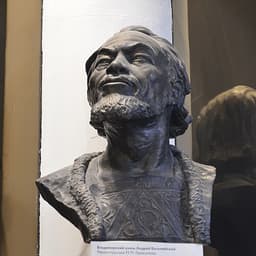
Andrei Bogolyubsky
Emperor · Medieval
46.8Total
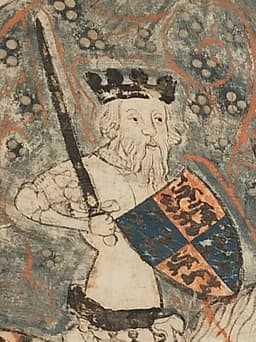
Edward III
Emperor · Medieval
62.3Total
Basic Information
Born
1111
1312
Died
1174
1377
Era
Medieval
Medieval
Nationality
Vladimir-Suzdal
England
Occupation
Emperor
Emperor
Civilization
Western
Western
Score Comparison
Military (10%)
10.0
72.0
Political (20%)
43.7
59.3
Influence (20%)
54.9
68.0
Legacy (20%)
46.7
40.0
Leadership (15%)
62.2
80.0
Strategy (15%)
45.0
72.0
TOTAL
46.8
62.3
Andrei Bogolyubsky — Complete Timeline
1157 AD
Transfer of the Capital to VladimirPolitical Action
After becoming Grand Prince, Andrei moved his capital from Kiev to Vladimir, a city in the northeast. He made Vladimir the political and religious center of his realm, building the Assumption Cathedral and Golden Gate.
Capital MoveVladimirPolitical Shift
Impact: regionalconstructive
1165 AD
Construction of the Church of the Intercession on the NerlCultural◆ Major
Andrei commissioned the Church of the Intercession on the Nerl River near Vladimir. This white-stone church is a masterpiece of medieval Russian architecture and a symbol of the Vladimir-Suzdal principality's cultural flourishing.
ArchitectureChurchCultural Symbol
Impact: regionalconstructive
1169 AD
Sack of KievWar
Andrei Bogolyubsky led a coalition of Rus princes in sacking Kiev, the traditional capital. His forces looted and burned the city, marking a decline in Kiev's power and the rise of Vladimir-Suzdal as a new center.
Sack of KievDeclineVladimir-Suzdal
Impact: regionaldestructive
1174 AD
Assassination by BoyarsPolitical Action◆ Major
Andrei was assassinated by a group of boyars in his palace at Bogolyubovo. The conspiracy was driven by his autocratic rule and conflicts with the nobility. His death led to a period of civil strife in Vladimir-Suzdal.
AssassinationBoyar RevoltCivil Strife
Impact: nationaltragic
Edward III — Complete Timeline
1337 AD
Claimed the French ThronePolitical Action
Edward III formally claimed the French crown through his mother Isabella, daughter of Philip IV of France, rejecting the Salic law that barred female succession. This claim initiated the Hundred Years' War between England and France.
Hundred Years' WarSuccession CrisisDynastic Claim
Impact: regional
1346 AD
Battle of CrécyWar◆ Major
Edward III's English army defeated a larger French force at Cr
Hundred Years' WarBattleLongbow
Impact: regional
1347 AD
Siege of CalaisWar◆ Major
Edward III besieged the French port of Calais for nearly a year, forcing its surrender. The city became an English enclave for over two centuries, serving as a strategic base for English operations in France.
Hundred Years' WarSiegeCalais
Impact: regional
1356 AD
Battle of PoitiersWar◆ Major
Edward III's son, Edward the Black Prince, led English forces to victory at Poitiers, capturing King John II of France. This triumph followed Cr
Hundred Years' WarBattleCapture of King John
Impact: regional
1360 AD
Treaty of BrétignyPolitical Action◆ Major
Edward III signed the Treaty of Br
TreatyHundred Years' WarTerritorial Gains
Impact: regional
Expert Analysis
Origins
Andrei Bogolyubsky (c. 1111–1174) was born into the Rurikid dynasty as the second son of Yuri Dolgoruky, Prince of Suzdal. His early years were spent in the northeastern Rus' lands, far from the traditional power center of Kiev. He received a typical princely education in warfare and governance, but his ambition and piety were shaped by the region's growing autonomy. Andrei's mother was a Polovtsian princess, reflecting the complex steppe alliances of the era.
Edward III (1312–1377) was born at Windsor Castle to King Edward II and Isabella of France. His childhood was marked by political turmoil: his father's weak rule and his mother's affair with Roger Mortimer led to Edward II's deposition in 1327. Young Edward was crowned at age 14, with Mortimer and Isabella ruling as regents. He grew up in a court rife with intrigue, which honed his political instincts and desire for personal control.
Rise to Power
Andrei's rise began when his father Yuri became Grand Prince of Kiev in 1149. Andrei was appointed to rule Vyshgorod, but he disliked the south and secretly left for Vladimir in 1155, taking a prized icon of the Virgin Mary. This act of defiance established his reputation. Upon Yuri's death in 1157, Andrei claimed the title of Grand Prince but refused to move to Kiev, instead ruling from Vladimir. He expelled rival princes and centralized power, becoming the first ruler to assert dominance without residing in Kiev. His sack of Kiev in 1169, when he led a coalition of eleven princes, marked a turning point: the city was looted and burned, ending its status as the undisputed capital.
Edward III's rise was more dramatic. In 1327, he was forced to execute his father's loyalists and accept Mortimer's rule. In 1330, at age 18, he staged a coup: with a small group of supporters, he arrested Mortimer at Nottingham Castle and executed him. Edward then assumed full power, exiling his mother to a convent. He quickly moved to assert English authority, invading Scotland in 1333 to restore Edward Balliol as vassal king. His claim to the French throne in 1337, based on his mother's lineage, ignited the Hundred Years' War, a conflict that defined his reign.
Leadership & Governance
Andrei governed as an autocrat, bypassing the traditional boyar councils and city veches (popular assemblies). He moved the capital to Vladimir, a smaller but more controllable city, and built it up with stone churches and fortifications. He appointed loyalists to key positions and exiled or killed rivals. His governance was based on personal authority rather than feudal consensus, which created resentment among the boyars. He also sought to make Vladimir a religious center, establishing a separate metropolitanate (though unsuccessful). His style scored 62.2 in Leadership, reflecting his decisive but divisive approach.
Edward III led through a combination of chivalric pageantry and pragmatic governance. He cultivated the nobility by founding the Order of the Garter in 1348, which bound them to his cause. He delegated military command to his son, the Black Prince, while managing finances through Parliament, which he convened frequently to secure war funding. His Leadership score of 80.0 reflects his ability to inspire and manage a complex kingdom. He also promoted English law and language, but his focus remained on war and territorial expansion.
Triumph & Tragedy
Andrei's greatest triumph was the transformation of Vladimir-Suzdal into the dominant Rus' principality, setting the stage for Moscow's later rise. The Church of the Intercession on the Nerl, built in 1165, stands as a masterpiece of medieval architecture. Yet his tragedy was his assassination in 1174 by boyars who resented his autocracy. His death led to a succession crisis and the fragmentation of his realm. His military score of 10.0 reflects his ineffectiveness in battle compared to his political maneuvering.
Edward III's triumphs include the stunning victories at Crécy (1346) and Poitiers (1356), where English longbowmen decimated French knights. The Treaty of Brétigny (1360) gave England vast territories in Aquitaine. His tragedy was the eventual loss of these gains after his death, as the war resumed and England's fortunes waned. His later years saw declining health and a strained relationship with his son. His military score of 72.0 and Strategy of 72.0 underscore his battlefield acumen.
Character & Destiny
Andrei was pious, ambitious, and ruthless. He saw himself as a divinely chosen ruler, independent of Kiev, and his character drove him to break tradition. But his isolation and distrust of the boyars sealed his fate. Historical assessments note his 'unbending will' that made enemies of his own court. His total score of 46.8 reflects a limited but impactful reign.
Edward III was charismatic, chivalric, and politically savvy. He understood the importance of spectacle and consensus, but his obsession with the French crown led to decades of war that drained England's resources. His total score of 62.3 places him as a more effective ruler, though his legacy is mixed.
Legacy
Andrei's legacy is the shift of Rus' power to the northeast, influencing the rise of Moscow. His architectural patronage left iconic monuments. However, his autocratic style was not immediately imitated; his assassination showed the limits of personal rule. His Influence score of 54.9 and Legacy of 46.7 reflect his regional but foundational impact.
Edward III's legacy is the Hundred Years' War, which reshaped English and French national identities. His military innovations (longbow tactics) and the Order of the Garter became enduring symbols. Yet his territorial gains were temporary, and the war's cost contributed to later unrest. His Influence score of 68.0 and Legacy of 40.0 indicate a broader but more volatile impact.
Conclusion
Edward III had a greater impact on history due to his higher total score (62.3 vs 46.8) and his role in a conflict that shaped European nation-states. Andrei's changes were regional and ephemeral, while Edward's wars had continental consequences. Edward's military and leadership scores (72.0 and 80.0) dwarf Andrei's (10.0 and 62.2). Although Andrei's shift of power was significant, Edward's long-term influence on warfare and politics is more profound. Thus, Edward III emerges as the more consequential figure.
Rankings
🥇
Edward IIILeader
Mil: 72.0Pol: 59.3Inf: 68.0
62.3
🥈
Andrei Bogolyubsky
Mil: 10.0Pol: 43.7Inf: 54.9
46.8
+15.5 behind
How This Comparison Works
Algorithm
Each figure is scored on 6 dimensions (0—100 scale) based on structured historical data: Military (10%), Political (20%), Influence (20%), Legacy (20%), Leadership (15%), Strategy (15%). The weighted total produces the final ranking.
Data Sources
Scores are computed from structured sub-indicators in the database. Scale factors adjust for era (Ancient ×0.85, Modern ×1.0) and civilization size (Eastern ×1.05, Other ×0.80) to account for differences in population and military scale.
Maximum 3 Figures
Comparisons are limited to 2—3 figures to ensure readability and statistical meaningfulness.
Error Margins
±5 points per dimension — Sub-scores are derived from historical records with inherent uncertainty. Two figures within 5 points on a dimension should be considered roughly equivalent in that area.
Total Score Accuracy
±3 points overall — The weighted combination of 6 dimensions produces a total score with approximately ±3 points of uncertainty. Differences of less than 3 points are not statistically significant— the figures are effectively tied.
Known Limitations
- Historical records are incomplete and uneven across civilizations
- Figures from oral-tradition societies may be underrepresented
- Occupation labels can misclassify multi-role figures
- Scores measure capability and impact, not moral character
- Quantitative scoring is a comparison tool, not absolute truth
Capability Radar
Military (10%) — Battles & Warfare
Battles
35
85
Win Rate
40
80
Expansion
45
85
Political (20%) — Governance & Reform
Reform
45
70
Diplomacy
40
75
Economy
35
80
Influence (20%) — Cultural & Global Reach
Cultural
40
65
Global
30
70
Legacy (20%) — Historical Impact
Historical
45
80
Longevity
35
75
Leadership (15%) — Power & Stability
Tenure
50
85
Stability
30
70
Strategy (15%) — Tactics & Innovation
Strategy
35
90
Tactics
30
85
Reform
20
75
Similar Comparisons
Comments & Discussion
No comments yet. Be the first to share your thoughts!