Loading...
Edward III vs Napoleon Bonaparte
Napoleon Bonaparte leads by 8.6 pts · 2 figures compared
…
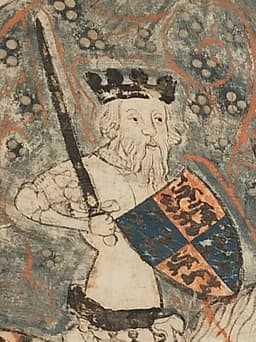
Edward III
Emperor · Medieval
62.3Total

Napoleon Bonaparte
General · Modern
70.9Total
Basic Information
Born
1312
1769
Died
1377
1821
Era
Medieval
Modern
Nationality
England
France
Occupation
Emperor
General
Civilization
Western
Western
Score Comparison
Military (10%)
72.0
94.0
Political (20%)
59.3
72.0
Influence (20%)
68.0
40.0
Legacy (20%)
40.0
80.0
Leadership (15%)
80.0
78.0
Strategy (15%)
72.0
90.0
TOTAL
62.3
70.9
Edward III — Complete Timeline
1337 AD
Claimed the French ThronePolitical Action
Edward III formally claimed the French crown through his mother Isabella, daughter of Philip IV of France, rejecting the Salic law that barred female succession. This claim initiated the Hundred Years' War between England and France.
Hundred Years' WarSuccession CrisisDynastic Claim
Impact: regional
1346 AD
Battle of CrécyWar◆ Major
Edward III's English army defeated a larger French force at Cr
Hundred Years' WarBattleLongbow
Impact: regional
1347 AD
Siege of CalaisWar◆ Major
Edward III besieged the French port of Calais for nearly a year, forcing its surrender. The city became an English enclave for over two centuries, serving as a strategic base for English operations in France.
Hundred Years' WarSiegeCalais
Impact: regional
1356 AD
Battle of PoitiersWar◆ Major
Edward III's son, Edward the Black Prince, led English forces to victory at Poitiers, capturing King John II of France. This triumph followed Cr
Hundred Years' WarBattleCapture of King John
Impact: regional
1360 AD
Treaty of BrétignyPolitical Action◆ Major
Edward III signed the Treaty of Br
TreatyHundred Years' WarTerritorial Gains
Impact: regional
Napoleon Bonaparte — Complete Timeline
1799 AD
Coup of 18 BrumaireOther◆ Major
Napoleon Bonaparte, with support from his brother Lucien and key political figures, overthrew the Directory in a bloodless coup. He established the Consulate with himself as First Consul, effectively becoming the ruler of France. This event ended the French Revolution's most unstable period.
French RevolutionCoupRise to Power
Impact: regional
1804 AD
Promulgation of the Napoleonic CodeOther◆ Major
Napoleon enacted the Civil Code of the French, known as the Napoleonic Code, a comprehensive set of laws that replaced the fragmented feudal legal systems. The code established legal equality, protected property rights, and secularized law. It became the basis for legal systems in many European and world countries.
Legal ReformNapoleonic CodeCivil Law
Impact: globalconstructive
1805 AD
Battle of AusterlitzWar◆ Major
Napoleon's Grande Arm
Napoleonic WarsBattleDecisive Victory
Impact: global
1812 AD
Invasion of RussiaWar◆ Major
Napoleon led the Grande Arm
Napoleonic WarsInvasionDisaster
Impact: globaldestructive
1815 AD
Battle of WaterlooWar◆ Major
Napoleon's French army was defeated by the combined forces of the Duke of Wellington's Anglo-Allied army and Gebhard Leberecht von Bl
Napoleonic WarsBattleFinal Defeat
Impact: globaldestructive
Expert Analysis
edward-iii-vs-napoleon-bonaparte
### The Conqueror and the King
On a windswept field in northern France, two men, separated by nearly five centuries, might have recognized something of themselves in each other. One, a short, intense Corsican, watched his Grande Armée crush the Prussians at Jena in 1806, his ambition seemingly without limit. The other, a tall, golden-haired Plantagenet, stood atop a hill at Crécy in 1346, watching his longbowmen decimate a French army that outnumbered his own, his claim to a throne written in blood and arrows. Both men sought to redraw the map of Europe. But one built an empire that collapsed in a single decade, while the other forged a war that lasted a hundred years. The difference between them is not merely one of time, but of character, circumstance, and the very nature of their ambition.
### Origins
Napoleon Bonaparte was born in 1769 on the island of Corsica, a place that had only just become French. He was an outsider, a provincial nobleman with a chip on his shoulder and a fire in his belly. The French Revolution, which erupted when he was twenty, shattered the old world and created a ladder for talent. For a man of immense ambition and military genius, it was a perfect storm. He was a child of the Enlightenment, a believer in merit, order, and rational law. His world was one of ideas, of grand codes and sweeping reforms.
Edward III was born in 1312 into the very heart of medieval kingship. His grandfather, Edward I, had conquered Wales and fought Scotland. His father, Edward II, was a disastrous king, weak and deposed. Edward III inherited a crown in crisis, a realm divided by noble factions and humiliated by Scotland. He was no outsider; he was the living embodiment of Plantagenet kingship, raised on chivalry, tournament, and the sacred duty of reclaiming lost honor. His ambition was not to create a new world, but to restore the old one—to reclaim the lands his ancestors had lost in France.
### Rise to Power
Napoleon’s rise was a rocket. He was a young artillery officer who seized his moment at the Siege of Toulon in 1793, quickly rising through the ranks of a revolutionary army that needed commanders, not noblemen. The Directory, a corrupt and weak government, gave him command of an army in Italy, and he turned it into a legend. He was not a politician in the traditional sense; he was a general who used military glory as a political weapon. In 1799, he staged a coup d’état and made himself First Consul. Five years later, he crowned himself Emperor. His path was one of pure, audacious will.
Edward III’s rise was a slow, careful consolidation. He was crowned at fourteen, but real power lay with his mother’s lover, Roger Mortimer, who had helped depose his father. For three years, Edward played the puppet king. But in 1330, at the age of eighteen, he staged a quiet coup of his own, seizing Mortimer at Nottingham Castle and executing him. He took the reins personally, not as a revolutionary, but as a king reasserting his birthright. His power came not from a revolution, but from patience, a sense of duty, and a deep understanding of the aristocratic world he was born to rule.
### Leadership & Governance
As a ruler, Napoleon was a whirlwind of energy and control. He centralized the French state, created the Bank of France, and most famously, codified the Napoleonic Code, a system of laws that emphasized equality before the law, property rights, and secular authority. He was a master of propaganda, portraying himself as the savior of the Revolution. On the battlefield, he was a genius—a master of speed, maneuver, and decisive battle. His political wisdom, however, was brittle. He trusted no one, appointed his own family to thrones, and believed his will alone could hold his empire together. “Power is my mistress,” he once said, and he was faithful only to her.
Edward III was a different kind of leader. He was not a lawgiver but a manager of men. He understood the feudal system intimately. To fund his wars, he had to bargain with Parliament, and he did so skillfully, granting concessions in exchange for taxes. He was a patron of chivalry, founding the Order of the Garter to bind his greatest knights to his cause. On the battlefield, he was a competent commander, but his true genius was delegation. He trusted his son, the Black Prince, to win the decisive victory at Poitiers in 1356. Edward III’s political wisdom was a form of partnership. He led by inspiring loyalty, not by commanding fear.
### Triumph & Tragedy
Napoleon’s greatest triumph was the empire of 1812, which stretched from Spain to Poland. He had defeated Austria, Prussia, and Russia in a series of dazzling campaigns. His greatest tragedy was the invasion of Russia that same year. Overconfident and unable to adapt, he marched his Grande Armée into the vast, frozen emptiness. Of the 600,000 men who crossed the Niemen, fewer than 100,000 returned. It was a wound from which his empire never recovered. The Battle of Waterloo in 1815 was the final, fatal stroke.
Edward III’s greatest triumph was the Treaty of Brétigny in 1360. After decades of war, including the stunning victories at Crécy and Poitiers, where the French king himself was captured, Edward forced France to cede vast territories in Aquitaine. He seemed to have won the Hundred Years’ War. His tragedy was that he could not hold it. The treaty was fragile, the gains unsustainable. In his later years, as he declined into senility, the French under a new king slowly took back everything he had won. He died in 1377, a great king whose work had already begun to unravel.
### Character & Destiny
Napoleon’s character was a furnace of ambition, ego, and restless energy. He could not stop. Every victory demanded another. “I am a man of the past,” he once reflected, “but I also belong to the future.” In truth, he belonged only to himself. His relentless drive for glory and control ultimately isolated him and made compromise impossible. His destiny was to burn bright and fast, like a meteor.
Edward III’s character was more grounded. He was a pragmatist, a warrior-king who knew when to fight and when to negotiate. He loved pageantry, but he also loved stability. His ambition was real, but it was bounded by a sense of feudal obligation and royal duty. He did not seek to conquer the world; he sought to reclaim his inheritance. His destiny was to endure, to build a foundation for a war that would outlive him. He was a builder, not a destroyer.
### Legacy
Napoleon’s legacy is a paradox. He was a tyrant who spread the ideals of the French Revolution across Europe, a conqueror who inspired nationalism in the very nations he crushed. The Napoleonic Code remains the basis of law in many countries. He is remembered as a military genius, a flawed titan, a cautionary tale about the limits of power. His name is synonymous with ambition and its consequences.
Edward III’s legacy is more subtle. He is not a household name, but his actions shaped the English nation. The Hundred Years’ War forged a sense of English identity, distinct from the French. His military innovations—the use of the longbow, the reliance on infantry—changed the nature of warfare. And his careful management of Parliament helped lay the groundwork for constitutional monarchy. He is remembered as a great medieval king, a man who understood that true power lies not in conquering, but in ruling well.
### Conclusion
Standing at the end of their stories, one sees two very different kinds of greatness. Napoleon Bonaparte was a force of nature, a man who remade the world in his image, only to be broken by it. Edward III was a king of his time, who understood the limits of his age and worked within them to achieve lasting, if incomplete, victories. Napoleon’s tragedy was that he could not stop. Edward’s tragedy was that he could not finish. Both men remind us that history is not made by those who simply want to win, but by those who understand what they are willing to lose.
Rankings
🥇
Napoleon BonaparteLeader
Mil: 94.0Pol: 72.0Inf: 40.0
70.9
🥈
Edward III
Mil: 72.0Pol: 59.3Inf: 68.0
62.3
+8.6 behind
How This Comparison Works
Algorithm
Each figure is scored on 6 dimensions (0—100 scale) based on structured historical data: Military (10%), Political (20%), Influence (20%), Legacy (20%), Leadership (15%), Strategy (15%). The weighted total produces the final ranking.
Data Sources
Scores are computed from structured sub-indicators in the database. Scale factors adjust for era (Ancient ×0.85, Modern ×1.0) and civilization size (Eastern ×1.05, Other ×0.80) to account for differences in population and military scale.
Maximum 3 Figures
Comparisons are limited to 2—3 figures to ensure readability and statistical meaningfulness.
Error Margins
±5 points per dimension — Sub-scores are derived from historical records with inherent uncertainty. Two figures within 5 points on a dimension should be considered roughly equivalent in that area.
Total Score Accuracy
±3 points overall — The weighted combination of 6 dimensions produces a total score with approximately ±3 points of uncertainty. Differences of less than 3 points are not statistically significant— the figures are effectively tied.
Known Limitations
- Historical records are incomplete and uneven across civilizations
- Figures from oral-tradition societies may be underrepresented
- Occupation labels can misclassify multi-role figures
- Scores measure capability and impact, not moral character
- Quantitative scoring is a comparison tool, not absolute truth
Capability Radar
Military (10%) — Battles & Warfare
Battles
85
95
Win Rate
80
90
Expansion
85
95
Political (20%) — Governance & Reform
Reform
70
95
Diplomacy
75
80
Economy
80
85
Influence (20%) — Cultural & Global Reach
Cultural
65
85
Global
70
90
Legacy (20%) — Historical Impact
Historical
80
95
Longevity
75
90
Leadership (15%) — Power & Stability
Tenure
85
85
Stability
70
70
Strategy (15%) — Tactics & Innovation
Strategy
90
95
Tactics
85
98
Reform
75
92
Similar Comparisons
Comments & Discussion
Campo Formio's Ghost6/17/2026
Pure Napoleonic fanboy here. The Jena comparison is cute, but it misses the point—Napoleon didn’t just win battles; he fundamentally rewired Europe. His Civil Code still governs half the continent, while Edward III’s legacy is a pointless bloodbath that bankrupted England. The Hundred Years’ War was a feudal tantrum driven by dynastic ego, not strategy. If Edward had faced Napoleon’s coalition warfare, his longbows would’ve been shredded by artillery at a mile out. One man built a modern state;
Longbow Realist6/17/2026
You’re dismissing Crecy like it’s a footnote. Edward III invented combined arms warfare: longbowmen behind stakes, dismounted knights, perfect terrain—that was revolutionary. Napoleon copied but didn’t create; he inherited revolutionary tactics and better logistics. Edward started from scratch with feudal levies and still crushed a force three times his size. Also, Napoleon’s Code is great, but he reinstated slavery in 1802. Edward abolished serfdom in parts of England and elevated the Commons.
洛林铁匠6/17/2026
拿战粉别吹了。拿破仑那套靠的是法国大革命提供的兵源和民族狂热,爱德华三世手里只有一堆不听使唤的骑士和农民。克雷西战役前,法国人已经用弩箭和骑兵配合打了三十年,爱德华硬是发明了长弓下马战术——这不是抄作业,是原创。拿破仑在意大利靠的是敌军分散,在俄国靠的是运气耗尽。真要比战略创新,爱德华的“阿金库尔前夜”式布阵,拿破仑一辈子没搞出来过。而且,拿破仑法典再牛,他死后法国退回波旁王朝;爱德华死后,英格兰直接开启了百年战争第二阶段。谁的影响力更硬核?
帝国计算器6/17/2026
数据层面碾压。拿破仑打了60场战役,胜率超过90%;爱德华三世的主线战役不超过20场,且多次被法国海军骚扰中断。更关键的是,拿破仑在1806年耶拿一战就击溃普鲁士全境,而爱德华用了三十多年才拿下加来一个港口。规模差了三个数量级:拿破仑动员过百万大军,爱德华能拉到一万长弓手就烧高香了。你说战术克制?那是对手。拿破仑的对手是全欧洲,爱德华的对手是一个封建法国。说穿了,中古战争在工业化前就是开胃小菜,根本不够看。
修道院抄写员6/17/2026
别在这比军事实力了,都是屠夫。爱德华三世在1346年洗劫卡昂时屠了三千平民,连妇女儿童都没放过;拿破仑在雅法炮击后处决了四千名投降的