Loading...
This comparison has not been analyzed yet.
One-time AI generation (~1 minute). Scores and timeline are already available below.
Amr ibn al-As vs Sima Yi
Amr ibn al-As leads by 1.4 pts · 2 figures compared
…

Amr ibn al-As
General · Ancient
59.7Total
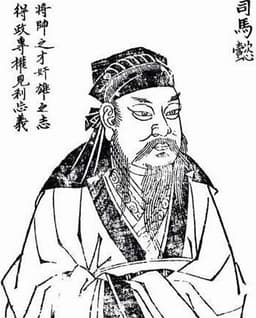
Sima Yi
General · Ancient
58.3Total
Basic Information
Born
-573
179
Died
—
251
Era
Ancient
Ancient
Nationality
Rashidun Caliphate
China
Occupation
General
General
Civilization
Middle Eastern
Eastern
Score Comparison
Military (10%)
72.0
75.0
Political (20%)
46.6
59.2
Influence (20%)
56.7
58.3
Legacy (20%)
58.0
40.0
Leadership (15%)
68.0
66.0
Strategy (15%)
66.7
74.4
TOTAL
59.7
58.3
Amr ibn al-As — Complete Timeline
640 AD
Conquest of EgyptWar◆ Major
Amr ibn al-As led the Muslim Arab army into Egypt, then a province of the Byzantine Empire. He defeated the Byzantines at the Battle of Heliopolis and captured the fortress of Babylon, leading to the surrender of Alexandria in 642.
Islamic ConquestEgyptByzantine Empire
Impact: regional
641 AD
Foundation of FustatCultural◆ Major
Amr ibn al-As established the city of Fustat near the Nile Delta as the new capital of Muslim Egypt. The city became a major administrative and commercial center, later evolving into modern Cairo.
City FoundationEgyptIslamic Architecture
Impact: regionalconstructive
642 AD
Governor of EgyptPolitical Action◆ Major
After the conquest, Amr ibn al-As was appointed governor of Egypt by Caliph Umar. He administered the province, implemented tax systems, and oversaw the construction of the Mosque of Amr ibn al-As, the first mosque in Africa.
GovernorshipEgyptAdministration
Impact: regionalconstructive
Sima Yi — Complete Timeline
228 AD
Battle of JietingWar◆ Major
Sima Yi led the Cao Wei forces to defeat the Shu Han army at Jieting, forcing Zhuge Liang to retreat. This victory prevented Shu from capturing the Chang'an region and secured Wei's western border.
BattleCao WeiShu HanThree Kingdoms
Impact: regionalconstructive
231 AD
Defense of HefeiWar
Sima Yi successfully defended the city of Hefei against an Eastern Wu invasion led by Sun Quan. He repelled the Wu forces, maintaining Wei control over the Huai River region.
DefenseCao WeiEastern WuThree Kingdoms
Impact: regionalconstructive
249 AD
Coup at Gaoping TombsPolitical Action
Sima Yi staged a coup against the regent Cao Shuang at the Gaoping Tombs. He seized control of the Cao Wei government, executing Cao Shuang and his faction. This event gave the Sima clan effective control over Wei.
CoupCao WeiThree KingdomsPower Struggle
Impact: nationaldestructive
251 AD
Death and Posthumous HonorsOther◆ Major
Sima Yi died in 251 AD. His descendants later founded the Jin dynasty, fulfilling his ambition. He was posthumously honored as Emperor Xuan of Jin, though he never ruled as emperor himself.
DeathJin DynastyLegacy
Impact: national
This comparison has not been analyzed yet.
One-time AI generation (~1 minute). Scores and timeline are already available below.
Rankings
🥇
Amr ibn al-AsLeader
Mil: 72.0Pol: 46.6Inf: 56.7
59.7
🥈
Sima Yi
Mil: 75.0Pol: 59.2Inf: 58.3
58.3
+1.4 behind
How This Comparison Works
Algorithm
Each figure is scored on 6 dimensions (0—100 scale) based on structured historical data: Military (10%), Political (20%), Influence (20%), Legacy (20%), Leadership (15%), Strategy (15%). The weighted total produces the final ranking.
Data Sources
Scores are computed from structured sub-indicators in the database. Scale factors adjust for era (Ancient ×0.85, Modern ×1.0) and civilization size (Eastern ×1.05, Other ×0.80) to account for differences in population and military scale.
Maximum 3 Figures
Comparisons are limited to 2—3 figures to ensure readability and statistical meaningfulness.
Error Margins
±5 points per dimension — Sub-scores are derived from historical records with inherent uncertainty. Two figures within 5 points on a dimension should be considered roughly equivalent in that area.
Total Score Accuracy
±3 points overall — The weighted combination of 6 dimensions produces a total score with approximately ±3 points of uncertainty. Differences of less than 3 points are not statistically significant— the figures are effectively tied.
Known Limitations
- Historical records are incomplete and uneven across civilizations
- Figures from oral-tradition societies may be underrepresented
- Occupation labels can misclassify multi-role figures
- Scores measure capability and impact, not moral character
- Quantitative scoring is a comparison tool, not absolute truth
Capability Radar
Military (10%) — Battles & Warfare
Battles
65
78
Win Rate
70
75
Expansion
75
72
Political (20%) — Governance & Reform
Reform
55
65
Diplomacy
70
82
Economy
50
70
Influence (20%) — Cultural & Global Reach
Cultural
55
65
Global
60
55
Legacy (20%) — Historical Impact
Historical
65
80
Longevity
60
75
Leadership (15%) — Power & Stability
Tenure
60
80
Stability
55
75
Strategy (15%) — Tactics & Innovation
Strategy
75
85
Tactics
72
88
Reform
40
60
Similar Comparisons
Comments & Discussion
No comments yet. Be the first to share your thoughts!