Loading...
Amenemhat III vs Julius Caesar
Julius Caesar leads by 26.1 pts · 2 figures compared
…
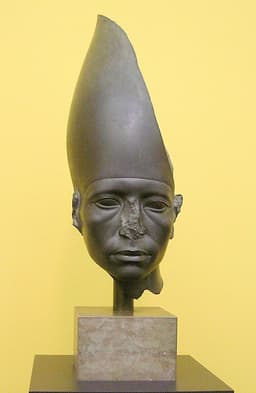
Amenemhat III
Emperor · Ancient
56.7Total

Julius Caesar
General · Ancient
82.8Total
Basic Information
Born
-1800
-100
Died
-1755
-44
Era
Ancient
Ancient
Nationality
Middle Kingdom Egypt
Roman Republic
Occupation
Emperor
General
Civilization
Middle Eastern
Western
Score Comparison
Military (10%)
25.9
88.0
Political (20%)
72.0
78.0
Influence (20%)
62.0
85.0
Legacy (20%)
58.0
82.0
Leadership (15%)
72.0
80.0
Strategy (15%)
25.0
85.0
TOTAL
56.7
82.8
Amenemhat III — Complete Timeline
1790 BC
Construction of the Black Pyramid at DahshurCultural◆ Major
Amenemhat III built the Black Pyramid at Dahshur, named for its dark mudbrick core. The pyramid was poorly constructed and suffered from structural issues, leading to its partial collapse in antiquity. It contained a complex burial chamber with a massive quartzite sarcophagus.
PyramidArchitectureDahshur
Impact: national
1785 BC
Construction of the Hawara Pyramid and LabyrinthCultural◆ Major
Amenemhat III built his second pyramid at Hawara, near the Faiyum. Adjacent to it, he constructed a vast mortuary temple complex known to later Greek writers as the Labyrinth, described by Herodotus as surpassing the pyramids in scale. The complex served as an administrative and religious center.
PyramidLabyrinthArchitecture
Impact: nationalconstructive
1780 BC
Completion of Faiyum Land ReclamationReform◆ Major
Amenemhat III completed the large-scale irrigation and land reclamation projects in the Faiyum region begun by his predecessors. By regulating the inflow of Nile water, he expanded arable land significantly, making the Faiyum one of the most productive agricultural areas in Egypt and contributing to the prosperity of his reign.
IrrigationAgricultureFaiyum
Impact: regionalconstructive
1775 BC
Peak of Middle Kingdom ProsperityPolitical Action◆ Major
Under Amenemhat III, Egypt reached the zenith of its Middle Kingdom power and wealth. Extensive mining expeditions to Sinai and the Eastern Desert yielded turquoise and copper. Trade flourished, and the administration was efficient, leading to a period of stability and cultural achievement often regarded as a golden age.
Golden AgeProsperityMiddle Kingdom
Impact: nationalconstructive
Julius Caesar — Complete Timeline
58 BC
Gallic WarsWar◆ Major
Caesar, as proconsul of Gaul, launched a series of campaigns that conquered all of Gaul (modern France, Belgium, and parts of Switzerland). He fought numerous battles, including against the Helvetii, the Belgae, and the Gallic chieftain Vercingetorix. The wars brought immense wealth and a loyal army to Caesar.
Gallic WarsConquestRoman Expansion
Impact: regional
49 BC
Crossing the RubiconPolitical Action◆ Major
Caesar led Legio XIII across the Rubicon River into Italy, defying the Roman Senate's order to disband his army. This act triggered a civil war against Pompey and the Optimates, ultimately leading to Caesar's dictatorship and the end of the Roman Republic.
Roman Civil WarEnd of RepublicPower Struggle
Impact: global
48 BC
Battle of PharsalusWar◆ Major
Caesar's outnumbered army defeated the larger forces of Pompey the Great at Pharsalus in Greece. Caesar's tactical use of a reserve line to counter Pompey's cavalry charge proved decisive. Pompey fled to Egypt, where he was assassinated, leaving Caesar as the undisputed master of the Roman world.
Roman Civil WarBattleDecisive Victory
Impact: regional
44 BC
Appointment as Dictator for LifePolitical Action◆ Major
The Roman Senate appointed Caesar dictator perpetuo (dictator for life), granting him unprecedented personal power. This move concentrated military, legislative, and judicial authority in one person, effectively ending the Roman Republic's traditional system of checks and balances and alarming many senators.
DictatorshipEnd of RepublicPower Consolidation
Impact: regionaldestructive
Assassination on the Ides of MarchPolitical Action◆ Major
A group of Roman senators, led by Marcus Junius Brutus and Gaius Cassius Longinus, stabbed Caesar to death at a meeting of the Senate in the Theatre of Pompey. The assassination was intended to restore the Republic, but instead triggered another civil war that led to the rise of the Roman Empire.
AssassinationRoman PoliticsEnd of Republic
Impact: globaldestructive
Expert Analysis
Origins
Amenemhat III, born around 1860 BCE, was the son of Pharaoh Senusret III. He inherited a stable and prosperous Middle Kingdom Egypt, with a centralized government and strong military. His education focused on administration, religious rituals, and engineering. Julius Caesar, born in 100 BCE into the patrician Julian family in Rome, grew up during the late Republic's turmoil. His father died when he was 16, and he received a traditional Roman education in rhetoric, law, and military tactics. His family claimed descent from the goddess Venus, but they were not among the wealthiest.
Rise to Power
Amenemhat III ascended the throne around 1860 BCE after his father's death, without significant opposition. He continued his father's policies, expanding Egypt's influence through diplomacy and trade rather than conquest. In contrast, Caesar rose through political and military maneuvering. He served as quaestor in Spain, then aedile, and in 63 BCE became pontifex maximus. His military reputation grew during the Gallic Wars (58-50 BCE), where he conquered Gaul and invaded Britain. The Senate's attempt to recall him led to his crossing of the Rubicon in 49 BCE, triggering a civil war. He defeated Pompey at Pharsalus in 48 BCE, becoming dictator.
Leadership & Governance
Amenemhat III governed as a traditional pharaoh, emphasizing stability and prosperity. He completed the Faiyum land reclamation project, building canals and regulating the Nile's flow to create arable land. His administration oversaw extensive mining in Sinai and the Eastern Desert, yielding copper, turquoise, and gold. He built two pyramids: the Black Pyramid at Dahshur (which collapsed due to poor design) and the Hawara Pyramid, known for its adjacent labyrinthine mortuary temple. Caesar, as dictator, enacted reforms including land redistribution, debt relief, and the Julian calendar. He centralized power, reduced the Senate's authority, and granted citizenship to provincials. His military leadership was direct and innovative, as at Pharsalus where he used a reserve line to counter Pompey's cavalry.
Triumph & Tragedy
Amenemhat III's greatest success was the economic peak of the Middle Kingdom, with flourishing trade and mining. His Faiyum project increased agricultural output and stabilized food supply. However, his Black Pyramid was structurally flawed and collapsed, and his labyrinth, though famous, was eventually destroyed. Caesar's triumphs include the conquest of Gaul, which brought immense wealth and territory to Rome, and his victory in the civil war. His reforms had lasting impact. Yet his assassination in 44 BCE, a direct result of his accumulation of power, plunged Rome into further civil wars. His dictatorship, while effective, undermined the Republic he sought to reform.
Character & Destiny
Amenemhat III was pragmatic and administrative, focused on internal development rather than military glory. His cautious nature led to stability but limited expansion. Caesar was ambitious, charismatic, and risk-taking. His crossing of the Rubicon was a decisive gamble. His clemency toward former enemies, like Brutus, may have been a miscalculation. The historian Suetonius noted Caesar's arrogance in ignoring warnings of the conspiracy. Ancient Egyptian records portray Amenemhat III as a wise ruler who maintained ma'at (order). Both men's characters shaped their fates: Amenemhat III's measured approach ensured a peaceful reign; Caesar's boldness brought both triumph and a violent end.
Legacy
Amenemhat III's legacy lies in Egypt's prosperity and the Faiyum region, which remained fertile for centuries. His labyrinth inspired Greek writers. However, his pyramid failures and the eventual decline of the Middle Kingdom limited his long-term impact. Caesar's legacy is immense: his military campaigns expanded Rome's boundaries, his reforms set precedents for imperial rule, and his name became synonymous with autocracy. The Julian calendar was used for centuries. His adopted heir Octavian became Augustus, the first Roman emperor. Caesar scored 88.0 in military and 85.0 in influence, while Amenemhat III scored 60.0 and 72.0 respectively.
Conclusion
While Amenemhat III presided over a golden age of peace and prosperity, his impact was confined to Egypt and its immediate region. Caesar's actions transformed the Mediterranean world, ending the Roman Republic and laying the foundation for the Roman Empire, which influenced Western civilization for millennia. Caesar's total score of 83.3 far exceeds Amenemhat III's 63.1. In terms of military, political, and lasting influence, Julius Caesar had greater impact.
Rankings
🥇
Julius CaesarLeader
Mil: 88.0Pol: 78.0Inf: 85.0
82.8
🥈
Amenemhat III
Mil: 25.9Pol: 72.0Inf: 62.0
56.7
+26.1 behind
How This Comparison Works
Algorithm
Each figure is scored on 6 dimensions (0—100 scale) based on structured historical data: Military (10%), Political (20%), Influence (20%), Legacy (20%), Leadership (15%), Strategy (15%). The weighted total produces the final ranking.
Data Sources
Scores are computed from structured sub-indicators in the database. Scale factors adjust for era (Ancient ×0.85, Modern ×1.0) and civilization size (Eastern ×1.05, Other ×0.80) to account for differences in population and military scale.
Maximum 3 Figures
Comparisons are limited to 2—3 figures to ensure readability and statistical meaningfulness.
Error Margins
±5 points per dimension — Sub-scores are derived from historical records with inherent uncertainty. Two figures within 5 points on a dimension should be considered roughly equivalent in that area.
Total Score Accuracy
±3 points overall — The weighted combination of 6 dimensions produces a total score with approximately ±3 points of uncertainty. Differences of less than 3 points are not statistically significant— the figures are effectively tied.
Known Limitations
- Historical records are incomplete and uneven across civilizations
- Figures from oral-tradition societies may be underrepresented
- Occupation labels can misclassify multi-role figures
- Scores measure capability and impact, not moral character
- Quantitative scoring is a comparison tool, not absolute truth
Capability Radar
Military (10%) — Battles & Warfare
Battles
10
95
Win Rate
10
92
Expansion
10
97
Political (20%) — Governance & Reform
Reform
80
90
Diplomacy
70
85
Economy
90
82
Influence (20%) — Cultural & Global Reach
Cultural
70
88
Global
60
94
Legacy (20%) — Historical Impact
Historical
75
95
Longevity
70
96
Leadership (15%) — Power & Stability
Tenure
85
75
Stability
85
60
Strategy (15%) — Tactics & Innovation
Strategy
10
94
Tactics
10
96
Reform
15
88
Similar Comparisons
Comments & Discussion
No comments yet. Be the first to share your thoughts!