Loading...
Fu Jian vs Shapur II
Shapur II leads by 0.6 pts · 2 figures compared
…
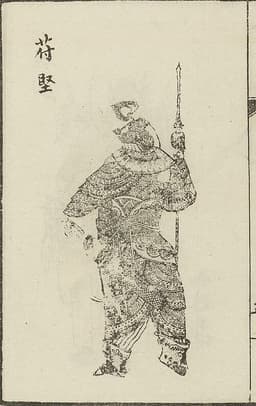
Fu Jian
Emperor · Ancient
64.4Total

Shapur II
Emperor · Ancient
65.0Total
Basic Information
Born
338
309
Died
385
379
Era
Ancient
Ancient
Nationality
China
Sassanid Empire
Occupation
Emperor
Emperor
Civilization
Eastern
Middle Eastern
Score Comparison
Military (10%)
78.0
78.0
Political (20%)
72.0
55.0
Influence (20%)
59.0
61.0
Legacy (20%)
50.0
58.0
Leadership (15%)
85.0
80.0
Strategy (15%)
58.0
72.0
TOTAL
64.4
65.0
Fu Jian — Complete Timeline
370 AD
Conquest of Former YanWar◆ Major
Fu Jian's Former Qin forces conquered the Former Yan state, annexing its territory in northern China. This victory significantly expanded Former Qin's power and territory, bringing Fu Jian closer to unifying the north.
ConquestExpansion
Impact: regionalconstructive
376 AD
Conquest of Former LiangWar◆ Major
Fu Jian's forces conquered the Former Liang state in the northwest, incorporating its territory into Former Qin. This further consolidated his control over northern China.
ConquestExpansion
Impact: regionalconstructive
Conquest of DaiWar
Fu Jian's army conquered the Dai state, a Xianbei confederation in the north. This eliminated a rival and extended Former Qin's influence into the steppe region.
ConquestExpansion
Impact: regionalconstructive
379 AD
Capture of XiangyangWar
Fu Jian's forces captured the strategic city of Xiangyang from the Eastern Jin dynasty. This victory gave Former Qin a foothold south of the Huai River, setting the stage for the invasion that led to the Battle of Fei River.
ConquestCampaign
Impact: regionalconstructive
383 AD
Battle of Fei RiverWar
Fu Jian led a massive Former Qin army against the Eastern Jin dynasty at the Fei River. The Jin forces defeated the Qin army, causing a catastrophic rout. This defeat shattered Fu Jian's unification efforts and led to the collapse of Former Qin.
BattleUnificationDefeat
Impact: regionaltragic
Shapur II — Complete Timeline
337 AD
First Roman-Sassanid WarWar◆ Major
Shapur II launched a major war against the Roman Empire, invading Mesopotamia and Armenia. The war lasted for decades, with Shapur achieving several victories, including the capture of the fortress of Singara. The conflict was marked by sieges, raids, and shifting alliances.
Sassanid EmpireRoman EmpireWar
Impact: regional
340 AD
Persecution of ChristiansPolitical Action◆ Major
Shapur II initiated a systematic persecution of Christians in the Sassanid Empire, accusing them of sympathizing with the Christian Roman Empire. Churches were destroyed, clergy were executed, and Christians were forced to convert to Zoroastrianism. The persecution lasted for decades.
Sassanid EmpirePersecutionChristianity
Impact: regionaldestructive
359 AD
Siege of AmidaWar◆ Major
Shapur II besieged and captured the Roman fortress city of Amida (modern Diyarbakir) after a 73-day siege. The Sassanid forces used siege towers, battering rams, and tunnels to breach the walls. The city was sacked, and its inhabitants were massacred or enslaved.
Sassanid EmpireRoman EmpireSiege
Impact: regionaldestructive
363 AD
Battle of CtesiphonWar◆ Major
Shapur II faced the Roman emperor Julian the Apostate, who invaded Sassanid territory and advanced to the capital Ctesiphon. The Romans won a tactical victory outside the city but failed to capture it. Julian was killed in a skirmish, and his successor Jovian made a humiliating peace.
Sassanid EmpireRoman EmpireBattle
Impact: regional
Treaty of 363Political Action◆ Major
After Julian's death, Shapur II negotiated a peace treaty with the new Roman emperor Jovian. The treaty ceded the Roman provinces of Mesopotamia and Armenia to the Sassanids, including the cities of Nisibis and Singara. This was a major diplomatic victory for Shapur II.
Sassanid EmpireRoman EmpireTreaty
Impact: regionalconstructive
Expert Analysis
Origins
Fu Jian (born 337 CE) was a Di (proto-Tibetan) chieftain's son who became emperor of Former Qin. He was raised in a military household and educated by Chinese tutors, including the scholar Wang Meng. His early exposure to both nomadic and Chinese cultures shaped his syncretic governance. Shapur II (born 309 CE) was the posthumous son of Hormizd II, crowned in utero by Sassanid nobles. His mother, Ifra Hormizd, ruled as regent until he came of age. Shapur's upbringing was entirely within the Zoroastrian Persian aristocracy, emphasizing military prowess and religious orthodoxy.
Rise to Power
Fu Jian ascended the throne of Former Qin in 357 CE at age 20 after a coup against his cousin Fu Sheng. With the aid of his brilliant prime minister Wang Meng, he centralized power and launched a series of campaigns. By 376, he had conquered Former Yan (370), Former Liang (376), and Dai (376), unifying northern China. His military score of 78.0 reflects these successes. Shapur II assumed full power in 325 CE after a regency. He immediately faced Arab incursions, which he crushed, earning the title "Dhū al-Aktāf" (Piercer of Shoulders). His first major war against Rome began in 337 CE, triggered by Constantine's Christianization and Persian support for Armenia. Shapur's political score of 55.0 is lower due to his ruthless methods.
Leadership & Governance
Fu Jian's leadership score of 85.0 reflects his inclusive policies: he appointed Chinese, Xianbei, and other ethnicities to high office, promoted Confucian education, and reduced taxes. However, his leniency towards conquered nobles, like the Xianbei and Qiang, sowed rebellion. Wang Meng advised executing them, but Fu Jian refused. Shapur II's leadership score of 80.0 indicates his authoritarian grip: he centralized the empire, built cities like Bishapur, and standardized coinage. He also persecuted Christians (340-379 CE), destroying churches and executing clergy, to enforce Zoroastrian unity. Both rulers expanded their domains, but Shapur's governance was more rigid.
Triumph & Tragedy
Fu Jian's greatest triumph was the near-unification of China by 382 CE, controlling a territory from the Great Wall to the Yangtze. His tragedy was the Battle of Fei River (383 CE), where his army of 300,000-870,000 (sources vary) was routed by Eastern Jin's 80,000. The defeat triggered revolts, and Former Qin collapsed by 394 CE. Fu Jian was killed by a former ally, Yao Chang, in 385 CE. Shapur II's triumph was the Treaty of 363 CE, which forced Rome to cede Mesopotamia and Armenia, securing Sassanid dominance for decades. His tragedy was the failure to conquer the Roman east permanently; Julian's invasion, though repelled, showed Sassanid vulnerability. Shapur's persecution of Christians also destabilized his realm, as Christian communities thrived underground.
Character & Destiny
Fu Jian was idealistic and overconfident, believing his multi-ethnic empire could be held together without force. Wang Meng's death in 375 CE left him without a check on his ambition. His strategic score of 58.0 reflects poor decisions at Fei River, such as ordering a retreat that turned into a rout. Shapur II was pragmatic and relentless: he spent decades warring with Rome, adapting tactics like siege warfare (e.g., Amida, 359 CE). His strategy score of 72.0 shows better planning, yet his religious intolerance created internal enemies. Both rulers' fates were shaped by their inability to balance conquest with consolidation.
Legacy
Fu Jian's legacy is mixed: he is remembered as a unifying figure in Chinese history, but his failure at Fei River made him a cautionary tale against hubris. His influence score of 59.0 reflects the short-lived nature of Former Qin. Shapur II's legacy is stronger: he stabilized the Sassanid frontier, built cities, and his treaty with Jovian lasted a generation. His influence score of 61.0 and legacy score of 58.0 show his impact on Persian identity. However, both were overshadowed by later figures: the Sui dynasty unified China properly, and the Sassanids fell to Islam in the 7th century.
Conclusion
Shapur II had a greater impact than Fu Jian. Their total scores are close (65.0 vs 64.4), but Shapur II's strategic and legacy scores are higher (72.0 vs 58.0 and 58.0 vs 50.0). Fu Jian's unification of northern China was impressive but ephemeral, undone by a single battle. Shapur II's wars with Rome reshaped the Near East, and his treaty of 363 CE gave Persia a generation of peace. While Fu Jian's inclusive governance was ahead of its time, it failed to survive his defeat. Shapur II's authoritarian stability, though harsh, endured. Thus, Shapur II edges out Fu Jian as the more consequential ruler.
Rankings
🥇
Shapur IILeader
Mil: 78.0Pol: 55.0Inf: 61.0
65.0
🥈
Fu Jian
Mil: 78.0Pol: 72.0Inf: 59.0
64.4
+0.6 behind
How This Comparison Works
Algorithm
Each figure is scored on 6 dimensions (0—100 scale) based on structured historical data: Military (10%), Political (20%), Influence (20%), Legacy (20%), Leadership (15%), Strategy (15%). The weighted total produces the final ranking.
Data Sources
Scores are computed from structured sub-indicators in the database. Scale factors adjust for era (Ancient ×0.85, Modern ×1.0) and civilization size (Eastern ×1.05, Other ×0.80) to account for differences in population and military scale.
Maximum 3 Figures
Comparisons are limited to 2—3 figures to ensure readability and statistical meaningfulness.
Error Margins
±5 points per dimension — Sub-scores are derived from historical records with inherent uncertainty. Two figures within 5 points on a dimension should be considered roughly equivalent in that area.
Total Score Accuracy
±3 points overall — The weighted combination of 6 dimensions produces a total score with approximately ±3 points of uncertainty. Differences of less than 3 points are not statistically significant— the figures are effectively tied.
Known Limitations
- Historical records are incomplete and uneven across civilizations
- Figures from oral-tradition societies may be underrepresented
- Occupation labels can misclassify multi-role figures
- Scores measure capability and impact, not moral character
- Quantitative scoring is a comparison tool, not absolute truth
Capability Radar
Military (10%) — Battles & Warfare
Battles
75
85
Win Rate
70
80
Expansion
80
85
Political (20%) — Governance & Reform
Reform
70
70
Diplomacy
60
75
Economy
65
70
Influence (20%) — Cultural & Global Reach
Cultural
50
60
Global
45
65
Legacy (20%) — Historical Impact
Historical
60
75
Longevity
40
70
Leadership (15%) — Power & Stability
Tenure
65
95
Stability
55
80
Strategy (15%) — Tactics & Innovation
Strategy
70
90
Tactics
65
85
Reform
60
75
Similar Comparisons
Comments & Discussion
No comments yet. Be the first to share your thoughts!