Loading...
This comparison has not been analyzed yet.
One-time AI generation (~1 minute). Scores and timeline are already available below.
Ambiorix vs Wang Jian
Wang Jian leads by 9.6 pts · 2 figures compared
…

Ambiorix
General · Ancient
45.1Total
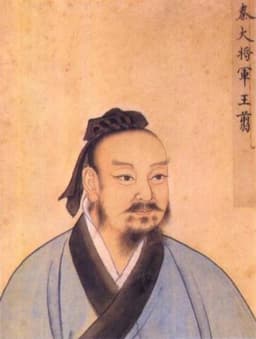
Wang Jian
General · Ancient
54.7Total
Basic Information
Born
-100
-260
Died
-50
-210
Era
Ancient
Ancient
Nationality
Gaul
China
Occupation
General
General
Civilization
Western
Eastern
Score Comparison
Military (10%)
30.0
88.0
Political (20%)
35.0
33.6
Influence (20%)
49.4
56.4
Legacy (20%)
40.8
56.0
Leadership (15%)
57.1
36.9
Strategy (15%)
57.5
72.0
TOTAL
45.1
54.7
Ambiorix — Complete Timeline
54 BC
Ambush of Roman Legion at AduatucaWar
Ambiorix led the Eburones in a surprise attack on a Roman legion under Quintus Titurius Sabinus and Lucius Aurunculeius Cotta at Aduatuca. The entire legion of 15 cohorts was destroyed, marking one of the worst Roman defeats in Gaul.
AmbushGallic WarsRoman Defeat
Impact: regionaldestructive
Siege of Quintus Cicero's CampWar◆ Major
Following the destruction of Sabinus's legion, Ambiorix besieged the camp of Quintus Tullius Cicero. The siege was intense but ultimately failed when Caesar arrived with reinforcements, forcing Ambiorix to withdraw.
SiegeGallic WarsRoman Relief
Impact: regional
53 BC
Defeat by Caesar's ForcesWar◆ Major
Caesar launched a punitive campaign against the Eburones, systematically destroying their villages and crops. Ambiorix was defeated in several skirmishes and forced to flee, though he evaded capture.
Punitive CampaignGallic WarsRoman Victory
Impact: regionaltragic
50 BC
Escape and DisappearancePolitical Action
Ambiorix escaped Roman pursuit and disappeared from historical records. He was never captured by Caesar, and his ultimate fate remains unknown. His successful evasion made him a symbol of Gallic resistance.
EscapeGallic WarsResistance
Impact: regional
Wang Jian — Complete Timeline
228 BC
Conquest of ZhaoWar◆ Major
Wang Jian led the Qin army to conquer the state of Zhao, capturing King Qian of Zhao. This victory eliminated one of the last major obstacles to Qin unification of China.
ConquestQin StateZhao State
Impact: regionaldestructive
223 BC
Conquest of ChuWar◆ Major
Wang Jian led a Qin army of 600,000 men to conquer the state of Chu. He defeated the Chu general Xiang Yan and captured King Fuchu of Chu, annexing Chu territory into Qin.
ConquestQin StateChu State
Impact: regionaldestructive
222 BC
Conquest of YanWar
Wang Jian led the Qin army to conquer the state of Yan, capturing King Xi of Yan. This victory further consolidated Qin control over northern China.
ConquestQin StateYan State
Impact: regionaldestructive
210 BC
Retirement and DeathOther
After the conquest of Chu, Wang Jian retired from military service. He died in 210 BC, having played a crucial role in the unification of China under Qin Shi Huang.
RetirementQin StateUnification
Impact: national
This comparison has not been analyzed yet.
One-time AI generation (~1 minute). Scores and timeline are already available below.
Rankings
🥇
Wang JianLeader
Mil: 88.0Pol: 33.6Inf: 56.4
54.7
🥈
Ambiorix
Mil: 30.0Pol: 35.0Inf: 49.4
45.1
+9.6 behind
How This Comparison Works
Algorithm
Each figure is scored on 6 dimensions (0—100 scale) based on structured historical data: Military (10%), Political (20%), Influence (20%), Legacy (20%), Leadership (15%), Strategy (15%). The weighted total produces the final ranking.
Data Sources
Scores are computed from structured sub-indicators in the database. Scale factors adjust for era (Ancient ×0.85, Modern ×1.0) and civilization size (Eastern ×1.05, Other ×0.80) to account for differences in population and military scale.
Maximum 3 Figures
Comparisons are limited to 2—3 figures to ensure readability and statistical meaningfulness.
Error Margins
±5 points per dimension — Sub-scores are derived from historical records with inherent uncertainty. Two figures within 5 points on a dimension should be considered roughly equivalent in that area.
Total Score Accuracy
±3 points overall — The weighted combination of 6 dimensions produces a total score with approximately ±3 points of uncertainty. Differences of less than 3 points are not statistically significant— the figures are effectively tied.
Known Limitations
- Historical records are incomplete and uneven across civilizations
- Figures from oral-tradition societies may be underrepresented
- Occupation labels can misclassify multi-role figures
- Scores measure capability and impact, not moral character
- Quantitative scoring is a comparison tool, not absolute truth
Capability Radar
Military (10%) — Battles & Warfare
Battles
35
85
Win Rate
40
90
Expansion
15
90
Political (20%) — Governance & Reform
Reform
5
20
Diplomacy
30
30
Economy
10
20
Influence (20%) — Cultural & Global Reach
Cultural
20
40
Global
15
50
Legacy (20%) — Historical Impact
Historical
35
70
Longevity
20
60
Leadership (15%) — Power & Stability
Tenure
20
40
Stability
15
30
Strategy (15%) — Tactics & Innovation
Strategy
45
85
Tactics
60
80
Reform
10
60
Similar Comparisons
Comments & Discussion
No comments yet. Be the first to share your thoughts!