Loading...
Amago Tsunehisa vs Rudolf of Habsburg
Rudolf of Habsburg leads by 7.6 pts · 2 figures compared
…

Amago Tsunehisa
Emperor · Medieval
52.6Total
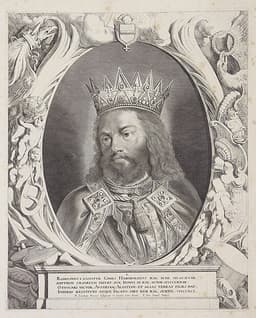
Rudolf of Habsburg
Emperor · Medieval
60.2Total
Basic Information
Born
1458
1218
Died
1541
1291
Era
Medieval
Medieval
Nationality
Japan
Holy Roman Empire
Occupation
Emperor
Emperor
Civilization
Eastern
Western
Score Comparison
Military (10%)
45.0
47.5
Political (20%)
53.8
68.0
Influence (20%)
51.8
61.0
Legacy (20%)
43.3
55.0
Leadership (15%)
72.0
68.0
Strategy (15%)
55.0
60.0
TOTAL
52.6
60.2
Amago Tsunehisa — Complete Timeline
1486 AD
Assassination of Amago KiyosadaPolitical Action◆ Major
Amago Tsunehisa orchestrated the assassination of his uncle Amago Kiyosada, the clan head, seizing control of the Amago clan. This act of treachery established Tsunehisa as the new leader and began the clan's rise to power.
AssassinationClan CoupAmago Rise
Impact: regionaldestructive
1517 AD
Battle of Arita-NakaideWar
Amago Tsunehisa defeated the forces of the Ouchi clan at Arita-Nakaide in Aki Province, halting Ouchi expansion into the San'in region. The battle solidified Amago control over their newly conquered territories.
BattleOuchi ConflictSan'in
Impact: regional
1518 AD
Conquest of Izumo ProvinceWar◆ Major
Amago Tsunehisa completed the conquest of Izumo Province, defeating the local Kyogoku clan and capturing Gassantoda Castle. This victory made the Amago the dominant power in the San'in region of western Honshu.
ConquestIzumoGassantoda Castle
Impact: regional
1537 AD
Retirement and SuccessionPolitical Action
Amago Tsunehisa retired as clan head and passed leadership to his grandson Amago Haruhisa. This orderly succession ensured the continued strength of the Amago clan during a period of expansion.
SuccessionRetirementAmago Clan
Impact: regionalconstructive
Rudolf of Habsburg — Complete Timeline
1273 AD
Elected King of GermanyPolitical Action
Rudolf of Habsburg was elected King of Germany by the prince-electors, ending the Great Interregnum. His election was supported by the Papacy and marked the beginning of the Habsburg dynasty's rise to power in the Holy Roman Empire.
ElectionGreat InterregnumHabsburg Dynasty
Impact: regionalconstructive
Crowned Holy Roman EmperorPolitical Action◆ Major
Rudolf of Habsburg was crowned Holy Roman Emperor in Aachen. His coronation marked the end of the Great Interregnum and the restoration of imperial authority, though his power was limited to his dynastic lands.
CoronationHoly Roman EmpireGreat Interregnum
Impact: regional
1278 AD
Defeated Ottokar II of Bohemia at the Battle of MarchfeldWar
Rudolf of Habsburg defeated King Ottokar II of Bohemia at the Battle of Marchfeld. This victory secured the Habsburg control over Austria, Styria, and Carniola, which became the core territories of the Habsburg dynasty.
BattleHabsburgAustria
Impact: regional
1282 AD
Invested His Sons with Austria and StyriaPolitical Action◆ Major
Rudolf of Habsburg invested his sons Albert and Rudolf with the duchies of Austria and Styria. This act established the Habsburg dynasty's hereditary claim to these territories, laying the foundation for their future power in Central Europe.
Territorial GrantHabsburgAustria
Impact: regionalconstructive
Expert Analysis
Origins
Amago Tsunehisa (1458–1541) was born into the Amago clan, a samurai family in Izumo Province, Japan. His early life was marked by the clan's decline under the Kyogoku overlords. Tsunehisa's father, Amago Kiyosada, was a weak leader, and Tsunehisa grew up amidst constant warfare. He received a typical samurai education in martial arts and strategy, but his true talent was in manipulation and political maneuvering. In contrast, Rudolf of Habsburg (1218–1291) was born in Limburg an der Lahn, Holy Roman Empire, to Count Albert IV of Habsburg and Hedwig of Kyburg. The Habsburgs were a minor noble family in Swabia. Rudolf inherited the family lands at age 21, but they were modest. He was educated in chivalry and administration, and his early career was as a loyal supporter of the Hohenstaufen emperors, which gave him political experience.
Rise to Power
Tsunehisa's rise began with a coup: in 1486, he orchestrated the assassination of his uncle, Amago Kiyosada, the clan head. This act of treachery allowed him to seize control of the Amago clan. Over the next decades, he expanded Amago territory through a mix of marriage alliances, bribery, and military campaigns. The conquest of Izumo Province in 1518, including the capture of Gassantoda Castle, was a turning point. By 1524, he defeated the Ouchi clan at the Battle of Arita-Nakaide, securing the San'in region. Rudolf of Habsburg's rise was more conventional. After the death of Emperor Frederick II, the Holy Roman Empire entered the Great Interregnum (1250–1273). Rudolf, as a count, gained prominence by supporting the Papacy against the Hohenstaufen. His election as King of Germany in 1273 was a surprise, as he was not a powerful prince. He owed his election to the electors' desire for a weak king. However, Rudolf quickly consolidated power.
Leadership & Governance
Tsunehisa ruled the Amago clan with a mix of fear and reward. He was known for his strategic marriages: he married his daughters to powerful neighbors to secure alliances. He also promoted capable retainers regardless of birth, creating a loyal bureaucracy. His governance was decentralized, allowing local samurai autonomy as long as they paid tribute. In contrast, Rudolf of Habsburg focused on restoring imperial authority. He used the Reichsgut (imperial lands) to reward supporters and built a power base in Swabia. He also instituted the Landfriede (peace of the land) to curb private warfare. Rudolf's administrative reforms included standardizing coinage and improving justice. He was a hands-on ruler, often traveling to mediate disputes. Tsunehisa scored 72.0 in Leadership, while Rudolf scored 68.0, but Rudolf's Political score of 68.0 far exceeded Tsunehisa's 53.8.
Triumph & Tragedy
Tsunehisa's greatest triumph was building the Amago clan from a minor family to a dominant force in western Japan. He successfully passed leadership to his grandson Amago Haruhisa, ensuring continuity. However, his tragedy was that his gains were temporary; after his death, the Amago clan declined and was eventually destroyed by the Mori clan. His ruthless methods also created many enemies. Rudolf's triumph was defeating King Ottokar II of Bohemia at the Battle of Marchfeld in 1278, which secured Austria, Styria, and Carinthia for the Habsburgs. He then invested his sons with these lands, founding the Habsburg dynasty's hereditary holdings. His tragedy was that he failed to secure the imperial throne for his son Albert; after Rudolf's death, the electors chose a different king. Rudolf's legacy as the first Habsburg emperor was secured, but his immediate family lost the crown.
Character & Destiny
Tsunehisa was a master schemer, patient and calculating. He was not a great battlefield commander (Military score 45.0), but his strategic acumen (Strategy 55.0) and political cunning allowed him to outmaneuver rivals. His character was marked by ruthlessness, as seen in his uncle's assassination. This trait, while effective in the short term, bred distrust. Rudolf, by contrast, was seen as a pious and just ruler. He was pragmatic, often using negotiation over war. His Military score was 47.5, but his political skills (68.0) were key. Rudolf's character helped him unite the empire after the Interregnum, but his reliance on family ties also sowed future conflicts. Historians view Rudolf as a capable administrator who restored stability, while Tsunehisa is remembered as a wily daimyo in a turbulent era.
Legacy
Tsunehisa's legacy is mixed. He built the Amago clan into a regional power, but his methods were typical of the Sengoku period. The Amago clan's fall after his death limited his long-term impact. In Japan, he is remembered as a cunning strategist, but his influence is overshadowed by figures like Oda Nobunaga. Rudolf's legacy is immense: he founded the Habsburg dynasty, which ruled Europe for centuries. His acquisition of Austria became the core of the Habsburg monarchy. He also restored the Holy Roman Empire after the Interregnum. Rudolf scored 55.0 in Legacy, while Tsunehisa scored 43.3. Rudolf's influence (61.0) also outranks Tsunehisa's (51.8).
Conclusion
Rudolf of Habsburg had a greater historical impact than Amago Tsunehisa. While Tsunehisa was a skilled clan builder in a chaotic period, his achievements were confined to regional Japanese politics and did not endure beyond a few generations. In contrast, Rudolf's actions shaped the political structure of Europe for centuries. The Habsburg dynasty he founded dominated the continent until World War I. Rudolf's total score of 60.2 versus Tsunehisa's 52.6 reflects this difference. Rudolf's political and influence scores are significantly higher, and his legacy is more lasting. Therefore, Rudolf of Habsburg is the more significant historical figure.
Rankings
🥇
Rudolf of HabsburgLeader
Mil: 47.5Pol: 68.0Inf: 61.0
60.2
🥈
Amago Tsunehisa
Mil: 45.0Pol: 53.8Inf: 51.8
52.6
+7.6 behind
How This Comparison Works
Algorithm
Each figure is scored on 6 dimensions (0—100 scale) based on structured historical data: Military (10%), Political (20%), Influence (20%), Legacy (20%), Leadership (15%), Strategy (15%). The weighted total produces the final ranking.
Data Sources
Scores are computed from structured sub-indicators in the database. Scale factors adjust for era (Ancient ×0.85, Modern ×1.0) and civilization size (Eastern ×1.05, Other ×0.80) to account for differences in population and military scale.
Maximum 3 Figures
Comparisons are limited to 2—3 figures to ensure readability and statistical meaningfulness.
Error Margins
±5 points per dimension — Sub-scores are derived from historical records with inherent uncertainty. Two figures within 5 points on a dimension should be considered roughly equivalent in that area.
Total Score Accuracy
±3 points overall — The weighted combination of 6 dimensions produces a total score with approximately ±3 points of uncertainty. Differences of less than 3 points are not statistically significant— the figures are effectively tied.
Known Limitations
- Historical records are incomplete and uneven across civilizations
- Figures from oral-tradition societies may be underrepresented
- Occupation labels can misclassify multi-role figures
- Scores measure capability and impact, not moral character
- Quantitative scoring is a comparison tool, not absolute truth
Capability Radar
Military (10%) — Battles & Warfare
Battles
45
45
Win Rate
50
50
Expansion
55
60
Political (20%) — Governance & Reform
Reform
50
55
Diplomacy
65
70
Economy
45
50
Influence (20%) — Cultural & Global Reach
Cultural
35
40
Global
15
55
Legacy (20%) — Historical Impact
Historical
40
70
Longevity
30
75
Leadership (15%) — Power & Stability
Tenure
60
65
Stability
50
60
Strategy (15%) — Tactics & Innovation
Strategy
65
55
Tactics
60
40
Reform
40
30
Similar Comparisons
Comments & Discussion
No comments yet. Be the first to share your thoughts!