Loading...
John I of Portugal vs Rudolf of Habsburg
John I of Portugal leads by 0.1 pts · 2 figures compared
…
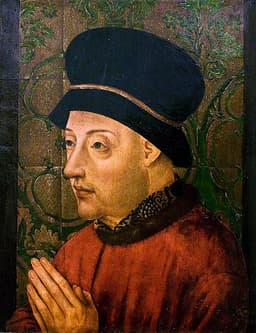
John I of Portugal
Emperor · Medieval
60.3Total
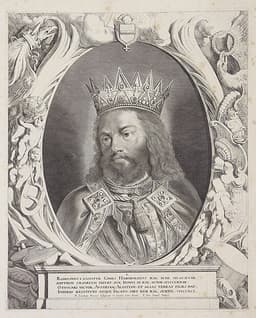
Rudolf of Habsburg
Emperor · Medieval
60.2Total
Basic Information
Born
1357
1218
Died
1433
1291
Era
Medieval
Medieval
Nationality
Portugal
Holy Roman Empire
Occupation
Emperor
Emperor
Civilization
Western
Western
Score Comparison
Military (10%)
65.0
47.5
Political (20%)
55.0
68.0
Influence (20%)
56.7
61.0
Legacy (20%)
58.0
55.0
Leadership (15%)
72.0
68.0
Strategy (15%)
60.7
60.0
TOTAL
60.3
60.2
John I of Portugal — Complete Timeline
1385 AD
Battle of AljubarrotaWar
John I led Portuguese forces to a decisive victory over the Castilian army at Aljubarrota. This battle secured Portuguese independence and solidified John's claim to the throne.
BattleIndependenceCastile
Impact: regionalconstructive
Accession to the thronePolitical Action
John I became King of Portugal after the 1383-1385 Crisis, being elected by the Cortes of Coimbra. His accession ended the Burgundian dynasty and founded the House of Aviz.
SuccessionDynastyAviz
Impact: nationalconstructive
1386 AD
Treaty of WindsorPolitical Action◆ Major
John I signed the Treaty of Windsor with England, establishing a perpetual alliance between Portugal and England. This alliance, the oldest in the world, has endured to the present day.
TreatyAllianceEngland
Impact: globalconstructive
1415 AD
Conquest of CeutaWar◆ Major
John I led the conquest of Ceuta in North Africa, marking the beginning of Portuguese overseas expansion. The capture of the city opened the era of European colonialism.
ConquestColonialismNorth Africa
Impact: global
Rudolf of Habsburg — Complete Timeline
1273 AD
Elected King of GermanyPolitical Action
Rudolf of Habsburg was elected King of Germany by the prince-electors, ending the Great Interregnum. His election was supported by the Papacy and marked the beginning of the Habsburg dynasty's rise to power in the Holy Roman Empire.
ElectionGreat InterregnumHabsburg Dynasty
Impact: regionalconstructive
Crowned Holy Roman EmperorPolitical Action◆ Major
Rudolf of Habsburg was crowned Holy Roman Emperor in Aachen. His coronation marked the end of the Great Interregnum and the restoration of imperial authority, though his power was limited to his dynastic lands.
CoronationHoly Roman EmpireGreat Interregnum
Impact: regional
1278 AD
Defeated Ottokar II of Bohemia at the Battle of MarchfeldWar
Rudolf of Habsburg defeated King Ottokar II of Bohemia at the Battle of Marchfeld. This victory secured the Habsburg control over Austria, Styria, and Carniola, which became the core territories of the Habsburg dynasty.
BattleHabsburgAustria
Impact: regional
1282 AD
Invested His Sons with Austria and StyriaPolitical Action◆ Major
Rudolf of Habsburg invested his sons Albert and Rudolf with the duchies of Austria and Styria. This act established the Habsburg dynasty's hereditary claim to these territories, laying the foundation for their future power in Central Europe.
Territorial GrantHabsburgAustria
Impact: regionalconstructive
Expert Analysis
Origins
John I of Portugal was born in 1357 as the illegitimate son of King Peter I of Portugal and Teresa Lourenço. He was raised as a knight and became Master of the Order of Aviz. His early life was shaped by the instability of the Portuguese court and the ongoing conflicts with Castile. Rudolf of Habsburg was born in 1218 in Limburg, Holy Roman Empire, into the House of Habsburg, a minor noble family. He was educated in chivalry and governance, inheriting scattered lands in Alsace and Switzerland. His early experiences involved managing fragmented territories and mediating local disputes.
Rise to Power
John I rose to prominence during the 1383-1385 Crisis, a period of interregnum following the death of King Ferdinand I. With no direct heir, John led a popular revolt against the regency of Queen Leonor Teles and the Castilian claim. He was elected king by the Cortes of Coimbra in April 1385, a turning point that established the Aviz dynasty. His military victory at the Battle of Aljubarrota on August 14, 1385, against a larger Castilian army secured his throne and Portuguese independence. Rudolf's rise came after the Great Interregnum, a period of imperial instability. He was elected King of Germany on October 1, 1273, by prince-electors seeking a weak ruler. Rudolf skillfully consolidated power by allying with the Papacy and leveraging his modest resources. His decisive victory over King Ottokar II of Bohemia at the Battle of Marchfeld on August 26, 1278, allowed him to seize Austria, Styria, and Carniola, which became the Habsburg heartland.
Leadership & Governance
John I's leadership style was pragmatic and institution-building. He centralized royal authority, reformed the administration, and fostered the Portuguese language. His governance included the Treaty of Windsor (1386) with England, creating the world's oldest diplomatic alliance. He also initiated overseas expansion with the conquest of Ceuta in 1415, which opened the Age of Discovery. His military score of 65.0 reflects his success in defending independence, but his political score of 55.0 indicates limitations in domestic reforms. Rudolf's governance focused on restoring imperial authority after the interregnum. He granted privileges to cities and nobles to secure loyalty, and used marriage alliances to expand Habsburg influence. His political score of 68.0 highlights his skill in diplomacy and state-building. However, his military score of 47.5 reflects a cautious approach; he avoided large-scale wars after Marchfeld.
Triumph & Tragedy
John I's greatest triumph was the Battle of Aljubarrota, which ensured Portuguese sovereignty. His conquest of Ceuta marked the start of European colonialism. However, his failure to fully integrate the nobility led to future conflicts, and the Ceuta expedition drained resources without immediate returns. Rudolf's triumph was the defeat of Ottokar II, which gave the Habsburgs a territorial base that lasted centuries. He also successfully crowned himself Holy Roman Emperor in 1273. His tragedy was the eventual loss of imperial influence after his death, as the Habsburgs struggled to maintain the crown. Rudolf's legacy score of 55.0 reflects the temporary nature of his achievements.
Character & Destiny
John I was decisive and charismatic, known as 'John of Good Memory.' His illegitimate birth drove him to prove his worth through military success and statecraft. His character shaped Portugal's destiny as an independent nation and early colonial power. Rudolf was patient and diplomatic, often described as 'cautious' and 'calculating.' His ability to navigate the complex politics of the empire allowed him to secure lands for his family. However, his lack of aggression limited his military expansion. Historical assessments note that Rudolf's character was suited to rebuilding, not conquering.
Legacy
John I's legacy is profound: he founded the Aviz dynasty, which ruled Portugal until 1580, and his policies laid the groundwork for the Portuguese Empire. The Treaty of Windsor remains in effect, and the conquest of Ceuta initiated European exploration. His total score of 60.3 reflects broad impact across military, political, and cultural spheres. Rudolf's legacy is the establishment of the Habsburg dynasty as a major European power. His acquisition of Austria and Styria provided the core of the Habsburg monarchy that dominated Europe until 1918. However, his influence score of 61.0 and legacy score of 55.0 indicate that his impact was more regional and dynastic than transformative.
Conclusion
John I of Portugal had greater overall impact than Rudolf of Habsburg. Despite a marginal score difference (60.3 vs 60.2), John's achievements—securing Portuguese independence, founding a new dynasty, and initiating overseas expansion—had lasting global consequences. Rudolf's consolidation of Habsburg power was significant but limited to Central Europe. John's military score (65.0) and leadership score (72.0) were higher, reflecting his decisive actions. Rudolf's higher political score (68.0) cannot compensate for his narrower influence. Thus, John I's legacy as a nation-builder and pioneer of the Age of Discovery places him above Rudolf.
Rankings
🥇
John I of PortugalLeader
Mil: 65.0Pol: 55.0Inf: 56.7
60.3
🥈
Rudolf of Habsburg
Mil: 47.5Pol: 68.0Inf: 61.0
60.2
+0.1 behind
How This Comparison Works
Algorithm
Each figure is scored on 6 dimensions (0—100 scale) based on structured historical data: Military (10%), Political (20%), Influence (20%), Legacy (20%), Leadership (15%), Strategy (15%). The weighted total produces the final ranking.
Data Sources
Scores are computed from structured sub-indicators in the database. Scale factors adjust for era (Ancient ×0.85, Modern ×1.0) and civilization size (Eastern ×1.05, Other ×0.80) to account for differences in population and military scale.
Maximum 3 Figures
Comparisons are limited to 2—3 figures to ensure readability and statistical meaningfulness.
Error Margins
±5 points per dimension — Sub-scores are derived from historical records with inherent uncertainty. Two figures within 5 points on a dimension should be considered roughly equivalent in that area.
Total Score Accuracy
±3 points overall — The weighted combination of 6 dimensions produces a total score with approximately ±3 points of uncertainty. Differences of less than 3 points are not statistically significant— the figures are effectively tied.
Known Limitations
- Historical records are incomplete and uneven across civilizations
- Figures from oral-tradition societies may be underrepresented
- Occupation labels can misclassify multi-role figures
- Scores measure capability and impact, not moral character
- Quantitative scoring is a comparison tool, not absolute truth
Capability Radar
Military (10%) — Battles & Warfare
Battles
65
45
Win Rate
70
50
Expansion
60
60
Political (20%) — Governance & Reform
Reform
70
55
Diplomacy
75
70
Economy
70
50
Influence (20%) — Cultural & Global Reach
Cultural
60
40
Global
55
55
Legacy (20%) — Historical Impact
Historical
65
70
Longevity
60
75
Leadership (15%) — Power & Stability
Tenure
75
65
Stability
65
60
Strategy (15%) — Tactics & Innovation
Strategy
65
55
Tactics
60
40
Reform
55
30
Similar Comparisons
Comments & Discussion
No comments yet. Be the first to share your thoughts!