Loading...
Alphonse Massamba-Debat vs Julius Caesar
Julius Caesar leads by 40.4 pts · 2 figures compared
…
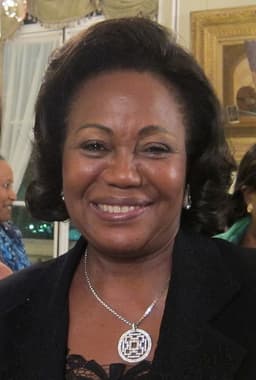
Alphonse Massamba-Debat
Politician · Modern
42.4Total

Julius Caesar
General · Ancient
82.8Total
Basic Information
Born
1921
-100
Died
—
-44
Era
Modern
Ancient
Nationality
Congo-Brazzaville
Roman Republic
Occupation
Politician
General
Civilization
Other
Western
Score Comparison
Military (10%)
50.0
88.0
Political (20%)
35.1
78.0
Influence (20%)
48.6
85.0
Legacy (20%)
38.3
82.0
Leadership (15%)
41.5
80.0
Strategy (15%)
42.1
85.0
TOTAL
42.4
82.8
Alphonse Massamba-Debat — Complete Timeline
1963 AD
Elected President of Congo-BrazzavillePolitical Action◆ Major
Massamba-Debat was elected president following the overthrow of Fulbert Youlou. He established a socialist-oriented government and pursued policies of nationalization and one-party rule under the National Revolutionary Movement.
ElectionSocialist GovernmentCongo-Brazzaville
Impact: national
1968 AD
Overthrown and Executed in CoupPolitical Action◆ Major
Massamba-Debat was overthrown in a military coup led by Marien Ngouabi. He was subsequently arrested and executed by firing squad, ending his presidency and marking a shift to Marxist military rule.
CoupExecutionCongo-Brazzaville
Impact: nationaltragic
Julius Caesar — Complete Timeline
58 BC
Gallic WarsWar◆ Major
Caesar, as proconsul of Gaul, launched a series of campaigns that conquered all of Gaul (modern France, Belgium, and parts of Switzerland). He fought numerous battles, including against the Helvetii, the Belgae, and the Gallic chieftain Vercingetorix. The wars brought immense wealth and a loyal army to Caesar.
Gallic WarsConquestRoman Expansion
Impact: regional
49 BC
Crossing the RubiconPolitical Action◆ Major
Caesar led Legio XIII across the Rubicon River into Italy, defying the Roman Senate's order to disband his army. This act triggered a civil war against Pompey and the Optimates, ultimately leading to Caesar's dictatorship and the end of the Roman Republic.
Roman Civil WarEnd of RepublicPower Struggle
Impact: global
48 BC
Battle of PharsalusWar◆ Major
Caesar's outnumbered army defeated the larger forces of Pompey the Great at Pharsalus in Greece. Caesar's tactical use of a reserve line to counter Pompey's cavalry charge proved decisive. Pompey fled to Egypt, where he was assassinated, leaving Caesar as the undisputed master of the Roman world.
Roman Civil WarBattleDecisive Victory
Impact: regional
44 BC
Appointment as Dictator for LifePolitical Action◆ Major
The Roman Senate appointed Caesar dictator perpetuo (dictator for life), granting him unprecedented personal power. This move concentrated military, legislative, and judicial authority in one person, effectively ending the Roman Republic's traditional system of checks and balances and alarming many senators.
DictatorshipEnd of RepublicPower Consolidation
Impact: regionaldestructive
Assassination on the Ides of MarchPolitical Action◆ Major
A group of Roman senators, led by Marcus Junius Brutus and Gaius Cassius Longinus, stabbed Caesar to death at a meeting of the Senate in the Theatre of Pompey. The assassination was intended to restore the Republic, but instead triggered another civil war that led to the rise of the Roman Empire.
AssassinationRoman PoliticsEnd of Republic
Impact: globaldestructive
Expert Analysis
alphonse-massamba-debat-vs-julius-caesar
# The Ides of March and the Long Shadow of a Congo Dawn
On a cool March morning in 44 BCE, Julius Caesar walked into the Senate chamber in Rome, unaware that sixty conspirators awaited him with daggers. On a humid April night in 1977, Alphonse Massamba-Debat faced a firing squad in Brazzaville, his socialist dream shattered by the very forces he had tried to tame. One man had conquered Gaul, crossed the Rubicon, and changed the course of Western civilization. The other had inherited a fragile postcolonial state, attempted to build a utopia, and was erased from power in a coup he never saw coming. What separates a titan from a footnote? The answer lies not merely in ability, but in the cruel arithmetic of history.
Origins
Caesar was born into the twilight of the Roman Republic, a world of senatorial intrigue, civil wars, and expanding frontiers. His patrician family, the Julii, claimed descent from the goddess Venus, but their fortunes had faded. Young Caesar learned that in Rome, survival meant ambition, and ambition meant debt, alliances, and audacity. He was shaped by the chaos of Marius and Sulla, by the spectacle of a republic tearing itself apart. His education was Greek philosophy, military theory, and the art of rhetoric—tools for a man who intended to remake the world.
Massamba-Debat was born in 1921 in the French Congo, a colony carved from the rainforests of Central Africa. His world was one of rubber quotas, forced labor, and the quiet humiliation of a people told they were not ready to govern themselves. He studied in France, absorbing the ideas of socialism and African nationalism that swept through the decolonizing world. When Congo-Brazzaville gained independence in 1960, Massamba-Debat was a teacher and politician, a man of books and committees, not battlefields. His era was defined not by the clash of legions, but by the fragile birth of nations and the Cold War's long reach.
Rise to Power
Caesar’s path was a masterclass in calculated risk. He climbed the *cursus honorum*—quaestor, aedile, praetor—borrowing fortunes to fund spectacles that won the people’s love. In 60 BCE, he forged the First Triumvirate with Pompey and Crassus, a shadow government that let him secure the governorship of Gaul. There, between 58 and 50 BCE, he did what no Roman had done: he conquered a vast territory, wrote his own propaganda in *Commentarii de Bello Gallico*, and built an army that loved him more than the Senate.
Massamba-Debat’s ascent was quieter, but no less dramatic. In 1963, street protests—the “Three Glorious Days”—toppled President Fulbert Youlou, a corrupt former priest. A provisional government handed power to Massamba-Debat, who was elected president on a wave of hope. He inherited a country of two million people, a copper mine, a railway, and a treasury drained by French interests. His rise was not conquest but consensus, a fragile mandate to build a socialist state in a continent already divided by superpowers.
Leadership & Governance
Caesar governed as a revolutionary who understood that power required both steel and spectacle. As dictator, he reformed the calendar, granted citizenship to Gauls, launched public works, and centralized taxation. His military genius was unmatched: at Alesia in 52 BCE, he besieged a Gallic army while simultaneously defeating a relief force, a feat of logistics and nerve. Yet his political wisdom was a blade’s edge—he pardoned enemies, only to see them plot his death. He ruled by charisma and clemency, but never solved the Republic’s core disease: the concentration of power in one man.
Massamba-Debat tried to govern through ideology. He nationalized foreign assets, established a single party, and aligned with the Soviet bloc. His “scientific socialism” brought schools and hospitals to the countryside, but also censorship, a secret police, and economic stagnation. He was no military commander—his military score of 30.2 reflects a man who never led an army. His strategy was political maneuvering, but he lacked the ruthlessness to purge rivals. In 1968, when Captain Marien Ngouabi launched a coup, Massamba-Debat surrendered without a fight, hoping for mercy. He did not receive it.
Triumph & Tragedy
Caesar’s greatest moment was his triumph: the conquest of Gaul, the crossing of the Rubicon in 49 BCE, the defeat of Pompey at Pharsalus. He stood at the peak of the world, dictator for life, his image stamped on coins. His tragedy was the Ides of March—his assassination in 44 BCE, a death he had been warned of but refused to fear. “The die is cast,” he had said at the Rubicon. At the Senate, he fell with twenty-three wounds, his blood staining the floor of a republic he had drowned.
Massamba-Debat’s triumph was brief: the early years of his presidency, when Congo-Brazzaville seemed a beacon of African socialism. His tragedy was total. Overthrown in 1968, he was imprisoned, then executed by firing squad in 1977, accused of conspiring in Ngouabi’s assassination. No grand narrative marked his end—only a quiet grave and a country that moved on without him.
Character & Destiny
Caesar was restless, brilliant, and arrogant. He believed in his own star, and history rewarded that belief. His personality—a blend of charm, calculation, and risk—shaped decisions that echoed for millennia. He gambled on Gaul, on the Rubicon, on clemency, and each time the dice rolled his way, until they didn’t. His destiny was to be the bridge between Republic and Empire, a role he wrote himself into.
Massamba-Debat was thoughtful, idealistic, and perhaps naive. He believed that socialism could be built by decree, that loyalty could be won by policy, that the Cold War would leave him alone. His destiny was to be a casualty of a world he could not control—a world of oil, coups, and the cynical calculus of power. He was not a bad man, but he was a man of his time, and his time was unkind.
Legacy
Caesar’s legacy is the Roman Empire, the Latin language spread across Europe, the Julian calendar used for sixteen centuries, and a name that became synonymous with autocracy. He is remembered as a genius, a tyrant, and a turning point. His story is taught in every school, his words quoted in every parliament.
Massamba-Debat is all but forgotten. His name appears in footnotes of African history, a cautionary tale of postcolonial ambition. His legacy is the lesson that in the struggle for power, the gentle are devoured by the fierce. His total score of 51.0, compared to Caesar’s 83.3, is not just a number—it is a measure of how history judges the scale of impact, not the purity of intent.
Conclusion
What separates Caesar from Massamba-Debat is not just talent, but the stage on which they performed. Caesar lived in a world where one man could reshape civilization with a legion and a speech. Massamba-Debat lived in a world of superpowers, debt, and the unforgiving logic of the Cold War. One was a force of nature; the other, a man caught in a storm. Yet both met violent ends, both were betrayed by those they trusted, and both remind us that power is always borrowed, never owned. The Ides of March and a Congo dawn—two moments, two men, one eternal truth.
Rankings
🥇
Julius CaesarLeader
Mil: 88.0Pol: 78.0Inf: 85.0
82.8
🥈
Alphonse Massamba-Debat
Mil: 50.0Pol: 35.1Inf: 48.6
42.4
+40.4 behind
How This Comparison Works
Algorithm
Each figure is scored on 6 dimensions (0—100 scale) based on structured historical data: Military (10%), Political (20%), Influence (20%), Legacy (20%), Leadership (15%), Strategy (15%). The weighted total produces the final ranking.
Data Sources
Scores are computed from structured sub-indicators in the database. Scale factors adjust for era (Ancient ×0.85, Modern ×1.0) and civilization size (Eastern ×1.05, Other ×0.80) to account for differences in population and military scale.
Maximum 3 Figures
Comparisons are limited to 2—3 figures to ensure readability and statistical meaningfulness.
Error Margins
±5 points per dimension — Sub-scores are derived from historical records with inherent uncertainty. Two figures within 5 points on a dimension should be considered roughly equivalent in that area.
Total Score Accuracy
±3 points overall — The weighted combination of 6 dimensions produces a total score with approximately ±3 points of uncertainty. Differences of less than 3 points are not statistically significant— the figures are effectively tied.
Known Limitations
- Historical records are incomplete and uneven across civilizations
- Figures from oral-tradition societies may be underrepresented
- Occupation labels can misclassify multi-role figures
- Scores measure capability and impact, not moral character
- Quantitative scoring is a comparison tool, not absolute truth
Capability Radar
Military (10%) — Battles & Warfare
Battles
21
95
Win Rate
27
92
Expansion
27
97
Political (20%) — Governance & Reform
Reform
30
90
Diplomacy
25
85
Economy
20
82
Influence (20%) — Cultural & Global Reach
Cultural
15
88
Global
15
94
Legacy (20%) — Historical Impact
Historical
20
95
Longevity
10
96
Leadership (15%) — Power & Stability
Tenure
20
75
Stability
10
60
Strategy (15%) — Tactics & Innovation
Strategy
31
94
Tactics
33
96
Reform
38
88
Similar Comparisons
Comments & Discussion
No comments yet. Be the first to share your thoughts!