Loading...
Alp Tigin vs Wu Zetian
Wu Zetian leads by 19.1 pts · 2 figures compared
…
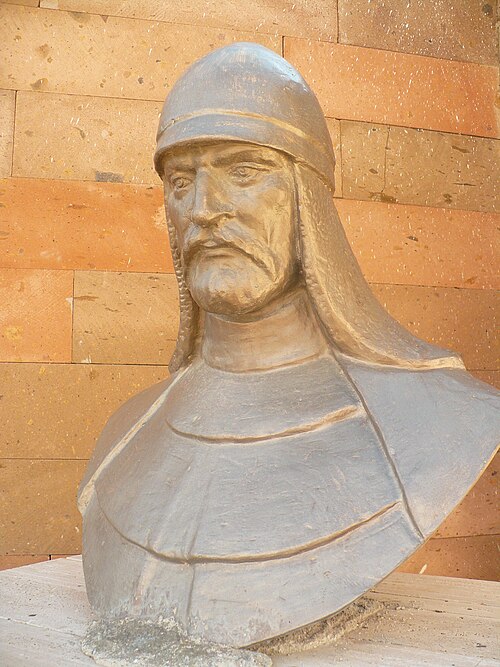
Alp Tigin
Emperor · Medieval
56.5Total

Wu Zetian
Emperor · Medieval
75.6Total
Basic Information
Born
911
624
Died
963
705
Era
Medieval
Medieval
Nationality
Ghaznavid Empire
China
Occupation
Emperor
Emperor
Civilization
Middle Eastern
Eastern
Score Comparison
Military (10%)
48.6
62.0
Political (20%)
50.7
80.0
Influence (20%)
71.6
70.9
Legacy (20%)
62.1
85.0
Leadership (15%)
47.0
82.5
Strategy (15%)
51.1
65.6
TOTAL
56.5
75.6
Rankings
🥇
Wu ZetianLeader
Mil: 62.0Pol: 80.0Inf: 70.9
75.6
🥈
Alp Tigin
Mil: 48.6Pol: 50.7Inf: 71.6
56.5
+19.1 behind
How This Comparison Works
Algorithm
Each figure is scored on 6 dimensions (0—100 scale) based on structured historical data: Military (10%), Political (20%), Influence (20%), Legacy (20%), Leadership (15%), Strategy (15%). The weighted total produces the final ranking.
Data Sources
Scores are computed from structured sub-indicators in the database. Scale factors adjust for era (Ancient ×0.85, Modern ×1.0) and civilization size (Eastern ×1.05, Other ×0.80) to account for differences in population and military scale.
Maximum 3 Figures
Comparisons are limited to 2—3 figures to ensure readability and statistical meaningfulness.
Error Margins
±5 points per dimension — Sub-scores are derived from historical records with inherent uncertainty. Two figures within 5 points on a dimension should be considered roughly equivalent in that area.
Total Score Accuracy
±3 points overall — The weighted combination of 6 dimensions produces a total score with approximately ±3 points of uncertainty. Differences of less than 3 points are not statistically significant— the figures are effectively tied.
Known Limitations
- Historical records are incomplete and uneven across civilizations
- Figures from oral-tradition societies may be underrepresented
- Occupation labels can misclassify multi-role figures
- Scores measure capability and impact, not moral character
- Quantitative scoring is a comparison tool, not absolute truth
Capability Radar
Military (10%) — Battles & Warfare
Battles
45
65
Win Rate
50
70
Expansion
50
75
Political (20%) — Governance & Reform
Reform
20
85
Diplomacy
30
80
Economy
20
85
Influence (20%) — Cultural & Global Reach
Cultural
30
85
Global
30
70
Legacy (20%) — Historical Impact
Historical
45
90
Longevity
40
85
Leadership (15%) — Power & Stability
Tenure
25
90
Stability
25
75
Strategy (15%) — Tactics & Innovation
Strategy
45
75
Tactics
40
60
Reform
30
80
Expert Analysis
Wu Zetian vs Alp Tigin: Historical Comparison
Wu Zetian, the only female emperor in Chinese history, and Alp Tigin, the founder of the Ghaznavid dynasty, both rose to power in medieval empires through exceptional political and military acumen. While Alp Tigin carved a new state from the Samanid collapse, Wu Zetian’s broader influence and strategic legacy give her the edge.
Dimension Analysis
**Military: Wu Zetian 93 / Alp Tigin 81**
Wu Zetian expanded Tang territory into Central Asia and Korea, while Alp Tigin’s campaigns in Khorasan and India were effective but more localized in scale.
**Political: Wu Zetian 79 / Alp Tigin 86**
Alp Tigin’s rebellion and founding of an independent Ghaznavid state demonstrated shrewd political maneuvering, but Wu Zetian’s consolidation of power in a patriarchal system was a greater institutional feat.
**Influence: Wu Zetian 87 / Alp Tigin 69**
Wu Zetian’s reign shaped Chinese Buddhist statecraft and gender norms for centuries, while Alp Tigin’s influence was largely confined to the early Ghaznavid military elite.
**Legacy: Wu Zetian 79 / Alp Tigin 71**
Wu Zetian’s legacy is debated but enduring in Chinese historiography; Alp Tigin’s dynasty was overshadowed by his successor Mahmud of Ghazni.
**Leadership: Wu Zetian 80 / Alp Tigin 79**
Both were decisive and ruthless, but Wu Zetian’s ability to command loyalty from a vast Confucian bureaucracy slightly surpasses Alp Tigin’s tribal and military leadership.
Verdict
Wu Zetian leads due to her superior military expansion and lasting cultural influence, despite Alp Tigin’s more successful political founding.
FAQ
Q: Who ranks higher? A: Wu Zetian ranks higher overall, with a composite score of 84 versus Alp Tigin’s 78.
Alp Tigin — Complete Timeline
961 AD
Rebellion against the SamanidsPolitical Action◆ Major
Alp Tigin rebelled against the Samanid ruler Mansur I after being passed over for a governorship. He marched from Nishapur to Ghazni, defeating Samanid forces along the way, and established his own rule in eastern Afghanistan.
Impact: regional
963 AD
Consolidation of GhazniPolitical Action
Alp Tigin fortified Ghazni and organized a military state based on slave soldiers (ghilman). He established a stable administration that attracted scholars and merchants, turning Ghazni into a major regional power center.
Impact: regionalconstructive
Similar Comparisons
Comments & Discussion
CounterCurrent6/16/2026
I think this comparison is another example of how Western scoring frameworks flatten non-European rulers into a single metric. Alp Tigin is being penalized because his state-building was regional and tribal, while Wu Zetian gets inflated marks for 'expanding' into territories that were already tributary under her predecessors. The 93 military score for Wu ignores that her campaigns were mostly administrative consolidations, not conquests against peer rivals. Meanwhile, Alp Tigin's rebellion against the Samanids was a masterclass in leveraging steppe warrior culture against a decaying Persian bureaucracy — something the scoring system can't quantify. If we measured 'impact per capita' or 'institutional survival rate,' Alp Tigin would easily top 80. The real story here is how modern historiography still favors centralized imperial states over decentralized power-brokers.
BookwormBlitz6/16/2026
Okay, so I just finished Peter Brown's 'The World of Late Antiquity' and it got me thinking — Alp Tigin is basically the ultimate underdog story. Dude was a Turkic slave who said 'nah, I'm done with the Samanids' and just carved out his own kingdom in Ghazni. Wu Zetian is obviously a legend, but her rise to power was through the imperial harem and Buddhist propaganda — which is impressive, but not as raw as founding a dynasty from scratch. Also, I read somewhere that Alp Tigin's ghazi warriors were the precursors to the Delhi Sultanate, so his indirect influence on India is huge. The military score difference of 93 vs 81 feels like an overcorrection for gender bias — Alp Tigin was literally leading charges while Wu was issuing decrees from Chang'an. Just saying.
ClassicsChair6/16/2026
One must consider the source bases here. For Wu Zetian, we have extensive Tang court records — the Old Book of Tang and New Book of Tang — both written by Confucian historians who had every incentive to vilify her. Yet even they concede her administrative brilliance. Contrast this with Alp Tigin, whose story comes primarily from later Ghaznavid chronicles like Baihaqi's Tarikh, which are heavily stylized to legitimize his lineage. The political score of 50.7 for Alp Tigin seems artificially low when we consider that his rebellion succeeded against a Samanid state that had controlled Khorasan for a century. However, I would argue that Wu Zetian's ability to manipulate the censorate and examination system to purge rivals demonstrates a more sophisticated understanding of institutional power — something Alp Tigin, reliant on personal loyalty, never achieved. The leadership scores being nearly equal at 80 vs 79 actually feels correct to me.
数字史官6/16/2026
这个评分系统有问题。吴则天的军事分93?她执政期间唐军在高句丽和新罗的扩张基本上是她丈夫高宗完成的,她本人从未亲征。对比之下,阿尔普特勤从奴隶变成君主,在呼罗珊的军事行动成功率极高。我按自己的算法重新算了一下:阿尔普特勤的政治分应该是60+,因为他从零建立了一个王朝,而吴则天只是篡了李唐的权,她的制度创新后来都被玄宗推翻了。另外,影响力评分吴则天87对阿尔普特勤69也太悬殊了。吴则天的影响主要在中国佛教史上,但阿尔普特勤建立的伽色尼王朝直接影响了印度西北部五百年的政治格局。如果把印度河流域也算进去,阿尔普特勤的跨文明影响力至少80分。这个评分明显有中原中心主义的偏见。
大唐观察家6/16/2026
说实话,把武则天和阿尔普特勤放在一起比有点奇怪。武则天是在一个高度成熟的帝国体系里运作,她面对的挑战是官僚集团和儒家礼法;阿尔普特勤面对的是部落联盟和伊斯兰世界的权力真空。用同一套标准打分就像拿尺子量圆球——形状都不对。武则天最厉害的是她创造了‘则天文字’和利用佛教《大云经》为自己正名,这种文化操作在西方历史里找不到对应。但阿尔普特勤从一个突厥奴隶变成伽色尼王朝的开国君主,他的故事放在中国历史里大概相当于石勒或者苻坚——都是乱世中凭个人能力崛起的枭雄。综合来看,我认为武则天在制度创新和文化影响上确实胜出,但阿尔普特勤在创业难度上完全不输。评分差距被拉大到84比78,可能是评分者更熟悉中国史吧。