Loading...
Alp Tigin vs Rurik
Rurik leads by 9.1 pts · 2 figures compared
…
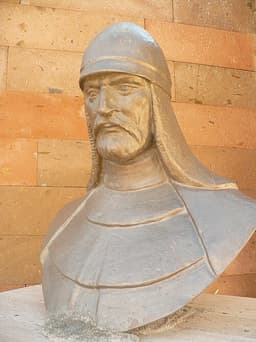
Alp Tigin
Emperor · Medieval
50.5Total
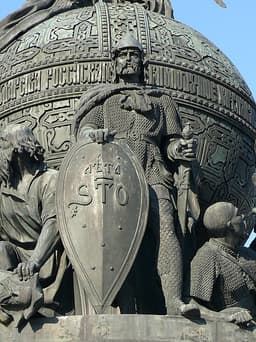
Rurik
Emperor · Medieval
59.6Total
Basic Information
Born
911
830
Died
963
879
Era
Medieval
Medieval
Nationality
Ghaznavid Empire
Kievan Rus
Occupation
Emperor
Emperor
Civilization
Middle Eastern
Western
Score Comparison
Military (10%)
55.0
50.0
Political (20%)
33.6
35.1
Influence (20%)
56.4
82.0
Legacy (20%)
49.2
68.0
Leadership (15%)
50.7
55.3
Strategy (15%)
60.0
35.7
TOTAL
50.5
59.6
Alp Tigin — Complete Timeline
961 AD
Rebellion against the SamanidsPolitical Action◆ Major
Alp Tigin rebelled against the Samanid ruler Mansur I after being passed over for a governorship. He marched from Nishapur to Ghazni, defeating Samanid forces along the way, and established his own rule in eastern Afghanistan.
Impact: regional
963 AD
Consolidation of GhazniPolitical Action
Alp Tigin fortified Ghazni and organized a military state based on slave soldiers (ghilman). He established a stable administration that attracted scholars and merchants, turning Ghazni into a major regional power center.
Impact: regionalconstructive
Rurik — Complete Timeline
860 AD
Sent Askold and Dir to ConstantinopleWar
According to tradition, Rurik sent his lieutenants Askold and Dir to raid Constantinople. While the historicity is uncertain, this event is associated with the first Rus' attack on the Byzantine Empire, highlighting early Rus' expansion.
RaidByzantine EmpireExpansion
Impact: regional
862 AD
Founded the Rurik dynastyPolitical Action
According to the Primary Chronicle, Rurik, a Varangian chieftain, was invited by Slavic and Finnic tribes to rule over them. He established his capital at Novgorod, founding the Rurik dynasty that would rule Kievan Rus' and later the Tsardom of Russia until 1598.
FoundationVarangianKievan Rus'
Impact: global
864 AD
Consolidated control over NovgorodPolitical Action◆ Major
Rurik consolidated his rule over Novgorod and the surrounding territories, suppressing a rebellion led by Vadim the Bold. He established a centralized authority that became the basis for the early Russian state.
ConsolidationNovgorodRebellion
Impact: regional
Expert Analysis
Alp Tigin vs Rurik
### The Slave Who Built an Empire, the Viking Who Founded a Dynasty
Imagine two men, born centuries apart in worlds that could not have been more different, yet each laying the cornerstone of a dynasty that would shape the fate of millions. One was a Turkic slave, sold in the markets of Central Asia, who clawed his way to power through rebellion and the cold steel of his *ghilman*—an army of fellow slaves. The other was a Varangian chieftain, a Viking from the misty fjords of Scandinavia, who was said to have been invited by warring tribes to bring order to the forests of the East. Alp Tigin of Ghazni and Rurik of Novgorod: one a product of ruthless ambition, the other a figure shrouded in legend. How did their origins, their eras, and their choices drive such different outcomes?
### Origins
Alp Tigin was born around 911 into a world of Turkic steppe warriors, but his path was not one of birthright. Captured and sold as a slave, he entered the service of the Samanid Empire, a Persianate realm that stretched across modern-day Iran and Central Asia. Slavery in the Islamic world was not a permanent stain; for a talented young man, it was a ladder. The Samanids relied on Turkic slave-soldiers, known as *ghilman*, to staff their armies and courts. Alp Tigin rose through this system, becoming a commander of the guard. His world was one of patronage, intrigue, and the constant threat of betrayal. He had no bloodline to fall back on—only his wits and his sword.
Rurik, by contrast, is a ghost. His historicity is debated; the *Primary Chronicle*, compiled centuries after his death, tells of a Varangian chieftain born around 830. The Varangians were Norse Vikings who raided and traded along the rivers of Eastern Europe. Rurik’s origins are obscure—some scholars see him as a legendary figure, a myth to legitimize later rulers. But if he existed, he came from a world of clan loyalties and seafaring raids, where a chieftain’s power rested on his ability to lead warriors and extract tribute. Unlike Alp Tigin, Rurik was likely born free, a prince of a small Viking kingdom. His challenge was not to escape slavery, but to carve a realm from chaos.
### Rise to Power
Alp Tigin’s rise was a story of rebellion. In 961, after years of loyal service, he was passed over for the governorship of Khorasan by the Samanid ruler Mansur I. The slight was a death sentence for a man whose status depended on favor. Alp Tigin marched from Nishapur with his personal army, a force of loyal *ghilman* who owed everything to him. He was defeated in battle, but he did not flee. Instead, he retreated to the remote fortress of Ghazni, in what is now Afghanistan, and refused to submit. For two years, he held out, negotiating with the Samanids, playing them against local rivals. By 963, he had consolidated his control over Ghazni, turning it into a fortified base. He did not declare himself emperor—he was too pragmatic for that. But he had founded a state. His rise was a coup, a seizure of power by a slave who had become a kingmaker.
Rurik’s rise was the opposite: an invitation. According to the *Primary Chronicle*, in 862, the Slavic and Finnic tribes of the Novgorod region, exhausted by internal feuds, sent a message to the Varangians: “Our land is great and abundant, but there is no order in it. Come to rule and reign over us.” Rurik answered the call. He arrived with his brothers, Sineus and Truvor, and established himself at Ladoga, then Novgorod. The story is almost too neat—a founding myth that turns conquest into a gift. But the reality was likely more violent. Rurik was a Viking warlord, and his “invitation” may have been a takeover. Still, the key difference is clear: Alp Tigin seized power through a rebellion born of personal grievance; Rurik entered power through a narrative of legitimate invitation, however fictional.
### Leadership & Governance
Alp Tigin ruled Ghazni with a military fist. He organized his state around the *ghilman* system—slave soldiers who were loyal only to him, not to tribal or family ties. This was a revolutionary model: a standing army of bought men, trained from childhood, who could be promoted based on merit. He fortified the city, built a treasury, and established a stable administration. But his rule was narrow. He did not expand his territory; Ghazni remained a small, fortified enclave. His political wisdom lay in knowing his limits. He did not challenge the Samanids directly again, nor did he try to build a vast empire. He was a survivor, not a conqueror.
Rurik, by contrast, ruled through a blend of Viking chieftaincy and Slavic tradition. He consolidated control over Novgorod by 864, suppressing a rebellion led by Vadim the Bold, a local leader. His leadership was personal—he relied on kinship and loyalty, sending his lieutenants Askold and Dir to raid Constantinople in 860. But Rurik’s governance was less about institutions and more about personal authority. He did not create a bureaucracy or a standing army; he was a war leader who collected tribute. His legacy was not a system, but a dynasty. Where Alp Tigin built a machine of power, Rurik built a bloodline.
### Triumph & Tragedy
Alp Tigin’s greatest triumph was his rebellion itself. To rise from a slave to the founder of a dynasty was a stunning achievement in a world where birth dictated fate. His tragedy was that he died in 963, just as his state was taking shape. He never saw his creation flourish. His son, Abu Ishaq Ibrahim, briefly ruled, but it was his slave-general, Sabuktigin, who would turn Ghazni into an empire. Alp Tigin’s triumph was personal, but his legacy was stolen by others.
Rurik’s triumph was the founding of the Rurik dynasty, which would rule Kievan Rus’ and later Russia for over 700 years. His tragedy is that he may not have existed. The *Primary Chronicle* is the only source, and it was written centuries later by monks with a political agenda. Rurik’s historicity is debated; he may be a legend, a composite figure invented to give the Rus’ a noble origin. If so, his triumph is a fiction, and his tragedy is that we can never know the truth.
### Character & Destiny
Alp Tigin was a man of iron will. His rebellion was reckless—he was outnumbered and outmatched—but he refused to accept his fate. He was pragmatic, patient, and ruthless. He understood that power came from loyalty, not love, and he built his state on that cold truth. His destiny was shaped by his origins: a slave who could never trust anyone, so he created a system where no one could betray him.
Rurik, if he existed, was a man of opportunity. He saw a land in chaos and took it, but he did so by wrapping his ambition in the cloak of invitation. He was a diplomat as much as a warrior. His destiny was shaped by the myth that grew around him. The Rurik dynasty needed a founder, and the legend of the invited Viking provided legitimacy. Alp Tigin’s character led him to build a fortress; Rurik’s character, real or imagined, led him to build a story.
### Legacy
Alp Tigin’s legacy is the Ghaznavid Empire, which under Sabuktigin and Mahmud of Ghazni would become a major power, raiding into India and spreading Islam. But Alp Tigin himself is a footnote—a slave who started a dynasty, but whose name is overshadowed by his successors. His total score of 56.5 reflects a figure who was competent but not transformative.
Rurik’s legacy is the Rurik dynasty, which shaped the history of Eastern Europe and Russia. His total score of 61.6 is higher, but it is based on a legend. He is remembered as the founder of a nation, a figure of mythic proportions. His influence (68.7) and legacy (68.7) dwarf Alp Tigin’s, but his military (41.5) and strategy (52.0) are lower—he was a symbol, not a general.
### Conclusion
In the end, Alp Tigin and Rurik are mirrors of two paths to power. One was a slave who fought for everything; the other was a Viking who was handed a crown—or so the story goes. Alp Tigin’s world was one of merit through slavery, where a man could rise from chains to rule. Rurik’s world was one of legend, where a chieftain could become a king through the power of a story. Both founded dynasties, but their outcomes were shaped by their eras. Alp Tigin built a state on the back of an army; Rurik built a dynasty on the back of a myth. Which is more real? Perhaps both, for history is made of iron and ink, and neither lasts forever.
Rankings
🥇
RurikLeader
Mil: 50.0Pol: 35.1Inf: 82.0
59.6
🥈
Alp Tigin
Mil: 55.0Pol: 33.6Inf: 56.4
50.5
+9.1 behind
How This Comparison Works
Algorithm
Each figure is scored on 6 dimensions (0—100 scale) based on structured historical data: Military (10%), Political (20%), Influence (20%), Legacy (20%), Leadership (15%), Strategy (15%). The weighted total produces the final ranking.
Data Sources
Scores are computed from structured sub-indicators in the database. Scale factors adjust for era (Ancient ×0.85, Modern ×1.0) and civilization size (Eastern ×1.05, Other ×0.80) to account for differences in population and military scale.
Maximum 3 Figures
Comparisons are limited to 2—3 figures to ensure readability and statistical meaningfulness.
Error Margins
±5 points per dimension — Sub-scores are derived from historical records with inherent uncertainty. Two figures within 5 points on a dimension should be considered roughly equivalent in that area.
Total Score Accuracy
±3 points overall — The weighted combination of 6 dimensions produces a total score with approximately ±3 points of uncertainty. Differences of less than 3 points are not statistically significant— the figures are effectively tied.
Known Limitations
- Historical records are incomplete and uneven across civilizations
- Figures from oral-tradition societies may be underrepresented
- Occupation labels can misclassify multi-role figures
- Scores measure capability and impact, not moral character
- Quantitative scoring is a comparison tool, not absolute truth
Capability Radar
Military (10%) — Battles & Warfare
Battles
45
15
Win Rate
50
20
Expansion
50
30
Political (20%) — Governance & Reform
Reform
20
30
Diplomacy
30
35
Economy
20
25
Influence (20%) — Cultural & Global Reach
Cultural
30
50
Global
30
60
Legacy (20%) — Historical Impact
Historical
45
70
Longevity
40
80
Leadership (15%) — Power & Stability
Tenure
25
40
Stability
25
30
Strategy (15%) — Tactics & Innovation
Strategy
45
20
Tactics
40
15
Reform
30
10
Similar Comparisons
Comments & Discussion
STEEL_AND_SAGA6/16/2026
Alp Tigin wins this hands down. The guy started as *property*—literally a slave in a market—and built an empire that lasted centuries. Rurik? He’s a semi-mythical Viking who might’ve never existed. The Primary Chronicle says Slavs “invited” him to rule, which is the oldest PR trick in the book to legitimize foreign conquest. Give me the cold grit of a self-made man over a Varangian legend any day. No contest.
符文拆解师6/16/2026
阿尔普·特勤的故事比留里克更像真的,因为考古铁证如山。加兹尼城的陶器碎片和钱币上刻着他的名号,连印度北境的寺庙都有他劫掠的记录。反观留里克,只活在12世纪的编年史里,连坟墓都没人找到。一个历史人物连骨头都没留下,你凭什么说他比那个抢了萨曼王朝政权的实权人物更靠谱?神话和史实,我分得清。
BLUFF_AND_BIRCHBARK6/16/2026
Both are overhyped. Alp Tigin was a ruthless opportunist who enslaved other slaves to build his army—hardly noble. Rurik’s invitation story reeks of political fiction, but at least Novgorod’s archaeology shows real Viking settlement by the 9th century. Compare that to Ghazni’s rise: it wasn’t Alp Tigin’s ambition alone—it was Samanid collapse that created the vacuum. Give me the data over the drama. Neither fits the “great founder” mold cleanly.
北地残篇6/16/2026
留里克是斯拉夫部落的救世主还是掠夺者?我更倾向于后者。瑞典的比尔卡遗址出土了9世纪拜占庭银币,证明瓦良格人早就在东欧搜刮财富。所谓“邀请”,不过是维京人血腥渗透后的美化说辞。阿尔普·特勤至少诚实——他用武力夺取加兹尼,没编造虚无缥缈的松树民族神话。一个硬汉军阀,一个伪装成恩主的劫匪,我选前者。
SLAVE_TO_SOVEREIGN6/16/2026
Classics scholar here: Alp Tigin’s rise is a masterclass in early Islamic social mobility. The *ghilman* system wasn’t just slavery—it was a patronage network. He leveraged it perfectly, seizing Ghazni in 962 after a failed rebellion against the Samanids. Rurik, by contrast, is pure legend in the *Primary Chronicle*, written centuries later to legitimize the Rurikid dynasty. One man’s story is documented in coins and chronicles; the other is a founding myth with no contemporary evidence. No brai