Loading...
Alp Tigin vs Peter the Great
Peter the Great leads by 22.7 pts · 2 figures compared
…
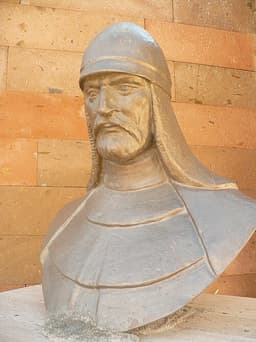
Alp Tigin
Emperor · Medieval
50.5Total
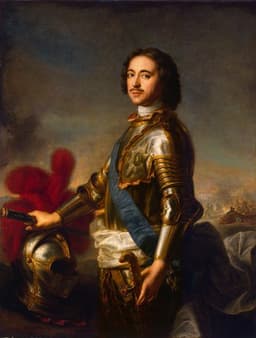
Peter the Great
Emperor · Modern
73.2Total
Basic Information
Born
911
1672
Died
963
1725
Era
Medieval
Modern
Nationality
Ghaznavid Empire
Russia
Occupation
Emperor
Emperor
Civilization
Middle Eastern
Western
Score Comparison
Military (10%)
55.0
75.0
Political (20%)
33.6
90.0
Influence (20%)
56.4
68.0
Legacy (20%)
49.2
65.0
Leadership (15%)
50.7
78.0
Strategy (15%)
60.0
72.0
TOTAL
50.5
73.2
Alp Tigin — Complete Timeline
961 AD
Rebellion against the SamanidsPolitical Action◆ Major
Alp Tigin rebelled against the Samanid ruler Mansur I after being passed over for a governorship. He marched from Nishapur to Ghazni, defeating Samanid forces along the way, and established his own rule in eastern Afghanistan.
Impact: regional
963 AD
Consolidation of GhazniPolitical Action
Alp Tigin fortified Ghazni and organized a military state based on slave soldiers (ghilman). He established a stable administration that attracted scholars and merchants, turning Ghazni into a major regional power center.
Impact: regionalconstructive
Peter the Great — Complete Timeline
1697 AD
Grand EmbassyPolitical Action◆ Major
Peter the Great traveled incognito to Western Europe as part of a diplomatic mission. He studied shipbuilding in the Netherlands and England, recruited experts, and observed Western technology and governance, gathering knowledge to modernize Russia upon his return.
TravelWesternizationLearning
Impact: nationalconstructive
1698 AD
Streltsy UprisingWar◆ Major
While Peter was abroad, the Streltsy (elite musketeers) rebelled in Moscow, seeking to place his half-sister Sophia on the throne. Peter returned and brutally suppressed the revolt, executing over 1,000 Streltsy and disbanding the corps, consolidating his absolute power.
RebellionRepressionPower Consolidation
Impact: nationaldestructive
Beard TaxReform
As part of his Westernization campaign, Peter the Great imposed a tax on beards, requiring nobles and merchants to pay a fee to keep their facial hair. Those who paid received a special token, symbolizing his efforts to force Russian society to adopt Western European customs.
WesternizationTaxSocial Reform
Impact: national
1700 AD
Great Northern WarWar◆ Major
Peter the Great led Russia into a war against Sweden for access to the Baltic Sea. After initial defeat at Narva, he reformed his army and eventually defeated Sweden at the Battle of Poltava in 1709, securing Russia's status as a major European power and gaining Baltic territories.
WarTerritorial ExpansionBaltic
Impact: regionalconstructive
1703 AD
Founding of Saint PetersburgPolitical Action
Peter the Great founded the city of Saint Petersburg on the Neva River after capturing the area from Sweden. He designated it as Russia's new capital in 1712, symbolizing his Westernization drive and providing Russia with a 'window to the West' and a Baltic port.
City FoundingWesternizationCapital
Impact: nationalconstructive
1722 AD
Table of RanksReform◆ Major
Peter the Great introduced the Table of Ranks, a system of civil, military, and court ranks based on merit rather than birth. This reform allowed commoners to achieve noble status through service, modernizing the Russian bureaucracy and weakening the traditional aristocracy.
BureaucracyMeritocracySocial Reform
Impact: nationalprogressive
Expert Analysis
Peter the Great vs Alp Tigin
### The Emperor and the Slave: Two Paths to Power
In the winter of 1697, a towering young man of twenty-five, his hands calloused from swinging an axe, labored in the shipyards of Zaandam, Netherlands. He wore simple clothes, asked too many questions, and drank with the locals. No one suspected he was the Tsar of all Russia. Four centuries earlier and two thousand miles to the southeast, another man—a Turkic slave sold in the markets of Bukhara—rose through the ranks of the Samanid army, not by birthright but by the blade. One man inherited a throne and remade a nation; the other seized a city and founded an empire. Peter the Great and Alp Tigin both carved their names into history, yet their stories reveal how different eras, cultures, and personalities define the very meaning of power.
Origins
Peter was born into the Kremlin’s gilded chaos in 1672, the son of Tsar Alexis and his second wife. His childhood was a brutal tutorial in Russian politics: his half-sister Sophia seized the regency, the Streltsy musketeers rioted, and young Peter watched relatives dragged to their deaths. This trauma forged a ruler who trusted no one but himself—and the foreigners he brought to teach him. Alp Tigin, born around 911, began life in the steppes of Central Asia, likely as a slave or a soldier-for-hire. In the Islamic world, the *ghulam* system turned captured boys into elite warriors; loyalty was purchased, not inherited. Alp Tigin’s rise was a testament to meritocracy in a world where a slave could become a general—if he was ruthless enough.
Rise to Power
Peter’s ascent was formal and dynastic. By 1689, he had outmaneuvered Sophia and assumed sole rule, but his true rise began with a journey. In 1697, he launched the Grand Embassy, an unprecedented fact-finding mission across Europe. Disguised as a commoner named Peter Mikhailov, he studied shipbuilding in the Netherlands, toured English dockyards, and recruited hundreds of engineers and officers. It was a revolution of the mind: the Tsar returned to Moscow determined to drag his backward realm into the modern age. Alp Tigin’s path was more direct. In 961, after being denied the governorship of Khorasan, he rebelled against his Samanid overlord, Mansur I. He marched his loyal troops east, seized the fortress of Ghazni in what is now Afghanistan, and declared himself independent. He did not seek to transform a civilization—he sought a kingdom of his own.
Leadership & Governance
Peter governed with a furious, hands-on intensity. He personally led his army in the Great Northern War against Sweden, suffering a crushing defeat at Narva in 1700, then rebuilt his forces from scratch. He founded St. Petersburg in 1703 on captured swamp-lands—a city built by forced labor, a window to the West. His reforms were sweeping: the Beard Tax of 1698 forced nobles to shave, the Table of Ranks of 1722 replaced aristocratic birth with state service. He created Russia’s first navy, standardized the alphabet, and imported Western technology wholesale. It was a reign of relentless, often brutal, modernization. Alp Tigin ruled differently. He consolidated Ghazni into a military state, organizing his army around *ghilman*—slave soldiers whose loyalty was absolute because they had no other home. He built no new capital, imposed no cultural revolution. His governance was pragmatic: secure the fortress, dominate the trade routes, and survive the rivalries of Turkic and Persian powers. Where Peter sought to change his people’s souls, Alp Tigin merely sought to command their swords.
Triumph & Tragedy
Peter’s greatest triumph was the victory at Poltava in 1709, which broke Swedish power and secured Russia’s access to the Baltic. He had transformed a medieval kingdom into a European empire. His tragedy was personal: his son Alexei opposed his reforms, fled abroad, and was tortured to death on Peter’s orders. The father who modernized Russia could not modernize his own family. Alp Tigin’s triumph was survival itself: he held Ghazni against the Samanids and laid the foundation for a dynasty that would, under his slave-son Mahmud, sweep into India. His tragedy was obscurity. He died in 963, probably of natural causes, and his immediate successors were weak. The Ghaznavid Empire would blossom later, but its founder barely lived to see it.
Character & Destiny
Peter was a man of contradictions: a reformer who flogged his nobles with his own hands, a visionary who drowned dissent in blood. His personality—restless, curious, autocratic—drove him to break with tradition at every turn. He believed that progress could be imposed, and history largely agrees that he was right. Alp Tigin was more a creature of his environment: a soldier who understood that in the fractured world of 10th-century Central Asia, power belonged to the one who held the sword and the purse. He did not seek to change the world; he sought to carve out a place in it. One man’s destiny was to reshape a nation; the other’s was to found a dynasty that would, for a time, reshape a region.
Legacy
Peter the Great is remembered as the father of modern Russia. St. Petersburg, which he built, was his monument until it was renamed Leningrad; his Table of Ranks shaped the bureaucracy for centuries. His legacy is a paradox: he made Russia strong, but at a terrible human cost. Alp Tigin’s legacy is more modest but more direct: he founded the Ghaznavid dynasty, which under Mahmud of Ghazni became the first Islamic empire to penetrate deep into India. Yet Alp Tigin himself remains a footnote—a slave who became a king, a name known only to specialists.
Conclusion
Standing in the shipyards of Zaandam, Peter the Great learned to build ships. Alp Tigin, in the dust of Ghazni, learned to build a state. One sought to import the future; the other seized the present. Their differences are not just of time and place—they are of vision. Peter believed that a ruler could remake his people; Alp Tigin believed a ruler could only command them. Both were right, in their own worlds. But the world remembers the man who tried to change everything, not the one who accepted what he found.
Rankings
🥇
Peter the GreatLeader
Mil: 75.0Pol: 90.0Inf: 68.0
73.2
🥈
Alp Tigin
Mil: 55.0Pol: 33.6Inf: 56.4
50.5
+22.7 behind
How This Comparison Works
Algorithm
Each figure is scored on 6 dimensions (0—100 scale) based on structured historical data: Military (10%), Political (20%), Influence (20%), Legacy (20%), Leadership (15%), Strategy (15%). The weighted total produces the final ranking.
Data Sources
Scores are computed from structured sub-indicators in the database. Scale factors adjust for era (Ancient ×0.85, Modern ×1.0) and civilization size (Eastern ×1.05, Other ×0.80) to account for differences in population and military scale.
Maximum 3 Figures
Comparisons are limited to 2—3 figures to ensure readability and statistical meaningfulness.
Error Margins
±5 points per dimension — Sub-scores are derived from historical records with inherent uncertainty. Two figures within 5 points on a dimension should be considered roughly equivalent in that area.
Total Score Accuracy
±3 points overall — The weighted combination of 6 dimensions produces a total score with approximately ±3 points of uncertainty. Differences of less than 3 points are not statistically significant— the figures are effectively tied.
Known Limitations
- Historical records are incomplete and uneven across civilizations
- Figures from oral-tradition societies may be underrepresented
- Occupation labels can misclassify multi-role figures
- Scores measure capability and impact, not moral character
- Quantitative scoring is a comparison tool, not absolute truth
Capability Radar
Military (10%) — Battles & Warfare
Battles
45
85
Win Rate
50
80
Expansion
50
90
Political (20%) — Governance & Reform
Reform
20
95
Diplomacy
30
80
Economy
20
85
Influence (20%) — Cultural & Global Reach
Cultural
30
85
Global
30
85
Legacy (20%) — Historical Impact
Historical
45
90
Longevity
40
85
Leadership (15%) — Power & Stability
Tenure
25
90
Stability
25
70
Strategy (15%) — Tactics & Innovation
Strategy
45
85
Tactics
40
75
Reform
30
95
Similar Comparisons
Comments & Discussion
THEWOODCHIPPER6/16/2026
Peter the Great didn't just visit Dutch shipyards—he *studied* them like a desperate student before finals, returning to Russia with 900 technicians. That's the difference between a reformer and a conqueror: Alp Tigin took Ghazni with a slave army and built an empire from plunder. Peter took an entire civilization and dragged it kicking into modernity. One's a castle builder, the other's a blacksmith forging a nation.
斯拉夫锤子6/16/2026
彼得大帝是个书呆子统治者,而阿尔普·特勤是真正的战士。彼得从荷兰带回造船技术,但俄国农民起义和纳尔瓦战役的惨败证明,强行西化只会让国家流血。阿尔普·特勤从奴隶到国王,靠的是刀剑和忠诚,而不是进口教科书。吉兹尼的城墙是用敌人头颅砌成的,不是用蓝图。
STATSKEEPER6/16/2026
The raw data tells a story the romance can't match. Alp Tigin's Ghaznavid dynasty lasted over 200 years; Peter's Romanovs, for all his westernizing, collapsed in 1917—only about 200 years of real power after him. Peter created a bureaucracy that functioned for a century; Alp Tigin's slave-soldier system spawned a military machine that conquered northern India. On longevity and territorial expansion, the slave-king's legacy is more robust.
考古斧头6/16/2026
彼得大帝的遗产是圣彼得堡,欧洲的窗口,但阿尔普·特勤的遗产是吉兹尼,一座中亚的麦加。当你比较两者时,别忘了时间尺度:彼得统治的21年改变了俄国,但阿尔普·特勤建立的王朝在印度教和伊斯兰教的边界上撑了300年,留下了马哈茂德这样比他更强的苏丹。彼得是伟大的,但他只是把俄国带上欧洲轨道,而阿尔普·特勤创造了全新的恒星系统。
IRONFEATHER6/16/2026
You revisionists love to sanitize Alp Tigin as a "meritocratic" slave-king, but let's get real: he was a rebel general who murdered his own patron, choked Samanid power through a coup, and built his state on Indian slave-raids. Peter was a brutal autocrat, sure, but he drained swamps, banned beards to drag nobles into enlightenment, and died from saving drowning soldiers—a tragic hero. Alp Tigin's end is obscure, likely assassinated. One left a city, the other a nation.