Loading...
Alp Tigin vs Mao Zedong
Mao Zedong leads by 28.9 pts · 2 figures compared
…
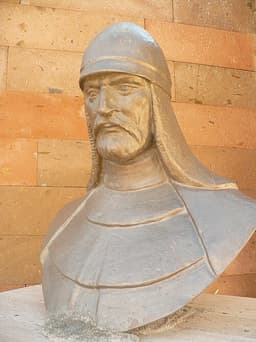
Alp Tigin
Emperor · Medieval
50.5Total
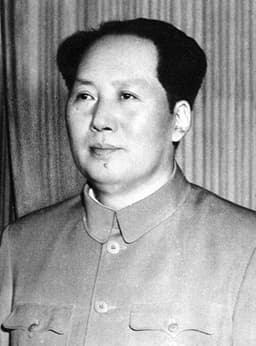
Mao Zedong
Politician · Modern
79.4Total
Basic Information
Born
911
1893
Died
963
1976
Era
Medieval
Modern
Nationality
Ghaznavid Empire
China
Occupation
Emperor
Politician
Civilization
Middle Eastern
Eastern
Score Comparison
Military (10%)
55.0
75.0
Political (20%)
33.6
88.0
Influence (20%)
56.4
85.0
Legacy (20%)
49.2
70.0
Leadership (15%)
50.7
85.0
Strategy (15%)
60.0
72.0
TOTAL
50.5
79.4
Alp Tigin — Complete Timeline
961 AD
Rebellion against the SamanidsPolitical Action◆ Major
Alp Tigin rebelled against the Samanid ruler Mansur I after being passed over for a governorship. He marched from Nishapur to Ghazni, defeating Samanid forces along the way, and established his own rule in eastern Afghanistan.
Impact: regional
963 AD
Consolidation of GhazniPolitical Action
Alp Tigin fortified Ghazni and organized a military state based on slave soldiers (ghilman). He established a stable administration that attracted scholars and merchants, turning Ghazni into a major regional power center.
Impact: regionalconstructive
Mao Zedong — Complete Timeline
1934 AD
Long MarchWar
Mao Zedong led the Chinese Red Army on a strategic retreat from Nationalist forces, covering approximately 6,000 miles over 370 days. The march solidified Mao's leadership within the Chinese Communist Party and became a foundational myth of the Communist revolution.
Chinese Civil WarCommunist RevolutionRetreat
Impact: national
1949 AD
Proclamation of the People's Republic of ChinaPolitical Action
Mao Zedong declared the founding of the People's Republic of China from Tiananmen Gate in Beijing. This ended the Chinese Civil War and established Communist rule over mainland China, with Mao as Chairman of the Central People's Government.
Founding of PRCCommunist VictoryRevolution
Impact: global
1958 AD
Great Leap ForwardReform◆ Major
Mao launched a campaign to rapidly industrialize China and collectivize agriculture. The policy led to widespread mismanagement, resulting in a famine that caused an estimated 15-45 million deaths between 1959 and 1961.
FamineIndustrializationCollectivization
Impact: nationaldestructive
1960 AD
Sino-Soviet SplitPolitical Action◆ Major
Mao's ideological differences with Soviet leader Nikita Khrushchev led to a breakdown in relations between China and the Soviet Union. The split ended the Sino-Soviet alliance and reshaped global Cold War dynamics, with China pursuing an independent path.
Cold WarIdeological ConflictAlliance Breakdown
Impact: global
1966 AD
Cultural RevolutionPolitical Action
Mao initiated a sociopolitical movement to purge capitalist and traditional elements from Chinese society. The Red Guard youth groups attacked intellectuals and officials, leading to widespread violence, destruction of cultural artifacts, and an estimated 1-2 million deaths.
Political PurgeSocial UpheavalRed Guard
Impact: nationaldestructive
1971 AD
Ping-Pong DiplomacyCultural◆ Major
Mao approved an invitation for the U.S. table tennis team to visit China, initiating a thaw in Sino-American relations. This cultural exchange paved the way for President Nixon's visit to China in 1972 and the eventual normalization of diplomatic ties.
DiplomacyU.S.-China RelationsCultural Exchange
Impact: globalconstructive
Expert Analysis
Mao Zedong vs Alp Tigin
# The Slave and the Emperor: How Two Outsiders Forged Empires from Nothing
In the autumn of 963, a Turkic slave commander lay dying in the fortress city of Ghazni, his body worn from decades of warfare and political maneuvering. Half a world away and a thousand years later, in September 1976, a revolutionary who had once been a librarian in Beijing breathed his last, leaving behind a nation transformed beyond recognition. Between Alp Tigin, the founder of the Ghaznavid dynasty, and Mao Zedong, the architect of modern China, lies an abyss of time, scale, and civilization. Yet both men began as outsiders who seized history by the throat. The question is not merely what they achieved, but why their paths—and their legacies—diverged so dramatically.
Origins
Alp Tigin was born into slavery in 911, probably in the steppes of Central Asia, captured as a child and sold into the Samanid Empire’s military apparatus. The Samanids, a Persian dynasty ruling from Bukhara, had perfected the system of training Turkic slaves as elite soldiers—the *ghilman*—who owed absolute loyalty to their masters. Alp Tigin rose through sheer competence, becoming commander of the Samanid army by mid-century. He had no bloodline, no clan, no homeland to call his own. His identity was forged in the crucible of the barracks.
Mao Zedong, born in 1893 in Shaoshan, Hunan Province, came from a peasant family that had clawed its way into modest landownership. His father, a harsh and frugal man, beat him; his mother, devoutly Buddhist, sheltered him. Mao grew up in a China crumbling under the weight of the Qing dynasty’s decay, foreign humiliation, and rural poverty. He devoured classical Chinese texts, then revolutionary pamphlets. Where Alp Tigin’s world was one of swords and horses, Mao’s was one of books and ideologies.
One was shaped by the discipline of the slave market, the other by the desperation of a civilization in collapse. Both learned early that power belonged to those who could seize it.
Rise to Power
Alp Tigin’s great moment came in 961, when the Samanid ruler Mansur I passed him over for the governorship of Khorasan. The slight was not just personal—it threatened his entire career. Rather than submit, Alp Tigin rebelled, marching his army from Nishapur eastward toward the Hindu Kush. It was a gamble born of necessity. He could not defeat the Samanid Empire in open war, so he chose a different path: he occupied the remote fortress city of Ghazni, in what is now eastern Afghanistan, and declared himself independent.
Mao’s rise followed a longer, more tortuous arc. In 1934, after years of guerrilla warfare against the Nationalists, his Communist forces were cornered. The Long March—a desperate 6,000-mile retreat through some of China’s most brutal terrain—became his crucible. Mao emerged from it not just alive, but as the undisputed leader of the Chinese Communist Party. Where Alp Tigin’s rebellion was a swift, military seizure, Mao’s was a marathon of endurance and political cunning.
Leadership & Governance
At Ghazni, Alp Tigin consolidated his power by building a military state around the *ghilman* system he knew so well. He fortified the city, organized a standing army of slave-soldiers, and established a stable administration that could extract taxes and maintain order. His rule was pragmatic, not ideological: he needed to survive in a hostile neighborhood of Persian dynasties and Turkic rivals. He died in 963, after only two years as an independent ruler, but he had planted a seed. The Ghaznavid dynasty would grow into an empire stretching from the Caspian to the Indus.
Mao’s governance was nothing less than a total transformation of Chinese society. In 1949, he proclaimed the People’s Republic of China from Tiananmen Gate, ending a century of civil war and foreign domination. Then came the Great Leap Forward of 1958, a crash industrialization campaign that Mao pushed with messianic fervor. It was a catastrophe: mismanagement, forced collectivization, and disastrous agricultural policies led to a famine that killed tens of millions. Yet Mao did not stop. In 1966, he launched the Cultural Revolution, unleashing the Red Guard to purge “capitalist” and “traditional” elements. The result was chaos, violence, and the destruction of countless cultural artifacts.
Alp Tigin built a fortress; Mao remade a civilization. One’s ambitions were limited by geography, the other’s by ideology.
Triumph & Tragedy
Alp Tigin’s greatest triumph was survival itself. A slave who became a king, he carved out a domain where none had existed. His tragedy was that he barely tasted power—he died too soon to see the empire he founded reach its height. His legacy was indirect, a seed planted in rocky soil.
Mao’s triumphs were monumental: uniting China, expelling foreign influence, and standing up to both the United States and the Soviet Union. The 1971 Ping-Pong Diplomacy, when he approved a visit by the U.S. table tennis team, thawed relations with America and reshaped global geopolitics. But his tragedies were equally vast. The Great Leap Forward and Cultural Revolution left scars that still ache in China’s collective memory. He saved China from humiliation, but at a cost that defies easy calculation.
Character & Destiny
Alp Tigin was a pragmatist. He had no grand vision—he wanted power, security, and a legacy for his bloodline. His personality was shaped by the slave market: cautious, calculating, loyal to his soldiers but ruthless to his enemies. He did not seek to change the world, only to find a place in it.
Mao was a visionary, a poet, and a revolutionary who believed he could remake human nature itself. He wrote, “Political power grows out of the barrel of a gun,” and he meant it. His personality was grandiose, paranoid, and messianic. He saw himself as the instrument of history, and he was willing to sacrifice millions to fulfill that destiny.
One man accepted the world as it was and carved his niche. The other tried to destroy the world and build it anew.
Legacy
Alp Tigin is remembered today as the founder of the Ghaznavid dynasty, a footnote in the history of medieval Islam. His name is known mainly to specialists. His fortress at Ghazni crumbled long ago. Yet the system he pioneered—the use of Turkic slave-soldiers—would shape the Islamic world for centuries, from the Mamluks of Egypt to the Ottoman Janissaries.
Mao Zedong is remembered as the father of modern China. His portrait still hangs in Tiananmen Square. His writings are studied, his policies debated, his legacy both revered and reviled. He is a colossus, impossible to ignore, impossible to summarize.
Conclusion
Standing at the end of their stories, one is struck by the sheer difference in scale. Alp Tigin’s world was a small fortress in the mountains; Mao’s was a continent. But the deeper difference lies in intention. Alp Tigin wanted to rule; Mao wanted to transform. One built a dynasty that lasted two centuries; the other built a nation that will endure for millennia. Both were outsiders who rose through violence and cunning. But the slave commander accepted the limits of his age, while the revolutionary tried to shatter them. In the end, perhaps the most telling contrast is this: Alp Tigin died in his bed, his work unfinished but his state intact. Mao died in his bed too, but the China he left behind was still reeling from his experiments. One man’s legacy is a quiet footnote; the other’s is a roaring debate that will not end.
Rankings
🥇
Mao ZedongLeader
Mil: 75.0Pol: 88.0Inf: 85.0
79.4
🥈
Alp Tigin
Mil: 55.0Pol: 33.6Inf: 56.4
50.5
+28.9 behind
How This Comparison Works
Algorithm
Each figure is scored on 6 dimensions (0—100 scale) based on structured historical data: Military (10%), Political (20%), Influence (20%), Legacy (20%), Leadership (15%), Strategy (15%). The weighted total produces the final ranking.
Data Sources
Scores are computed from structured sub-indicators in the database. Scale factors adjust for era (Ancient ×0.85, Modern ×1.0) and civilization size (Eastern ×1.05, Other ×0.80) to account for differences in population and military scale.
Maximum 3 Figures
Comparisons are limited to 2—3 figures to ensure readability and statistical meaningfulness.
Error Margins
±5 points per dimension — Sub-scores are derived from historical records with inherent uncertainty. Two figures within 5 points on a dimension should be considered roughly equivalent in that area.
Total Score Accuracy
±3 points overall — The weighted combination of 6 dimensions produces a total score with approximately ±3 points of uncertainty. Differences of less than 3 points are not statistically significant— the figures are effectively tied.
Known Limitations
- Historical records are incomplete and uneven across civilizations
- Figures from oral-tradition societies may be underrepresented
- Occupation labels can misclassify multi-role figures
- Scores measure capability and impact, not moral character
- Quantitative scoring is a comparison tool, not absolute truth
Capability Radar
Military (10%) — Battles & Warfare
Battles
45
85
Win Rate
50
80
Expansion
50
85
Political (20%) — Governance & Reform
Reform
20
95
Diplomacy
30
80
Economy
20
70
Influence (20%) — Cultural & Global Reach
Cultural
30
90
Global
30
90
Legacy (20%) — Historical Impact
Historical
45
95
Longevity
40
85
Leadership (15%) — Power & Stability
Tenure
25
95
Stability
25
60
Strategy (15%) — Tactics & Innovation
Strategy
45
85
Tactics
40
75
Reform
30
90
Similar Comparisons
Comments & Discussion
GHILMAN_GRUDGE6/16/2026
Calling Alp Tigin a ‘founder’ is generous. He was a mutinous governor who grabbed Ghazni after losing a palace coup—his empire barely outlived him. Mao built a nuclear-armed state that still stands. Comparing a 10th-century warlord who commanded a few thousand horse archers to the man who industrialized China is like comparing a mud hut to the Great Wall. Scale isn’t everything, but when one guy rules Punjab for a decade and the other reshapes a fifth of humanity, the gap is embarrassing to glos
星火考古者6/16/2026
说阿尔普特勤是‘从奴隶到皇帝’的传奇,但史料里他战死时连王冠都没正式戴上,真正建立加兹尼王朝的是他的奴隶儿子苏布克特勤。这简直像把民兵队长当开国元勋吹——看似华丽的逆袭,实则是雇佣兵圈的权力游戏。毛泽东至少亲手写了《论持久战》,改变了中国土地制度;而阿尔普特勤的战功,不过是给波斯宫廷换了个突厥保镖头子。历史感不能光看剧情,得看剧本谁写的。