Loading...
Alp Tigin vs Li Cunxu
Li Cunxu leads by 16.0 pts · 2 figures compared
…
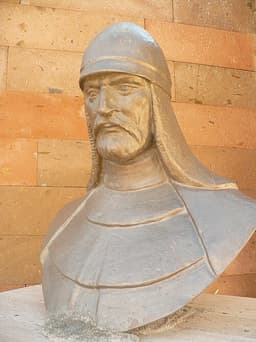
Alp Tigin
Emperor · Medieval
50.5Total
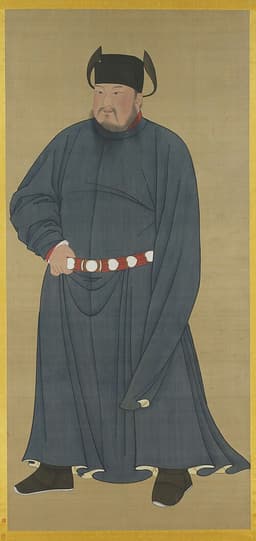
Li Cunxu
Emperor · Medieval
66.5Total
Basic Information
Born
911
885
Died
963
926
Era
Medieval
Medieval
Nationality
Ghaznavid Empire
China
Occupation
Emperor
Emperor
Civilization
Middle Eastern
Eastern
Score Comparison
Military (10%)
55.0
76.0
Political (20%)
33.6
68.0
Influence (20%)
56.4
62.0
Legacy (20%)
49.2
58.0
Leadership (15%)
50.7
80.0
Strategy (15%)
60.0
67.2
TOTAL
50.5
66.5
Alp Tigin — Complete Timeline
961 AD
Rebellion against the SamanidsPolitical Action◆ Major
Alp Tigin rebelled against the Samanid ruler Mansur I after being passed over for a governorship. He marched from Nishapur to Ghazni, defeating Samanid forces along the way, and established his own rule in eastern Afghanistan.
Impact: regional
963 AD
Consolidation of GhazniPolitical Action
Alp Tigin fortified Ghazni and organized a military state based on slave soldiers (ghilman). He established a stable administration that attracted scholars and merchants, turning Ghazni into a major regional power center.
Impact: regionalconstructive
Li Cunxu — Complete Timeline
908 AD
Succeeded as Prince of JinPolitical Action◆ Major
Li Cunxu inherited the title Prince of Jin from his father Li Keyong. He continued the struggle against Later Liang, consolidating the Jin state as a major power in northern China.
JinSuccessionFive Dynasties
Impact: regional
910 AD
Battle of BaixiangWar◆ Major
Li Cunxu's Jin army defeated the Later Liang forces under Zhu Wen at Baixiang. This victory established Jin as the dominant military power in the north and marked a turning point in the war.
JinLater LiangBattle
Impact: regionalconstructive
923 AD
Conquered Later LiangWar
Li Cunxu led a successful campaign against Later Liang, capturing its capital Kaifeng and ending the dynasty. He then proclaimed himself emperor, founding the Later Tang dynasty.
Later TangConquestDynastic Change
Impact: nationalconstructive
Founded Later Tang DynastyPolitical Action
Li Cunxu declared himself emperor of the Later Tang dynasty, claiming legitimacy as the restorer of the Tang lineage. He established his capital at Luoyang and reunified much of northern China.
Later TangDynasty FoundingReunification
Impact: nationalconstructive
926 AD
Killed in mutiny at XingyuanWar◆ Major
Li Cunxu faced a mutiny by his own troops at Xingyuan during a campaign against the Khitans. He was killed in the fighting, leading to the collapse of Later Tang and the rise of Later Jin.
Later TangMutinyDeath
Impact: nationaltragic
Expert Analysis
Alp Tigin vs Li Cunxu
### The Slave Who Built a Kingdom and the Prince Who Lost an Empire
In the year 963, a Turkic slave commander named Alp Tigin lay dying in the mountain fortress of Ghazni, a city he had seized through treachery and held through iron discipline. Just sixty-three years earlier, in 885, a baby boy named Li Cunxu had been born into the Shatuo Turkic aristocracy of northern China, destined to restore a dynasty and die in a mutiny. Though separated by thousands of miles and distinct civilizations, these two men both rose from obscurity to found short-lived empires. One built a state that would endure for nearly two centuries; the other saw his creation collapse within three years of his death. The difference lies not in their ambition, but in the soil in which they planted their dreams.
Origins
Alp Tigin began life as a commodity. Purchased as a slave in the Central Asian steppes, he entered the service of the Samanid Empire, a Persianate kingdom that ruled Transoxiana and Khorasan. In the Samanid court, slave soldiers—*ghilman*—were the backbone of the military, and a talented Turk could rise to command armies. Alp Tigin was such a man: ruthless, patient, and utterly pragmatic. He learned statecraft in the shadow of a throne where loyalty was measured in gold and blood.
Li Cunxu, by contrast, was born to power. His father, Li Keyong, was a Shatuo Turk chieftain who had been granted the title Prince of Jin by the faltering Tang dynasty. The Shatuo were mercenaries who had carved out a fiefdom in what is now Shanxi. Young Li Cunxu grew up in a saddle, learning archery and cavalry tactics from his father’s veterans. The Tang ideal of imperial unity was a living memory in his household, not a distant legend. His ambition was not to carve a new kingdom but to restore an old one.
Rise to Power
Alp Tigin’s ascent was a masterclass in opportunism. In 961, after being passed over for the governorship of Khorasan, he marched his army from Nishapur to the gates of Samanid power. When the Samanid ruler Mansur I refused to negotiate, Alp Tigin simply marched east to Ghazni, a strategic fortress in what is now Afghanistan. He bribed the garrison, murdered the local governor, and declared himself master. His was a coup d’état disguised as a relocation.
Li Cunxu’s rise was a generational war. He inherited the title Prince of Jin in 908, at the age of twenty-three, and immediately faced the Later Liang dynasty, which had usurped the Tang throne. For fifteen years, he fought a grinding campaign across the North China Plain. His turning point came in 910 at the Battle of Baixiang, where he shattered the Later Liang army of Emperor Zhu Wen. The victory was not just military—it was psychological. Li Cunxu proved that the Shatuo horsemen could beat the Chinese infantry on their own ground.
Leadership & Governance
Alp Tigin ruled Ghazni like a warlord-accountant. He consolidated his power by fortifying the city and organizing a military state based on slave soldiers. He paid his *ghilman* well, kept them loyal through a mix of fear and reward, and never trusted a single noble with real authority. His administration was lean, efficient, and utterly devoid of ideology. He did not claim to restore the Samanids or the Abbasids; he simply ruled.
Li Cunxu governed as a Confucian emperor wrapped in a Turkic skin. After conquering the Later Liang in 923 and founding the Later Tang dynasty, he declared himself the restorer of the Tang lineage. He adopted Tang rituals, appointed Chinese scholars to his court, and tried to reconcile the Shatuo military aristocracy with the Chinese civil bureaucracy. It was a noble vision—but it was also a contradiction. His Turkic generals wanted plunder; his Chinese ministers wanted order. He tried to serve both, and ended up pleasing neither.
Triumph & Tragedy
Alp Tigin’s greatest triumph was simply surviving. In 963, after two years of rule, he died peacefully in Ghazni, having passed his fortress-kingdom to his son. He had built nothing grand—no great library, no legal code, no grand temple. But he had built something durable: a state that would, under his successors, conquer northern India and become the Ghaznavid Empire.
Li Cunxu’s triumph was spectacular. In 923, he led his army across the Yellow River, captured the Later Liang capital of Kaifeng, and forced the last Liang emperor to commit suicide. He proclaimed the Later Tang dynasty and for a brief moment, northern China was united under a single ruler. But his tragedy came swiftly. In 926, while campaigning against the Khitans, his own troops mutinied at Xingyuan. He was killed in the fighting. The Later Tang collapsed within three years.
Character & Destiny
Alp Tigin was a pragmatist. He understood that power in the fractured world of tenth-century Central Asia came from the loyalty of paid soldiers, not from the legitimacy of a dynasty. He never overreached. He did not try to conquer Samarkand or Baghdad. He built a small, defensible state and let time do the rest.
Li Cunxu was a romantic. He believed in the Tang dream—a unified China under a single emperor, ruled by Confucian virtue and military might. He fought for fifteen years to achieve that dream, and when he succeeded, he tried to govern by it. But the Shatuo generals who had bled for him wanted rewards, not rituals. His own soldiers killed him because he had forgotten that an empire built on conquest must continue to conquer.
Legacy
Alp Tigin’s legacy is the Ghaznavid Empire. His son Mahmud of Ghazni would turn his tiny fortress into a vast sultanate stretching from the Caspian to the Ganges. The slave soldier had founded a dynasty that would last until 1186. His name is remembered not as a great emperor, but as the man who planted a seed that grew into a tree.
Li Cunxu’s legacy is a cautionary tale. He is remembered as a brilliant general who could not govern. The Later Tang was one of the Five Dynasties, a period of chaos that ended only with the Song unification in 960. His story is taught in Chinese history as an example of how military genius without political wisdom leads to ruin.
Conclusion
These two men, born within twenty years of each other, both rose from the margins to the center of history. One was a slave who built a kingdom; the other was a prince who lost an empire. The difference was not in their courage or their skill, but in their vision. Alp Tigin knew that power is a fortress, not a dream. Li Cunxu believed that a dream could be a fortress. History, as always, favored the realist. But it is the romantic who lingers in the memory, his shattered empire a monument to the terrible cost of hope.
Rankings
🥇
Li CunxuLeader
Mil: 76.0Pol: 68.0Inf: 62.0
66.5
🥈
Alp Tigin
Mil: 55.0Pol: 33.6Inf: 56.4
50.5
+16.0 behind
How This Comparison Works
Algorithm
Each figure is scored on 6 dimensions (0—100 scale) based on structured historical data: Military (10%), Political (20%), Influence (20%), Legacy (20%), Leadership (15%), Strategy (15%). The weighted total produces the final ranking.
Data Sources
Scores are computed from structured sub-indicators in the database. Scale factors adjust for era (Ancient ×0.85, Modern ×1.0) and civilization size (Eastern ×1.05, Other ×0.80) to account for differences in population and military scale.
Maximum 3 Figures
Comparisons are limited to 2—3 figures to ensure readability and statistical meaningfulness.
Error Margins
±5 points per dimension — Sub-scores are derived from historical records with inherent uncertainty. Two figures within 5 points on a dimension should be considered roughly equivalent in that area.
Total Score Accuracy
±3 points overall — The weighted combination of 6 dimensions produces a total score with approximately ±3 points of uncertainty. Differences of less than 3 points are not statistically significant— the figures are effectively tied.
Known Limitations
- Historical records are incomplete and uneven across civilizations
- Figures from oral-tradition societies may be underrepresented
- Occupation labels can misclassify multi-role figures
- Scores measure capability and impact, not moral character
- Quantitative scoring is a comparison tool, not absolute truth
Capability Radar
Military (10%) — Battles & Warfare
Battles
45
85
Win Rate
50
80
Expansion
50
75
Political (20%) — Governance & Reform
Reform
20
50
Diplomacy
30
60
Economy
20
45
Influence (20%) — Cultural & Global Reach
Cultural
30
55
Global
30
45
Legacy (20%) — Historical Impact
Historical
45
65
Longevity
40
50
Leadership (15%) — Power & Stability
Tenure
25
55
Stability
25
40
Strategy (15%) — Tactics & Innovation
Strategy
45
78
Tactics
40
82
Reform
30
60
Similar Comparisons
Comments & Discussion
BloodySceptre6/16/2026
Calling Li Cunxu a "prince who lost an empire" misses the point. He didn't just inherit glory—he earned it. The guy annihilated the Later Liang in 923, personally led charges, and unified the north through sheer grit. If he was a failure, then every other warlord of the Five Dynasties was a joke. His empire collapsed because his adopted son rebelled, not because Li Cunxu was weak. Alp Tigin's slave start is dramatic, but Li Cunxu's battlefield legacy is unironically more impressive.
荒漠刀锋6/16/2026
拿阿尔普特勤的奴隶出身对比李存勖的贵族血统,简直像拿匕首比长剑。阿尔普特勤卖了命才爬到地方总督,到头来还得靠背叛萨曼王朝才能自立。李存勖十三岁就上阵杀敌,父亲死后扛着晋旗打天下,923年灭后梁时亲自冲锋陷阵。你管这叫"丢失帝国的王子"?他是五代的项羽,死在自家兄弟手里,不是死在床上。
LogicHammer6/16/2026
The comparison is poetic but historically lazy. Alp Tigin's Ghaznavid state lasted 200 years because he set up a slave-soldier system that adapted to Indian invasions. Li Cunxu's Later Tang died in three years because it was a rickety coalition of Shatuo elites and Chinese provincial governors. These aren't just different "soils"—they're different institutions. One created a military machine; the other was a personal charisma show. Numbers don't lie: Ghaznavid gold coinage boomed; Later Tang col