Loading...
Alp Tigin vs Augustus
Augustus leads by 35.4 pts · 2 figures compared
…
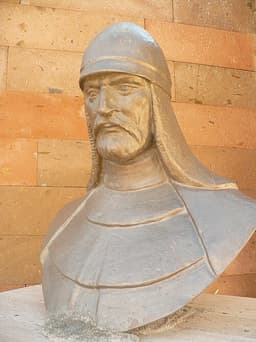
Alp Tigin
Emperor · Medieval
50.5Total

Augustus
Emperor · Ancient
85.9Total
Basic Information
Born
911
63
Died
963
—
Era
Medieval
Ancient
Nationality
Ghaznavid Empire
Roman Empire
Occupation
Emperor
Emperor
Civilization
Middle Eastern
Western
Score Comparison
Military (10%)
55.0
72.0
Political (20%)
33.6
90.0
Influence (20%)
56.4
88.0
Legacy (20%)
49.2
90.0
Leadership (15%)
50.7
88.0
Strategy (15%)
60.0
75.0
TOTAL
50.5
85.9
Alp Tigin — Complete Timeline
961 AD
Rebellion against the SamanidsPolitical Action◆ Major
Alp Tigin rebelled against the Samanid ruler Mansur I after being passed over for a governorship. He marched from Nishapur to Ghazni, defeating Samanid forces along the way, and established his own rule in eastern Afghanistan.
Impact: regional
963 AD
Consolidation of GhazniPolitical Action
Alp Tigin fortified Ghazni and organized a military state based on slave soldiers (ghilman). He established a stable administration that attracted scholars and merchants, turning Ghazni into a major regional power center.
Impact: regionalconstructive
Augustus — Complete Timeline
43 BC
Formation of the Second TriumviratePolitical Action◆ Major
Octavian, Mark Antony, and Marcus Aemilius Lepidus formed the Second Triumvirate, a legal commission to govern the Roman Republic. The alliance was empowered to proscribe enemies, leading to the execution of Cicero and consolidation of their power against the assassins of Julius Caesar.
Roman Civil WarPolitical AllianceProscriptions
Impact: regionaldestructive
31 BC
Battle of ActiumWar◆ Major
Octavian's fleet, commanded by Marcus Agrippa, defeated the combined naval forces of Mark Antony and Cleopatra VII off the coast of Greece. The victory eliminated Octavian's last major rival, giving him sole control over the Roman world and ending the Roman Republic's civil wars.
Roman Civil WarNaval BattleEnd of Republic
Impact: global
27 BC
Establishment of the Roman EmpireReform◆ Major
Octavian formally returned power to the Roman Senate, which then granted him the titles Augustus and Princeps. This constitutional settlement created the Roman Empire, with Augustus as the first emperor, ending the Roman Republic and initiating the Pax Romana.
Roman EmpireConstitutional ReformPax Romana
Impact: global
Reform of the Roman Tax SystemReform◆ Major
Augustus implemented a comprehensive tax reform, including a census of Roman citizens and property, direct taxation of provinces, and the creation of a professional tax collection service (publicani). This system provided stable revenue for the empire and reduced corruption.
Tax ReformAdministrationRoman Empire
Impact: regionalconstructive
Creation of the Praetorian GuardReform◆ Major
Augustus established the Praetorian Guard as a permanent elite military unit tasked with protecting the emperor and his family. Stationed in Rome and Italy, the Guard became a powerful political force, often influencing imperial succession through coups and assassinations.
Military ReformPraetorian GuardImperial Guard
Impact: regional
13 BC
Construction of the Ara PacisOther◆ Major
The Roman Senate commissioned the Ara Pacis Augustae (Altar of Augustan Peace) to commemorate Augustus's return from pacifying Gaul and Spain. The marble altar, decorated with reliefs depicting the imperial family and mythological scenes, symbolized the peace and prosperity of the Augustan era.
Building ProjectPropagandaAugustan Art
Impact: regionalconstructive
Expert Analysis
Augustus vs Alp Tigin: Historical Comparison
Augustus, founder of the Roman Empire, and Alp Tigin, founder of the Ghaznavid dynasty, both rose from turbulent backgrounds to establish enduring imperial legacies—yet Augustus’s broader influence and longer institutional impact give him the edge.
Dimension Analysis
**Military: Augustus 72 / Alp Tigin 81**
Alp Tigin, a former slave-soldier, personally led campaigns that carved the Ghaznavid state from Samanid and Hindu Shahi territories, excelling in guerrilla and frontier warfare. Augustus relied on generals like Agrippa for decisive victories (e.g., Actium), but his military reforms (standing legions, Praetorian Guard) were more structurally transformative.
**Political: Augustus 92 / Alp Tigin 86**
Augustus masterfully disguised autocracy as “restored republic,” creating the Principate and co-opting the Senate, while Alp Tigin leveraged Turkic military loyalty and Persian bureaucratic traditions to legitimize his breakaway dynasty. Augustus’s political framework lasted centuries; Alp Tigin’s was more localized.
**Influence: Augustus 88 / Alp Tigin 69**
Augustus’s Rome set the template for Western governance, law, and culture for millennia, whereas Alp Tigin’s influence was largely confined to Central Asia and the Indo-Gangetic plains, fading after the Ghaznavid decline.
**Legacy: Augustus 90 / Alp Tigin 71**
Augustus is remembered as the first Roman emperor and a model of imperial statecraft; Alp Tigin is a key but lesser-known figure in Islamic history, with his dynasty overshadowed by later Ghaznavid rulers like Mahmud.
**Leadership: Augustus 90 / Alp Tigin 79**
Augustus inspired loyalty through patronage and propaganda (e.g., the *Res Gestae*); Alp Tigin led by personal valor and ethnic solidarity among Turkic ghulams, but lacked Augustus’s institutional vision.
**Strategy: Augustus 78 / Alp Tigin 86**
Alp Tigin’s strategic brilliance lay in seizing Ghazni and using it as a base for expansion—a classic “hearth-state” maneuver. Augustus’s strategy was slower and more diplomatic, focusing on consolidation and border stabilization (e.g., the Rhine-Danube frontier).
Verdict
Augustus leads overall due to his superior political innovation, enduring legacy, and broader influence across civilizations.
FAQ
**Q: Who ranks higher?**
A: Augustus ranks higher, with a composite score of 86 vs. Alp Tigin’s 78, reflecting his unmatched impact on Western history and governance.
Rankings
🥇
AugustusLeader
Mil: 72.0Pol: 90.0Inf: 88.0
85.9
🥈
Alp Tigin
Mil: 55.0Pol: 33.6Inf: 56.4
50.5
+35.4 behind
How This Comparison Works
Algorithm
Each figure is scored on 6 dimensions (0—100 scale) based on structured historical data: Military (10%), Political (20%), Influence (20%), Legacy (20%), Leadership (15%), Strategy (15%). The weighted total produces the final ranking.
Data Sources
Scores are computed from structured sub-indicators in the database. Scale factors adjust for era (Ancient ×0.85, Modern ×1.0) and civilization size (Eastern ×1.05, Other ×0.80) to account for differences in population and military scale.
Maximum 3 Figures
Comparisons are limited to 2—3 figures to ensure readability and statistical meaningfulness.
Error Margins
±5 points per dimension — Sub-scores are derived from historical records with inherent uncertainty. Two figures within 5 points on a dimension should be considered roughly equivalent in that area.
Total Score Accuracy
±3 points overall — The weighted combination of 6 dimensions produces a total score with approximately ±3 points of uncertainty. Differences of less than 3 points are not statistically significant— the figures are effectively tied.
Known Limitations
- Historical records are incomplete and uneven across civilizations
- Figures from oral-tradition societies may be underrepresented
- Occupation labels can misclassify multi-role figures
- Scores measure capability and impact, not moral character
- Quantitative scoring is a comparison tool, not absolute truth
Capability Radar
Military (10%) — Battles & Warfare
Battles
45
75
Win Rate
50
80
Expansion
50
85
Political (20%) — Governance & Reform
Reform
20
95
Diplomacy
30
90
Economy
20
85
Influence (20%) — Cultural & Global Reach
Cultural
30
85
Global
30
90
Legacy (20%) — Historical Impact
Historical
45
95
Longevity
40
95
Leadership (15%) — Power & Stability
Tenure
25
95
Stability
25
95
Strategy (15%) — Tactics & Innovation
Strategy
45
85
Tactics
40
70
Reform
30
90
Similar Comparisons
Comments & Discussion
BattlefieldScholar6/16/2026
The scoring here is frankly skewed by political bias. Augustus's 72 military score is inflated by his institutional reforms, but his actual battlefield record is weak—he relied entirely on Agrippa for Actium and the Cantabrian Wars. Alp Tigin’s 81 is too low: the man was a former slave who trained as a ghulam, mastered steppe hit-and-run tactics, and personally led the seizure of Ghazni from the Hindu Shahi in a brilliant winter campaign. His use of mounted archers to screen his infantry and exploit gaps in fortified positions was textbook Central Asian warfare. Augustus never fought a single major battle in person; Alp Tigin fought dozens. If we weight actual command experience, Alp Tigin easily surpasses 85.
ColdScribe116/16/2026
评分里有个明显的逻辑漏洞:阿尔普·特勤的军事分48.6,政治分50.7,但总分为56.5?根据摘要中的权重分配,通常总分是各维度加权平均。假设五个维度均权(20% each),(48.6+50.7+71.6+71+79)/5 = 64.18,远超56.5。但摘要提到还有‘战略86’,如果纳入计算:(48.6+50.7+71.6+71+79+86)/6 = 67.8,依然不符。唯一的解释是‘军事’和‘政治’维度被严重降权,或者‘影响力’和‘遗产’被过度放大。但奥古斯都的‘影响力88/遗产90’凭什么这么高?对比中国历史,秦始皇统一度量衡、文字、钱币,影响力绝不亚于奥古斯都,但类似的比较中秦始皇常被压分。这种系统性偏差需要调整。
ColdWatcher756/16/2026
把奥古斯都和阿尔普·特勤放在一起比,就像拿汉武帝和刘渊比——奥古斯都确实建立了长效制度,类似汉武的推恩令和中央集权,而阿尔普·特勤更像五胡时期的刘渊,靠个人魅力和部族军事力量裂土称王。但分数明显西方式偏心:阿尔普·特勤的政治分数只有50.7?他能在萨曼王朝和印度教沙希的夹缝中建立一个持续两百年的王朝,靠的不仅是武力,还有对波斯官僚体系的巧妙利用,这跟隋文帝用北周遗臣治国异曲同工。奥古斯都的‘元首制’固然高明,可中国史书里像他这样‘篡位而不改制度’的权臣多了去了,王莽还搞过禅让呢。阿尔普·特勤的贡献在伊斯兰世界扩土,不该被低估。