Loading...
Alp Arslan vs Rajendra Chola I
Rajendra Chola I leads by 8.0 pts · 2 figures compared
…
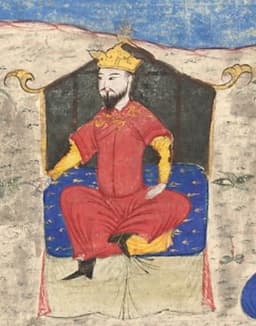
Alp Arslan
Emperor · Medieval
74.2Total
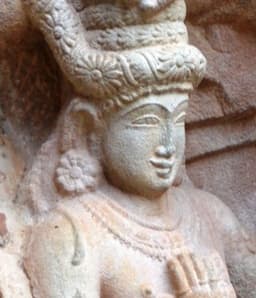
Rajendra Chola I
Emperor · Medieval
82.2Total
Basic Information
Born
1029
971
Died
1072
1044
Era
Medieval
Medieval
Nationality
Seljuk Empire
India
Occupation
Emperor
Emperor
Civilization
Middle Eastern
Indian
Score Comparison
Military (10%)
82.0
84.7
Political (20%)
65.0
82.0
Influence (20%)
82.0
84.0
Legacy (20%)
72.0
84.0
Leadership (15%)
72.0
78.0
Strategy (15%)
70.0
77.6
TOTAL
74.2
82.2
Alp Arslan — Complete Timeline
1070 AD
Conquest of Aleppo and SyriaWar◆ Major
Alp Arslan led campaigns into Syria, capturing Aleppo and extending Seljuk control to the Mediterranean coast. He defeated the Fatimid Caliphate's forces and established Seljuk dominance over the Levant.
ConquestSyriaFatimid
Impact: regional
1071 AD
Battle of ManzikertWar
Alp Arslan defeated the Byzantine Emperor Romanos IV Diogenes at the Battle of Manzikert in eastern Anatolia. The Byzantine army was destroyed and Romanos captured, leading to the Seljuk conquest of Anatolia and the beginning of Turkic settlement in the region.
BattleByzantineAnatolia
Impact: global
1072 AD
AssassinationOther◆ Major
Alp Arslan was assassinated by a captured fortress commander while on campaign in Transoxiana. His death at the height of his power led to a succession struggle and the eventual fragmentation of the Seljuk Empire under his son Malik Shah I.
AssassinationDeathSuccession
Impact: regionaltragic
Rajendra Chola I — Complete Timeline
1014 AD
Accession to the Chola ThronePolitical Action
Rajendra Chola I succeeded his father Raja Raja Chola I as emperor of the Chola Empire. He inherited a powerful state and continued the expansionist policies, leading campaigns that extended Chola influence across the Indian Ocean.
Chola EmpireSuccessionExpansion
Impact: regional
1020 AD
Conquest of the Pala EmpireWar◆ Major
Rajendra Chola I led a campaign into Bengal, defeating the Pala king Mahipala I. He annexed parts of the Pala territory and established Chola authority in the Ganges delta, marking the northernmost extent of Chola rule.
Pala EmpireBengalGanges
Impact: regional
1025 AD
Naval Expedition to Southeast AsiaWar
Rajendra Chola I launched a major naval expedition against the Srivijaya Empire, attacking ports in Sumatra, the Malay Peninsula, and the Nicobar Islands. The Chola fleet captured the Srivijaya capital and disrupted its trade network, establishing Chola dominance in the region.
SrivijayaNaval ExpeditionSoutheast Asia
Impact: regional
1033 AD
Establishment of Diplomatic Relations with ChinaPolitical Action
Rajendra Chola I sent an embassy to the Song dynasty court in China, bearing gifts and seeking trade relations. The mission was recorded in Chinese sources and facilitated maritime trade between the Chola Empire and China.
ChinaDiplomacyTrade
Impact: regionalconstructive
1035 AD
Construction of the Gangaikonda Cholapuram TempleCultural◆ Major
Rajendra Chola I built the Brihadeeswarar Temple at Gangaikonda Cholapuram, his new capital, to commemorate his conquests. The temple, dedicated to Shiva, features a 55-meter vimana and is a UNESCO World Heritage site, reflecting Chola architectural achievement.
Gangaikonda CholapuramTempleChola Architecture
Impact: regionalconstructive
Expert Analysis
Origins
**Alp Arslan** (born 1029) was the son of Chaghri Beg, a Seljuk prince, and nephew of Tughril Beg, the founder of the Seljuk Empire. He grew up in the nomadic Turkic tradition of the Oghuz Turks, learning horsemanship and archery. His early education was supervised by the vizier Nizam al-Mulk, who later became his chief administrator. Alp Arslan's formative years were spent in the steppes of Central Asia, where he gained military experience in campaigns against the Ghaznavids and other Turkic tribes.
**Rajendra Chola I** (born 971) was the son of Raja Raja Chola I, the greatest Chola emperor, and his queen Vanavan Mahadevi. He was raised in the Tamil court of Thanjavur, immersed in Dravidian culture, Hindu religion, and administrative practices. Rajendra accompanied his father on military campaigns from a young age, learning statecraft and warfare. His education included Tamil literature, mathematics, and naval strategy, which later proved crucial for his expeditions.
Rise to Power
Alp Arslan became sultan in 1064 after the death of his uncle Tughril Beg, but he faced a challenge from his cousin Kutalmish, whom he defeated in battle. He secured his position by appointing Nizam al-Mulk as vizier, who stabilized the empire through administrative reforms. Alp Arslan's first major campaign was against the Byzantine Empire, culminating in the Battle of Manzikert in 1071, where he captured Emperor Romanos IV Diogenes. This victory opened Anatolia to Turkic settlement.
Rajendra Chola I ascended the throne in 1014 after his father's death. He inherited a powerful empire that already controlled much of South India and Sri Lanka. Rajendra immediately launched campaigns to expand northward, defeating the Western Chalukyas and the Pala Empire in Bengal in 1023. His most audacious move was the naval expedition against the Srivijaya Empire in 1025, which demonstrated Chola naval power across the Bay of Bengal.
Leadership & Governance
Alp Arslan ruled through a combination of military might and delegation. He relied heavily on Nizam al-Mulk, who implemented the iqta system of land grants to soldiers and bureaucrats. Alp Arslan himself was often on campaign, leaving administration to his vizier. His leadership style was pragmatic: he granted generous terms to defeated enemies, such as releasing Romanos after a ransom, which encouraged other Byzantine factions to submit. However, his governance was decentralized, leading to succession crises after his death.
Rajendra Chola I was an active administrator who personally oversaw the construction of a new capital at Gangaikonda Cholapuram. He built a massive temple there, the Brihadeeswarar Temple, which served as a symbol of his power. He maintained a centralized bureaucracy with efficient tax collection and local councils (ur, sabha) for village governance. Rajendra also established diplomatic relations with the Song dynasty in China, sending an embassy in 1016 to promote trade. His governance was more structured than Alp Arslan's, with clear succession planning.
Triumph & Tragedy
Alp Arslan's greatest triumph was the Battle of Manzikert, where his tactical use of feigned retreat and archers destroyed the Byzantine army. He scored 82.0 in military, reflecting this victory. His conquest of Aleppo and Syria extended Seljuk influence to the Mediterranean. However, his tragedy was his assassination in 1072 by a captured commander, Yussuf al-Khwarazmi, during a petty quarrel. His death at age 43 left the empire in a succession crisis that led to fragmentation.
Rajendra Chola I's triumph was the naval expedition to Srivijaya, which established Chola dominance in Southeast Asia for decades. He also conquered the Pala Empire, bringing the Ganges delta under Chola control. He built the magnificent Gangaikonda Cholapuram temple, a masterpiece of Dravidian architecture. His tragedy was the overextension of his empire; after his death, the Chola Empire struggled to maintain control over distant territories like Srivijaya and Bengal. Internal rebellions and the rise of the Hoysala and Kakatiya dynasties weakened the Chola hold.
Character & Destiny
Alp Arslan was known for his personal bravery and generosity, but also for a temper that led to his death. He reportedly forgave many enemies but killed a prisoner who insulted him, leading to the prisoner's son assassinating him. His character was shaped by the nomadic warrior ethos, valuing honor and martial prowess. His destiny was to open Anatolia to Turkic settlement, but his early death prevented consolidation.
Rajendra Chola I was a meticulous planner and builder. He had a vision of a maritime empire, which he executed through careful naval logistics. He was also a patron of arts and literature, commissioning Tamil poetry and temple construction. His character reflected the stability of the Chola dynasty, which had a strong administrative tradition. His destiny was to expand Chola influence to its zenith, but his successors could not sustain the vast empire.
Legacy
Alp Arslan's legacy is the Battle of Manzikert, which is considered the beginning of Turkic domination in Anatolia, leading eventually to the Ottoman Empire. His military score of 82.0 and influence score of 82.0 reflect this impact. However, his political score of 65.0 shows his failure to secure stable succession. He is remembered as a conqueror who changed the course of Byzantine history.
Rajendra Chola I's legacy is more enduring in terms of cultural and administrative contributions. His naval expedition established trade routes and cultural exchange between India and Southeast Asia. His temple building set a standard for Dravidian architecture. His political score of 82.0 and legacy score of 84.0 reflect his comprehensive impact. He is remembered as a builder and diplomat as well as a warrior.
Conclusion
While Alp Arslan's victory at Manzikert had profound long-term consequences for Anatolia and the Byzantine Empire, Rajendra Chola I's achievements were more multifaceted and sustainable. Rajendra scored 82.2 total compared to Alp Arslan's 74.2, a gap of 8.0 points. Rajendra's naval expedition demonstrated strategic innovation, his temple construction left a lasting cultural monument, and his diplomatic outreach to China established trade ties. Alp Arslan's legacy is largely military, but his assassination prevented him from consolidating gains. Therefore, Rajendra Chola I had a greater overall impact as a ruler who combined military conquest, administration, and cultural patronage.
Rankings
🥇
Rajendra Chola ILeader
Mil: 84.7Pol: 82.0Inf: 84.0
82.2
🥈
Alp Arslan
Mil: 82.0Pol: 65.0Inf: 82.0
74.2
+8.0 behind
How This Comparison Works
Algorithm
Each figure is scored on 6 dimensions (0—100 scale) based on structured historical data: Military (10%), Political (20%), Influence (20%), Legacy (20%), Leadership (15%), Strategy (15%). The weighted total produces the final ranking.
Data Sources
Scores are computed from structured sub-indicators in the database. Scale factors adjust for era (Ancient ×0.85, Modern ×1.0) and civilization size (Eastern ×1.05, Other ×0.80) to account for differences in population and military scale.
Maximum 3 Figures
Comparisons are limited to 2—3 figures to ensure readability and statistical meaningfulness.
Error Margins
±5 points per dimension — Sub-scores are derived from historical records with inherent uncertainty. Two figures within 5 points on a dimension should be considered roughly equivalent in that area.
Total Score Accuracy
±3 points overall — The weighted combination of 6 dimensions produces a total score with approximately ±3 points of uncertainty. Differences of less than 3 points are not statistically significant— the figures are effectively tied.
Known Limitations
- Historical records are incomplete and uneven across civilizations
- Figures from oral-tradition societies may be underrepresented
- Occupation labels can misclassify multi-role figures
- Scores measure capability and impact, not moral character
- Quantitative scoring is a comparison tool, not absolute truth
Capability Radar
Military (10%) — Battles & Warfare
Battles
85
95
Win Rate
90
98
Expansion
85
95
Political (20%) — Governance & Reform
Reform
70
88
Diplomacy
80
85
Economy
70
92
Influence (20%) — Cultural & Global Reach
Cultural
65
85
Global
75
85
Legacy (20%) — Historical Impact
Historical
80
88
Longevity
70
80
Leadership (15%) — Power & Stability
Tenure
75
90
Stability
70
90
Strategy (15%) — Tactics & Innovation
Strategy
85
92
Tactics
80
90
Reform
70
85
Similar Comparisons
Comments & Discussion
No comments yet. Be the first to share your thoughts!