Loading...
Alfred the Great vs Vikramaditya VI
Alfred the Great leads by 7.6 pts · 2 figures compared
…
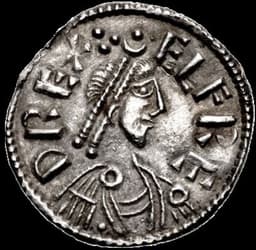
Alfred the Great
Emperor · Medieval
68.7Total
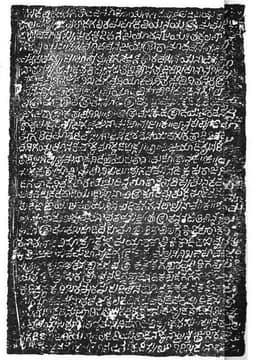
Vikramaditya VI
Emperor · Medieval
61.1Total
Basic Information
Born
849
1076
Died
899
1126
Era
Medieval
Medieval
Nationality
England
India
Occupation
Emperor
Emperor
Civilization
Western
Indian
Score Comparison
Military (10%)
52.5
65.0
Political (20%)
70.0
60.0
Influence (20%)
65.0
60.0
Legacy (20%)
80.0
50.0
Leadership (15%)
66.0
80.0
Strategy (15%)
68.1
60.7
TOTAL
68.7
61.1
Alfred the Great — Complete Timeline
878 AD
Battle of EdingtonWar
Alfred defeated the Viking Great Heathen Army led by Guthrum at Edington. The victory forced Guthrum to accept baptism and the Treaty of Wedmore, establishing a boundary between Wessex and the Danelaw.
VikingsDanelawGuthrumWessex
Impact: regionalconstructive
880 AD
Establishment of the Burghal SystemReform◆ Major
Alfred created a network of fortified towns (burhs) across Wessex, each with a garrison and tax system for maintenance. This defensive system protected against Viking attacks and promoted urban development.
FortificationsDefenseUrbanization
Impact: nationalconstructive
890 AD
Translation of Latin Works into Old EnglishCultural◆ Major
Alfred commissioned translations of key Latin texts, including Boethius's Consolation of Philosophy and Gregory the Great's Pastoral Care, into Old English. He also initiated the Anglo-Saxon Chronicle, promoting literacy and education.
TranslationEducationAnglo-Saxon Chronicle
Impact: nationalconstructive
Vikramaditya VI — Complete Timeline
1076 AD
Introduction of the Vikrama EraPolitical Action◆ Major
Vikramaditya VI introduced a new calendar era, the Vikrama Era, starting from his coronation. This era was used in inscriptions and administrative records, marking a new chronological system in the Deccan.
CalendarEraAdministration
Impact: regionalconstructive
1085 AD
Patronage of BilhanaCultural◆ Major
Vikramaditya VI patronized the Kashmiri poet Bilhana, who composed the Vikramankadevacharita, a Sanskrit epic poem celebrating the king's life and reign. This work became a key source for Western Chalukya history.
LiteraturePatronageSanskrit
Impact: regionalconstructive
1090 AD
Military Campaigns against the CholasWar◆ Major
Vikramaditya VI led successful campaigns against the Chola king Kulottunga I, capturing territories in the Vengi region. These victories expanded Western Chalukya influence into the eastern Deccan.
CholaVengiExpansion
Impact: regional
1100 AD
Reforms in Land Revenue SystemReform
Vikramaditya VI implemented land revenue reforms, standardizing tax rates and improving record-keeping. These reforms increased state revenue and reduced corruption among local officials.
RevenueAdministrationReform
Impact: regionalconstructive
Expert Analysis
Origins
Alfred the Great (born 849) was the fifth son of King Æthelwulf of Wessex. His early life included a trip to Rome in 853, where he was anointed by Pope Leo IV. He received a Christian education but was not groomed for kingship. His formative experiences included witnessing Viking raids and the death of his brother King Æthelred I in battle.
Vikramaditya VI (born c. 1073) was the younger son of Western Chalukya king Someshvara I. He grew up in the royal court, receiving military training and exposure to administration. His early career involved leading campaigns against the Cholas and his own brother, Someshvara II, whom he later overthrew.
Rise to Power
Alfred became king in 871 after the death of his brother Æthelred. His early reign was marked by repeated Viking invasions. In 878, after a surprise attack by Guthrum's Great Heathen Army, Alfred was forced to flee to the Somerset marshes. He regrouped and defeated the Vikings at the Battle of Edington, forcing Guthrum's baptism and the Treaty of Wedmore. This turning point secured Wessex and laid the foundation for English unity.
Vikramaditya VI rose to power by deposing his elder brother Someshvara II in 1076. He had served as a general under his brother but grew ambitious. He allied with the Chola king Kulottunga I initially, then turned against him. His coronation marked the start of the Vikrama Era (1076). He spent the first decade consolidating power and repelling invasions from the Cholas and the Hoysalas.
Leadership & Governance
Alfred's leadership combined military innovation with administrative reform. He created the Burghal System, a network of 30 fortified towns, each with a garrison and tax system. This defensive network protected Wessex and allowed for economic growth. He also reformed the legal code, compiling the Doom Book, which blended Mosaic law with Christian principles. Alfred's educational reforms included translating Latin works like Boethius's Consolation of Philosophy into Old English, fostering literacy. His political score of 70.0 reflects these achievements.
Vikramaditya VI was a patron of arts and literature, best known for supporting the Kashmiri poet Bilhana, who wrote the Vikramankadevacharita. He introduced land revenue reforms, standardizing tax rates and improving record-keeping, which increased state revenue. He also maintained a strong military, scoring 65.0 in military, but his political score of 60.0 indicates less administrative innovation compared to Alfred. His leadership score of 80.0 highlights his charismatic rule.
Triumph & Tragedy
Alfred's greatest triumph was the victory at Edington, which secured Wessex and led to the conversion of Guthrum. He established a navy, built fortifications, and created a system of defense that allowed his successors to unify England. His tragedy was that he did not complete the unification; he died in 899, leaving the task to his children and grandchildren. His legacy score of 80.0 reflects his foundational role.
Vikramaditya VI's triumphs include successful campaigns against the Cholas, expanding the Western Chalukya empire to its greatest extent. He also introduced the Vikrama Era, which was used for centuries. His tragedy was that his empire declined after his death in 1126, as his successors failed to maintain control. His legacy score of 50.0 indicates limited long-term impact.
Character & Destiny
Alfred was known for his piety, learning, and perseverance. He suffered from a chronic illness (possibly Crohn's disease) but remained dedicated to his duties. His character shaped his destiny: his patience and strategic thinking allowed him to survive the Viking onslaught and build a lasting state. Historians regard him as the 'father of the English nation.'
Vikramaditya VI was ambitious and charismatic, but his usurpation of his brother created instability. He was a great patron but also a warrior king. His destiny was to expand the empire temporarily, but his centralized rule did not outlast him. He is remembered as a great king in Kannada and Sanskrit literature.
Legacy
Alfred's legacy is immense: he is the only English monarch called 'the Great.' His burhs evolved into towns, his legal code influenced English law, and his educational reforms revived learning. The unification of England was completed by his grandson Æthelstan. Alfred's influence score of 65.0 is high due to his cultural and political impact.
Vikramaditya VI's legacy is more regional. The Vikrama Era continued in use for inscriptions, and his patronage of Bilhana produced a classic epic. However, his empire fragmented after his death. His legacy score of 50.0 reflects a limited impact beyond his reign.
Conclusion
Alfred the Great had a greater impact than Vikramaditya VI. With a total score of 68.7 versus 61.1, Alfred's military, political, and legacy scores are higher. He founded a nation and a dynasty that shaped England, while Vikramaditya's achievements were more ephemeral. Alfred's strategic innovations and cultural revival had lasting effects, whereas Vikramaditya's empire declined. The data supports Alfred as the superior historical figure.
Rankings
🥇
Alfred the GreatLeader
Mil: 52.5Pol: 70.0Inf: 65.0
68.7
🥈
Vikramaditya VI
Mil: 65.0Pol: 60.0Inf: 60.0
61.1
+7.6 behind
How This Comparison Works
Algorithm
Each figure is scored on 6 dimensions (0—100 scale) based on structured historical data: Military (10%), Political (20%), Influence (20%), Legacy (20%), Leadership (15%), Strategy (15%). The weighted total produces the final ranking.
Data Sources
Scores are computed from structured sub-indicators in the database. Scale factors adjust for era (Ancient ×0.85, Modern ×1.0) and civilization size (Eastern ×1.05, Other ×0.80) to account for differences in population and military scale.
Maximum 3 Figures
Comparisons are limited to 2—3 figures to ensure readability and statistical meaningfulness.
Error Margins
±5 points per dimension — Sub-scores are derived from historical records with inherent uncertainty. Two figures within 5 points on a dimension should be considered roughly equivalent in that area.
Total Score Accuracy
±3 points overall — The weighted combination of 6 dimensions produces a total score with approximately ±3 points of uncertainty. Differences of less than 3 points are not statistically significant— the figures are effectively tied.
Known Limitations
- Historical records are incomplete and uneven across civilizations
- Figures from oral-tradition societies may be underrepresented
- Occupation labels can misclassify multi-role figures
- Scores measure capability and impact, not moral character
- Quantitative scoring is a comparison tool, not absolute truth
Capability Radar
Military (10%) — Battles & Warfare
Battles
55
65
Win Rate
60
70
Expansion
50
60
Political (20%) — Governance & Reform
Reform
85
70
Diplomacy
75
65
Economy
70
75
Influence (20%) — Cultural & Global Reach
Cultural
75
60
Global
60
40
Legacy (20%) — Historical Impact
Historical
80
55
Longevity
85
50
Leadership (15%) — Power & Stability
Tenure
70
85
Stability
65
70
Strategy (15%) — Tactics & Innovation
Strategy
75
65
Tactics
70
60
Reform
80
55
Similar Comparisons
Comments & Discussion
No comments yet. Be the first to share your thoughts!