Loading...
Ulugh Beg vs Vikramaditya VI
Vikramaditya VI leads by 10.4 pts · 2 figures compared
…
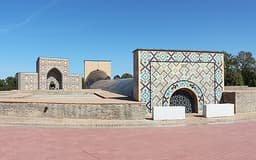
Ulugh Beg
Emperor · Medieval
50.7Total
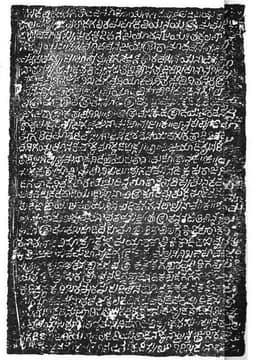
Vikramaditya VI
Emperor · Medieval
61.1Total
Basic Information
Born
1394
1076
Died
1449
1126
Era
Medieval
Medieval
Nationality
Timurid Empire
India
Occupation
Emperor
Emperor
Civilization
Middle Eastern
Indian
Score Comparison
Military (10%)
50.0
65.0
Political (20%)
37.9
60.0
Influence (20%)
68.0
60.0
Legacy (20%)
55.0
50.0
Leadership (15%)
41.5
80.0
Strategy (15%)
30.3
60.7
TOTAL
50.7
61.1
Ulugh Beg — Complete Timeline
1420 AD
Patronage of Mathematics and AstronomyCultural
Ulugh Beg gathered scholars like Al-Kashi and Qadi Zada al-Rumi at his court in Samarkand. He funded the study of mathematics, trigonometry, and astronomy, making Samarkand a leading scientific center of the 15th century.
SciencePatronageSamarkand
Impact: regionalconstructive
1424 AD
Construction of the Ulugh Beg ObservatoryInvention◆ Major
Ulugh Beg built a large observatory in Samarkand, equipped with a 40-meter sextant. He used it to compile the Zij-i Sultani, a star catalog of over 1,000 stars, which was the most accurate in the world for 250 years.
AstronomyScienceSamarkand
Impact: globalconstructive
1437 AD
Publication of the Zij-i SultaniCultural◆ Major
Ulugh Beg published the Zij-i Sultani, a star catalog and astronomical tables. It corrected errors in Ptolemy's Almagest and provided accurate positions of stars and planets, influencing later astronomers like Copernicus and Tycho Brahe.
AstronomyScienceStar Catalog
Impact: globalconstructive
1447 AD
Accession as Timurid SultanPolitical Action◆ Major
Upon the death of his father Shah Rukh, Ulugh Beg became the ruler of the Timurid Empire, based in Samarkand. His reign was short and marked by conflict with his nephew Abd al-Latif and other rivals.
SuccessionTimurid EmpireSamarkand
Impact: regional
1449 AD
Defeat and Execution by Abd al-LatifPolitical Action
Ulugh Beg was defeated in battle by his son Abd al-Latif, who had rebelled against him. He was captured and executed on Abd al-Latif's orders, ending his reign. His death marked the decline of the Timurid Empire.
DeathCivil WarTimurid Decline
Impact: regionaltragic
Vikramaditya VI — Complete Timeline
1076 AD
Introduction of the Vikrama EraPolitical Action◆ Major
Vikramaditya VI introduced a new calendar era, the Vikrama Era, starting from his coronation. This era was used in inscriptions and administrative records, marking a new chronological system in the Deccan.
CalendarEraAdministration
Impact: regionalconstructive
1085 AD
Patronage of BilhanaCultural◆ Major
Vikramaditya VI patronized the Kashmiri poet Bilhana, who composed the Vikramankadevacharita, a Sanskrit epic poem celebrating the king's life and reign. This work became a key source for Western Chalukya history.
LiteraturePatronageSanskrit
Impact: regionalconstructive
1090 AD
Military Campaigns against the CholasWar◆ Major
Vikramaditya VI led successful campaigns against the Chola king Kulottunga I, capturing territories in the Vengi region. These victories expanded Western Chalukya influence into the eastern Deccan.
CholaVengiExpansion
Impact: regional
1100 AD
Reforms in Land Revenue SystemReform
Vikramaditya VI implemented land revenue reforms, standardizing tax rates and improving record-keeping. These reforms increased state revenue and reduced corruption among local officials.
RevenueAdministrationReform
Impact: regionalconstructive
Expert Analysis
Origins
Ulugh Beg was born in 1394 in Sultaniya, Persia, as the grandson of Timur (Tamerlane). His father was Shah Rukh, the Timurid ruler of Persia and Transoxiana. He was educated in Samarkand, a center of learning, and showed early aptitude for astronomy and mathematics. His upbringing combined royal privilege with scholarly pursuits, influenced by the Islamic Golden Age.
Vikramaditya VI, born in 1073, was a prince of the Western Chalukya dynasty in southern India. His father was King Someshvara I. He was groomed for military leadership, participating in campaigns from a young age. His education included traditional Hindu texts, statecraft, and martial training, typical for a Kshatriya ruler.
Rise to Power
Ulugh Beg became governor of Samarkand in 1409 under his father Shah Rukh. He focused on building the city as a cultural and scientific hub, attracting scholars like Al-Kashi and Qadi Zada al-Rumi. Upon Shah Rukh's death in 1447, Ulugh Beg ascended as Timurid sultan, but his reign was immediately challenged by his son Abd al-Latif, who rebelled. The conflict culminated in the Battle of Damghan in 1448, where Ulugh Beg was defeated and captured. He was executed in 1449, ending his short rule.
Vikramaditya VI rose to power after a succession struggle. He deposed his elder brother Someshvara II in 1076 and crowned himself king. He then embarked on military campaigns to secure his realm, notably against the Chola dynasty. His successful wars against Kulottunga I expanded Western Chalukya territory into Vengi, establishing him as a major power in the Deccan.
Leadership & Governance
Ulugh Beg's leadership was marked by his patronage of science rather than military or political consolidation. He governed Samarkand as a scholar-ruler, prioritizing the observatory and the academy. However, his neglect of military and administrative matters weakened his authority. He scored 41.5 in leadership and 37.9 in politics, reflecting his ineffective governance. His son's rebellion exploited this weakness.
Vikramaditya VI excelled in leadership, scoring 80.0. He implemented land revenue reforms, standardizing tax rates and improving record-keeping, which increased state revenue. He also introduced the Vikrama Era calendar, a cultural legacy. His military campaigns were strategic, securing borders and expanding influence. He patronized the poet Bilhana, who composed the Vikramankadevacharita, boosting his cultural prestige.
Triumph & Tragedy
Ulugh Beg's greatest triumph was the construction of the Samarkand Observatory and the publication of the Zij-i Sultani, a star catalog with over 1,000 stars. This work corrected Ptolemy's Almagest and was used for centuries. His tragedy was his political failure: his reign lasted only two years, ended by his own son's rebellion. He was defeated in battle and executed, his observatory later abandoned.
Vikramaditya VI's triumphs included military victories over the Cholas, territorial expansion, and successful administrative reforms. His tragedy was that his empire declined after his death; his successors failed to maintain his achievements. The Vikrama Era continued but the dynasty weakened under pressure from the Hoysalas and other rivals.
Character & Destiny
Ulugh Beg was a scholar at heart, more interested in astronomy than politics. He delegated governance to others, leading to discontent. His trusting nature allowed his son's rebellion to succeed. Historians note his intellectual brilliance but political naivety. His fate was sealed by his inability to balance science with statecraft.
Vikramaditya VI was a pragmatic ruler, combining military prowess with administrative acumen. He was decisive in war and reform, but also a patron of arts. His character reflected the ideal of a 'dharmic' king, balancing power with duty. His destiny was to be remembered as the greatest Chalukya ruler, though his dynasty faded.
Legacy
Ulugh Beg's legacy is primarily scientific. The Zij-i Sultani influenced European and Islamic astronomy. His observatory was a model for later institutions. However, his political legacy is minor; the Timurid empire fragmented after his death. His scores: Influence 68.0, Legacy 55.0.
Vikramaditya VI's legacy is both political and cultural. The Vikrama Era was used for centuries in inscriptions. His land reforms set precedents for revenue systems. His patronage of Bilhana produced enduring literature. However, his empire did not outlast him by long. His scores: Influence 60.0, Legacy 50.0.
Conclusion
Vikramaditya VI had greater overall impact, with a total score of 61.1 vs Ulugh Beg's 50.7. While Ulugh Beg's astronomical contributions were significant, Vikramaditya VI's military, political, and administrative achievements created a more enduring and multifaceted legacy. Ulugh Beg's failure in leadership (41.5 vs 80.0) and politics (37.9 vs 60.0) undermines his long-term influence. Vikramaditya VI's reforms and conquests shaped the Deccan for generations, whereas Ulugh Beg's work, though brilliant, was isolated from sustainable governance. Thus, Vikramaditya VI stands as the more successful ruler.
Rankings
🥇
Vikramaditya VILeader
Mil: 65.0Pol: 60.0Inf: 60.0
61.1
🥈
Ulugh Beg
Mil: 50.0Pol: 37.9Inf: 68.0
50.7
+10.4 behind
How This Comparison Works
Algorithm
Each figure is scored on 6 dimensions (0—100 scale) based on structured historical data: Military (10%), Political (20%), Influence (20%), Legacy (20%), Leadership (15%), Strategy (15%). The weighted total produces the final ranking.
Data Sources
Scores are computed from structured sub-indicators in the database. Scale factors adjust for era (Ancient ×0.85, Modern ×1.0) and civilization size (Eastern ×1.05, Other ×0.80) to account for differences in population and military scale.
Maximum 3 Figures
Comparisons are limited to 2—3 figures to ensure readability and statistical meaningfulness.
Error Margins
±5 points per dimension — Sub-scores are derived from historical records with inherent uncertainty. Two figures within 5 points on a dimension should be considered roughly equivalent in that area.
Total Score Accuracy
±3 points overall — The weighted combination of 6 dimensions produces a total score with approximately ±3 points of uncertainty. Differences of less than 3 points are not statistically significant— the figures are effectively tied.
Known Limitations
- Historical records are incomplete and uneven across civilizations
- Figures from oral-tradition societies may be underrepresented
- Occupation labels can misclassify multi-role figures
- Scores measure capability and impact, not moral character
- Quantitative scoring is a comparison tool, not absolute truth
Capability Radar
Military (10%) — Battles & Warfare
Battles
20
65
Win Rate
20
70
Expansion
10
60
Political (20%) — Governance & Reform
Reform
40
70
Diplomacy
25
65
Economy
35
75
Influence (20%) — Cultural & Global Reach
Cultural
70
60
Global
65
40
Legacy (20%) — Historical Impact
Historical
75
55
Longevity
70
50
Leadership (15%) — Power & Stability
Tenure
30
85
Stability
20
70
Strategy (15%) — Tactics & Innovation
Strategy
15
65
Tactics
15
60
Reform
10
55
Similar Comparisons
Comments & Discussion
No comments yet. Be the first to share your thoughts!