Loading...
This comparison has not been analyzed yet.
One-time AI generation (~1 minute). Scores and timeline are already available below.
Alfred the Great vs Seongjong of Goryeo
Alfred the Great leads by 10.1 pts · 2 figures compared
…
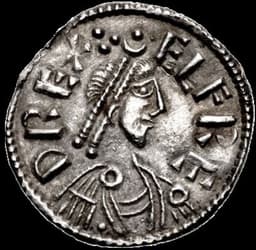
Alfred the Great
Emperor · Medieval
68.7Total
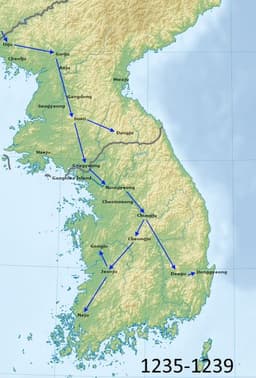
Seongjong of Goryeo
Emperor · Medieval
58.6Total
Basic Information
Born
849
961
Died
899
997
Era
Medieval
Medieval
Nationality
England
Korea
Occupation
Emperor
Emperor
Civilization
Western
Eastern
Score Comparison
Military (10%)
52.5
50.0
Political (20%)
70.0
70.0
Influence (20%)
65.0
58.0
Legacy (20%)
80.0
50.0
Leadership (15%)
66.0
78.0
Strategy (15%)
68.1
43.7
TOTAL
68.7
58.6
Alfred the Great — Complete Timeline
878 AD
Battle of EdingtonWar
Alfred defeated the Viking Great Heathen Army led by Guthrum at Edington. The victory forced Guthrum to accept baptism and the Treaty of Wedmore, establishing a boundary between Wessex and the Danelaw.
VikingsDanelawGuthrumWessex
Impact: regionalconstructive
880 AD
Establishment of the Burghal SystemReform◆ Major
Alfred created a network of fortified towns (burhs) across Wessex, each with a garrison and tax system for maintenance. This defensive system protected against Viking attacks and promoted urban development.
FortificationsDefenseUrbanization
Impact: nationalconstructive
890 AD
Translation of Latin Works into Old EnglishCultural◆ Major
Alfred commissioned translations of key Latin texts, including Boethius's Consolation of Philosophy and Gregory the Great's Pastoral Care, into Old English. He also initiated the Anglo-Saxon Chronicle, promoting literacy and education.
TranslationEducationAnglo-Saxon Chronicle
Impact: nationalconstructive
Seongjong of Goryeo — Complete Timeline
990 AD
Establishment of Confucian Academies and SchoolsCultural◆ Major
King Seongjong founded national Confucian academies and local schools throughout Goryeo, promoting Confucian learning and ethics. This educational reform strengthened the civil service examination system and fostered a Confucian scholar-official class that shaped Goryeo governance.
EducationConfucianismGoryeo
Impact: nationalprogressive
995 AD
Promulgation of the Goryeo Code of LawsReform◆ Major
Seongjong issued a comprehensive legal code based on Confucian principles, systematizing Goryeo's laws and administrative regulations. This code provided a legal framework for governance, criminal justice, and social order, influencing Korean law for centuries.
Legal ReformConfucianismGoryeo
Impact: nationalconstructive
This comparison has not been analyzed yet.
One-time AI generation (~1 minute). Scores and timeline are already available below.
Rankings
🥇
Alfred the GreatLeader
Mil: 52.5Pol: 70.0Inf: 65.0
68.7
🥈
Seongjong of Goryeo
Mil: 50.0Pol: 70.0Inf: 58.0
58.6
+10.1 behind
How This Comparison Works
Algorithm
Each figure is scored on 6 dimensions (0—100 scale) based on structured historical data: Military (10%), Political (20%), Influence (20%), Legacy (20%), Leadership (15%), Strategy (15%). The weighted total produces the final ranking.
Data Sources
Scores are computed from structured sub-indicators in the database. Scale factors adjust for era (Ancient ×0.85, Modern ×1.0) and civilization size (Eastern ×1.05, Other ×0.80) to account for differences in population and military scale.
Maximum 3 Figures
Comparisons are limited to 2—3 figures to ensure readability and statistical meaningfulness.
Error Margins
±5 points per dimension — Sub-scores are derived from historical records with inherent uncertainty. Two figures within 5 points on a dimension should be considered roughly equivalent in that area.
Total Score Accuracy
±3 points overall — The weighted combination of 6 dimensions produces a total score with approximately ±3 points of uncertainty. Differences of less than 3 points are not statistically significant— the figures are effectively tied.
Known Limitations
- Historical records are incomplete and uneven across civilizations
- Figures from oral-tradition societies may be underrepresented
- Occupation labels can misclassify multi-role figures
- Scores measure capability and impact, not moral character
- Quantitative scoring is a comparison tool, not absolute truth
Capability Radar
Military (10%) — Battles & Warfare
Battles
55
20
Win Rate
60
20
Expansion
50
10
Political (20%) — Governance & Reform
Reform
85
80
Diplomacy
75
70
Economy
70
70
Influence (20%) — Cultural & Global Reach
Cultural
75
60
Global
60
30
Legacy (20%) — Historical Impact
Historical
80
55
Longevity
85
50
Leadership (15%) — Power & Stability
Tenure
70
75
Stability
65
75
Strategy (15%) — Tactics & Innovation
Strategy
75
15
Tactics
70
15
Reform
80
25
Similar Comparisons
Comments & Discussion
No comments yet. Be the first to share your thoughts!