Loading...
Alfonso VIII of Castile vs Pachacuti
Pachacuti leads by 8.4 pts · 2 figures compared
…
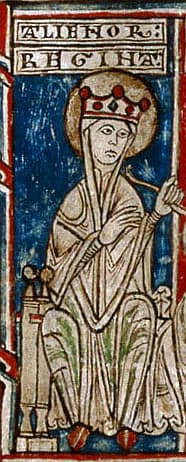
Alfonso VIII of Castile
Emperor · Medieval
61.0Total
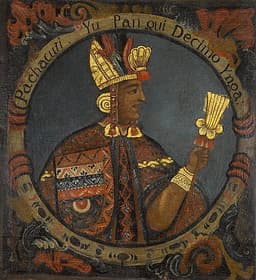
Pachacuti
Emperor · Medieval
69.4Total
Basic Information
Born
1155
1418
Died
1214
1472
Era
Medieval
Medieval
Nationality
Castile
Inca Empire
Occupation
Emperor
Emperor
Civilization
Western
Other
Score Comparison
Military (10%)
60.0
78.5
Political (20%)
72.0
58.1
Influence (20%)
56.7
65.0
Legacy (20%)
55.0
72.0
Leadership (15%)
68.0
78.0
Strategy (15%)
61.2
69.2
TOTAL
61.0
69.4
Alfonso VIII of Castile — Complete Timeline
1170 AD
Marriage to Eleanor of EnglandPolitical Action
Alfonso VIII married Eleanor of England, daughter of Henry II and Eleanor of Aquitaine. This marriage brought Castile into the Plantagenet sphere of influence and produced several children who married into other European royal houses.
MarriageAllianceCastile
Impact: regionalconstructive
1195 AD
Battle of AlarcosWar◆ Major
Alfonso VIII's Castilian army was decisively defeated by the Almohad Caliph Abu Yusuf Yaqub al-Mansur at Alarcos. The defeat led to the loss of several frontier fortresses and a period of Almohad dominance in Iberia.
ReconquistaBattleDefeat
Impact: regionaltragic
1208 AD
Founding of the University of PalenciaCultural◆ Major
Alfonso VIII founded the University of Palencia, one of the first universities in Europe. The institution attracted scholars from across Europe and promoted the study of theology, law, and the liberal arts in Castile.
EducationUniversityCulture
Impact: regionalconstructive
1212 AD
Battle of Las Navas de TolosaWar
Alfonso VIII led a coalition of Castilian, Aragonese, Navarrese, and Portuguese forces to a decisive victory over the Almohad Caliph Muhammad al-Nasir at Las Navas de Tolosa. This battle broke Almohad power in Iberia and opened the way for the Christian reconquest of Andalusia.
ReconquistaBattleTurning Point
Impact: regionalconstructive
Pachacuti — Complete Timeline
1438 AD
Conquest of the Chanka KingdomWar
Pachacuti led the Inca army to defeat the Chanka, a powerful rival, in a decisive battle near Cusco. This victory secured his position as Sapa Inca and initiated a period of rapid expansion, transforming the Inca from a small kingdom into a vast empire.
ConquestInca ExpansionChanka
Impact: regional
1440 AD
Reconstruction of CuscoCultural◆ Major
Pachacuti rebuilt Cusco as the imperial capital, designing it in the shape of a puma and constructing massive stone structures like Sacsayhuam
Urban PlanningArchitectureInca Empire
Impact: regionalconstructive
1450 AD
Initiation of Machu Picchu's ConstructionCultural◆ Major
Pachacuti ordered the construction of Machu Picchu, a royal estate and ceremonial site high in the Andes. The complex featured sophisticated dry-stone masonry and terraced agriculture, serving as a symbol of Inca engineering and a retreat for the emperor.
ArchitectureRoyal EstateInca Engineering
Impact: regionalconstructive
Expert Analysis
Origins
Alfonso VIII of Castile was born in 1155, the son of Sancho III of Castile and Blanche of Navarre. His father died when Alfonso was only three years old, plunging Castile into a regency marked by noble infighting. Alfonso was raised in the court of the Lara family, who exploited the power vacuum. His early education was limited, but he developed a keen understanding of politics and warfare from the constant conflicts. In contrast, Pachacuti Inca Yupanqui was born around 1418 in Cusco, the son of the Sapa Inca Viracocha. He was not the designated heir; his older brother Urco was expected to rule. Pachacuti received training in military and administrative affairs, but his early life was overshadowed by his father's reign and the threat of the Chanka people. His name originally meant 'earth-shaker,' a fitting prelude to his transformative rule.
Rise to Power
Alfonso VIII's rise was a struggle against regency and external threats. He was proclaimed king in 1158 but only assumed full control in 1166 after a civil war against the House of Lara. He then focused on consolidating Castile and expanding southward against the Almohad Caliphate. His early campaigns were mixed, culminating in the disastrous Battle of Alarcos in 1195, where his army was routed. This defeat nearly undid his reign, but he regrouped. Pachacuti's rise was dramatic: in 1438, the Chanka attacked Cusco. While his father and brother fled, Pachacuti rallied the Inca army and won a decisive victory, securing his position as Sapa Inca. He then deposed his father and began a series of conquests that would create the largest empire in pre-Columbian America. His military score of 78.5 reflects his success; Alfonso's 60.0 shows his mixed record.
Leadership & Governance
Alfonso VIII governed through feudal alliances and marriage diplomacy. His marriage to Eleanor of England brought Castile into the Plantagenet network, securing allies against the Almohads. He founded the University of Palencia in 1208, one of Europe's first universities, to train clergy and administrators. However, his governance was hampered by noble factions and limited centralized control. Pachacuti, scoring 58.1 in politics, implemented revolutionary administrative reforms. He divided the empire into four suyus (provinces) governed by apus (governors), established a census system, and imposed Quechua as the official language. He rebuilt Cusco in the shape of a puma, using massive dry-stone masonry that still stands. While Alfonso relied on existing feudal structures, Pachacuti created a new imperial system that integrated conquered peoples through forced resettlement and cultural assimilation.
Triumph & Tragedy
Alfonso VIII's greatest triumph was the Battle of Las Navas de Tolosa in 1212. Leading a coalition of Castilian, Aragonese, Navarrese, and Portuguese forces, he decisively defeated the Almohad Caliph Muhammad al-Nasir. This victory broke Almohad power in Iberia and opened the way for the Reconquista's final phase. His tragedy was the Battle of Alarcos in 1195, where his overconfidence led to a crushing defeat that cost him several fortresses and prestige. Pachacuti's triumphs include the conquest of the Chanka and the construction of Machu Picchu, a masterpiece of engineering. His administrative reforms created a stable empire. Yet his tragedy lies in the forced labor and brutal suppression of conquered peoples, and the eventual collapse of the Inca Empire after his death due to civil war and Spanish conquest. His legacy score of 72.0 reflects enduring impact; Alfonso's 55.0 shows a more limited legacy.
Character & Destiny
Alfonso VIII was determined and resilient, learning from defeat. After Alarcos, he pursued diplomatic alliances and strengthened his army, leading to his greatest victory. His character was shaped by the need to assert royal authority over fractious nobles. Pachacuti was visionary and ruthless, willing to depose his father and impose central control. He saw himself as a divine ruler, expanding the Inca state through conquest and ideology. His decision-making was strategic, but his ambition led to overextension. Historians often note Pachacuti's genius in statecraft, while Alfonso is seen as a capable but not exceptional monarch. Alfonso's leadership score of 68.0 and strategy of 61.2 are lower than Pachacuti's 78.0 and 69.2, suggesting the Inca emperor was more effective in building and commanding an empire.
Legacy
Alfonso VIII's legacy is tied to the Reconquista; his victory at Las Navas de Tolosa was a turning point in Iberian history. The University of Palencia, though short-lived, influenced later universities. He is remembered as a crusader king, but his impact is regional. In contrast, Pachacuti's legacy is monumental: he created the Inca Empire, built Machu Picchu, and established administrative systems that lasted until the Spanish conquest. His influence score of 65.0 (against Alfonso's 56.7) reflects his broader impact on Andean civilization. Today, Pachacuti is considered the greatest Inca ruler, while Alfonso is one of several medieval Spanish kings. The total score gap of 8.4 points underscores Pachacuti's greater overall achievement.
Conclusion
While Alfonso VIII achieved a critical victory that shaped Spanish history, Pachacuti's transformation of a small kingdom into a vast empire with enduring architectural and administrative innovations gives him greater impact. Alfonso's military and political achievements were significant but contextually limited to the Reconquista. Pachacuti's scores are higher in every category except political (58.1 vs 72.0), but his overall total of 69.4 surpasses Alfonso's 61.0. The Inca emperor's legacy—visible in Machu Picchu and the Quechua language—remains more globally recognized. Thus, Pachacuti has had a greater historical impact.
Rankings
🥇
PachacutiLeader
Mil: 78.5Pol: 58.1Inf: 65.0
69.4
🥈
Alfonso VIII of Castile
Mil: 60.0Pol: 72.0Inf: 56.7
61.0
+8.4 behind
How This Comparison Works
Algorithm
Each figure is scored on 6 dimensions (0—100 scale) based on structured historical data: Military (10%), Political (20%), Influence (20%), Legacy (20%), Leadership (15%), Strategy (15%). The weighted total produces the final ranking.
Data Sources
Scores are computed from structured sub-indicators in the database. Scale factors adjust for era (Ancient ×0.85, Modern ×1.0) and civilization size (Eastern ×1.05, Other ×0.80) to account for differences in population and military scale.
Maximum 3 Figures
Comparisons are limited to 2—3 figures to ensure readability and statistical meaningfulness.
Error Margins
±5 points per dimension — Sub-scores are derived from historical records with inherent uncertainty. Two figures within 5 points on a dimension should be considered roughly equivalent in that area.
Total Score Accuracy
±3 points overall — The weighted combination of 6 dimensions produces a total score with approximately ±3 points of uncertainty. Differences of less than 3 points are not statistically significant— the figures are effectively tied.
Known Limitations
- Historical records are incomplete and uneven across civilizations
- Figures from oral-tradition societies may be underrepresented
- Occupation labels can misclassify multi-role figures
- Scores measure capability and impact, not moral character
- Quantitative scoring is a comparison tool, not absolute truth
Capability Radar
Military (10%) — Battles & Warfare
Battles
65
85
Win Rate
50
90
Expansion
55
90
Political (20%) — Governance & Reform
Reform
65
92
Diplomacy
75
75
Economy
60
80
Influence (20%) — Cultural & Global Reach
Cultural
60
85
Global
65
65
Legacy (20%) — Historical Impact
Historical
75
80
Longevity
70
70
Leadership (15%) — Power & Stability
Tenure
70
85
Stability
55
82
Strategy (15%) — Tactics & Innovation
Strategy
75
88
Tactics
70
80
Reform
60
85
Similar Comparisons
Comments & Discussion
No comments yet. Be the first to share your thoughts!