Loading...
Alfonso II of Asturias vs Huayna Capac
Huayna Capac leads by 3.7 pts · 2 figures compared
…
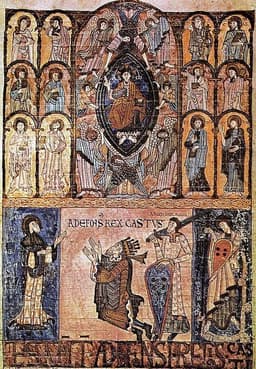
Alfonso II of Asturias
Emperor · Medieval
54.6Total
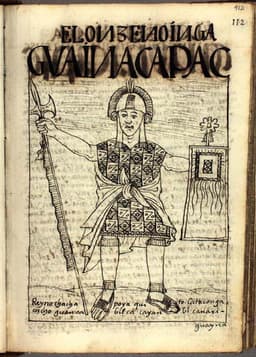
Huayna Capac
Emperor · Medieval
58.3Total
Basic Information
Born
760
1468
Died
842
1527
Era
Medieval
Medieval
Nationality
Asturias
Inca Empire
Occupation
Emperor
Emperor
Civilization
Western
Other
Score Comparison
Military (10%)
50.0
76.0
Political (20%)
39.4
45.0
Influence (20%)
61.0
55.0
Legacy (20%)
52.0
54.0
Leadership (15%)
74.0
68.0
Strategy (15%)
43.7
65.4
TOTAL
54.6
58.3
Alfonso II of Asturias — Complete Timeline
791 AD
Established the capital of Asturias at OviedoPolitical Action◆ Major
Alfonso II moved the Asturian capital from Pravia to Oviedo, which he fortified and developed. He built churches, palaces, and defensive walls, making Oviedo the political and cultural center of the kingdom.
Capital CityUrban DevelopmentAsturias
Impact: nationalconstructive
794 AD
Defeated Umayyad forces at the Battle of LutosWar◆ Major
Alfonso II's army defeated an Umayyad raiding force at the Battle of Lutos in the Cantabrian mountains. The victory prevented a major Muslim incursion into Asturias and demonstrated the kingdom's growing military capability.
BattleAsturiasUmayyad
Impact: regionalconstructive
798 AD
Initiated diplomatic relations with the Carolingian EmpirePolitical Action
Alfonso II sent envoys to the court of Charlemagne, establishing diplomatic ties between Asturias and the Carolingian Empire. This alliance provided mutual support against the Umayyads and linked Asturias to broader European Christian networks.
DiplomacyCarolingianAsturias
Impact: regionalconstructive
813 AD
Discovered the tomb of Saint James the GreatCultural
According to tradition, a hermit named Pelagius discovered a tomb in the forest of Libred
Religious DiscoveryPilgrimageSantiago de Compostela
Impact: globalconstructive
Huayna Capac — Complete Timeline
1493 AD
Conquest of the Kingdom of QuitoWar◆ Major
Huayna Capac led Inca armies northward, conquering the Kingdom of Quito (in modern Ecuador). This campaign extended the Inca Empire to its northernmost extent, incorporating new territories and peoples into the imperial administration.
Inca ExpansionConquestNorthern Campaign
Impact: regional
1500 AD
Construction of SacsayhuamanCultural◆ Major
Huayna Capac oversaw the expansion and fortification of Sacsayhuaman, a massive stone fortress overlooking Cusco. The complex, built with enormous fitted stones, served as both a military stronghold and a ceremonial center, demonstrating Inca engineering capabilities.
ArchitectureFortificationInca Engineering
Impact: regionalconstructive
1525 AD
Division of the Inca EmpirePolitical Action
Huayna Capac divided the Inca Empire between his sons Hu
Succession CrisisCivil WarInca Decline
Impact: regionaldestructive
1527 AD
Death from SmallpoxOther
Huayna Capac died from smallpox, a disease introduced by Europeans that spread through the Inca Empire ahead of Spanish conquistadors. His death triggered the Inca civil war and left the empire vulnerable to Francisco Pizarro's invasion.
EpidemicDiseaseInca Collapse
Impact: regionaltragic
Expert Analysis
Origins
Alfonso II of Asturias (c. 760–842) was born into the Asturian nobility, the son of King Fruela I. After his father's assassination, he spent years in exile at the monastery of Samos, where he received a religious education. His early life was marked by political instability within the small Christian kingdom of Asturias, which had emerged from Visigothic remnants in the mountains of northern Spain. Huayna Capac (c. 1493–1527) was born in Cusco as the son of Inca Emperor Túpac Inca Yupanqui and his principal wife, Mama Ocllo. He was raised in the Inca imperial court, trained in warfare, administration, and religion, and was groomed for succession from an early age. His upbringing reflected the highly centralized and militaristic nature of the Inca state, which by then dominated the Andes.
Rise to Power
Alfonso II claimed the throne in 791 after the death of King Bermudo I, who abdicated in his favor. However, he faced immediate opposition from a rival faction supporting his cousin, Nepociano. Alfonso was initially forced to flee to Álava but returned with support from the Basques and Galicians, securing his throne in 792. He then consolidated power by moving the capital to Oviedo in 794, establishing a stable administrative base. Huayna Capac ascended to power around 1493 upon his father's death, inheriting an empire already vast. He faced no internal rivals, as Inca succession was typically undisputed, but he had to manage the complex bureaucracy and military machine. His early reign focused on consolidating control over recently conquered territories, particularly in the north, where he led campaigns to subdue the Kingdom of Quito.
Leadership & Governance
Alfonso II governed as a Christian king with strong ties to the Church. He promoted the construction of churches and palaces in Oviedo, including San Julián de los Prados, and established diplomatic relations with the Carolingian Empire, securing recognition and potential military support. His administrative reforms included codifying laws and organizing the defense of the kingdom through a network of fortifications. Alfonso's leadership was characterized by piety and a focus on religious unity, as seen in his discovery of the supposed tomb of Saint James, which became a powerful symbol for the Reconquista. Huayna Capac ruled as an absolute monarch with a highly organized state apparatus. He expanded the Inca road system, improved agricultural terraces, and enforced the mit'a labor system. He also centralized power by appointing loyal governors and integrating conquered elites through marriages and gifts. Huayna Capac's governance was pragmatic but authoritarian, with a focus on maintaining imperial cohesion through infrastructure and cultural standardization.
Triumph & Tragedy
Alfonso II's greatest success was the discovery of the tomb of Saint James in 813, which transformed Santiago de Compostela into a major pilgrimage site and galvanized Christian resistance against Muslim rule. His military victory at the Battle of Lutos (c. 794) also prevented a major Umayyad incursion. However, his reign saw limited territorial expansion; Asturias remained a small kingdom. His tragedy lay in the constant internal strife he faced, including a rebellion by his cousin Nepociano, which he suppressed but which depleted resources. Huayna Capac's triumphs included the conquest of Quito and the extension of the Inca Empire to its maximum extent, covering modern Peru, Ecuador, Bolivia, and parts of Chile and Argentina. He also oversaw the construction of Sacsayhuaman, a fortress of immense stonework. His tragedy was his death from smallpox around 1527, which triggered a civil war between his sons Huáscar and Atahualpa, weakening the empire before the Spanish invasion. Moreover, his division of the empire between his sons was a fatal political miscalculation.
Character & Destiny
Alfonso II was known as 'the Chaste' for his religious devotion and celibacy. His character was cautious and diplomatic, preferring alliances (e.g., with Charlemagne) and symbolic gestures (the saint's tomb) over aggressive expansion. This strategy preserved Asturias but limited its growth. His destiny was to be remembered as a pious founder of the Reconquista's spiritual heart. Huayna Capac was a dynamic and ambitious ruler, confident in his empire's strength. His strategic scores (65.4) reflect his military acumen, but his political score (45.0) shows weakness in succession planning. His character led him to centralize power but also to ignore the dangers of division. His destiny was to rule at the zenith of Inca power, only to see it collapse due to his own decisions and the unintended consequences of European contact.
Legacy
Alfonso II's legacy is deeply tied to the Christian identity of Spain. The discovery of Saint James's tomb made Santiago de Compostela one of Christendom's most important pilgrimage sites, and the Camino de Santiago became a cultural and economic artery. His establishment of Oviedo as the capital set a precedent for Asturian kingship. He scored 52.0 in legacy, reflecting his enduring influence on Spanish history. Huayna Capac's legacy is the Inca Empire at its peak, but also its vulnerability. His administrative and infrastructure projects (roads, terraces) outlasted the empire and were used by the Spanish. However, his division of the empire and death from smallpox directly led to the civil war that facilitated the Spanish conquest. He scored 54.0 in legacy, slightly higher than Alfonso, but his impact is more mixed.
Conclusion
Huayna Capac had greater immediate impact, commanding an empire of millions and shaping Andean history. His total score of 58.3 surpasses Alfonso's 54.6, largely due to higher military (76.0 vs 50.0) and strategy (65.4 vs 43.7) scores. However, Alfonso's influence on the Reconquista and Christian Europe was more enduring in the long term. Taking a stance, Huayna Capac's legacy is more significant in terms of scale and drama, but Alfonso's contributions to European civilization—through the Santiago pilgrimage and the preservation of Christian resistance—arguably had a broader historical reach. Ultimately, Huayna Capac's empire was vast but fleeting, while Alfonso's symbolic foundation of a religious movement lasted centuries. Thus, while Huayna Capac scored higher on metrics, Alfonso II's impact on world history is more profound.
Rankings
🥇
Huayna CapacLeader
Mil: 76.0Pol: 45.0Inf: 55.0
58.3
🥈
Alfonso II of Asturias
Mil: 50.0Pol: 39.4Inf: 61.0
54.6
+3.7 behind
How This Comparison Works
Algorithm
Each figure is scored on 6 dimensions (0—100 scale) based on structured historical data: Military (10%), Political (20%), Influence (20%), Legacy (20%), Leadership (15%), Strategy (15%). The weighted total produces the final ranking.
Data Sources
Scores are computed from structured sub-indicators in the database. Scale factors adjust for era (Ancient ×0.85, Modern ×1.0) and civilization size (Eastern ×1.05, Other ×0.80) to account for differences in population and military scale.
Maximum 3 Figures
Comparisons are limited to 2—3 figures to ensure readability and statistical meaningfulness.
Error Margins
±5 points per dimension — Sub-scores are derived from historical records with inherent uncertainty. Two figures within 5 points on a dimension should be considered roughly equivalent in that area.
Total Score Accuracy
±3 points overall — The weighted combination of 6 dimensions produces a total score with approximately ±3 points of uncertainty. Differences of less than 3 points are not statistically significant— the figures are effectively tied.
Known Limitations
- Historical records are incomplete and uneven across civilizations
- Figures from oral-tradition societies may be underrepresented
- Occupation labels can misclassify multi-role figures
- Scores measure capability and impact, not moral character
- Quantitative scoring is a comparison tool, not absolute truth
Capability Radar
Military (10%) — Battles & Warfare
Battles
15
75
Win Rate
20
80
Expansion
15
85
Political (20%) — Governance & Reform
Reform
30
60
Diplomacy
40
65
Economy
35
70
Influence (20%) — Cultural & Global Reach
Cultural
55
60
Global
50
55
Legacy (20%) — Historical Impact
Historical
70
65
Longevity
65
50
Leadership (15%) — Power & Stability
Tenure
60
70
Stability
50
55
Strategy (15%) — Tactics & Innovation
Strategy
20
75
Tactics
25
70
Reform
10
65
Similar Comparisons
Comments & Discussion
No comments yet. Be the first to share your thoughts!