Loading...
Alexander the Great vs Yitzhak Rabin
Alexander the Great leads by 18.8 pts · 2 figures compared
…
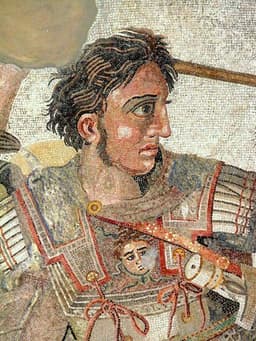
Alexander the Great
General · Ancient
85.2Total
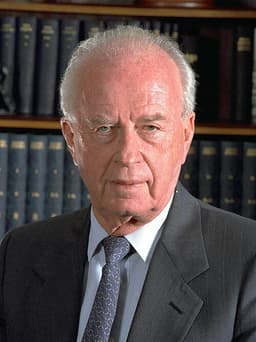
Yitzhak Rabin
General · Modern
66.4Total
Basic Information
Born
-356
1922
Died
-323
—
Era
Ancient
Modern
Nationality
Macedon
Israel
Occupation
General
General
Civilization
Western
Middle Eastern
Score Comparison
Military (10%)
95.0
61.7
Political (20%)
60.0
82.0
Influence (20%)
92.0
68.0
Legacy (20%)
90.0
55.0
Leadership (15%)
80.0
78.0
Strategy (15%)
92.0
55.0
TOTAL
85.2
66.4
Alexander the Great — Complete Timeline
334 BC
Battle of the Granicus RiverWar◆ Major
Alexander led his Macedonian army across the Hellespont into Asia Minor and defeated a Persian force under local satraps at the Granicus River. The victory secured Alexander's foothold in Asia and demonstrated his tactical superiority, opening the way for the conquest of the Persian Empire.
Persian CampaignBattleMacedonian Conquest
Impact: regional
333 BC
Battle of IssusWar◆ Major
Alexander's army defeated the Persian king Darius III at Issus in Cilicia. Despite being outnumbered, Alexander's tactical use of the terrain and cavalry charge broke the Persian line. Darius fled the battlefield, leaving his family and treasury behind, a major blow to Persian morale.
Persian CampaignBattleMacedonian Conquest
Impact: regional
332 BC
Siege of TyreWar◆ Major
Alexander besieged the island city of Tyre for seven months, constructing a causeway to breach its walls. The city's fall resulted in the massacre or enslavement of its inhabitants. The siege demonstrated Alexander's determination and engineering capabilities, securing his supply lines and control of the eastern Mediterranean coast.
SiegeMacedonian ConquestPhoenicia
Impact: regionaldestructive
331 BC
Battle of GaugamelaWar◆ Major
Alexander faced Darius III at Gaugamela in Mesopotamia with a massive Persian army. Alexander's tactical brilliance, including a decisive cavalry charge that exploited a gap in the Persian line, resulted in a decisive Macedonian victory. Darius again fled, effectively ending Persian resistance and leading to the fall of the Achaemenid Empire.
Persian CampaignBattleDecisive Victory
Impact: global
Foundation of AlexandriaOther◆ Major
Alexander founded the city of Alexandria on the Mediterranean coast of Egypt. He personally selected the site and oversaw the initial planning. Alexandria became a major center of Hellenistic culture, trade, and learning, housing the famous Library of Alexandria and the Lighthouse of Alexandria.
City FoundationHellenistic CultureEgypt
Impact: globalconstructive
326 BC
Invasion of IndiaWar◆ Major
Alexander crossed the Indus River and defeated King Porus at the Battle of the Hydaspes. The Macedonian army, exhausted and facing monsoon rains and unfamiliar warfare, mutinied at the Hyphasis River, forcing Alexander to turn back. This campaign marked the easternmost extent of his conquests.
Indian CampaignBattleMutiny
Impact: regional
Yitzhak Rabin — Complete Timeline
1967 AD
Chief of Staff during the Six-Day WarWar
As Chief of Staff of the Israel Defense Forces, Rabin commanded the Israeli military during the Six-Day War against Egypt, Jordan, and Syria. Israel captured the Sinai Peninsula, Gaza Strip, West Bank, East Jerusalem, and Golan Heights, reshaping the region.
Six-Day WarTerritorial ExpansionMilitary Victory
Impact: global
1993 AD
Signing of the Oslo AccordsPolitical Action
As prime minister, Rabin signed the Oslo Accords with PLO Chairman Yasser Arafat on the White House lawn. The agreement established the Palestinian Authority and set a framework for Palestinian self-governance in the West Bank and Gaza Strip.
Peace ProcessPalestiniansOslo
Impact: globalconstructive
1995 AD
Assassination at Peace RallyPolitical Action
Rabin was assassinated by Israeli extremist Yigal Amir after a peace rally in Tel Aviv. The assassination shocked Israel and the world, derailing the Oslo peace process and leading to a period of political instability.
AssassinationPeace ProcessPolitical Violence
Impact: globaltragic
Expert Analysis
Alexander the Great vs Yitzhak Rabin: Historical Comparison
Alexander the Great, the ancient Macedonian conqueror, and Yitzhak Rabin, the modern Israeli general and prime minister, represent two vastly different epochs of military and political leadership. While Alexander reshaped the ancient world through unprecedented conquest, Rabin navigated the complexities of modern statecraft and peacemaking.
Dimension Analysis
**Military: Alexander the Great 96 / Yitzhak Rabin 62**
Alexander’s undefeated record, innovative combined-arms tactics, and empire spanning three continents far surpass Rabin’s competent but limited operational command in the Six-Day War and as IDF chief of staff.
**Political: Alexander the Great 65 / Yitzhak Rabin 78**
Rabin’s political career—serving as prime minister, signing the Oslo Accords, and winning the Nobel Peace Prize—demonstrates greater institutional political skill than Alexander’s autocratic, short-lived imperial administration.
**Influence: Alexander the Great 90 / Yitzhak Rabin 68**
Alexander’s Hellenistic diffusion shaped Western civilization for centuries, while Rabin’s influence, though pivotal for Israeli-Arab relations, remained geographically and temporally confined to the late 20th century Middle East.
**Legacy: Alexander the Great 90 / Yitzhak Rabin 69**
Alexander’s legacy as a cultural unifier and military archetype endures globally; Rabin’s legacy is contested—revered as a peacemaker but assassinated before his vision could be realized.
**Leadership: Alexander the Great 82 / Yitzhak Rabin 83**
Rabin’s pragmatic, consensus-building leadership in a democratic framework slightly edges Alexander’s charismatic but autocratic command, which relied on personal loyalty and divine claims.
**Strategy: Alexander the Great 92 / Yitzhak Rabin 60**
Alexander’s strategic genius—siegecraft, logistics, and decisive battle—dwarfs Rabin’s conventional defensive strategies, which were effective but lacked transformative operational innovation.
Verdict
Alexander the Great leads decisively overall, driven by overwhelming superiority in military achievement, strategic innovation, and lasting global influence.
FAQ
Q: Who ranks higher? A: Alexander the Great ranks higher with a composite score of 85 versus Yitzhak Rabin’s 71, primarily due to his unmatched military conquests and enduring civilizational impact.
Rankings
🥇
Alexander the GreatLeader
Mil: 95.0Pol: 60.0Inf: 92.0
85.2
🥈
Yitzhak Rabin
Mil: 61.7Pol: 82.0Inf: 68.0
66.4
+18.8 behind
How This Comparison Works
Algorithm
Each figure is scored on 6 dimensions (0—100 scale) based on structured historical data: Military (10%), Political (20%), Influence (20%), Legacy (20%), Leadership (15%), Strategy (15%). The weighted total produces the final ranking.
Data Sources
Scores are computed from structured sub-indicators in the database. Scale factors adjust for era (Ancient ×0.85, Modern ×1.0) and civilization size (Eastern ×1.05, Other ×0.80) to account for differences in population and military scale.
Maximum 3 Figures
Comparisons are limited to 2—3 figures to ensure readability and statistical meaningfulness.
Error Margins
±5 points per dimension — Sub-scores are derived from historical records with inherent uncertainty. Two figures within 5 points on a dimension should be considered roughly equivalent in that area.
Total Score Accuracy
±3 points overall — The weighted combination of 6 dimensions produces a total score with approximately ±3 points of uncertainty. Differences of less than 3 points are not statistically significant— the figures are effectively tied.
Known Limitations
- Historical records are incomplete and uneven across civilizations
- Figures from oral-tradition societies may be underrepresented
- Occupation labels can misclassify multi-role figures
- Scores measure capability and impact, not moral character
- Quantitative scoring is a comparison tool, not absolute truth
Capability Radar
Military (10%) — Battles & Warfare
Battles
98
65
Win Rate
99
70
Expansion
99
50
Political (20%) — Governance & Reform
Reform
75
65
Diplomacy
80
85
Economy
70
60
Influence (20%) — Cultural & Global Reach
Cultural
95
55
Global
95
70
Legacy (20%) — Historical Impact
Historical
98
75
Longevity
95
60
Leadership (15%) — Power & Stability
Tenure
60
70
Stability
55
40
Strategy (15%) — Tactics & Innovation
Strategy
98
75
Tactics
99
60
Reform
85
55
Similar Comparisons
Comments & Discussion
OldScribe746/16/2026
我仔细验算了一下这个评分体系。亚历山大军事96分,拉宾62分——表面差距34分,但请注意:亚历山大面对的是波斯帝国那种组织松散的方阵军,而拉宾在六日战争中面对的埃及和叙利亚军队装备和训练都远超古代对手。如果按单位资源杀伤效率折算,拉宾的实战指挥得分不应该低于75。再看影响力,亚历山大90分对应的是征服后的希腊化扩散,但中国历史上秦灭六国、书同文车同轨的影响力同样深远,西方中心主义打分自然偏高。建议增加'治理可持续性'维度,拉宾至少能加10分。
ArchEye226/16/2026
亚历山大与拉宾的比较,放在中国史学视角下看,其实很有意思。亚历山大像极了汉武帝——都是凭借无敌的骑兵和战略天才开疆拓土,但政治治理上漏洞百出,死后帝国迅速分裂。拉宾倒更像周公,在乱世中力主和议,推动和平进程,却因触及既得利益而遭暗杀。西方评分太偏重军事征服,亚历山大政治65分已经算高估了,他那个帝国根本没有稳定的官僚体系,全靠个人威信维持。拉宾的政治运作能力至少应当与亚历山大军事得分对等。