Loading...
This comparison has not been analyzed yet.
One-time AI generation (~1 minute). Scores and timeline are already available below.
Alexander Bortnikov vs Jose Miguel Gomez
Alexander Bortnikov leads by 1.8 pts · 2 figures compared
…
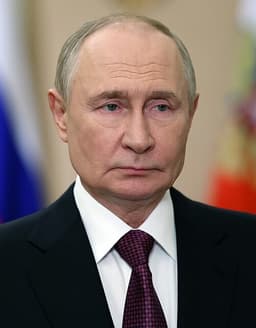
Alexander Bortnikov
General · Modern
48.9Total
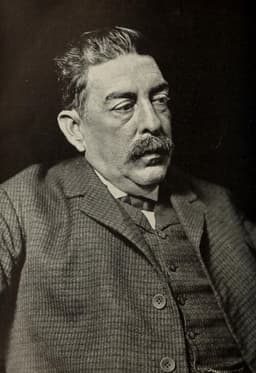
Jose Miguel Gomez
General · Modern
47.1Total
Basic Information
Born
1951
1858
Died
—
1921
Era
Modern
Modern
Nationality
Russia
Cuba
Occupation
General
General
Civilization
Western
Western
Score Comparison
Military (10%)
25.0
69.6
Political (20%)
68.0
29.3
Influence (20%)
57.2
47.9
Legacy (20%)
44.2
39.2
Leadership (15%)
48.8
55.3
Strategy (15%)
35.7
56.7
TOTAL
48.9
47.1
Alexander Bortnikov — Complete Timeline
2008 AD
Appointed Director of the FSBPolitical Action◆ Major
Alexander Bortnikov was appointed Director of the Federal Security Service (FSB) of Russia by President Dmitry Medvedev. He succeeded Nikolai Patrushev, becoming the head of Russia's primary security and intelligence agency, responsible for counterintelligence, border security, and counterterrorism.
AppointmentSecurity ServiceRussia
Impact: national
2010 AD
Oversaw FSB response to the 2010 Moscow Metro bombingsPolitical Action◆ Major
Following the suicide bombings on the Moscow Metro by female attackers from the North Caucasus, Bortnikov directed the FSB's investigation and security response. The attacks killed 40 people and injured over 100, leading to increased security measures and counterterrorism operations in the region.
TerrorismMoscow MetroCounterterrorism
Impact: nationaltragic
2014 AD
FSB involvement in the annexation of CrimeaPolitical Action◆ Major
Under Bortnikov's leadership, the FSB played a key role in the Russian annexation of Crimea, including intelligence operations and support for local pro-Russian forces. The FSB's activities facilitated the rapid takeover of the peninsula, which was condemned by Ukraine and much of the international community.
CrimeaAnnexationIntelligence
Impact: globaldestructive
2020 AD
FSB response to the COVID-19 pandemicPolitical Action
Bortnikov directed the FSB's role in enforcing COVID-19 restrictions and monitoring compliance in Russia. The agency was involved in tracking infections, managing border closures, and investigating violations of quarantine measures, contributing to the government's pandemic response.
COVID-19PandemicSecurity
Impact: national
Jose Miguel Gomez — Complete Timeline
1908 AD
Election as President of CubaPolitical Action◆ Major
Jose Miguel Gomez was elected as the second president of Cuba, representing the Liberal Party. His victory marked a peaceful transfer of power between political parties in the young republic.
Cuban PoliticsElectionLiberal Party
Impact: nationalconstructive
1912 AD
Suppression of the Negro RebellionWar◆ Major
As president, Gomez ordered the military suppression of the Negro Rebellion, an uprising of Afro-Cubans protesting discrimination. The rebellion was crushed with heavy casualties, and Gomez's actions were criticized for their brutality.
Negro RebellionRacial ConflictSuppression
Impact: nationaldestructive
1917 AD
Corruption Scandal and US InterventionPolitical Action◆ Major
Gomez was implicated in a major corruption scandal involving fraudulent contracts and embezzlement. The scandal led to US intervention under the Platt Amendment, damaging Cuba's sovereignty and Gomez's reputation.
CorruptionUS InterventionPlatt Amendment
Impact: nationaldestructive
Exile After Failed CoupPolitical Action◆ Major
After losing the 1916 election, Gomez led a failed coup attempt against President Menocal. The coup was defeated, and Gomez fled into exile in the United States to avoid prosecution.
Coup AttemptExilePolitical Crisis
Impact: nationaldestructive
This comparison has not been analyzed yet.
One-time AI generation (~1 minute). Scores and timeline are already available below.
Rankings
🥇
Alexander BortnikovLeader
Mil: 25.0Pol: 68.0Inf: 57.2
48.9
🥈
Jose Miguel Gomez
Mil: 69.6Pol: 29.3Inf: 47.9
47.1
+1.8 behind
How This Comparison Works
Algorithm
Each figure is scored on 6 dimensions (0—100 scale) based on structured historical data: Military (10%), Political (20%), Influence (20%), Legacy (20%), Leadership (15%), Strategy (15%). The weighted total produces the final ranking.
Data Sources
Scores are computed from structured sub-indicators in the database. Scale factors adjust for era (Ancient ×0.85, Modern ×1.0) and civilization size (Eastern ×1.05, Other ×0.80) to account for differences in population and military scale.
Maximum 3 Figures
Comparisons are limited to 2—3 figures to ensure readability and statistical meaningfulness.
Error Margins
±5 points per dimension — Sub-scores are derived from historical records with inherent uncertainty. Two figures within 5 points on a dimension should be considered roughly equivalent in that area.
Total Score Accuracy
±3 points overall — The weighted combination of 6 dimensions produces a total score with approximately ±3 points of uncertainty. Differences of less than 3 points are not statistically significant— the figures are effectively tied.
Known Limitations
- Historical records are incomplete and uneven across civilizations
- Figures from oral-tradition societies may be underrepresented
- Occupation labels can misclassify multi-role figures
- Scores measure capability and impact, not moral character
- Quantitative scoring is a comparison tool, not absolute truth
Capability Radar
Military (10%) — Battles & Warfare
Battles
0
54
Win Rate
0
52
Expansion
5
60
Political (20%) — Governance & Reform
Reform
55
10
Diplomacy
50
20
Economy
30
10
Influence (20%) — Cultural & Global Reach
Cultural
20
10
Global
35
5
Legacy (20%) — Historical Impact
Historical
30
15
Longevity
25
10
Leadership (15%) — Power & Stability
Tenure
60
40
Stability
45
10
Strategy (15%) — Tactics & Innovation
Strategy
15
60
Tactics
10
66
Reform
20
67
Similar Comparisons
Comments & Discussion
No comments yet. Be the first to share your thoughts!