Loading...
Jose Miguel Gomez vs Napoleon Bonaparte
Napoleon Bonaparte leads by 23.8 pts · 2 figures compared
…
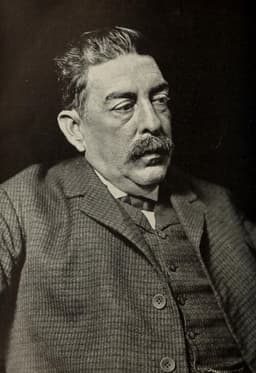
Jose Miguel Gomez
General · Modern
47.1Total

Napoleon Bonaparte
General · Modern
70.9Total
Basic Information
Born
1858
1769
Died
1921
1821
Era
Modern
Modern
Nationality
Cuba
France
Occupation
General
General
Civilization
Western
Western
Score Comparison
Military (10%)
69.6
94.0
Political (20%)
29.3
72.0
Influence (20%)
47.9
40.0
Legacy (20%)
39.2
80.0
Leadership (15%)
55.3
78.0
Strategy (15%)
56.7
90.0
TOTAL
47.1
70.9
Jose Miguel Gomez — Complete Timeline
1908 AD
Election as President of CubaPolitical Action◆ Major
Jose Miguel Gomez was elected as the second president of Cuba, representing the Liberal Party. His victory marked a peaceful transfer of power between political parties in the young republic.
Cuban PoliticsElectionLiberal Party
Impact: nationalconstructive
1912 AD
Suppression of the Negro RebellionWar◆ Major
As president, Gomez ordered the military suppression of the Negro Rebellion, an uprising of Afro-Cubans protesting discrimination. The rebellion was crushed with heavy casualties, and Gomez's actions were criticized for their brutality.
Negro RebellionRacial ConflictSuppression
Impact: nationaldestructive
1917 AD
Corruption Scandal and US InterventionPolitical Action◆ Major
Gomez was implicated in a major corruption scandal involving fraudulent contracts and embezzlement. The scandal led to US intervention under the Platt Amendment, damaging Cuba's sovereignty and Gomez's reputation.
CorruptionUS InterventionPlatt Amendment
Impact: nationaldestructive
Exile After Failed CoupPolitical Action◆ Major
After losing the 1916 election, Gomez led a failed coup attempt against President Menocal. The coup was defeated, and Gomez fled into exile in the United States to avoid prosecution.
Coup AttemptExilePolitical Crisis
Impact: nationaldestructive
Napoleon Bonaparte — Complete Timeline
1799 AD
Coup of 18 BrumaireOther◆ Major
Napoleon Bonaparte, with support from his brother Lucien and key political figures, overthrew the Directory in a bloodless coup. He established the Consulate with himself as First Consul, effectively becoming the ruler of France. This event ended the French Revolution's most unstable period.
French RevolutionCoupRise to Power
Impact: regional
1804 AD
Promulgation of the Napoleonic CodeOther◆ Major
Napoleon enacted the Civil Code of the French, known as the Napoleonic Code, a comprehensive set of laws that replaced the fragmented feudal legal systems. The code established legal equality, protected property rights, and secularized law. It became the basis for legal systems in many European and world countries.
Legal ReformNapoleonic CodeCivil Law
Impact: globalconstructive
1805 AD
Battle of AusterlitzWar◆ Major
Napoleon's Grande Arm
Napoleonic WarsBattleDecisive Victory
Impact: global
1812 AD
Invasion of RussiaWar◆ Major
Napoleon led the Grande Arm
Napoleonic WarsInvasionDisaster
Impact: globaldestructive
1815 AD
Battle of WaterlooWar◆ Major
Napoleon's French army was defeated by the combined forces of the Duke of Wellington's Anglo-Allied army and Gebhard Leberecht von Bl
Napoleonic WarsBattleFinal Defeat
Impact: globaldestructive
Expert Analysis
Origins
**Napoleon Bonaparte** was born in 1769 on the island of Corsica, shortly after its annexation by France. His family belonged to the minor nobility, and his father, Carlo Buonaparte, secured a scholarship for Napoleon to attend a military academy in mainland France. He graduated from the École Militaire in Paris in 1785, becoming a second lieutenant in the artillery. His early exposure to Enlightenment ideas and Corsican nationalism shaped his ambition.
**Jose Miguel Gomez** was born in 1858 in Sancti Spíritus, Cuba, during the Spanish colonial era. He came from a wealthy landowning family. Gomez studied law at the University of Havana, but his education was interrupted by the Cuban War of Independence (1895-1898). He joined the rebel forces, serving under General Máximo Gómez (no relation), and rose to the rank of major general. His early military career was marked by participation in key battles against Spanish forces.
Rise to Power
Napoleon's rise was meteoric. During the French Revolution, he distinguished himself at the Siege of Toulon in 1793, earning promotion to brigadier general. In 1795, he suppressed a royalist uprising in Paris, gaining the trust of the Directory. His Italian campaign of 1796-1797 brought stunning victories against Austria, making him a national hero. In 1799, he orchestrated the Coup of 18 Brumaire, overthrowing the Directory and establishing the Consulate with himself as First Consul. By 1804, he crowned himself Emperor of the French.
Jose Miguel Gomez rose through Cuban politics after independence. He served as governor of Santa Clara province and later as a senator. In 1908, he was elected as the second president of Cuba, representing the Liberal Party. His victory was notable for being the first peaceful transfer of power between political parties in Cuban history. However, his presidency was tainted by corruption from the start, as he used his office to enrich himself and his allies.
Leadership & Governance
Napoleon's governance was transformative. He centralized the French state, created the Bank of France, and established the Napoleonic Code, which influenced legal systems worldwide. He reformed education through the University of France and promoted meritocracy in the military and civil service. However, his authoritarian rule suppressed dissent, and he reestablished slavery in French colonies in 1802. His administrative efficiency contrasted with his expansionist wars, which drained French resources.
Jose Miguel Gomez's leadership was characterized by cronyism and corruption. He awarded lucrative contracts to friends and family, leading to a major scandal involving the Havana streetcar system and the National Bank. Under the Platt Amendment, the United States intervened to protect its interests, forcing Gomez to accept American oversight. He also suppressed the Negro Rebellion of 1912, ordering the military to crush Afro-Cuban protests against discrimination, resulting in thousands of deaths. His governance score of 61.9 reflects his ineffective and corrupt administration.
Triumph & Tragedy
Napoleon's greatest triumph was the Battle of Austerlitz in 1805, where he defeated the combined armies of Russia and Austria, cementing French dominance in Europe. His Napoleonic Code remains a lasting legacy. However, his invasion of Russia in 1812 was a catastrophic failure, losing over 400,000 men. His final defeat at Waterloo in 1815 ended his rule and led to his exile on Saint Helena. His military score of 94.0 reflects his tactical brilliance, but his strategic overreach led to his downfall.
Jose Miguel Gomez's presidency saw the peaceful transfer of power in 1908, a milestone for Cuban democracy. However, his corruption scandal and the brutal suppression of the Negro Rebellion tarnished his legacy. After losing the 1916 election, he led a failed coup attempt and fled into exile in the United States, where he died in 1921. His total score of 61.6 reflects his limited and negative impact.
Character & Destiny
Napoleon was ambitious, intelligent, and ruthless. His confidence and strategic mind drove his conquests, but his hubris led to overextension. He once said, "Power is my mistress." Historians assess him as a military genius but a flawed ruler whose personal ambition caused immense suffering.
Jose Miguel Gomez was opportunistic and self-serving. His corruption and willingness to use violence against citizens revealed a lack of principle. His character led to political isolation and exile, with few defenders of his legacy.
Legacy
Napoleon's legacy is immense. The Napoleonic Code influenced civil law in Europe and the Americas. He redrew the map of Europe, ended feudalism in many regions, and inspired nationalism. His military tactics are studied in war colleges. Despite his defeat, his impact on modern state-building and law is undeniable, reflected in his legacy score of 80.0.
Jose Miguel Gomez's legacy is minimal and negative. He is remembered as a corrupt president who deepened American influence in Cuba and suppressed minority rights. His actions contributed to the instability that led to the Cuban Revolution. His legacy score of 53.6 reflects his obscurity and poor reputation.
Conclusion
Napoleon Bonaparte had a far greater impact on world history than Jose Miguel Gomez. With a total score of 70.9 against Gomez's 61.6, Napoleon's military and political achievements reshaped Europe and the world. Gomez's corrupt and repressive presidency left no positive enduring mark. While Napoleon's legacy is complex, his influence on law, governance, and military strategy is undeniable. Gomez, by contrast, is a footnote in Cuban history. Napoleon's impact is global and lasting; Gomez's is local and fleeting.
Rankings
🥇
Napoleon BonaparteLeader
Mil: 94.0Pol: 72.0Inf: 40.0
70.9
🥈
Jose Miguel Gomez
Mil: 69.6Pol: 29.3Inf: 47.9
47.1
+23.8 behind
How This Comparison Works
Algorithm
Each figure is scored on 6 dimensions (0—100 scale) based on structured historical data: Military (10%), Political (20%), Influence (20%), Legacy (20%), Leadership (15%), Strategy (15%). The weighted total produces the final ranking.
Data Sources
Scores are computed from structured sub-indicators in the database. Scale factors adjust for era (Ancient ×0.85, Modern ×1.0) and civilization size (Eastern ×1.05, Other ×0.80) to account for differences in population and military scale.
Maximum 3 Figures
Comparisons are limited to 2—3 figures to ensure readability and statistical meaningfulness.
Error Margins
±5 points per dimension — Sub-scores are derived from historical records with inherent uncertainty. Two figures within 5 points on a dimension should be considered roughly equivalent in that area.
Total Score Accuracy
±3 points overall — The weighted combination of 6 dimensions produces a total score with approximately ±3 points of uncertainty. Differences of less than 3 points are not statistically significant— the figures are effectively tied.
Known Limitations
- Historical records are incomplete and uneven across civilizations
- Figures from oral-tradition societies may be underrepresented
- Occupation labels can misclassify multi-role figures
- Scores measure capability and impact, not moral character
- Quantitative scoring is a comparison tool, not absolute truth
Capability Radar
Military (10%) — Battles & Warfare
Battles
54
95
Win Rate
52
90
Expansion
60
95
Political (20%) — Governance & Reform
Reform
10
95
Diplomacy
20
80
Economy
10
85
Influence (20%) — Cultural & Global Reach
Cultural
10
85
Global
5
90
Legacy (20%) — Historical Impact
Historical
15
95
Longevity
10
90
Leadership (15%) — Power & Stability
Tenure
40
85
Stability
10
70
Strategy (15%) — Tactics & Innovation
Strategy
60
95
Tactics
66
98
Reform
67
92
Similar Comparisons
Comments & Discussion
No comments yet. Be the first to share your thoughts!