Loading...
Jose Miguel Gomez vs Koprulu Fazil Mustafa
Koprulu Fazil Mustafa leads by 11.6 pts · 2 figures compared
…
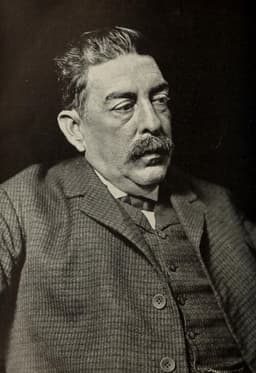
Jose Miguel Gomez
General · Modern
47.1Total
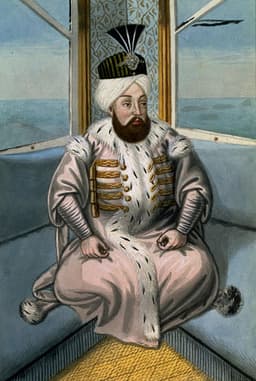
Koprulu Fazil Mustafa
General · Modern
58.7Total
Basic Information
Born
1858
1637
Died
1921
1691
Era
Modern
Modern
Nationality
Cuba
Ottoman Empire
Occupation
General
General
Civilization
Western
Middle Eastern
Score Comparison
Military (10%)
69.6
67.5
Political (20%)
29.3
55.0
Influence (20%)
47.9
54.9
Legacy (20%)
39.2
47.5
Leadership (15%)
55.3
80.0
Strategy (15%)
56.7
61.2
TOTAL
47.1
58.7
Jose Miguel Gomez — Complete Timeline
1908 AD
Election as President of CubaPolitical Action◆ Major
Jose Miguel Gomez was elected as the second president of Cuba, representing the Liberal Party. His victory marked a peaceful transfer of power between political parties in the young republic.
Cuban PoliticsElectionLiberal Party
Impact: nationalconstructive
1912 AD
Suppression of the Negro RebellionWar◆ Major
As president, Gomez ordered the military suppression of the Negro Rebellion, an uprising of Afro-Cubans protesting discrimination. The rebellion was crushed with heavy casualties, and Gomez's actions were criticized for their brutality.
Negro RebellionRacial ConflictSuppression
Impact: nationaldestructive
1917 AD
Corruption Scandal and US InterventionPolitical Action◆ Major
Gomez was implicated in a major corruption scandal involving fraudulent contracts and embezzlement. The scandal led to US intervention under the Platt Amendment, damaging Cuba's sovereignty and Gomez's reputation.
CorruptionUS InterventionPlatt Amendment
Impact: nationaldestructive
Exile After Failed CoupPolitical Action◆ Major
After losing the 1916 election, Gomez led a failed coup attempt against President Menocal. The coup was defeated, and Gomez fled into exile in the United States to avoid prosecution.
Coup AttemptExilePolitical Crisis
Impact: nationaldestructive
Koprulu Fazil Mustafa — Complete Timeline
1689 AD
Appointment as Grand VizierPolitical Action◆ Major
Koprulu Fazil Mustafa Pasha was appointed Grand Vizier by Sultan Suleiman II during a period of military crisis. He implemented reforms to restore the Ottoman army and administration, including financial reorganization and efforts to curb corruption.
Koprulu EraReformOttoman Politics
Impact: nationalconstructive
1690 AD
Reconquest of BelgradeWar◆ Major
Koprulu Fazil Mustafa Pasha led a successful campaign to recapture Belgrade from the Habsburgs. The victory temporarily restored Ottoman control over the key fortress city and boosted morale, though it did not reverse the overall decline in the war.
Ottoman-Habsburg WarReconquestBelgrade
Impact: regionalconstructive
1691 AD
Battle of SlankamenWar◆ Major
Koprulu Fazil Mustafa Pasha led the Ottoman army against the Habsburgs at the Battle of Slankamen. He was killed in action during the battle, which ended in a decisive Ottoman defeat. His death was a major blow to the Koprulu reform efforts and the Ottoman war effort.
Ottoman-Habsburg WarBattleDeath in Battle
Impact: regionaltragic
Expert Analysis
Origins
Jose Miguel Gomez was born in 1858 in Sancti Spiritus, Cuba, into a wealthy sugar plantation family. He studied law at the University of Havana but left to join the Cuban War of Independence against Spain. His family's political connections and his own military service during the war laid the groundwork for his future political career.
Koprulu Fazil Mustafa Pasha was born around 1637 into the influential Koprulu family of the Ottoman Empire. His father, Koprulu Mehmed Pasha, was a renowned grand vizier. Fazil Mustafa received a classical Ottoman education, studying Islamic law, administration, and military strategy. The Koprulu dynasty had a tradition of capable statesmen, and Fazil Mustafa was groomed for high office from an early age.
Rise to Power
Gomez rose to prominence during the Cuban War of Independence (1895-1898), where he served as a general under Maximo Gomez. After the war, he aligned with the Liberal Party and became governor of Santa Clara province. In 1908, he was elected as the second president of Cuba, taking office on January 28, 1909. His victory marked a peaceful transfer of power between parties, a rare event in Cuban history at the time.
Koprulu Fazil Mustafa rose through the Ottoman bureaucracy and military, serving as governor of various provinces. In 1689, during a period of military crisis after the Ottoman defeat at the Battle of Vienna, Sultan Suleiman II appointed him grand vizier. His appointment was part of a pattern where the Koprulu family was called upon to restore order. He immediately implemented reforms to reorganize the army and replenish the treasury.
Leadership & Governance
Gomez's presidency was marked by corruption and cronyism. He awarded lucrative contracts to friends and allies, embezzled public funds, and tolerated widespread graft. His governance style was personalistic, relying on patronage networks rather than institutional reforms. The US, under the Platt Amendment, intervened to pressure him to clean up his administration, but with limited success. His political score of 29.3 reflects his poor governance.
Koprulu Fazil Mustafa's leadership was characterized by discipline and reform. He reorganized the Ottoman army, improved logistics, and restored morale. He also implemented financial reforms, cutting unnecessary expenditures and increasing tax collection efficiency. His leadership score of 80.0 highlights his effectiveness. He led from the front, personally commanding the army in the field.
Triumph & Tragedy
Gomez's greatest success was overseeing a peaceful transition of power after his election, but his presidency was marred by the corruption scandal that led to US intervention. He also suppressed the Negro Rebellion in 1912, killing thousands of Afro-Cubans, which stained his legacy. His failed coup attempt in 1917 after losing the election led to exile, ending his political career in disgrace.
Koprulu Fazil Mustafa's greatest triumph was the reconquest of Belgrade in 1690, a major victory that temporarily restored Ottoman control over the city. However, his tragedy came at the Battle of Slankamen in 1691, where he was killed in action. His death was a severe blow to the Ottoman war effort, and the battle ended in a decisive Habsburg victory. Despite his reforms, he could not reverse the empire's decline.
Character & Destiny
Gomez was ambitious and opportunistic, but also corrupt and ruthless. His character led him to prioritize personal gain over national interest, and his destiny was exile and obscurity. Historians view him as a symbol of the corruption that plagued early Cuban republic.
Koprulu Fazil Mustafa was dedicated, capable, and self-sacrificing. His character earned him respect, but his death on the battlefield cut short his reforms. He is remembered as a tragic hero who gave his life for the empire.
Legacy
Gomez's legacy is negative: his corruption set a precedent for future Cuban presidents and contributed to US intervention. He scored 39.2 in legacy.
Koprulu Fazil Mustafa's legacy is more positive: his reforms strengthened the Ottoman state temporarily, and his military campaigns, especially the reconquest of Belgrade, are remembered. He scored 47.5 in legacy.
Conclusion
Koprulu Fazil Mustafa had a greater impact than Jose Miguel Gomez. With a total score of 58.7 versus 47.1, he demonstrated superior leadership (80.0 vs 55.3) and political skill (55.0 vs 29.3). While Gomez's corruption exemplified the failures of post-colonial governance, Mustafa's reforms and battlefield heroism had a lasting, albeit limited, effect on the Ottoman Empire. Mustafa's legacy, though not transformative, is more substantial than Gomez's largely negative imprint.
Rankings
🥇
Koprulu Fazil MustafaLeader
Mil: 67.5Pol: 55.0Inf: 54.9
58.7
🥈
Jose Miguel Gomez
Mil: 69.6Pol: 29.3Inf: 47.9
47.1
+11.6 behind
How This Comparison Works
Algorithm
Each figure is scored on 6 dimensions (0—100 scale) based on structured historical data: Military (10%), Political (20%), Influence (20%), Legacy (20%), Leadership (15%), Strategy (15%). The weighted total produces the final ranking.
Data Sources
Scores are computed from structured sub-indicators in the database. Scale factors adjust for era (Ancient ×0.85, Modern ×1.0) and civilization size (Eastern ×1.05, Other ×0.80) to account for differences in population and military scale.
Maximum 3 Figures
Comparisons are limited to 2—3 figures to ensure readability and statistical meaningfulness.
Error Margins
±5 points per dimension — Sub-scores are derived from historical records with inherent uncertainty. Two figures within 5 points on a dimension should be considered roughly equivalent in that area.
Total Score Accuracy
±3 points overall — The weighted combination of 6 dimensions produces a total score with approximately ±3 points of uncertainty. Differences of less than 3 points are not statistically significant— the figures are effectively tied.
Known Limitations
- Historical records are incomplete and uneven across civilizations
- Figures from oral-tradition societies may be underrepresented
- Occupation labels can misclassify multi-role figures
- Scores measure capability and impact, not moral character
- Quantitative scoring is a comparison tool, not absolute truth
Capability Radar
Military (10%) — Battles & Warfare
Battles
54
65
Win Rate
52
55
Expansion
60
60
Political (20%) — Governance & Reform
Reform
10
70
Diplomacy
20
55
Economy
10
60
Influence (20%) — Cultural & Global Reach
Cultural
10
30
Global
5
30
Legacy (20%) — Historical Impact
Historical
15
40
Longevity
10
35
Leadership (15%) — Power & Stability
Tenure
40
50
Stability
10
45
Strategy (15%) — Tactics & Innovation
Strategy
60
70
Tactics
66
60
Reform
67
75
Similar Comparisons
Comments & Discussion
No comments yet. Be the first to share your thoughts!