Loading...
Alexander Bortnikov vs Teodoro Obiang Nguema
Teodoro Obiang Nguema leads by 2.2 pts · 2 figures compared
…
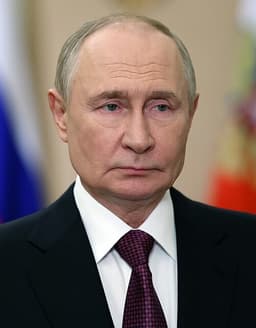
Alexander Bortnikov
General · Modern
48.9Total

Teodoro Obiang Nguema
General · Modern
51.1Total
Basic Information
Born
1951
1942
Died
—
—
Era
Modern
Modern
Nationality
Russia
Equatorial Guinea
Occupation
General
General
Civilization
Western
Other
Score Comparison
Military (10%)
25.0
67.2
Political (20%)
68.0
30.8
Influence (20%)
57.2
47.9
Legacy (20%)
44.2
46.7
Leadership (15%)
48.8
70.0
Strategy (15%)
35.7
56.6
TOTAL
48.9
51.1
Alexander Bortnikov — Complete Timeline
2008 AD
Appointed Director of the FSBPolitical Action◆ Major
Alexander Bortnikov was appointed Director of the Federal Security Service (FSB) of Russia by President Dmitry Medvedev. He succeeded Nikolai Patrushev, becoming the head of Russia's primary security and intelligence agency, responsible for counterintelligence, border security, and counterterrorism.
AppointmentSecurity ServiceRussia
Impact: national
2010 AD
Oversaw FSB response to the 2010 Moscow Metro bombingsPolitical Action◆ Major
Following the suicide bombings on the Moscow Metro by female attackers from the North Caucasus, Bortnikov directed the FSB's investigation and security response. The attacks killed 40 people and injured over 100, leading to increased security measures and counterterrorism operations in the region.
TerrorismMoscow MetroCounterterrorism
Impact: nationaltragic
2014 AD
FSB involvement in the annexation of CrimeaPolitical Action◆ Major
Under Bortnikov's leadership, the FSB played a key role in the Russian annexation of Crimea, including intelligence operations and support for local pro-Russian forces. The FSB's activities facilitated the rapid takeover of the peninsula, which was condemned by Ukraine and much of the international community.
CrimeaAnnexationIntelligence
Impact: globaldestructive
2020 AD
FSB response to the COVID-19 pandemicPolitical Action
Bortnikov directed the FSB's role in enforcing COVID-19 restrictions and monitoring compliance in Russia. The agency was involved in tracking infections, managing border closures, and investigating violations of quarantine measures, contributing to the government's pandemic response.
COVID-19PandemicSecurity
Impact: national
Teodoro Obiang Nguema — Complete Timeline
1979 AD
Seized Power in a Coup d'ÉtatPolitical Action
Teodoro Obiang Nguema Mbasogo led a coup that overthrew his uncle, President Francisco Mac
CoupPower Seizure
Impact: nationaldestructive
Executed Political RivalsPolitical Action◆ Major
Obiang ordered the execution of his uncle and several former officials, consolidating his power. The executions were part of a broader purge of political opponents and marked the start of his repressive regime.
ExecutionRepression
Impact: nationaldestructive
1996 AD
Re-elected in Controversial ElectionsPolitical Action◆ Major
Obiang won a presidential election with 97.8% of the vote, but the election was widely criticized as fraudulent by international observers. He has since been re-elected multiple times in similarly disputed polls.
Election FraudAuthoritarianism
Impact: nationaldestructive
2004 AD
Survived a Coup AttemptPolitical Action◆ Major
Obiang survived a coup attempt allegedly involving foreign mercenaries, including Mark Thatcher. The plot was foiled, and the perpetrators were tried and imprisoned, further entrenching Obiang's rule.
Coup AttemptSurvival
Impact: national
2022 AD
Became Longest-Serving Current Head of StatePolitical Action◆ Major
Obiang became the longest-serving current head of state in the world, surpassing Paul Biya of Cameroon. His tenure has been marked by authoritarianism, corruption, and human rights abuses.
LongevityAuthoritarianism
Impact: global
Expert Analysis
Origins
Alexander Bortnikov was born in 1951 in Perm, Russia. He graduated from the Leningrad Institute of Railway Transport Engineers in 1973, but soon joined the KGB, rising through its ranks. His early career was in counterintelligence and economic security. He became a protégé of Nikolai Patrushev, who later became FSB director.
Teodoro Obiang Nguema Mbasogo was born in 1942 in Acoacán, Equatorial Guinea. He attended military academies in Spain and returned to serve in the colonial Guardia Civil. After independence in 1968, he joined his uncle's regime. He rose to become governor of Bioko and later Minister of Defense.
Rise to Power
Bortnikov's rise was steady within the security apparatus. In 2003, he was appointed deputy director of the FSB. In 2008, President Dmitry Medvedev appointed him Director of the FSB, succeeding Patrushev. He retained the position through the transition to Vladimir Putin's third term, showing his political acumen.
Obiang seized power in a 1979 coup d'état, overthrowing his uncle, President Francisco Macías Nguema, who had led the country to ruin with brutal repression and economic collapse. Obiang ordered the execution of his uncle and several former officials, consolidating his grip. He has since been re-elected in elections with implausible margins, such as 97.8% in 2002.
Leadership & Governance
Bortnikov leads the FSB, Russia's main security agency, with a focus on counterintelligence, counterterrorism, and political surveillance. Under his command, the FSB expanded its domestic role, including monitoring dissent and enforcing Kremlin policies. His leadership style is bureaucratic and opaque, typical of intelligence chiefs. He scored 48.8 in leadership and 35.7 in strategy, reflecting his operational rather than strategic role.
Obiang governs Equatorial Guinea as a personal autocracy. He controls the military and security forces, and has suppressed all political opposition. His regime has enriched itself from oil revenues, while the population remains poor. He scored 70.0 in leadership, indicating his firm control, but only 30.8 in political, reflecting his lack of legitimacy. His strategy score of 56.6 shows some cunning in maintaining power.
Triumph & Tragedy
Bortnikov's triumphs include overseeing the FSB's response to the 2010 Moscow Metro bombings and his role in the annexation of Crimea in 2014, where the FSB provided intelligence and support. However, his tenure has seen failures, such as the 2017 Saint Petersburg Metro bombing and accusations of human rights abuses. His legacy score is 44.2, reflecting his mixed record.
Obiang's triumphs are personal: he has survived multiple coup attempts, including a 2004 plot involving Mark Thatcher, and has become the world's longest-serving current head of state. However, his country ranks among the most corrupt and repressive. His military score of 67.2 reflects his control over the army, but his influence score of 47.9 shows limited global impact.
Character & Destiny
Bortnikov is a career security officer, loyal to the Kremlin. He operates in the shadows, avoiding public attention. His character is shaped by secrecy and discipline. His destiny was to become a key figure in Russia's security state, but his impact is constrained by being an instrument of higher powers.
Obiang is a ruthless survivor. He has eliminated rivals and consolidated power through fear. His character is defined by paranoia and greed. His destiny was to rule a small, oil-rich state with an iron fist, but his legacy is one of stagnation and inequality.
Legacy
Bortnikov's legacy is tied to the FSB's role in Russia's authoritarian turn. He has strengthened domestic surveillance and international intelligence operations, but his name is not widely known. His influence score of 57.2 reflects his behind-the-scenes power.
Obiang's legacy is more visible: he has turned Equatorial Guinea into a family fiefdom, with his son as vice president. He has presided over oil wealth that has not reached the people. His legacy score of 46.7 is low due to his negative global reputation.
Conclusion
Teodoro Obiang Nguema, with a total score of 51.1, edges out Alexander Bortnikov's 48.9 by 2.2 points. While Bortnikov wields significant power within Russia's security apparatus, his influence is derivative of the presidency. Obiang, despite ruling a smaller country, has been the absolute ruler for over four decades, shaping his nation's destiny directly. His longevity and control give him a greater, though negative, impact. Thus, Obiang has had a more significant impact on the world stage, for better or worse.
Rankings
🥇
Teodoro Obiang NguemaLeader
Mil: 67.2Pol: 30.8Inf: 47.9
51.1
🥈
Alexander Bortnikov
Mil: 25.0Pol: 68.0Inf: 57.2
48.9
+2.2 behind
How This Comparison Works
Algorithm
Each figure is scored on 6 dimensions (0—100 scale) based on structured historical data: Military (10%), Political (20%), Influence (20%), Legacy (20%), Leadership (15%), Strategy (15%). The weighted total produces the final ranking.
Data Sources
Scores are computed from structured sub-indicators in the database. Scale factors adjust for era (Ancient ×0.85, Modern ×1.0) and civilization size (Eastern ×1.05, Other ×0.80) to account for differences in population and military scale.
Maximum 3 Figures
Comparisons are limited to 2—3 figures to ensure readability and statistical meaningfulness.
Error Margins
±5 points per dimension — Sub-scores are derived from historical records with inherent uncertainty. Two figures within 5 points on a dimension should be considered roughly equivalent in that area.
Total Score Accuracy
±3 points overall — The weighted combination of 6 dimensions produces a total score with approximately ±3 points of uncertainty. Differences of less than 3 points are not statistically significant— the figures are effectively tied.
Known Limitations
- Historical records are incomplete and uneven across civilizations
- Figures from oral-tradition societies may be underrepresented
- Occupation labels can misclassify multi-role figures
- Scores measure capability and impact, not moral character
- Quantitative scoring is a comparison tool, not absolute truth
Capability Radar
Military (10%) — Battles & Warfare
Battles
0
50
Win Rate
0
54
Expansion
5
60
Political (20%) — Governance & Reform
Reform
55
5
Diplomacy
50
30
Economy
30
10
Influence (20%) — Cultural & Global Reach
Cultural
20
5
Global
35
10
Legacy (20%) — Historical Impact
Historical
30
10
Longevity
25
70
Leadership (15%) — Power & Stability
Tenure
60
95
Stability
45
20
Strategy (15%) — Tactics & Innovation
Strategy
15
61
Tactics
10
67
Reform
20
65
Similar Comparisons
Comments & Discussion
No comments yet. Be the first to share your thoughts!