Loading...
Aleksandar Stamboliyski vs Julius Caesar
Julius Caesar leads by 33.0 pts · 2 figures compared
…
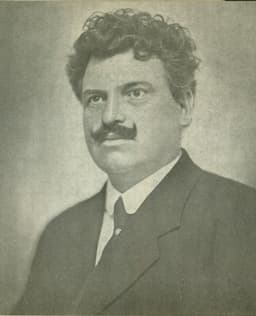
Aleksandar Stamboliyski
Politician · Modern
49.8Total

Julius Caesar
General · Ancient
82.8Total
Basic Information
Born
1879
-100
Died
1923
-44
Era
Modern
Ancient
Nationality
Bulgaria
Roman Republic
Occupation
Politician
General
Civilization
Western
Western
Score Comparison
Military (10%)
48.4
88.0
Political (20%)
68.0
78.0
Influence (20%)
51.8
85.0
Legacy (20%)
43.3
82.0
Leadership (15%)
45.0
80.0
Strategy (15%)
42.0
85.0
TOTAL
49.8
82.8
Aleksandar Stamboliyski — Complete Timeline
1920 AD
Land reform and redistributionReform◆ Major
As Prime Minister, Stamboliyski implemented a radical land reform, limiting private land ownership to 30 hectares and redistributing excess land to poor peasants. This policy aimed to break the power of large landowners and create a class of small farmers.
Land ReformPeasant PolicyAgrarian Reform
Impact: nationalconstructive
1923 AD
Suppression of the 1923 Communist uprisingWar◆ Major
Stamboliyski's government violently suppressed a communist-led uprising in Bulgaria, resulting in hundreds of deaths. This action deepened the rift between the Agrarian Union and the Bulgarian Communist Party.
UprisingCommunist SuppressionPolitical Violence
Impact: nationaldestructive
Assassination and mutilationPolitical Action◆ Major
Stamboliyski was captured by a right-wing coup led by the Military League and the Internal Macedonian Revolutionary Organization. He was tortured, had his hand cut off, and was shot dead. His body was then dismembered and left in a field.
AssassinationCoupPolitical Violence
Impact: nationaltragic
Julius Caesar — Complete Timeline
58 BC
Gallic WarsWar◆ Major
Caesar, as proconsul of Gaul, launched a series of campaigns that conquered all of Gaul (modern France, Belgium, and parts of Switzerland). He fought numerous battles, including against the Helvetii, the Belgae, and the Gallic chieftain Vercingetorix. The wars brought immense wealth and a loyal army to Caesar.
Gallic WarsConquestRoman Expansion
Impact: regional
49 BC
Crossing the RubiconPolitical Action◆ Major
Caesar led Legio XIII across the Rubicon River into Italy, defying the Roman Senate's order to disband his army. This act triggered a civil war against Pompey and the Optimates, ultimately leading to Caesar's dictatorship and the end of the Roman Republic.
Roman Civil WarEnd of RepublicPower Struggle
Impact: global
48 BC
Battle of PharsalusWar◆ Major
Caesar's outnumbered army defeated the larger forces of Pompey the Great at Pharsalus in Greece. Caesar's tactical use of a reserve line to counter Pompey's cavalry charge proved decisive. Pompey fled to Egypt, where he was assassinated, leaving Caesar as the undisputed master of the Roman world.
Roman Civil WarBattleDecisive Victory
Impact: regional
44 BC
Appointment as Dictator for LifePolitical Action◆ Major
The Roman Senate appointed Caesar dictator perpetuo (dictator for life), granting him unprecedented personal power. This move concentrated military, legislative, and judicial authority in one person, effectively ending the Roman Republic's traditional system of checks and balances and alarming many senators.
DictatorshipEnd of RepublicPower Consolidation
Impact: regionaldestructive
Assassination on the Ides of MarchPolitical Action◆ Major
A group of Roman senators, led by Marcus Junius Brutus and Gaius Cassius Longinus, stabbed Caesar to death at a meeting of the Senate in the Theatre of Pompey. The assassination was intended to restore the Republic, but instead triggered another civil war that led to the rise of the Roman Empire.
AssassinationRoman PoliticsEnd of Republic
Impact: globaldestructive
Expert Analysis
aleksandar-stamboliyski-vs-julius-caesar
# The Ides of March and the Bloody Harvest: Caesar and Stamboliyski
On a spring morning in 44 BCE, the most powerful man in the Roman world fell to twenty-three dagger blows in the Senate chamber. On a June evening in 1923, a Bulgarian peasant leader was hacked to pieces in his home village, his severed head sent to Sofia in a biscuit tin. Both men died violently, cut down by political enemies. But the worlds they built, and the worlds that killed them, could not have been more different. Julius Caesar and Aleksandar Stamboliyski both tried to remake their societies from the top down. One succeeded so thoroughly that his name became synonymous with imperial power. The other failed so completely that his name is barely remembered beyond the Balkans. Why?
Origins
Caesar was born into the patrician Julian clan, one of Rome’s oldest families, though not its richest. His world was a senatorial republic already creaking under the weight of empire—a system designed for a city-state, now ruling the Mediterranean. His education was in rhetoric, law, and military command, the traditional tools of Roman ambition. He learned early that in Rome, glory was won on battlefields and spent in forums.
Stamboliyski was born in 1879 in the village of Slavovitsa, the son of a peasant. Bulgaria had only just been liberated from Ottoman rule, and his world was one of subsistence farming, village councils, and deep resentment toward urban elites who treated peasants as backward. He did not study Cicero; he studied agronomy. He did not command legions; he organized village cooperatives. His education was in the raw economics of land and labor, and he learned that in Bulgaria, power belonged to the city.
The difference in their origins is not just one of class, but of what their societies valued. Rome prized military conquest and oratory. Bulgaria, newly independent and overwhelmingly rural, prized land and community solidarity. Caesar entered a world where the highest ambition was to be first among equals. Stamboliyski entered a world where the highest ambition was to give voice to the voiceless.
Rise to Power
Caesar’s path was the cursus honorum—the ladder of Roman offices. He served as military tribune, quaestor, aedile, praetor, and consul, each step funded by borrowed money and cemented by alliances. His great breakthrough came in 58 BCE when he secured command of Gaul. Over eight years, he conquered a territory larger than Italy, built a loyal army, and amassed enough wealth to buy the Republic. When the Senate ordered him to disband his legions, he crossed the Rubicon River in 49 BCE, a decision that meant civil war. He won.
Stamboliyski’s path was the peasant movement. He founded the Bulgarian Agrarian National Union in 1899 and spent two decades organizing farmers, publishing newspapers, and fighting elections. He was imprisoned for his activism. He was beaten by police. He never commanded an army. His breakthrough came not through conquest but through crisis: after World War I, Bulgaria was defeated, bankrupt, and humiliated. In the chaos, Stamboliyski’s Agrarian Union won a parliamentary majority, and in 1920 he became Prime Minister.
Caesar rose by breaking the rules of his system. Stamboliyski rose by working within the rules of his—until those rules were broken by others.
Leadership & Governance
Caesar governed as a military autocrat who understood that power required both force and spectacle. He reformed the calendar, granted citizenship to provincials, launched public works, and packed the Senate with his supporters. But he never solved the fundamental problem of the Republic: how to concentrate power without destroying the institutions that legitimized it. His solution was to become dictator for life, a title that made enemies of every senator who still believed in the old ways.
Stamboliyski governed as a radical reformer who believed that land was the foundation of justice. In 1920, his government limited private land ownership to 30 hectares and redistributed the surplus to poor peasants. He introduced compulsory labor service for public works. He tried to break the power of the urban middle class and the military. He pursued peace with Yugoslavia and the League of Nations, rejecting the irredentist nationalism that had led Bulgaria to disaster. His reforms were genuine and deep, but they made him enemies: the army, the Macedonian revolutionaries, the urban elite, and even the communists, whom he suppressed violently in 1923.
Caesar’s governance was about expansion and consolidation. Stamboliyski’s was about redistribution and peace. One built an empire; the other tried to build a just society. Both discovered that creating enemies is easier than creating institutions.
Triumph & Tragedy
Caesar’s greatest triumph was Gaul—the conquest of a million people, the writing of his own legend in the *Commentaries*, the forging of an army that would carry him to supreme power. His greatest tragedy was the Ides of March: he had pardoned his enemies, trusted his friends, and believed that clemency would win loyalty. Instead, it bred contempt. He died at the feet of a statue of his rival Pompey, betrayed by men he had spared.
Stamboliyski’s greatest triumph was the land reform—a genuine revolution in a country where land was life. For a few years, Bulgarian peasants had more hope than they had ever known. His greatest tragedy was his death. In June 1923, a right-wing coup by the Military League and the Internal Macedonian Revolutionary Organization captured him in his home village. He was tortured, his hands cut off, his body mutilated, and his head delivered to Sofia. The coup destroyed his movement and set Bulgaria on a path toward fascism and war.
Caesar’s tragedy was that his success made him a target. Stamboliyski’s tragedy was that his reforms made him a threat.
Character & Destiny
Caesar was audacious, calculating, and supremely confident. He gambled everything on the crossing of the Rubicon because he believed his own luck. He was a master of propaganda, of timing, of the grand gesture. His character drove him to seize power when others hesitated. But his confidence blinded him to the hatred he inspired. He believed his enemies would accept his generosity. They did not.
Stamboliyski was stubborn, idealistic, and sometimes naive. He believed that if he gave peasants land and dignity, they would defend him. He believed that if he spoke the truth about war and nationalism, his enemies would listen. He did not prepare for the violence that would come. He did not build an army loyal to him personally. He trusted the system, even as the system prepared to kill him.
Caesar’s character made him a conqueror. Stamboliyski’s character made him a martyr. One died because he was too powerful. The other died because he was not powerful enough.
Legacy
Caesar’s legacy is the Roman Empire. His adopted heir Octavian became Augustus, the first emperor. His name became a title: Kaiser, Tsar. His reforms outlasted the Republic. He is remembered as a genius of war and politics, a man who changed the course of history.
Stamboliyski’s legacy is more fragile. His land reforms were reversed by the coup. His Agrarian Union was suppressed. He is remembered in Bulgaria as a tragic figure, a peasant leader who tried to build a different kind of politics and was destroyed for it. But his ideas did not die entirely. Land reform, cooperative movements, and the belief that rural people deserve a voice—these survived in other times and places.
Conclusion
Caesar and Stamboliyski died in the same way—by violence, at the hands of men who feared what they represented. But they lived in different worlds, and their deaths mean different things. Caesar’s assassination was the end of one era and the beginning of another. Stamboliyski’s murder was the crushing of a hope that never fully returned.
Perhaps the deepest difference is this: Caesar sought to become history itself, to etch his name into the stone of Rome. Stamboliyski sought to change history quietly, by giving land to the landless. One man’s ambition was immortal; the other’s was mortal. That is why we remember the conqueror and forget the reformer—and that, perhaps, is the most tragic thing of all.
Rankings
🥇
Julius CaesarLeader
Mil: 88.0Pol: 78.0Inf: 85.0
82.8
🥈
Aleksandar Stamboliyski
Mil: 48.4Pol: 68.0Inf: 51.8
49.8
+33.0 behind
How This Comparison Works
Algorithm
Each figure is scored on 6 dimensions (0—100 scale) based on structured historical data: Military (10%), Political (20%), Influence (20%), Legacy (20%), Leadership (15%), Strategy (15%). The weighted total produces the final ranking.
Data Sources
Scores are computed from structured sub-indicators in the database. Scale factors adjust for era (Ancient ×0.85, Modern ×1.0) and civilization size (Eastern ×1.05, Other ×0.80) to account for differences in population and military scale.
Maximum 3 Figures
Comparisons are limited to 2—3 figures to ensure readability and statistical meaningfulness.
Error Margins
±5 points per dimension — Sub-scores are derived from historical records with inherent uncertainty. Two figures within 5 points on a dimension should be considered roughly equivalent in that area.
Total Score Accuracy
±3 points overall — The weighted combination of 6 dimensions produces a total score with approximately ±3 points of uncertainty. Differences of less than 3 points are not statistically significant— the figures are effectively tied.
Known Limitations
- Historical records are incomplete and uneven across civilizations
- Figures from oral-tradition societies may be underrepresented
- Occupation labels can misclassify multi-role figures
- Scores measure capability and impact, not moral character
- Quantitative scoring is a comparison tool, not absolute truth
Capability Radar
Military (10%) — Battles & Warfare
Battles
28
95
Win Rate
33
92
Expansion
37
97
Political (20%) — Governance & Reform
Reform
60
90
Diplomacy
40
85
Economy
50
82
Influence (20%) — Cultural & Global Reach
Cultural
30
88
Global
20
94
Legacy (20%) — Historical Impact
Historical
40
95
Longevity
20
96
Leadership (15%) — Power & Stability
Tenure
20
75
Stability
15
60
Strategy (15%) — Tactics & Innovation
Strategy
37
94
Tactics
42
96
Reform
43
88
Similar Comparisons
Comments & Discussion
HISTORYSLAYER6/17/2026
Caesar is just a rich boy with a god complex who got exactly what he deserved. Stamboliyski was a genuine people’s hero who actually tried to break the system, not just bend it to his will. Caesar’s “I came, I saw, I conquered” is an arrogant motto; Stamboliyski died fighting for land reform. One built an empire, the other built schools for peasants. I know who I’d rather drink with.
古罗马杠精6/17/2026
别拿农民领袖跟贵族独裁者比了。凯撒是被元老院暗算的,他的死是顶级权力游戏,而斯坦博利斯基是被自己人剁成肉酱的,连个像样的葬礼都没有。凯撒死后有奥古斯都接班,他死后保加利亚直接变成法西斯国家。一个死得庄严,一个死得窝囊,根本不是一个量级。
DATAWHISPERER6/17/2026
Let’s look at the numbers: Caesar’s reforms lasted centuries, Stamboliyski’s barely made it to 1924. Caesar conquered Gaul with 50,000 men; Stamboliyski couldn’t hold a single coalition government together. Even their death tolls are lopsided—Caesar was stabbed 23 times, which is almost theatrical. Stamboliyski was shot, bayoneted, and decapitated. The sheer inefficiency of his political execution tells you everything about his lack of institutional power.
农民哲学家6/17/2026
斯坦博利斯基才是真正的英雄。他敢对中产阶级加税,敢推动义务教育,敢和农民称兄道弟。凯撒只是个给罗马贵族开疆拓土的军阀。一个死在元老院台阶上,一个死在自家的豌豆田里,谁更贴近土地,一眼就看得出来。历史书把凯撒写成了神,把斯坦博利斯基写成了笑话,但笑话往往比神更真实。