Loading...
Albrecht von Wallenstein vs Qin Shi Huang
Qin Shi Huang leads by 11.7 pts · 2 figures compared
…

Albrecht von Wallenstein
General · Modern
73.5Total
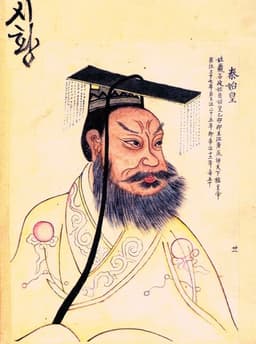
Qin Shi Huang
Emperor · Ancient
85.2Total
Basic Information
Born
1583
-259
Died
1634
-210
Era
Modern
Ancient
Nationality
Bohemia
China
Occupation
General
Emperor
Civilization
Western
Eastern
Score Comparison
Military (10%)
72.0
80.0
Political (20%)
62.7
90.0
Influence (20%)
82.0
85.0
Legacy (20%)
68.0
90.0
Leadership (15%)
79.8
78.0
Strategy (15%)
74.4
82.0
TOTAL
73.5
85.2
Albrecht von Wallenstein — Complete Timeline
1620 AD
Battle of White MountainWar◆ Major
Wallenstein fought as a mercenary commander for the Catholic League at the Battle of White Mountain near Prague. The battle was a decisive victory for the Habsburgs, crushing the Bohemian Revolt and beginning the Thirty Years' War.
Thirty Years' WarBohemian RevoltHabsburg
Impact: regional
1625 AD
Appointment as Imperial GeneralissimoPolitical Action◆ Major
Holy Roman Emperor Ferdinand II appointed Wallenstein as commander-in-chief of the imperial army. Wallenstein raised and financed a massive army of 50,000 men, becoming one of the most powerful figures in the empire.
Thirty Years' WarImperial ArmyMilitary Command
Impact: regional
1626 AD
Battle of Dessau BridgeWar◆ Major
Wallenstein defeated the Protestant forces of Ernst von Mansfeld at the Dessau Bridge. The victory secured imperial control over northern Germany and eliminated a major Protestant threat.
Thirty Years' WarProtestant UnionImperial Victory
Impact: regional
1628 AD
Siege of StralsundWar◆ Major
Wallenstein besieged the Baltic port of Stralsund, but failed to capture it. The city was aided by Danish and Swedish forces. The failure marked the first major setback for Wallenstein and prevented imperial control of the Baltic.
Thirty Years' WarBalticSiege
Impact: regional
1630 AD
Dismissal by Ferdinand IIPolitical Action◆ Major
Under pressure from the Catholic League, Emperor Ferdinand II dismissed Wallenstein from command. The League feared Wallenstein's power and ambition. Wallenstein retired to his estates in Bohemia.
Thirty Years' WarImperial PoliticsDismissal
Impact: regional
1634 AD
Assassination of WallensteinPolitical Action
Wallenstein was assassinated in Eger by imperial officers loyal to Ferdinand II. He had been plotting with Protestant powers and was declared a traitor. His death removed a major figure from the Thirty Years' War.
AssassinationThirty Years' WarTreason
Impact: regionaltragic
Qin Shi Huang — Complete Timeline
246 BC
Construction of the Mausoleum and Terracotta ArmyOther◆ Major
Qin Shi Huang commissioned a vast mausoleum complex near Xi'an, guarded by thousands of life-sized terracotta soldiers, horses, and chariots. The project employed hundreds of thousands of workers and reflected his obsession with immortality and imperial power.
Impact: global
230 BC
Conquest of the Six Warring StatesWar
From 230 to 221 BCE, Ying Zheng led the Qin state in a series of campaigns that conquered the Han, Zhao, Wei, Chu, Yan, and Qi states. This unified China under a single ruler for the first time, ending the Warring States period.
Impact: global
221 BC
Standardization of Writing, Currency, and MeasurementsReform◆ Major
Qin Shi Huang ordered the standardization of Chinese script, currency, and weights and measures across the unified empire. This facilitated administration, trade, and cultural integration, laying a foundation for future dynasties.
Impact: globalconstructive
Proclamation of the Qin DynastyPolitical Action
After conquering the last independent state, Ying Zheng declared himself Shi Huangdi (First Emperor), founding the Qin Dynasty. He adopted a new title to signify his supreme authority and initiated centralized imperial rule.
Impact: global
214 BC
Initiation of the Great Wall ConstructionOther◆ Major
Qin Shi Huang ordered the connection and extension of existing northern fortifications to create a unified defensive wall against nomadic Xiongnu raids. This project involved massive conscripted labor and became the precursor to the later Great Wall.
Impact: regional
213 BC
Burning of Books and Burying of ScholarsPolitical Action◆ Major
On the advice of Li Si, Qin Shi Huang ordered the burning of historical records and philosophical texts not aligned with Legalist doctrine. He also had 460 Confucian scholars buried alive to suppress dissent and consolidate ideological control.
Impact: nationaldestructive
Expert Analysis
albrecht-von-wallenstein-vs-qin-shi-huang
# The First Emperor and the Last Condottiero
On a winter morning in 210 BC, deep within a vast underground palace near the modern city of Xi'an, the body of Qin Shi Huang lay encased in bronze atop a map of the empire he had conquered, with rivers of mercury flowing beneath him. Two thousand years later, on a cold February night in 1634, Albrecht von Wallenstein lay dying in a townhouse in Eger, his chest pierced by a partisan wielded by a captain he had once trusted. Both men built armies that reshaped continents. Both died in isolation, surrounded by fear rather than love. Yet one founded a dynasty that gave its name to a civilization; the other left behind a legend of ambition that consumed itself. What divided them was not merely time or geography, but the very nature of power itself.
Origins
Ying Zheng was born into a world of warring chaos. The China of 259 BC was a patchwork of seven rival states locked in endless conflict. His father was a prince of Qin, a semi-barbarian kingdom in the west that had long been dismissed by the more cultured eastern states. The boy grew up in a court rife with intrigue, his mother involved in scandal, his regents plotting against him. He learned early that trust was a weakness.
Wallenstein came from a different kind of chaos. Born in 1583 into the Bohemian lesser nobility, he was orphaned young and raised by Lutheran relatives before converting to Catholicism. The Holy Roman Empire of his youth was not a single state but a labyrinth of hundreds of principalities, bishoprics, and free cities, all nominally under the Habsburg emperor but each jealously guarding its privileges. Wallenstein learned to navigate this world by accumulating wealth—first through a fortunate marriage, then through shrewd land purchases from bankrupt nobles. He became the richest man in Bohemia, a baron who thought like a banker.
Rise to Power
Qin Shi Huang’s path was forged in steel. At thirteen he inherited the throne of Qin, but it took him eight years to consolidate power, executing his mother’s lover and exiling his own regent. Then, between 230 and 221 BC, he unleashed his armies in a relentless campaign that annihilated six rival kingdoms. He did not negotiate; he conquered. When the last king surrendered, Ying Zheng did not simply take a new title—he invented one: *Shi Huangdi*, the First Emperor, a name that implied there would be a Second, and a Third, and a line stretching into eternity.
Wallenstein rose by a different calculus. He fought at the Battle of White Mountain in 1620 as a mercenary commander, but his real genius was organizational. In 1625, Emperor Ferdinand II appointed him Imperial Generalissimo, but Wallenstein did not inherit an army—he created one. He raised troops on credit, using his own fortune as collateral, and paid them by allowing them to plunder the territories they passed through. His army was a private enterprise, a vast corporation of violence that answered to him because he fed it. The emperor needed Wallenstein because only Wallenstein could finance a war that was bankrupting the empire.
Leadership & Governance
Qin Shi Huang governed through absolute uniformity. He standardized the written script so that a man from the former state of Chu could read a document drafted in the former state of Zhao. He fixed the axle width of carts so they would fit the same ruts on the imperial roads. He unified currency, weights, and measures. His reign was a project of erasure—he wanted to destroy the memory of the old kingdoms and replace it with a single Qin identity. When philosophers objected, he ordered their books burned and, according to tradition, buried 460 scholars alive. The First Emperor did not seek consent; he demanded obedience.
Wallenstein governed through calculation. He understood that in the Thirty Years' War, loyalty was a commodity. He built a network of officers bound to him by personal obligation and material reward, not imperial decree. His military genius lay in logistics—he could move armies across Germany faster than his enemies because he had created a system of supply depots and credit networks. But his political wisdom was limited. He negotiated with Protestant powers behind the emperor’s back, not because he was a traitor, but because he believed war was a business to be settled by contract. The emperor saw it differently.
Triumph & Tragedy
Qin Shi Huang’s greatest triumph was the creation of China itself. The standardization he imposed outlasted his dynasty by two thousand years. The Great Wall he initiated, though built largely by later dynasties, became the symbol of a unified civilization. His tomb, guarded by the Terracotta Army, remains one of the most astonishing archaeological discoveries in human history.
But his tragedy was that he trusted no one. He became obsessed with immortality, sending expeditions to find the elixir of life, consuming mercury pills that likely hastened his death. When he died in 210 BC during an imperial tour, his chief eunuch and his prime minister conspired to hide the death for weeks, allowing the emperor’s body to rot in its carriage while they installed a puppet ruler. Within three years, the Qin Dynasty had collapsed in rebellion.
Wallenstein’s greatest moment was the Battle of Dessau Bridge in 1626, where he crushed the Protestant general Ernst von Mansfeld and secured imperial control over northern Germany. His tragedy was that success made him indispensable and therefore dangerous. The Catholic League princes feared his power; the emperor feared his ambition. In 1630, Ferdinand II dismissed him, only to recall him two years later when Sweden’s king Gustavus Adolphus threatened to destroy the empire. Wallenstein returned, but he no longer trusted his master. He began negotiating with the enemy, offering to betray the emperor in exchange for a kingdom of his own. The emperor’s officers killed him before he could complete the deal.
Character & Destiny
Qin Shi Huang was driven by a vision of cosmic order. He believed that he was not merely a king but a divine figure, the bridge between heaven and earth. This belief gave him the ruthlessness to destroy centuries of tradition, but it also blinded him to the human cost. He could not imagine that his subjects might hate him, because in his mind, he was saving them from chaos.
Wallenstein was driven by a vision of personal advancement. He was a modern man in an age of faith—he believed in contracts, credit, and calculation. He treated war as a business and loyalty as a transaction. But the Thirty Years' War was not a business; it was a religious catastrophe that had consumed Germany. The other princes saw him as an upstart, the emperor saw him as a threat, and his own officers saw him as a man who would sell them if the price was right. His assassination was not a tragedy; it was the logical conclusion of a life built on leverage.
Legacy
Qin Shi Huang’s legacy is China. The administrative system he created—provinces governed by appointed officials rather than hereditary nobles—became the model for every subsequent dynasty. The name "China" itself may derive from "Qin." He is remembered as both a unifier and a tyrant, a figure of awe and horror. His tomb remains unexcavated, a symbol of his ambition to control even the afterlife.
Wallenstein’s legacy is more ambiguous. He is remembered as the greatest military entrepreneur of the Thirty Years' War, a man who raised armies from nothing and made emperors tremble. But his name is also synonymous with overreach, with the danger of a subordinate who becomes too powerful. In German literature, he is a tragic figure—Schiller wrote a trilogy about him—a man destroyed by his own ambition in an age that had no room for individual will.
Conclusion
Standing before the Terracotta Army, one feels the weight of absolute power—the ability to command thousands of soldiers to build a palace for the dead. Standing in the town square of Eger, one feels the weight of a different kind of power—the power of money and influence, which can buy loyalty but never trust. Qin Shi Huang and Wallenstein both died alone, surrounded by men who feared them. But the First Emperor built a world that outlasted him, while the Bohemian general built only a fortune that was seized the day after his death. The difference was not in their ambition, but in what they chose to conquer. Qin Shi Huang conquered minds; Wallenstein conquered only men.
Rankings
🥇
Qin Shi HuangLeader
Mil: 80.0Pol: 90.0Inf: 85.0
85.2
🥈
Albrecht von Wallenstein
Mil: 72.0Pol: 62.7Inf: 82.0
73.5
+11.7 behind
How This Comparison Works
Algorithm
Each figure is scored on 6 dimensions (0—100 scale) based on structured historical data: Military (10%), Political (20%), Influence (20%), Legacy (20%), Leadership (15%), Strategy (15%). The weighted total produces the final ranking.
Data Sources
Scores are computed from structured sub-indicators in the database. Scale factors adjust for era (Ancient ×0.85, Modern ×1.0) and civilization size (Eastern ×1.05, Other ×0.80) to account for differences in population and military scale.
Maximum 3 Figures
Comparisons are limited to 2—3 figures to ensure readability and statistical meaningfulness.
Error Margins
±5 points per dimension — Sub-scores are derived from historical records with inherent uncertainty. Two figures within 5 points on a dimension should be considered roughly equivalent in that area.
Total Score Accuracy
±3 points overall — The weighted combination of 6 dimensions produces a total score with approximately ±3 points of uncertainty. Differences of less than 3 points are not statistically significant— the figures are effectively tied.
Known Limitations
- Historical records are incomplete and uneven across civilizations
- Figures from oral-tradition societies may be underrepresented
- Occupation labels can misclassify multi-role figures
- Scores measure capability and impact, not moral character
- Quantitative scoring is a comparison tool, not absolute truth
Capability Radar
Military (10%) — Battles & Warfare
Battles
85
85
Win Rate
80
90
Expansion
75
90
Political (20%) — Governance & Reform
Reform
75
95
Diplomacy
65
75
Economy
80
90
Influence (20%) — Cultural & Global Reach
Cultural
65
95
Global
65
85
Legacy (20%) — Historical Impact
Historical
80
95
Longevity
70
95
Leadership (15%) — Power & Stability
Tenure
70
70
Stability
60
65
Strategy (15%) — Tactics & Innovation
Strategy
90
85
Tactics
88
80
Reform
85
95
Similar Comparisons
Comments & Discussion
Qin's Iron Oracle6/17/2026
Calling this a comparison between equals misses the point entirely. Qin Shi Huang didn't just *lead* armies; he *created* a system that could produce them endlessly—standardized weapons, roads, grain levies across provinces. Wallenstein raised mercenaries with loans and charisma, which is impressive freelancing but ultimately fragile. The First Emperor built a machine that outlasted him; Wallenstein built a contract that expired when he did. That's the difference between an architect of civiliza
The Mercury Stream Analyst6/17/2026
比烂大赛冠军是秦始皇,原因很简单:他的体系活了两千年,而华伦斯坦的死活只影响了他自己那个季度。你要比暴政?前者焚书坑儒是系统性清洗,后者屠杀只是顺手签个雇佣合同的附带条款。但更关键的是,材料里说秦始皇用汞做河流装饰,那人可是妄想永生。华伦斯坦呢?他最后连自己卧室都没守住。一个建造了帝国的骨架,另一个只是替神圣罗马帝国打工的拆迁队。别拿花盆对比挖掘机。
Condottiero's Ghost6/17/2026
Romanticizing Wallenstein as some doomed tragic hero ignores his actual track record. Yes, he was brilliant at logistics and keeping an army fed in hostile territory. But he was also terrible at politics—openly boasting about deposing the emperor, alienating his own officers, and trusting men who had every reason to betray him. Qin Shi Huang was ruthless, but he knew exactly who his enemies were and acted accordingly. Wallenstein practically wrote the manual on how to lose power through arroganc
春秋笔法批判6/17/2026
说华伦斯坦是“最后的雇佣兵队长”是在美化他的幼稚。秦始皇知道权力需要恐惧、秩序和制度——他统一文字、货币、度量衡,这是文明的骨架。华伦斯坦呢?他的“帝国”是临时拼凑的部队和借贷信誉,连忠诚都要按月付款。更讽刺的是,他死于自己招募的一个下级军官之手,而秦始皇的死亡是个国家机密,修建了整座陵墓来掩盖。一个人死的像个商人破产,另一个死的像个神祇隐退。这不是对比,这是讽刺。
Legionnaire's Log6/17/2026
Here's what gets lost in the dramatic narratives: Wallenstein's armies were personally loyal to him, not the Emperor. That's extraordinary for a 17th-century general, but it also made him a walking crisis. Qin Shi Huang's generals served the *state* first. When the First Emperor died, the system didn't collapse overnight—it took years of rebellion. When Wallenstein died, his army disbanded within weeks. That's not about charisma; it's about whether you built military institutions or just a reall