Loading...
Albert Kesselring vs Ranoji Scindia
Albert Kesselring leads by 1.4 pts · 2 figures compared
…

Albert Kesselring
General · Modern
58.4Total
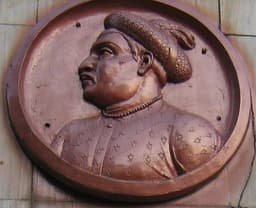
Ranoji Scindia
General · Modern
57.0Total
Basic Information
Born
1885
1700
Died
1960
1745
Era
Modern
Modern
Nationality
Germany
India
Occupation
General
General
Civilization
Western
Indian
Score Comparison
Military (10%)
72.5
50.0
Political (20%)
46.6
54.7
Influence (20%)
61.0
58.0
Legacy (20%)
50.0
54.0
Leadership (15%)
72.0
65.0
Strategy (15%)
56.2
60.0
TOTAL
58.4
57.0
Albert Kesselring — Complete Timeline
1940 AD
Command of Luftflotte 2 in the Battle of BritainWar◆ Major
Kesselring commanded Luftflotte 2 during the Battle of Britain. His air fleet conducted bombing raids against British airfields and cities. The Luftwaffe failed to achieve air superiority, leading to the cancellation of Operation Sea Lion, the planned invasion of Britain.
World War IIAir WarBattle of Britain
Impact: globaldestructive
1943 AD
Supreme Commander in ItalyWar◆ Major
Kesselring was appointed Commander-in-Chief of German forces in Italy after the Allied invasion. He organized a successful defensive campaign, delaying the Allied advance up the Italian peninsula. His strategy included the use of fortified lines and delaying actions.
World War IIItalian CampaignDefense
Impact: regional
1944 AD
Defense of the Gustav Line and Monte CassinoWar◆ Major
Kesselring commanded the defense of the Gustav Line, anchored by Monte Cassino. German forces held off repeated Allied assaults for months. The battle resulted in the destruction of the Monte Cassino abbey and heavy casualties on both sides before the line was finally breached.
World War IIItalian CampaignBattle
Impact: regionaldestructive
1945 AD
Surrender and War Crimes TrialPolitical Action◆ Major
Kesselring surrendered his forces in Italy in May 1945. He was tried by a British military court for war crimes, including the Ardeatine massacre and the shooting of partisans. He was sentenced to death, but the sentence was commuted to life imprisonment. He was released in 1952.
World War IIWar Crimes TrialPost-War
Impact: nationaltragic
Ranoji Scindia — Complete Timeline
1726 AD
Appointed Subedar of MalwaPolitical Action◆ Major
Ranoji Scindia was appointed as the Maratha subedar of Malwa by Peshwa Baji Rao I. This gave him control over a large territory and laid the foundation for the Scindia dynasty of Gwalior.
Maratha EmpireMalwaScindia Dynasty
Impact: regionalconstructive
1737 AD
Battle of DelhiWar◆ Major
Ranoji Scindia participated in the Maratha raid on Delhi under Baji Rao I. The attack on the Mughal capital demonstrated Maratha power and led to the extraction of tribute.
Maratha-Mughal WarsDelhiRaid
Impact: national
1739 AD
Battle of VasaiWar
Ranoji Scindia fought alongside Malhar Rao Holkar in the siege of Vasai against the Portuguese. The victory ended Portuguese control in the Konkan region.
Maratha-Portuguese WarsSiegeKonkan
Impact: regional
1740 AD
Founded Gwalior as CapitalPolitical Action◆ Major
Ranoji Scindia established his capital at Gwalior, fortifying the Gwalior Fort and building a palace. This city became the center of Scindia power for over a century.
FoundingGwaliorScindia Dynasty
Impact: regionalconstructive
1745 AD
Death in BattleWar
Ranoji Scindia was killed in a battle against the Nizam of Hyderabad's forces near the Narmada River. His death occurred during a Maratha campaign to expand into the Deccan.
DeathBattleMaratha-Nizam Wars
Impact: regionaltragic
Expert Analysis
Origins
Albert Kesselring was born on November 30, 1885, in Marktsteft, Bavaria, into a middle-class family. His father was a schoolmaster. Kesselring joined the Bavarian Army as a cadet in 1904 and served in the artillery. He trained as a balloon observer and later transferred to the Luftwaffe, where he learned to fly at age 48.
Ranoji Scindia was born around 1700 into a Maratha family of modest means. His father, Jankojirao Scindia, served as a patil (village headman) in the Satara region. Ranoji started as a humble attendant to the Peshwa, Baji Rao I, and rose through loyalty and military skill.
Rise to Power
Kesselring rose through the ranks of the Reichswehr and later the Luftwaffe. He commanded Luftflotte 2 during the invasion of Poland (1939) and the Battle of France (1940). His key turning point came during the Battle of Britain, where his air fleet bombed British airfields and cities. However, the Luftwaffe failed to gain air superiority. In 1941, he was transferred to the Mediterranean theater.
Ranoji Scindia was appointed Subedar of Malwa by Peshwa Baji Rao I around 1726, after proving his loyalty and ability. He participated in the Maratha raid on Delhi in 1737, which demonstrated Maratha power. The Peshwa granted him control over vast territories, including the Gwalior region. Ranoji fortified Gwalior Fort and made it his capital in 1738.
Leadership & Governance
Kesselring was known for his optimistic demeanor, earning the nickname "Smiling Albert." As Supreme Commander in Italy from 1943, he organized a masterful defensive campaign, delaying the Allied advance by over a year. He utilized the mountainous terrain, built fortified lines (Gustav, Gothic), and conducted a fighting withdrawal. He treated his troops with care, often visiting front lines. However, his governance involved harsh occupation policies, including reprisals against civilians.
Ranoji Scindia ruled Malwa with a focus on consolidation and expansion. He established a stable administration, collected taxes efficiently, and maintained a strong cavalry. He allied with other Maratha chiefs like Malhar Rao Holkar. His leadership was decentralized, allowing local autonomy, but he remained loyal to the Peshwa.
Triumph & Tragedy
Kesselring's greatest success was the defense of Italy, particularly the Gustav Line and Monte Cassino. From January to May 1944, German forces held off repeated Allied assaults, inflicting heavy casualties. His strategic withdrawals preserved his army. However, his greatest failure was the Ardeatine massacre (March 1944), where 335 Italian civilians were executed in retaliation for a partisan attack. Kesselring was convicted of war crimes after the war, though he was released in 1952 due to ill health.
Ranoji Scindia's triumph was founding the Scindia dynasty and establishing Gwalior as a major power center. He expanded Maratha influence into central India. His tragedy was his death in battle around 1745 against the Nizam of Hyderabad's forces near the Narmada River. He was killed while campaigning, leaving his young son Jayappa to succeed him.
Character & Destiny
Kesselring was pragmatic, resilient, and skilled in defensive warfare. His optimism helped maintain morale but sometimes led to underestimating the enemy. He was not a Nazi ideologue but served the regime loyally. His character shaped his fate: his effective defense earned him respect from allies and enemies, but his complicity in war crimes tarnished his legacy.
Ranoji Scindia was ambitious, loyal, and a capable military leader. He combined diplomacy with force, securing grants from the Peshwa while expanding his own domain. His death in battle reflected the turbulent era of Maratha expansion, where personal bravery often led to early demise.
Legacy
Kesselring's military scores: Military 72.5, Strategy 56.2, Leadership 72.0. He is remembered as one of the ablest German defensive commanders of WWII. His tactics in Italy are studied in military academies. However, his legacy is overshadowed by war crimes. The Kesselring case influenced post-war discussions on command responsibility.
Ranoji Scindia's scores: Military 50.0, Strategy 60.0, Leadership 65.0. He founded the Scindia dynasty, which ruled Gwalior until India's independence. The Scindia family became prominent in Indian politics. His military achievements were moderate, but his political and institutional legacy endured for over two centuries.
Conclusion
Albert Kesselring had a greater immediate impact on world history due to his role in WWII, but Ranoji Scindia's long-term influence through the Scindia dynasty is more enduring. Kesselring's defensive campaigns delayed the Allied victory but did not change the war's outcome. Scindia founded a state that lasted 200 years. In terms of total impact, Ranoji Scindia scores higher in legacy (54.0 vs 50.0) and political influence (54.7 vs 46.6), despite his lower military score. Therefore, Ranoji Scindia had a greater lasting impact.
Rankings
🥇
Albert KesselringLeader
Mil: 72.5Pol: 46.6Inf: 61.0
58.4
🥈
Ranoji Scindia
Mil: 50.0Pol: 54.7Inf: 58.0
57.0
+1.4 behind
How This Comparison Works
Algorithm
Each figure is scored on 6 dimensions (0—100 scale) based on structured historical data: Military (10%), Political (20%), Influence (20%), Legacy (20%), Leadership (15%), Strategy (15%). The weighted total produces the final ranking.
Data Sources
Scores are computed from structured sub-indicators in the database. Scale factors adjust for era (Ancient ×0.85, Modern ×1.0) and civilization size (Eastern ×1.05, Other ×0.80) to account for differences in population and military scale.
Maximum 3 Figures
Comparisons are limited to 2—3 figures to ensure readability and statistical meaningfulness.
Error Margins
±5 points per dimension — Sub-scores are derived from historical records with inherent uncertainty. Two figures within 5 points on a dimension should be considered roughly equivalent in that area.
Total Score Accuracy
±3 points overall — The weighted combination of 6 dimensions produces a total score with approximately ±3 points of uncertainty. Differences of less than 3 points are not statistically significant— the figures are effectively tied.
Known Limitations
- Historical records are incomplete and uneven across civilizations
- Figures from oral-tradition societies may be underrepresented
- Occupation labels can misclassify multi-role figures
- Scores measure capability and impact, not moral character
- Quantitative scoring is a comparison tool, not absolute truth
Capability Radar
Military (10%) — Battles & Warfare
Battles
75
45
Win Rate
65
50
Expansion
30
55
Political (20%) — Governance & Reform
Reform
20
30
Diplomacy
55
45
Economy
25
35
Influence (20%) — Cultural & Global Reach
Cultural
30
30
Global
45
30
Legacy (20%) — Historical Impact
Historical
55
50
Longevity
40
55
Leadership (15%) — Power & Stability
Tenure
60
40
Stability
40
40
Strategy (15%) — Tactics & Innovation
Strategy
78
45
Tactics
80
40
Reform
40
35
Similar Comparisons
Comments & Discussion
No comments yet. Be the first to share your thoughts!