Loading...
Albert III of Austria vs Timur
Timur leads by 12.2 pts · 2 figures compared
…
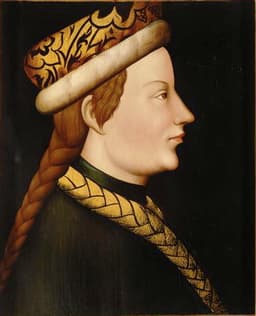
Albert III of Austria
Emperor · Medieval
53.4Total
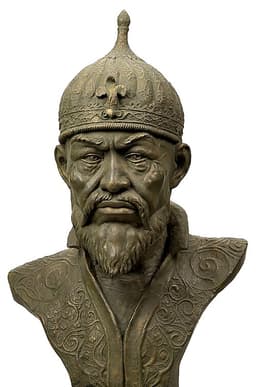
Timur
Emperor · Medieval
65.6Total
Basic Information
Born
1349
1336
Died
1395
1405
Era
Medieval
Medieval
Nationality
Austria
Timurid Empire
Occupation
Emperor
Emperor
Civilization
Western
Middle Eastern
Score Comparison
Military (10%)
50.0
79.0
Political (20%)
54.7
70.0
Influence (20%)
53.3
70.0
Legacy (20%)
44.2
40.0
Leadership (15%)
80.0
79.8
Strategy (15%)
38.6
77.6
TOTAL
53.4
65.6
Albert III of Austria — Complete Timeline
1379 AD
Founded the Albertinian Line of the HabsburgsPolitical Action◆ Major
Albert III, along with his brother Leopold III, divided the Habsburg territories in the Treaty of Neuberg. Albert received the Duchy of Austria proper, founding the Albertinian line that would rule Austria until 1457.
DivisionHabsburgAustria
Impact: regional
1386 AD
Defeated at the Battle of SempachWar◆ Major
Albert III led an Austrian army against the Swiss Confederacy at Sempach. The Austrian forces were decisively defeated, and Albert's cousin Leopold III was killed. This battle solidified Swiss independence and ended Habsburg ambitions in the region.
BattleSwiss ConfederacyDefeat
Impact: regionaltragic
Timur — Complete Timeline
1362 AD
Battle of the Terek RiverWar
Timur defeated the Mongol ruler of the Chagatai Khanate, establishing his control over Transoxiana. This victory marked the beginning of his rise to power, as he captured Samarkand and declared himself emir.
Rise to PowerBattleCentral Asia
Impact: regional
1387 AD
Conquest of PersiaWar◆ Major
Timur launched a campaign into Persia, capturing Isfahan and Shiraz. He suppressed a revolt in Isfahan by massacring tens of thousands of inhabitants, establishing his reputation for extreme brutality and consolidating control over the region.
ConquestMassacrePersia
Impact: regionaldestructive
1395 AD
Campaign against the Golden HordeWar◆ Major
Timur defeated the Golden Horde under Tokhtamysh at the Battle of the Terek River. He sacked Sarai, the Horde's capital, and destroyed its trade networks, permanently weakening the Mongol state and securing his northern frontier.
ConquestGolden HordeBattle
Impact: regionaldestructive
1398 AD
Sack of DelhiWar◆ Major
Timur invaded the Delhi Sultanate, defeating Sultan Nasir-ud-Din Mahmud Shah Tughluq. His army sacked Delhi, massacring tens of thousands of civilians and destroying the city's infrastructure, then withdrew with immense plunder.
ConquestMassacreIndia
Impact: regionaldestructive
1402 AD
Battle of AnkaraWar
Timur defeated the Ottoman Sultan Bayezid I at Ankara, capturing him. The victory shattered Ottoman power, leading to a civil war among Bayezid's sons and delaying Ottoman expansion into Europe for a decade.
BattleOttoman EmpireDecisive Victory
Impact: global
1404 AD
Construction of SamarkandCultural◆ Major
Timur invested heavily in transforming Samarkand into a cultural and architectural center. He brought artisans from conquered lands to build mosques, madrasas, and the Bibi-Khanym Mosque, making the city a showcase of Timurid art and learning.
ArchitecturePatronageCultural Center
Impact: regionalconstructive
1405 AD
Death during campaign against Ming ChinaWar◆ Major
Timur died of illness while leading a massive army toward the Ming dynasty's borders. His death ended the planned invasion of China and led to the fragmentation of his empire among his sons and grandsons.
DeathCampaignMing Dynasty
Impact: regional
Expert Analysis
Albert III of Austria vs Timur
# The Conqueror and the Consolidator
On a winter morning in 1405, an aging Timur lay dying on the frozen steppe of what is now Kazakhstan, his army halted mid-march toward the borders of Ming China. Half a world away, a decade earlier, Albert III of Austria had breathed his last in Vienna, his realm intact but his ambitions modest. Both men were rulers, both lived in the 14th century, and both left marks on history—yet their paths could not have been more different. Why did one man shake the world from Delhi to Ankara, while the other spent his reign holding together a patchwork of Alpine valleys? The answer lies not in their times, but in the forces that shaped them.
Origins
Timur was born in 1336 near Samarkand, into a Turco-Mongol clan of the Barlas tribe, a people whose memory still burned with the glory of Genghis Khan. His early life was one of raiding and local warfare—a world where a man’s worth was measured by the number of cities he could sack and the number of skulls he could pile. He was wounded in his right leg and right arm, earning the name Timur-e Lang, “Timur the Lame,” a handicap that only seemed to sharpen his ferocity. The steppe bred him for conquest: there was no law but strength, no legacy but destruction.
Albert III, born in 1349 in Vienna, came from the Habsburgs, a family that had clawed its way from a Swiss castle to the ducal throne of Austria. His world was one of dynastic marriages, legal charters, and careful alliances. The Holy Roman Empire was a web of princes, bishops, and free cities, where a ruler succeeded not by crushing enemies but by outmaneuvering them. Where Timur learned to ride and kill, Albert learned to negotiate and divide.
Rise to Power
Timur’s ascent was a blood-soaked ladder. In 1362, at the Battle of the Terek River, he defeated the Mongol ruler of the Chagatai Khanate, seizing control of Transoxiana. He was not a legitimate heir—he had to take power by force, and he never stopped taking it. Every victory was a turning point: the conquest of Persia in 1387, where he suppressed a revolt in Isfahan by massacring tens of thousands; the campaign against the Golden Horde in 1395, where he defeated Tokhtamysh at the Terek River and sacked Sarai. He built his empire on the bones of his enemies.
Albert III came to power in 1365, inheriting a duchy that was stable but fragile. His rise was not a conquest but a partition. In 1379, he and his brother Leopold III signed the Treaty of Neuberg, dividing Habsburg lands into the Albertinian and Leopoldian lines. Albert took Lower and Upper Austria. It was a political act, not a military one—a decision made in a chamber, not on a battlefield. His path was one of consolidation, not expansion.
Leadership & Governance
As a ruler, Timur was a force of nature. He commanded armies that moved with terrifying speed and discipline, and his military genius was unmatched. At the Battle of Ankara in 1402, he captured the Ottoman Sultan Bayezid I, smashing the Ottoman Empire so thoroughly that it plunged into a civil war that lasted a decade. His sack of Delhi in 1398 was a masterpiece of terror: his army slaughtered tens of thousands, leaving the city a ruin. But Timur was not merely a destroyer. He brought artisans from conquered cities to Samarkand, transforming it into a cultural jewel. In 1404, he invested heavily in its architecture, building mosques and madrasas that still stand. His governance was brutal but visionary—a paradox of blood and beauty.
Albert III ruled with a different hand. His military record was thin and painful: in 1386, at the Battle of Sempach, he led Austrian forces against the Swiss Confederacy and was decisively defeated. The loss was a lesson in the limits of power. Albert focused on what he could control: the administration of his lands, the strengthening of ducal authority, and the careful management of his nobility. He founded the Albertinian line of the Habsburgs, ensuring that his branch of the family would survive. Where Timur built an empire, Albert built a dynasty.
Triumph & Tragedy
Timur’s greatest triumph was the Battle of Ankara, where he captured the greatest sultan of the age and broke the Ottoman Empire. It was a victory that echoed from the Balkans to the Levant. His greatest tragedy was his death in 1405, on the eve of his invasion of Ming China. He died of illness, his army stranded, his grandest campaign unfulfilled. He left behind an empire that would crumble within decades, as his sons and grandsons fought over the ruins.
Albert III’s triumph was quieter: the Treaty of Neuberg, which secured his line’s inheritance and stabilized Habsburg rule. His tragedy was Sempach—a humiliating defeat that exposed the weakness of his military. But unlike Timur, Albert did not die in glory or failure. He died in Vienna in 1395, his realm intact, his legacy secure. He was a survivor, not a conqueror.
Character & Destiny
Timur was driven by an insatiable hunger for power and recognition. He saw himself as the heir of Genghis Khan, and he acted accordingly: ruthlessly, relentlessly, without mercy. His character was forged in the crucible of the steppe, where mercy was weakness and destruction was strength. His destiny was to be a world-shaker, a man who changed the map of Asia and Europe in a single lifetime.
Albert III was a pragmatist. He knew his limits and worked within them. His character was shaped by the complexities of medieval politics, where a ruler’s success depended not on how many cities he burned, but on how many alliances he forged. His destiny was to be a builder, not a destroyer—a man who ensured that the Habsburgs would survive to dominate Europe for centuries.
Legacy
Timur is remembered as a monster and a patron of the arts. His name is synonymous with terror in Persia and India, yet his capital Samarkand is a UNESCO World Heritage site. He inspired the Mughal Empire, which Babur, his descendant, would found in India. His legacy is a paradox: a man of unparalleled destruction who created a cultural renaissance.
Albert III is remembered as a founder. The Albertinian line of the Habsburgs would produce emperors and kings, and his careful stewardship laid the groundwork for the Habsburg monarchy that would rule Central Europe until 1918. His legacy is quiet but enduring—a dynasty, not a legend.
Conclusion
Timur and Albert III were products of their worlds: one of the steppe, where power was taken by the sword; the other of the court, where power was preserved by the pen. Timur conquered an empire and lost it; Albert held a duchy and passed it on. In the end, both succeeded on their own terms. But when we ask which model endures, we might look at the long arc of history: the conqueror’s empire vanished, while the consolidator’s dynasty lasted half a millennium. Perhaps the greatest power is not the strength to destroy, but the wisdom to endure.
Rankings
🥇
TimurLeader
Mil: 79.0Pol: 70.0Inf: 70.0
65.6
🥈
Albert III of Austria
Mil: 50.0Pol: 54.7Inf: 53.3
53.4
+12.2 behind
How This Comparison Works
Algorithm
Each figure is scored on 6 dimensions (0—100 scale) based on structured historical data: Military (10%), Political (20%), Influence (20%), Legacy (20%), Leadership (15%), Strategy (15%). The weighted total produces the final ranking.
Data Sources
Scores are computed from structured sub-indicators in the database. Scale factors adjust for era (Ancient ×0.85, Modern ×1.0) and civilization size (Eastern ×1.05, Other ×0.80) to account for differences in population and military scale.
Maximum 3 Figures
Comparisons are limited to 2—3 figures to ensure readability and statistical meaningfulness.
Error Margins
±5 points per dimension — Sub-scores are derived from historical records with inherent uncertainty. Two figures within 5 points on a dimension should be considered roughly equivalent in that area.
Total Score Accuracy
±3 points overall — The weighted combination of 6 dimensions produces a total score with approximately ±3 points of uncertainty. Differences of less than 3 points are not statistically significant— the figures are effectively tied.
Known Limitations
- Historical records are incomplete and uneven across civilizations
- Figures from oral-tradition societies may be underrepresented
- Occupation labels can misclassify multi-role figures
- Scores measure capability and impact, not moral character
- Quantitative scoring is a comparison tool, not absolute truth
Capability Radar
Military (10%) — Battles & Warfare
Battles
20
95
Win Rate
25
92
Expansion
20
96
Political (20%) — Governance & Reform
Reform
40
78
Diplomacy
45
70
Economy
40
82
Influence (20%) — Cultural & Global Reach
Cultural
30
88
Global
20
85
Legacy (20%) — Historical Impact
Historical
35
90
Longevity
30
75
Leadership (15%) — Power & Stability
Tenure
60
85
Stability
35
65
Strategy (15%) — Tactics & Innovation
Strategy
25
93
Tactics
20
94
Reform
15
80
Similar Comparisons
Comments & Discussion
Tamerlane's Triumph6/16/2026
The comparison misses the point entirely. Albert III was a footnote in a dusty corner of Europe while Timur reshaped the entire Islamic world. Let's be real: Timur decimated the Golden Horde, sacked Delhi, and crushed the Ottoman Empire at Ankara in 1402. The Habsburg duke spent his reign haggling over Alpine toll roads. One built skull pyramids, the other built tax offices. History remembers conquerors, not administrators.
大陆克星6/16/2026
军事上完全不是一个量级。帖木儿在安卡拉战役活捉奥斯曼苏丹巴耶济德,一战打断奥斯曼帝国扩张势头二十年。阿尔布雷希特三世?他最大成就是把哈布斯堡领地合并成"阿尔卑斯公爵领",本质上就是个土地整合员。帖木儿在印度河畔堆了十万颗人头时,这位奥地利公爵还在跟匈牙利人讨价还价边境税收。别拿山大王比霸主。
Steppe Realist6/16/2026
The comparison is like pitting a hurricane against a gentle breeze. Timur's military campaigns stretched from the Volga to the Indus, covering over 5,000 miles. Each conquest wasn't just territory—it was systemic destruction that reshaped trade routes and population centers. Albert III's "greatest achievement" was securing the Habsburg succession through the Treaty of Neuberg in 1379. One man moved civilizations, the other moved furniture in a drafty castle.
数据守护者6/16/2026
数字不会撒谎。帖木儿生涯攻占超过50座主要城市,统治范围横跨中亚、波斯、印度、安纳托利亚,面积约400万平方公里。阿尔布雷希特三世统治的奥地利公国加上施蒂里亚、克恩滕,总面积不到10万平方公里。帖木儿军队规模据估计达20万,阿尔布雷希特三世能征集的骑士大概两万。这不是比较,这是用天文望远镜看蚂蚁。历史评分标准不该双标。
Classical Scholar6/16/2026
This is a battle between the epic and the mundane. Timur reminds me of Alexander: both wounded young, both built empires through sheer force of will, both died mid-campaign. Albert III is more akin to a medieval Philip II of Macedon—consolidating, organizing, building internal strength. But here's the thing: nobody remembers Philip except as Alexander's father. Timur's existential ambition, his project of "restoring the Mongol Empire," is what makes history tremble. Albert just kept the books ba