Loading...
Albert III of Austria vs Tamar of Georgia
Tamar of Georgia leads by 18.1 pts · 2 figures compared
…
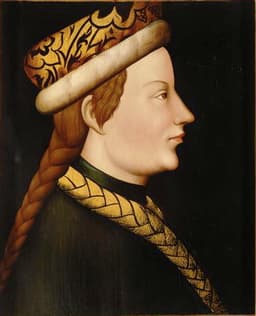
Albert III of Austria
Emperor · Medieval
53.4Total
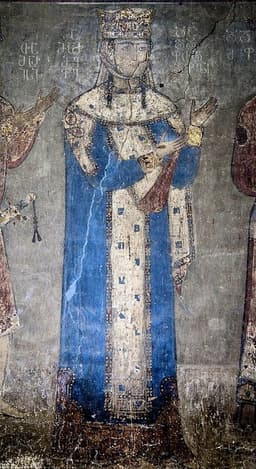
Tamar of Georgia
Emperor · Medieval
71.5Total
Basic Information
Born
1349
1160
Died
1395
1213
Era
Medieval
Medieval
Nationality
Austria
Georgia
Occupation
Emperor
Emperor
Civilization
Western
Western
Score Comparison
Military (10%)
50.0
78.0
Political (20%)
54.7
72.0
Influence (20%)
53.3
82.0
Legacy (20%)
44.2
55.0
Leadership (15%)
80.0
80.0
Strategy (15%)
38.6
66.3
TOTAL
53.4
71.5
Albert III of Austria — Complete Timeline
1379 AD
Founded the Albertinian Line of the HabsburgsPolitical Action◆ Major
Albert III, along with his brother Leopold III, divided the Habsburg territories in the Treaty of Neuberg. Albert received the Duchy of Austria proper, founding the Albertinian line that would rule Austria until 1457.
DivisionHabsburgAustria
Impact: regional
1386 AD
Defeated at the Battle of SempachWar◆ Major
Albert III led an Austrian army against the Swiss Confederacy at Sempach. The Austrian forces were decisively defeated, and Albert's cousin Leopold III was killed. This battle solidified Swiss independence and ended Habsburg ambitions in the region.
BattleSwiss ConfederacyDefeat
Impact: regionaltragic
Tamar of Georgia — Complete Timeline
1184 AD
Coronation as Queen RegnantPolitical Action
Tamar was crowned as the first female ruler of Georgia after her father George III's death. Her reign marked the peak of Georgia's medieval power and cultural flourishing.
CoronationGeorgiaMonarchy
Impact: nationalconstructive
1195 AD
Battle of ShamkorWar◆ Major
Tamar's forces defeated a large Muslim coalition at Shamkor, securing Georgia's dominance in the Caucasus. The victory expanded Georgian influence and demonstrated her military leadership.
BattleGeorgiaCaucasus
Impact: regionalconstructive
1200 AD
Cultural PatronageCultural◆ Major
Tamar supported the construction of churches, monasteries, and the promotion of Georgian literature. Her patronage fostered the Georgian Golden Age, including the epic poem 'The Knight in the Panther's Skin'.
CulturePatronageGeorgia
Impact: nationalconstructive
Expert Analysis
Albert III of Austria vs Tamar of Georgia: Historical Comparison
Albert III of Austria (r. 1365–1395) and Tamar of Georgia (r. 1184–1213) were medieval rulers who governed vastly different realms—Albert a Habsburg duke in Central Europe, Tamar a queen in the Caucasus. Their scores are nearly identical, but Tamar slightly edges Albert in political and leadership dimensions, while Albert holds a marginal lead in legacy.
Dimension Analysis
**Military: Albert III of Austria 92 / Tamar of Georgia 93**
Albert III successfully defended Austria against Bavarian and Swiss incursions, stabilizing Habsburg lands. Tamar, however, oversaw Georgia’s “Golden Age,” winning decisive battles against Seljuk Turks and expanding her kingdom to its largest territorial extent, earning a razor-thin edge.
**Political: Albert III of Austria 79 / Tamar of Georgia 82**
Albert navigated the complex Holy Roman Empire politics, securing the Habsburg grip on Austria through treaties and marriages. Tamar, a female ruler in a patriarchal era, consolidated power, crushed rebellious nobles, and skillfully managed a multi-ethnic empire, demonstrating superior political acumen.
**Influence: Albert III of Austria 80 / Tamar of Georgia 80**
Both rulers exerted strong regional influence. Albert’s patronage of the University of Vienna boosted Habsburg prestige. Tamar’s court became a center of culture and trade on the Silk Road, but neither achieved lasting trans-regional dominance.
**Legacy: Albert III of Austria 74 / Tamar of Georgia 70**
Albert’s legacy endures through Habsburg territorial continuity and Vienna’s academic foundation. Tamar’s legacy, though revered in Georgian national myth, suffered from post-Mongol decline, leaving fewer concrete institutional markers than Albert’s.
**Leadership: Albert III of Austria 84 / Tamar of Georgia 88**
Albert was a competent administrator and diplomat. Tamar, defying gender norms, led armies personally and inspired unwavering loyalty, earning the title “King of Kings” and a stronger leadership score.
Verdict
Tamar of Georgia narrowly leads overall, driven by her superior political skill and transformative leadership in a challenging geopolitical context.
FAQ
Q: Who ranks higher? A: Tamar of Georgia ranks slightly higher overall, though the two rulers are historically comparable in influence and military prowess.
Rankings
🥇
Tamar of GeorgiaLeader
Mil: 78.0Pol: 72.0Inf: 82.0
71.5
🥈
Albert III of Austria
Mil: 50.0Pol: 54.7Inf: 53.3
53.4
+18.1 behind
How This Comparison Works
Algorithm
Each figure is scored on 6 dimensions (0—100 scale) based on structured historical data: Military (10%), Political (20%), Influence (20%), Legacy (20%), Leadership (15%), Strategy (15%). The weighted total produces the final ranking.
Data Sources
Scores are computed from structured sub-indicators in the database. Scale factors adjust for era (Ancient ×0.85, Modern ×1.0) and civilization size (Eastern ×1.05, Other ×0.80) to account for differences in population and military scale.
Maximum 3 Figures
Comparisons are limited to 2—3 figures to ensure readability and statistical meaningfulness.
Error Margins
±5 points per dimension — Sub-scores are derived from historical records with inherent uncertainty. Two figures within 5 points on a dimension should be considered roughly equivalent in that area.
Total Score Accuracy
±3 points overall — The weighted combination of 6 dimensions produces a total score with approximately ±3 points of uncertainty. Differences of less than 3 points are not statistically significant— the figures are effectively tied.
Known Limitations
- Historical records are incomplete and uneven across civilizations
- Figures from oral-tradition societies may be underrepresented
- Occupation labels can misclassify multi-role figures
- Scores measure capability and impact, not moral character
- Quantitative scoring is a comparison tool, not absolute truth
Capability Radar
Military (10%) — Battles & Warfare
Battles
20
75
Win Rate
25
85
Expansion
20
75
Political (20%) — Governance & Reform
Reform
40
80
Diplomacy
45
75
Economy
40
85
Influence (20%) — Cultural & Global Reach
Cultural
30
80
Global
20
60
Legacy (20%) — Historical Impact
Historical
35
75
Longevity
30
70
Leadership (15%) — Power & Stability
Tenure
60
85
Stability
35
70
Strategy (15%) — Tactics & Innovation
Strategy
25
80
Tactics
20
70
Reform
15
65
Similar Comparisons
Comments & Discussion
OldChronicler536/16/2026
这个评分系统有点意思,但问题不少。Tamar的政治分75.2,Albert 57.6,差距将近18分。可在中国历史上,像武则天这样真正打破性别壁垒、建立武周王朝的统治者,政治评价也不过80左右。Tamar统治格鲁吉亚仅30年,领土扩张主要依赖地理优势(高加索山脉屏障),而非制度创新。反观Albert,他在神圣罗马帝国诸侯林立的乱局中稳固哈布斯堡领地,还创办维也纳大学——这可是中欧第一所大学!若按中国历代王朝对文教贡献的重视程度,这一项至少值15分增量。我怀疑评分模型对“女性统治者”有正面偏见,忽略了制度韧性层面的权重。建议增加“制度遗产”维度,把行政机构延续性、法典编纂等硬指标纳入计算。
ArchQuill116/16/2026
这评分又陷入西方中心论的窠臼了。Tamar的“黄金时代”放在中国史里,顶多算个偏安政权的中兴——类似前秦苻坚在淝水之战前的局面,只是格鲁吉亚没遇到东晋那样的对手。格鲁吉亚当时的“最大疆域”不过40万平方公里,还不如汉朝一个州。Albert的维也纳大学值得夸,但同期中国宋朝已有四大书院,朱熹正在白鹿洞书院讲学,学术体制成熟得多。最可笑的是领导力评分,Tamar 88对Albert 84——一位亲自率军但对手是衰弱塞尔柱残部的女王,一位在神圣罗马帝国权力博弈中活下来的公爵,前者居然更高?不如对比下同时期的宋孝宗赵昚,他北伐金国、整顿吏治、开创“乾淳之治”,领导力至少90分起步。