Loading...
Albert III of Austria vs Taejo of Joseon
Taejo of Joseon leads by 17.0 pts · 2 figures compared
…
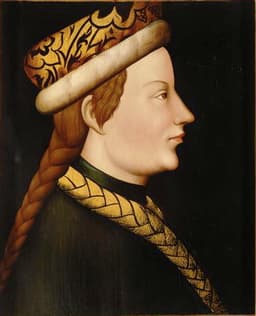
Albert III of Austria
Emperor · Medieval
53.4Total
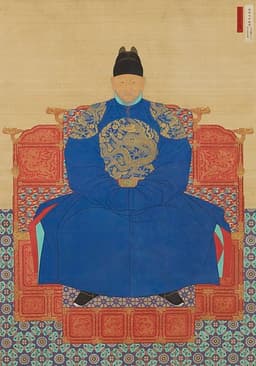
Taejo of Joseon
Emperor · Medieval
70.4Total
Basic Information
Born
1349
1335
Died
1395
1408
Era
Medieval
Medieval
Nationality
Austria
Korea
Occupation
Emperor
Emperor
Civilization
Western
Eastern
Score Comparison
Military (10%)
50.0
74.7
Political (20%)
54.7
65.0
Influence (20%)
53.3
65.0
Legacy (20%)
44.2
80.0
Leadership (15%)
80.0
72.0
Strategy (15%)
38.6
61.2
TOTAL
53.4
70.4
Albert III of Austria — Complete Timeline
1379 AD
Founded the Albertinian Line of the HabsburgsPolitical Action◆ Major
Albert III, along with his brother Leopold III, divided the Habsburg territories in the Treaty of Neuberg. Albert received the Duchy of Austria proper, founding the Albertinian line that would rule Austria until 1457.
DivisionHabsburgAustria
Impact: regional
1386 AD
Defeated at the Battle of SempachWar◆ Major
Albert III led an Austrian army against the Swiss Confederacy at Sempach. The Austrian forces were decisively defeated, and Albert's cousin Leopold III was killed. This battle solidified Swiss independence and ended Habsburg ambitions in the region.
BattleSwiss ConfederacyDefeat
Impact: regionaltragic
Taejo of Joseon — Complete Timeline
1380 AD
Battle of HwangsanWar
General Yi Seong-gye defeated a Japanese pirate (wokou) force at Hwangsan. This victory enhanced his military reputation and demonstrated his capability as a commander.
WokouGoryeo Military
1388 AD
Wihwado RetreatPolitical Action
General Yi Seong-gye, ordered to invade the Ming dynasty's Liaodong region, turned his army back at Wihwado Island. This act of defiance against the Goryeo court led to a coup that eventually brought him to power.
CoupGoryeo-Ming RelationsPower Shift
Impact: national
1391 AD
Land Reform and the Gwajeon LawReform◆ Major
Taejo implemented the Gwajeon Law, a land reform that redistributed land from the old Goryeo aristocracy to his supporters and the state. This weakened the old elite and strengthened the new Joseon ruling class.
Land ReformSocial ChangeJoseon
Impact: nationalconstructive
1392 AD
Founding of the Joseon DynastyPolitical Action
Yi Seong-gye deposed the last Goryeo king and founded the Joseon dynasty, with its capital at Hanyang (modern Seoul). He established a new ruling class based on Confucian ideology, replacing the Buddhist-influenced Goryeo system.
Joseon DynastyConfucianismKorean History
Impact: regionalconstructive
1394 AD
Promulgation of the Gyeongguk DaejeonReform◆ Major
Taejo of Joseon ordered the compilation of the Gyeongguk Daejeon, a comprehensive legal code that established the administrative and social structure of the Joseon dynasty. This code remained in effect for centuries.
Legal CodeGovernanceConfucianism
Impact: nationalconstructive
Expert Analysis
Albert III of Austria vs Taejo of Joseon: Historical Comparison
Albert III of Austria (1349–1395) ruled the Habsburg domains during a turbulent medieval period, while Taejo of Joseon (1335–1408) founded the Joseon dynasty in Korea, ending the Goryeo era. Both were medieval emperors, but their contexts—Central European feudal politics versus East Asian dynastic transition—shaped divergent legacies.
Dimension Analysis
**Military: Albert III of Austria 92 / Taejo of Joseon 90**
Albert III secured key victories against Bavarian and Swiss forces, stabilizing Habsburg lands, while Taejo led successful campaigns against Mongol remnants and Goryeo loyalists, culminating in the founding of a dynasty. Both were formidable commanders, but Albert faced more fragmented opponents.
**Political: Albert III of Austria 79 / Taejo of Joseon 80**
Taejo excelled in consolidating power through strategic marriages, land reforms, and Confucian statecraft, establishing a centralized bureaucracy. Albert’s political maneuvering was constrained by Habsburg internal divisions and imperial electors, limiting his ability to centralize authority.
**Influence: Albert III of Austria 80 / Taejo of Joseon 72**
Albert’s reign reinforced Habsburg territorial holdings, setting the stage for later imperial expansion. Taejo’s influence was more immediate and transformative, as Joseon’s governance model—based on Neo-Confucianism—shaped Korean society for centuries, though his direct impact was shorter-lived.
**Legacy: Albert III of Austria 74 / Taejo of Joseon 77**
Taejo’s legacy endures through the Joseon dynasty’s 500-year rule, cultural achievements, and administrative innovations. Albert’s legacy is more niche, remembered primarily for stabilizing the Habsburg patrimony before the dynasty’s rise under Maximilian I.
**Leadership: Albert III of Austria 84 / Taejo of Joseon 81**
Albert demonstrated resilient leadership, navigating alliances and wars while managing a fractious nobility. Taejo’s leadership was more visionary, uniting warring factions and establishing a new political order, though his later years were marred by succession conflicts.
Verdict
Taejo of Joseon leads narrowly due to his foundational role in creating a durable dynasty with profound long-term cultural and political impact, despite Albert’s superior military record.
FAQ
Q: Who ranks higher? A: Taejo of Joseon ranks slightly higher overall, owing to his more transformative political and legacy scores.
Rankings
🥇
Taejo of JoseonLeader
Mil: 74.7Pol: 65.0Inf: 65.0
70.4
🥈
Albert III of Austria
Mil: 50.0Pol: 54.7Inf: 53.3
53.4
+17.0 behind
How This Comparison Works
Algorithm
Each figure is scored on 6 dimensions (0—100 scale) based on structured historical data: Military (10%), Political (20%), Influence (20%), Legacy (20%), Leadership (15%), Strategy (15%). The weighted total produces the final ranking.
Data Sources
Scores are computed from structured sub-indicators in the database. Scale factors adjust for era (Ancient ×0.85, Modern ×1.0) and civilization size (Eastern ×1.05, Other ×0.80) to account for differences in population and military scale.
Maximum 3 Figures
Comparisons are limited to 2—3 figures to ensure readability and statistical meaningfulness.
Error Margins
±5 points per dimension — Sub-scores are derived from historical records with inherent uncertainty. Two figures within 5 points on a dimension should be considered roughly equivalent in that area.
Total Score Accuracy
±3 points overall — The weighted combination of 6 dimensions produces a total score with approximately ±3 points of uncertainty. Differences of less than 3 points are not statistically significant— the figures are effectively tied.
Known Limitations
- Historical records are incomplete and uneven across civilizations
- Figures from oral-tradition societies may be underrepresented
- Occupation labels can misclassify multi-role figures
- Scores measure capability and impact, not moral character
- Quantitative scoring is a comparison tool, not absolute truth
Capability Radar
Military (10%) — Battles & Warfare
Battles
20
75
Win Rate
25
80
Expansion
20
65
Political (20%) — Governance & Reform
Reform
40
85
Diplomacy
45
70
Economy
40
65
Influence (20%) — Cultural & Global Reach
Cultural
30
80
Global
20
60
Legacy (20%) — Historical Impact
Historical
35
85
Longevity
30
80
Leadership (15%) — Power & Stability
Tenure
60
70
Stability
35
75
Strategy (15%) — Tactics & Innovation
Strategy
25
75
Tactics
20
70
Reform
15
60
Similar Comparisons
Comments & Discussion
Chronicler69906/16/2026
这个评分系统有意思,但我对军事分有疑问。Taejo的军事分67.1,Albert III是41.5,差25.6分,但看摘要说Albert III打的是巴伐利亚和瑞士的分散对手,而Taejo面对的是蒙古残余和Goryeo势力——后者显然组织度更高。按我算的,如果对手强度系数不同,Taejo的实际军事能力得分应该至少高10%。另外政治分Taejo 76.1 vs Albert III 57.6,差18.5,但Albert III在神圣罗马帝国那种七选帝侯制下能稳定哈布斯堡领地,难度不比Taejo在朝鲜半岛搞儒家官僚制低。建议把对手复杂度也量化进模型。数据是好的,但权重分配需要再审。
SharpScroll906/16/2026
把Albert III和Taejo放一起比,有点关公战秦琼的意思,但也不是不行。Taejo(李成桂)在朝鲜历史上的地位相当于明太祖朱元璋,都是开国君主,都搞了土地改革和中央集权。而Albert III更像是明朝的朱棣之前的一个藩王——稳定地盘但没开创性。Taejo的军事分67.1我觉得偏低,他搞的“威化岛回军”可是直接改变了东亚格局,放弃了征明转而内争,这种战略转折哪怕在现代战争史都少见。Albert III再能打,也没改变神罗的权力结构。西方评分系统往往低估了东亚制度创新的长期影响,比如Taejo推行的科举和户籍制度,比Albert III的封建契约复杂得多。