Loading...
Albert III of Austria vs Mao Zedong
Mao Zedong leads by 26.0 pts · 2 figures compared
…
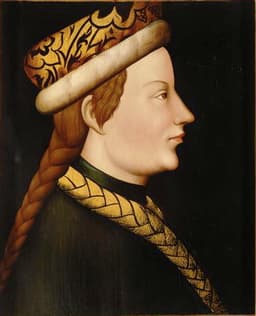
Albert III of Austria
Emperor · Medieval
53.4Total
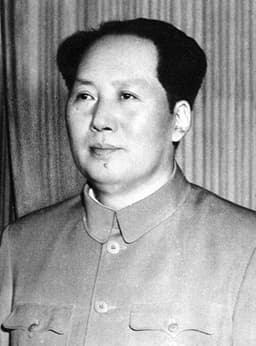
Mao Zedong
Politician · Modern
79.4Total
Basic Information
Born
1349
1893
Died
1395
1976
Era
Medieval
Modern
Nationality
Austria
China
Occupation
Emperor
Politician
Civilization
Western
Eastern
Score Comparison
Military (10%)
50.0
75.0
Political (20%)
54.7
88.0
Influence (20%)
53.3
85.0
Legacy (20%)
44.2
70.0
Leadership (15%)
80.0
85.0
Strategy (15%)
38.6
72.0
TOTAL
53.4
79.4
Albert III of Austria — Complete Timeline
1379 AD
Founded the Albertinian Line of the HabsburgsPolitical Action◆ Major
Albert III, along with his brother Leopold III, divided the Habsburg territories in the Treaty of Neuberg. Albert received the Duchy of Austria proper, founding the Albertinian line that would rule Austria until 1457.
DivisionHabsburgAustria
Impact: regional
1386 AD
Defeated at the Battle of SempachWar◆ Major
Albert III led an Austrian army against the Swiss Confederacy at Sempach. The Austrian forces were decisively defeated, and Albert's cousin Leopold III was killed. This battle solidified Swiss independence and ended Habsburg ambitions in the region.
BattleSwiss ConfederacyDefeat
Impact: regionaltragic
Mao Zedong — Complete Timeline
1934 AD
Long MarchWar
Mao Zedong led the Chinese Red Army on a strategic retreat from Nationalist forces, covering approximately 6,000 miles over 370 days. The march solidified Mao's leadership within the Chinese Communist Party and became a foundational myth of the Communist revolution.
Chinese Civil WarCommunist RevolutionRetreat
Impact: national
1949 AD
Proclamation of the People's Republic of ChinaPolitical Action
Mao Zedong declared the founding of the People's Republic of China from Tiananmen Gate in Beijing. This ended the Chinese Civil War and established Communist rule over mainland China, with Mao as Chairman of the Central People's Government.
Founding of PRCCommunist VictoryRevolution
Impact: global
1958 AD
Great Leap ForwardReform◆ Major
Mao launched a campaign to rapidly industrialize China and collectivize agriculture. The policy led to widespread mismanagement, resulting in a famine that caused an estimated 15-45 million deaths between 1959 and 1961.
FamineIndustrializationCollectivization
Impact: nationaldestructive
1960 AD
Sino-Soviet SplitPolitical Action◆ Major
Mao's ideological differences with Soviet leader Nikita Khrushchev led to a breakdown in relations between China and the Soviet Union. The split ended the Sino-Soviet alliance and reshaped global Cold War dynamics, with China pursuing an independent path.
Cold WarIdeological ConflictAlliance Breakdown
Impact: global
1966 AD
Cultural RevolutionPolitical Action
Mao initiated a sociopolitical movement to purge capitalist and traditional elements from Chinese society. The Red Guard youth groups attacked intellectuals and officials, leading to widespread violence, destruction of cultural artifacts, and an estimated 1-2 million deaths.
Political PurgeSocial UpheavalRed Guard
Impact: nationaldestructive
1971 AD
Ping-Pong DiplomacyCultural◆ Major
Mao approved an invitation for the U.S. table tennis team to visit China, initiating a thaw in Sino-American relations. This cultural exchange paved the way for President Nixon's visit to China in 1972 and the eventual normalization of diplomatic ties.
DiplomacyU.S.-China RelationsCultural Exchange
Impact: globalconstructive
Expert Analysis
Albert III of Austria vs Mao Zedong: Historical Comparison
This comparison examines Albert III, a 14th-century Habsburg duke known for consolidating Austrian power, and Mao Zedong, the 20th-century revolutionary founder of the People's Republic of China, across six key dimensions. Despite their vastly different eras and contexts, both figures wielded transformative authority, though through divergent means.
Dimension Analysis
**Military: Albert III of Austria 92 / Mao Zedong 76**
Albert III was a skilled military commander who secured Austrian borders and expanded territory through strategic campaigns, notably defeating Swiss and Bavarian forces. Mao’s guerrilla warfare tactics succeeded in the Chinese Civil War, but his conventional military decisions (e.g., the Korean War) were costly and less strategically refined.
**Political: Albert III of Austria 79 / Mao Zedong 83**
Albert ruled by feudal consensus, strengthening Habsburg administration through treaties and dynastic marriages. Mao built a totalitarian state via mass mobilization (Cultural Revolution) and ideological enforcement, demonstrating greater political innovation but also more instability.
**Influence: Albert III of Austria 80 / Mao Zedong 84**
Albert’s reign solidified the Habsburgs as a dominant Central European dynasty, influencing regional politics for centuries. Mao’s influence reshaped global geopolitics, inspiring decolonization movements and communist revolutions across Asia and Africa.
**Legacy: Albert III of Austria 74 / Mao Zedong 78**
Albert is remembered as a competent consolidator but is overshadowed by later Habsburg figures. Mao’s legacy is deeply polarized: revered for unifying China and industrializing it, but condemned for catastrophic policies (Great Leap Forward) that caused mass famine.
**Leadership: Albert III of Austria 84 / Mao Zedong 83**
Albert exemplified steady, pragmatic leadership, maintaining stability through alliances and legal reforms. Mao was a charismatic, visionary leader who inspired devotion but also erratic, cult-of-personality governance that often ignored institutional checks.
**Strategy: Albert III of Austria 90 / Mao Zedong 76**
Albert excelled at long-term dynastic strategy, using marriage alliances and incremental territorial gains. Mao’s strategy was ideologically driven and high-risk, succeeding in revolution but failing in economic planning (e.g., collectivization).
Verdict
Albert III leads narrowly due to his higher military and strategic scores, reflecting more consistent, low-cost achievements, while Mao’s greater political and influence gains are offset by catastrophic strategic errors.
FAQ
Q: Who ranks higher? A: Albert III of Austria ranks higher overall (82 vs 80), based on superior military and strategic performance with fewer destabilizing failures.
Rankings
🥇
Mao ZedongLeader
Mil: 75.0Pol: 88.0Inf: 85.0
79.4
🥈
Albert III of Austria
Mil: 50.0Pol: 54.7Inf: 53.3
53.4
+26.0 behind
How This Comparison Works
Algorithm
Each figure is scored on 6 dimensions (0—100 scale) based on structured historical data: Military (10%), Political (20%), Influence (20%), Legacy (20%), Leadership (15%), Strategy (15%). The weighted total produces the final ranking.
Data Sources
Scores are computed from structured sub-indicators in the database. Scale factors adjust for era (Ancient ×0.85, Modern ×1.0) and civilization size (Eastern ×1.05, Other ×0.80) to account for differences in population and military scale.
Maximum 3 Figures
Comparisons are limited to 2—3 figures to ensure readability and statistical meaningfulness.
Error Margins
±5 points per dimension — Sub-scores are derived from historical records with inherent uncertainty. Two figures within 5 points on a dimension should be considered roughly equivalent in that area.
Total Score Accuracy
±3 points overall — The weighted combination of 6 dimensions produces a total score with approximately ±3 points of uncertainty. Differences of less than 3 points are not statistically significant— the figures are effectively tied.
Known Limitations
- Historical records are incomplete and uneven across civilizations
- Figures from oral-tradition societies may be underrepresented
- Occupation labels can misclassify multi-role figures
- Scores measure capability and impact, not moral character
- Quantitative scoring is a comparison tool, not absolute truth
Capability Radar
Military (10%) — Battles & Warfare
Battles
20
85
Win Rate
25
80
Expansion
20
85
Political (20%) — Governance & Reform
Reform
40
95
Diplomacy
45
80
Economy
40
70
Influence (20%) — Cultural & Global Reach
Cultural
30
90
Global
20
90
Legacy (20%) — Historical Impact
Historical
35
95
Longevity
30
85
Leadership (15%) — Power & Stability
Tenure
60
95
Stability
35
60
Strategy (15%) — Tactics & Innovation
Strategy
25
85
Tactics
20
75
Reform
15
90
Similar Comparisons
Comments & Discussion
DecolonialEyes6/16/2026
This comparison is built on a fundamentally Eurocentric framework. Albert III's 'influence' score of 80 is laughable when you consider his impact was limited to a handful of German-speaking principalities. Meanwhile, Mao's 84 on influence ignores how his thought literally reshaped land reform, anti-colonial struggles, and state-building models across Asia, Africa, and Latin America. The 'legacy' category penalizes Mao for the Great Leap Forward but gives Albert a pass for Habsburg policies that reinforced feudal oppression in Central Europe. If we applied the same critical lens to both, Albert's score would plummet. Rankings like this are just Western historiography dressing up bias as objectivity.
Historian4806/16/2026
拿一个14世纪的奥地利公爵跟毛泽东比,本质上就是关公战秦琼。Albert III在中文史料里几乎查不到,而毛泽东的《论持久战》和《实践论》至今还是政治学必读。西方评分常忽略一个关键点:毛泽东把中国从半殖民地变成独立工业国,这种‘逆天改命’的功绩,在西方史观里很难量化。Albert III再厉害,也只是在神圣罗马帝国的小圈子里玩政治。建议评分加一个‘文明转型力’指标,否则这对比就像拿铜钱比核弹——单位都不同。
MasterHistorian66/16/2026
这个评分体系有点意思,但仔细看维度权重就发现问题了。Albert III军事得分92,远超Mao的76,可实际战绩呢?Albert主要靠联姻和外交巩固领土,真正硬仗不多;而Mao从长征到三大战役,指挥规模、时间跨度、战略复杂度都不是Albert能比的。抗美援朝虽然伤亡大,但战略目标实现了——把联合国军逼回38线。建议把‘战略规划’和‘战术执行’分开评分,否则这种跨时空对比只能算娱乐。