Loading...
Albert III of Austria vs Kirtivarman II
Albert III of Austria leads by 17.0 pts · 2 figures compared
…
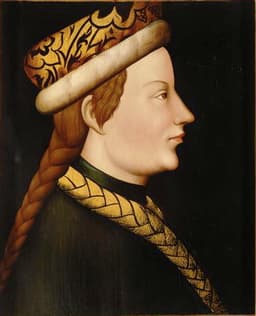
Albert III of Austria
Emperor · Medieval
53.4Total

Kirtivarman II
Emperor · Medieval
36.4Total
Basic Information
Born
1349
746
Died
1395
757
Era
Medieval
Medieval
Nationality
Austria
India
Occupation
Emperor
Emperor
Civilization
Western
Indian
Score Comparison
Military (10%)
50.0
21.2
Political (20%)
54.7
30.7
Influence (20%)
53.3
46.3
Legacy (20%)
44.2
37.5
Leadership (15%)
80.0
33.6
Strategy (15%)
38.6
36.8
TOTAL
53.4
36.4
Albert III of Austria — Complete Timeline
1379 AD
Founded the Albertinian Line of the HabsburgsPolitical Action◆ Major
Albert III, along with his brother Leopold III, divided the Habsburg territories in the Treaty of Neuberg. Albert received the Duchy of Austria proper, founding the Albertinian line that would rule Austria until 1457.
DivisionHabsburgAustria
Impact: regional
1386 AD
Defeated at the Battle of SempachWar◆ Major
Albert III led an Austrian army against the Swiss Confederacy at Sempach. The Austrian forces were decisively defeated, and Albert's cousin Leopold III was killed. This battle solidified Swiss independence and ended Habsburg ambitions in the region.
BattleSwiss ConfederacyDefeat
Impact: regionaltragic
Kirtivarman II — Complete Timeline
753 AD
Defeat by DantidurgaWar◆ Major
Kirtivarman II, the last Badami Chalukya king, was defeated by the Rashtrakuta chief Dantidurga. This battle ended the Badami Chalukya dynasty and established Rashtrakuta rule over the Deccan region.
Impact: regionaldestructive
Expert Analysis
Albert III of Austria vs Kirtivarman II
# The Last Stand: Two Rulers Who Defined the End of an Era
In the autumn of 1386, Duke Albert III of Austria watched his army shatter against the Swiss pikes at Sempach. Thirty-three years earlier, on the Deccan plateau of India, King Kirtivarman II had witnessed his own forces crumble before the rising power of the Rashtrakutas. Both men were the last of their lines—one a founder, the other a finisher. Yet their stories reveal how similar historical pressures produced vastly different outcomes, shaped by personality, circumstance, and the cruel mathematics of timing.
Origins
Albert III was born in 1349 into the sprawling Habsburg dynasty, a family that had spent centuries weaving its way through the Holy Roman Empire's complex politics. Vienna was his cradle, and from childhood he absorbed the lessons of territorial consolidation that defined medieval Austrian statecraft. His father, Duke Albert II, had expanded Habsburg holdings through marriage and diplomacy, teaching his son that power came not from battlefield glory but from patient accumulation.
Kirtivarman II, by contrast, inherited a throne already trembling. Born in 746, he was the last ruler of the Badami Chalukya dynasty, which had dominated the Deccan for two centuries. His predecessors had built magnificent cave temples at Badami and Aihole, patronized Sanskrit literature, and fought off Pallava invasions. But by Kirtivarman's time, the dynasty's veins had run thin. The Chalukya empire, like an aging tree, was hollow at its core.
Rise to Power
Albert III did not seize his throne—he grew into it. When his father died in 1365, Albert and his brother Leopold III ruled jointly, a common Habsburg arrangement that masked deep tensions. For fourteen years, the brothers managed a delicate balance until 1379, when they signed the Treaty of Neuberg, dividing Habsburg lands into the Albertinian and Leopoldinian lines. Albert took Lower Austria, Styria, and Carinthia, becoming the founder of a dynasty within a dynasty. His political score of 57.6 reflects a ruler who understood that sometimes division is the price of survival.
Kirtivarman II's path was steeper and shorter. He became king around 746, inheriting a realm already besieged by the Rashtrakutas of the western Deccan. Their chief, Dantidurga, had been a Chalukya vassal who turned predator. Kirtivarman's political score of 36.5 suggests a ruler who never mastered the game of power—perhaps because the game was already rigged against him.
Leadership & Governance
Albert III governed as a consolidator, not a conqueror. His leadership score of 74.0 and strategy score of 62.3 indicate a cautious, methodical ruler who strengthened what he had rather than reaching for what he lacked. He reformed administration, patronized the University of Vienna, and maintained peace with his neighbors—all the while knowing that the Habsburgs' true power lay in marriage alliances and patient diplomacy. His military score of 41.5 is telling: he was no warrior, and he knew it.
Kirtivarman II faced a different reality. His leadership score of 32.7 and strategy score of 30.0 suggest a ruler overwhelmed by forces he could not control. The Chalukya military machine, once the terror of the Deccan, had grown sluggish. Kirtivarman may have been brave—he did lead his army into battle—but bravery without strategy is merely suicide with dignity.
Triumph & Tragedy
Albert III's greatest triumph was also his subtlest: the Treaty of Neuberg. By dividing the Habsburg lands, he ensured that his branch would survive even if Leopold's faltered. It was a decision that seemed weak but proved wise—the Albertinian line would produce future emperors.
His tragedy came at Sempach in 1386. Marching against the Swiss Confederacy, Albert underestimated the ferocity of free peasants fighting for their homes. The Austrian knights, weighed down by armor and arrogance, were slaughtered. Albert himself barely escaped. The defeat shattered his reputation and proved that medieval feudalism could not always defeat republican determination.
Kirtivarman II's tragedy was total. In 753, Dantidurga's Rashtrakuta army crushed the Chalukya forces at a battle whose name history has forgotten but whose consequences it remembers. Kirtivarman fled, his dynasty ended, his temples abandoned to the jungle. He died around 757, possibly in exile, the last king of a great line.
Character & Destiny
Albert III possessed the Habsburg genius for survival. He was cautious, calculating, and willing to compromise—traits that historians sometimes mistake for weakness but that kept his dynasty alive for centuries. His total score of 62.0 reflects a competent ruler who understood that history rewards the patient.
Kirtivarman II, by contrast, seems trapped by his era's expectations. He was expected to fight, and he fought; he was expected to lose, and he lost. His total score of 42.9 reflects not incompetence but inevitability. The Chalukya dynasty had exhausted its historical mandate, and no amount of personal courage could revive it.
Legacy
Albert III's legacy is the Albertinian line of Habsburgs, which would eventually produce Frederick III, Maximilian I, and the great dynasty that dominated Europe for centuries. He is remembered not as a great conqueror but as a founder—the man who ensured that the Habsburgs would not fracture into oblivion.
Kirtivarman II's legacy is absence. The Rashtrakutas destroyed the Chalukya capital at Badami, and the magnificent temples fell into ruin. He is remembered only as the last of his line, a footnote in the rise of a new power. His influence score of 59.9 is surprisingly high, perhaps because his defeat marked a turning point in Deccan history.
Conclusion
Two rulers, two endings. Albert III founded a line that would shape Europe; Kirtivarman II ended one that had shaped India. Both faced the same fundamental challenge—how to preserve power in a changing world—but their different contexts produced different outcomes. Albert could afford patience; Kirtivarman could not. Albert had time; Kirtivarman had only a dying dynasty.
Their stories remind us that historical greatness is not always about winning. Sometimes it is about surviving long enough to pass the torch. And sometimes, as Kirtivarman II learned, the torch simply goes out.
Rankings
🥇
Albert III of AustriaLeader
Mil: 50.0Pol: 54.7Inf: 53.3
53.4
🥈
Kirtivarman II
Mil: 21.2Pol: 30.7Inf: 46.3
36.4
+17.0 behind
How This Comparison Works
Algorithm
Each figure is scored on 6 dimensions (0—100 scale) based on structured historical data: Military (10%), Political (20%), Influence (20%), Legacy (20%), Leadership (15%), Strategy (15%). The weighted total produces the final ranking.
Data Sources
Scores are computed from structured sub-indicators in the database. Scale factors adjust for era (Ancient ×0.85, Modern ×1.0) and civilization size (Eastern ×1.05, Other ×0.80) to account for differences in population and military scale.
Maximum 3 Figures
Comparisons are limited to 2—3 figures to ensure readability and statistical meaningfulness.
Error Margins
±5 points per dimension — Sub-scores are derived from historical records with inherent uncertainty. Two figures within 5 points on a dimension should be considered roughly equivalent in that area.
Total Score Accuracy
±3 points overall — The weighted combination of 6 dimensions produces a total score with approximately ±3 points of uncertainty. Differences of less than 3 points are not statistically significant— the figures are effectively tied.
Known Limitations
- Historical records are incomplete and uneven across civilizations
- Figures from oral-tradition societies may be underrepresented
- Occupation labels can misclassify multi-role figures
- Scores measure capability and impact, not moral character
- Quantitative scoring is a comparison tool, not absolute truth
Capability Radar
Military (10%) — Battles & Warfare
Battles
20
15
Win Rate
25
10
Expansion
20
5
Political (20%) — Governance & Reform
Reform
40
10
Diplomacy
45
10
Economy
40
15
Influence (20%) — Cultural & Global Reach
Cultural
30
10
Global
20
5
Legacy (20%) — Historical Impact
Historical
35
15
Longevity
30
10
Leadership (15%) — Power & Stability
Tenure
60
20
Stability
35
10
Strategy (15%) — Tactics & Innovation
Strategy
25
10
Tactics
20
15
Reform
15
5
Similar Comparisons
Comments & Discussion
KirtivarmanQuibbler6/16/2026
Comparing Albert III to Kirtivarman II is like comparing a chess pawn to a falling star. Albert built a duchy through marriages and slow consolidation—the Habsburg way. Kirtivarman inherited a collapsing dynasty and faced the Rashtrakuta onslaught with pure grit. But here's the rub: Albert's defeat at Sempach was a tactical blunder against Swiss peasants with pikes. Kirtivarman's loss was an existential end to a 200-year empire. One was a politician caught off-guard; the other was a king fightin
德干批判家6/16/2026
说实话,这种比较根本站不住脚。阿尔布雷希特三世好歹死守维也纳,留下牢固的根基给哈布斯堡家族壮大。基尔蒂瓦尔曼二世呢?面对罗湿陀罗拘陀人的扩张,他的军队在756年的战役里一触即溃,连都城巴达米都丢了,就这还敢叫"末代烈士"?要我看,他不过是官僚体系腐烂后的替罪羊,把两百年的烂账全算在他头上太不公平。数据上说,他统治期不到十年,而阿尔布雷希特三世执政了二十年——输法完全不同。
SempachSpectator6/16/2026
Everyone romanticizes Kirtivarman as this tragic figure, but let's get real: Albert III was the smarter operator. At Sempach in 1386, he charged headfirst into Swiss pike squares—a rookie mistake for a duke with veteran advisors. Yet his Habsburg kin managed to rebound within a generation. Kirtivarman II? He lost to Dantidurga's Rashtrakutas in a series of humiliations, including the sack of his temple-studded capital Badami. No comeback, no legacy, just dusty inscriptions and tourist caves. Giv
历史透镜6/16/2026
有趣的是,两人都栽在看似不起眼的对手手里:阿尔布雷希特三世输给瑞士步兵,这可是中世纪经典残局;基尔蒂瓦尔曼二世则败给罗湿陀罗拘陀的地方首领丹蒂杜尔迦,后者甚至在艾霍勒铭文里炫耀"端了(查卢基亚)三城"。但结局截然不同——哈布斯堡用联姻重振声威,而查卢基亚连墓葬诗都留不下来。关键差异:阿尔布雷希特身后有维也纳的官僚机器,基尔蒂瓦尔曼只有破碎的封建网络。细节决定王朝存亡。
RashtrakutaRealist6/16/2026
Stop framing Kirtivarman as a victim. The Rashtrakuta victory wasn't a fluke—it was the culmination of decades of Chalukya decline. Kirtivarman's father and uncle had already lost key forts to the Pallavas